

The best play of your week probably happened with nobody recording it. Amateur sport has always been like that: you score, everyone celebrates, and forty seconds later the only proof is other people's memory. This guide covers every practical way to change that, from the phone in your bag to the fixed camera some venues now install, and what actually changes depending on where you play.
Whether it happens on a court, a field, a mat, a studio floor, a track or a running route, capturing a moment comes down to the same four decisions: where the camera sits, how wide it sees, how long it records, and what you do with the footage afterwards. Everything below is those four decisions applied to real situations. If you already know your sport, skip ahead to soccer, padel, futsal, beach tennis or basketball.
When the Venue Does the Filming
Some places now have a camera already pointed at the action, so nobody has to sit out to hold a phone. VISU works with venues to turn what just happened into a short clip you can share.
Why Nobody Ever Films the Good Part
The problem is structural, not lazy. Recording a game requires someone to not play it. That person has to arrive early, hold a phone steady for an hour, and predict which thirty seconds will matter. Nobody volunteers for that twice.
So amateur sport ends up with a strange gap. People play weekly for years and finish with almost no footage of themselves, while a professional match generates dozens of angles of a single throw-in. The difference is not the equipment. It is that somebody in the professional setup is paid to point a camera at the field, and in your game everyone came to play.
Every solution below is really an answer to the same question: how do you get footage without someone sacrificing their game to film it? Some answers cost money, some cost setup time, and one of them removes the problem entirely by putting the camera on the venue rather than on a person.
The Four Ways to Record a Game
There are only four, and each trades something different. Pick by what you are willing to give up.
| Method | Costs you | Best for | Main weakness |
|---|---|---|---|
| Handheld phone, someone filming | One person not playing | A specific moment you know is coming | Nobody wants the job twice |
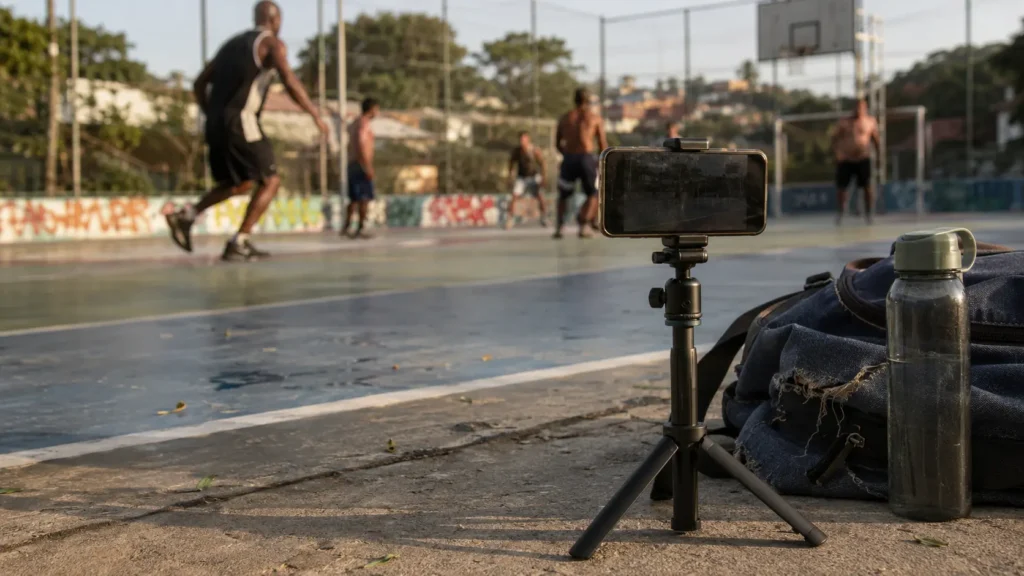
| Phone on a tripod, left running | Setup time and battery | Fixed-angle sports in a small space | Wide, distant, and hours of nothing |
| Someone on the sideline who is not playing | Asking a favour | Tournaments, finals, one-off matches | Not repeatable weekly |
| Fixed camera installed at the venue | Nothing, if the venue has one | Regular weekly play | Only where it exists |
The tripod is the default answer and it disappoints most people. A phone left running produces a wide, distant, hour-long file where the players are small and the interesting parts are buried. It technically worked. Nobody watches it. We compare the two setups properly in tripod versus fixed camera.
The fixed-camera option is different in kind, not degree. Because it belongs to the place rather than to a person, it is there every week without anyone organising it, and it is already pointed at the area where things happen. The trade is availability: it only helps at venues that installed one, which is why finding a venue with a camera is becoming its own question. If you want the mechanics, what a replay camera is explains how the triggered version works.
Where to Put the Camera
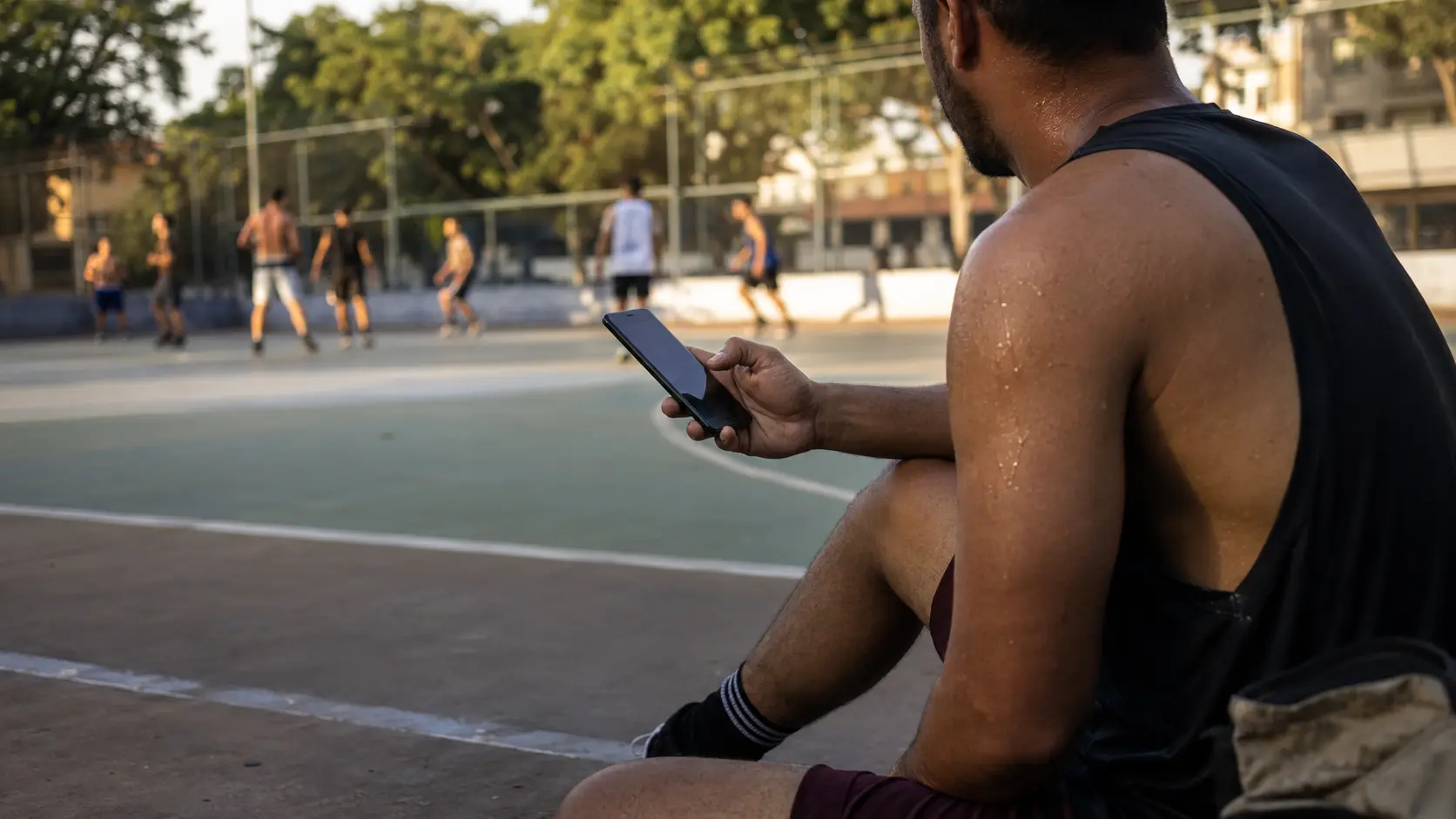
Position matters more than the camera itself. A modern phone placed well beats a better camera placed badly, and this is the single change that most improves amateur footage.
Height beats everything. Filming from standing height at ground level flattens the action, and players overlap into one mass. Getting the camera above head height separates them and lets you actually read the play. A fence post, a bench, a railing or a bag on a step all work.
Centre, not corner. Filming from a corner makes the far end unusable. From the middle of the long side, both halves stay reachable. This is why installed cameras are almost always mounted mid-side and high.
Wide enough to keep the ball in frame, no wider. The instinct is to zoom in on people. The result is losing the action every few seconds. Frame for where the ball travels, not for faces.
Sun behind the camera, never in front. Late afternoon is when most amateur sport happens and also when backlighting ruins the most footage. If the sun is low and in front of the lens, everyone becomes a silhouette. Move to the other side. Indoor venues have the opposite problem, covered in filming indoor courts.
Position advice gets more specific once you know the sport. We break it down per activity in camera angle for soccer, for padel and for basketball.
If You Run the Place Where People Play
A camera on the wall is now something players notice and choose a venue for. It is the same reasoning behind every activation VISU builds: give people a reason to come back and something to show other people afterwards.
For court and venue owners.
What Changes by Activity
The four decisions stay the same, but the answers move depending on the space and the speed.
Large open spaces, like football fields. Height matters most here, and one camera cannot cover everything. Accept that you are filming a zone rather than a whole match, and put the camera where most of the action concentrates.
Enclosed courts, like futsal, padel and basketball. These are the easiest to film well, because the walls define exactly where play happens. One well-placed camera can cover the entire space. In padel the glass creates reflections, so avoid pointing at a wall that faces the sun.
Sand courts, like beach tennis and footvolley. Bright, high-contrast surfaces confuse automatic exposure, and players end up dark against glowing sand. Filming earlier or later in the day fixes more than any setting. The same trap catches the moments most worth sharing, which tend to happen in exactly that light.
Indoor spaces, like mats, studios and gyms. Light is the constraint, not framing. Indoor lighting is dimmer than it looks and produces blur on fast movement. Get as close as the activity allows and avoid filming toward windows. This applies equally to a jiu-jitsu mat, a dance studio and a crossfit box, where the activity is the same problem in a different room.
Moving activities, like running and skating. There is no fixed area to point at, so fixed cameras stop helping and the answer goes back to someone filming, or capturing a specific spot people pass through.
How Long a Clip Should Be
Shorter than you think. The moment worth keeping is almost always under thirty seconds, and usually closer to fifteen. Everything before it is buildup that only the people who were there find interesting.
This is why hour-long recordings fail socially. Nobody scrubs through a match to find your goal, including you. A file you never open is the same as no footage at all.
The useful unit is the play, not the game. Whatever method you use, the output that actually gets watched is one action with a few seconds of context before and after. If you record long, plan to cut. If the venue camera clips automatically, that decision is already made for you. We put numbers to it in how long a sports clip should be, and what makes a good clip covers the rest.
Watching your own footage has a second use beyond sharing it. Whether filming actually improves your game looks at that, and analysing your own match is the practical version.
Turning Footage Into Something People Watch
A clip has two lives. The first is you watching it. The second starts when someone else does, and most footage never gets there.
Send it where the group already talks. The team chat gets more views in ten minutes than a social post gets in a week, because those people were there and want to see it. Start there before thinking about an audience, as sharing clips in your team group explains.
Vertical for social, horizontal for watching. If it is going to a feed, vertical fills the screen. If people will watch it properly, or you want to see the whole play, horizontal keeps the context. Filming horizontal and cropping later gives you both. More in vertical versus horizontal.
The first second decides everything. Start the clip immediately before the action, not with people walking into position. Nobody waits eight seconds to find out whether the goal happens. If the destination is a feed, posting your best moment on Instagram and Stories versus Reels cover the format side.
What Goes Wrong Most Often
Filming into the sun. The most common ruined footage, and the most avoidable. Check where the light is before you start, not after.
Zooming in. Feels right, loses the ball constantly. Stay wide.
Camera at hip height. Players merge into one shape and the play becomes unreadable. Raise it.
Recording everything and reviewing nothing. An hour of untouched footage is a decision postponed forever. Either cut on the same day or use a method that produces short clips by default.
Filming people who did not agree to it. A private venue can have its own rules, other people's children are involved, and someone may simply not want to be posted. Ask before publishing anything with other people in it. Filming at a private court and filming minors go into the specifics.
Losing the clips. Footage scattered across a camera roll disappears within months. Storing your clips is unglamorous and saves the ones you will want in five years.
The Clip Without the Camera Work
Where a venue has a camera installed, the play that just happened can become a short clip without anyone sitting out to film it. Sharing it costs nothing. Watching the full clip and downloading it happens in the VISU app.
FAQ: Filming Amateur Sports
What is the best way to film an amateur game?
If the venue has a fixed camera, that is the best option, because it requires nobody to sit out and it is already positioned well. Without one, a phone on a tripod above head height at the middle of the long side is the most reliable setup. Handheld filming produces the best footage but costs you a player.
Where should the camera be placed?
Above head height, at the middle of the long side, wide enough to keep the ball in frame, with the sun behind the camera rather than in front of it. Height and centring matter far more than the camera model. A phone placed well beats a better camera placed badly.
Should I film vertically or horizontally?
Horizontally, then crop to vertical if you are posting to a feed. Horizontal keeps the context of the play and gives you both formats later. Filming vertically first means you cannot recover the width, and in sports the width is usually where the action is.
How long should a sports clip be?
Under thirty seconds, and often closer to fifteen. The play plus a few seconds either side is what people actually watch. Hour-long recordings rarely get opened again, including by the person who filmed them, so a long file is often the same as having no footage.
Can I film at a private court or gym?
The venue sets its own rules, so ask first. Beyond permission to film, publishing is a separate question: other people appear in the footage, children may be present, and not everyone wants to be posted. Asking before sharing avoids most problems.
Do I need a special camera to get good clips?
No. Position, light and length account for most of the difference between footage people watch and footage they ignore. A current phone placed high and centred, filming in good light, produces clips that are perfectly good to share. Equipment is the last thing to change, not the first.