

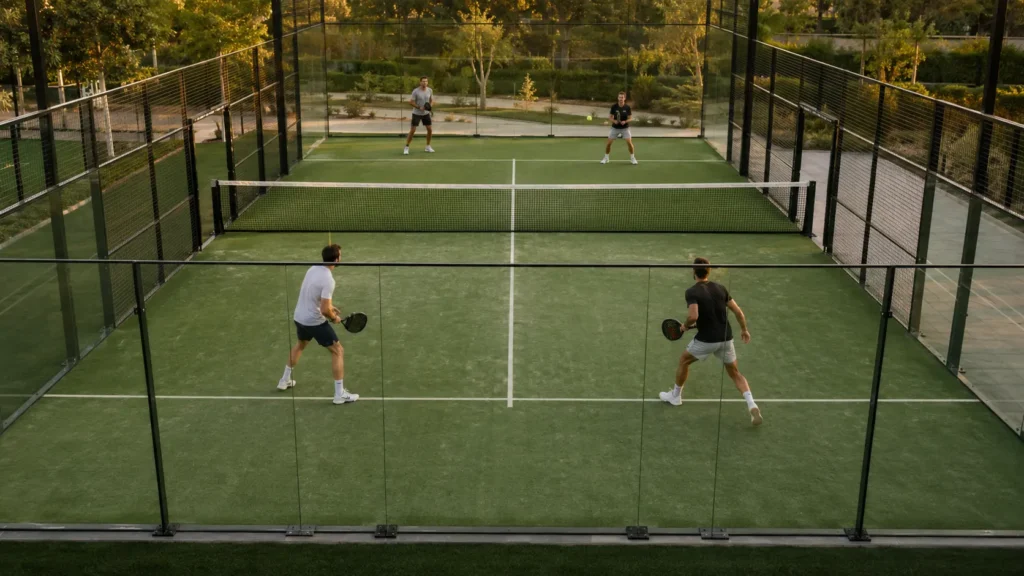
A padel court is one of the few sports spaces where the right camera angle is decided by the rulebook rather than by taste. The dimensions are fixed, the glass is 3 metres of it, and the ceiling clearance is regulated. Once you know those three numbers, there is a short list of positions that work and a long list that cannot, no matter how good your phone is.
The court is 20 by 10 metres, the walls run 4 metres total (3 metres of tempered glass with a metre of mesh above it), and covered courts need at least 6 metres of clearance under the roof, per the International Padel Federation rules. Those are not trivia. They are the reason a camera at chest height fails and a camera at 3 metres works, and they explain why every well-filmed padel clip you have seen looks like it was shot from roughly the same place.
The Angle Is Already Solved
A court with VISU Replay has the camera fixed in the position that works, so the angle stops being your problem. You play, press the button, and the clip is there.
The Short Answer
Behind the back glass, roughly 3 metres up, centred on the court. That is the position that survives contact with everything padel does: the glass stops being a mirror when you shoot from above the reflective band, both service boxes stay in frame, and the ball keeps a readable path when it comes off the wall.
Everything below is why, and what to do when you cannot get there. If you have not read how to record your padel match yet, start there for the basics of setup and stability. This post is the granular version: the specific height, the specific side, and how the answer shifts depending on whether you want a clip to share or footage to study.
Height Is the Decision That Matters
Position gets all the attention and height decides the outcome. Two cameras in the same spot, one at 1.5 metres and one at 3 metres, produce footage so different they look like different sports.
Below 2 metres: the glass wins. This is inside the reflective band. You film the court and get the court plus a mirror of everything behind you, including yourself. Worse, the players nearest the camera block the ones behind them, so half the rally happens behind somebody's back.
Around 3 metres: the working height. You are above the reflection line and below the mesh, looking slightly down into the court. Bodies stop overlapping. The ball keeps a visible arc instead of flattening into the background. This is the height most club installations end up at, and they did not get there by coincidence.
Above 4 metres: the court flattens. Technically clean, and you can see the whole court, but the footage starts reading like a tactics diagram. Depth disappears, so a lob and a flat drive look similar. Fine for analysis, weak for anything you want to post.
The 6-metre clearance is your ceiling, literally. Covered courts are built with at least 6 metres above the playing surface, so on an indoor court you have real vertical room to work with. Outdoors you are limited to whatever structure exists. That single difference decides most of what follows, and filming indoor courts covers the lighting side of the same problem.
The Angle Changes With What You Want
This is the part most guides skip. There is no single best angle, because "best" depends on what the footage is for, and the three common goals pull in different directions.
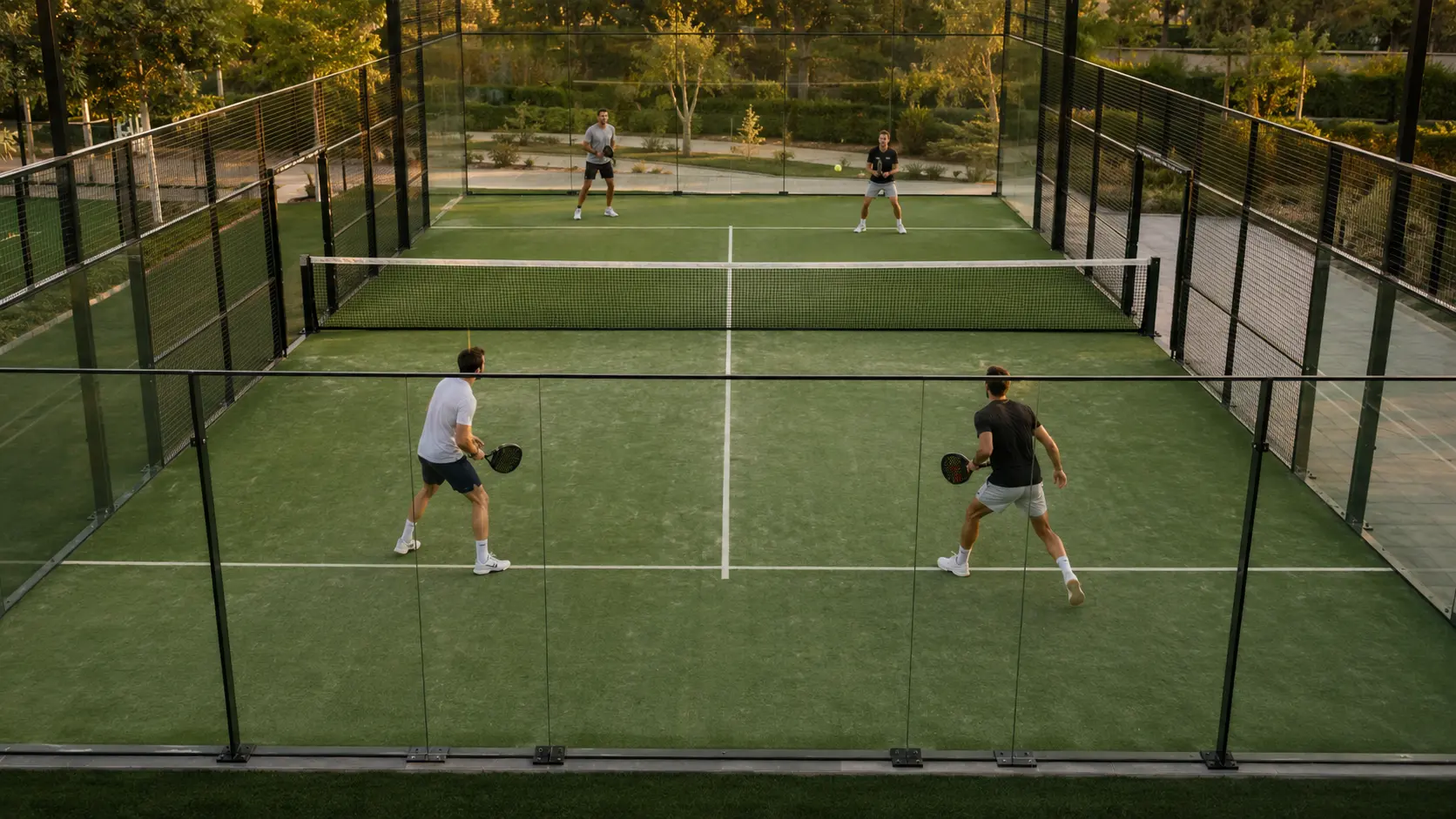
To share a clip: behind the glass, centred, 3 metres. Shareable means legible in three seconds on a phone held at arm's length. Centred and slightly elevated gives you the whole point with the ball readable throughout, which is what makes a clip watchable to someone who was not there. Pair it with the padel moments worth keeping to know which points are worth the trouble.
To study the match: higher and further back. Analysis needs court position, not drama. Four metres up, further behind the glass, wide enough that both pairs are always in frame. You lose the sense of pace and gain the ability to see who was out of position and when, which is the whole point. Reviewing your padel match goes into what to actually look for.
To fix one player's technique: side-on, low, close. The only case where the side of the court beats behind the glass. A bandeja or a smash is a body mechanic, and body mechanics are invisible head-on. This angle is useless for the rally and excellent for the swing, so treat it as a separate recording rather than a compromise on the main one.
Do not try to serve all three from one position. The middle-ground angle that half-satisfies each is worse than any of them at its own job. Pick the goal first, then the angle.
The Positions, Compared
Every viable position on a padel court, and what each one costs you.
| Position | Height | Good for | What it costs |
|---|---|---|---|
| Behind back glass, centred | 3 m | Everything, clips especially | Needs something to mount on |
| Behind back glass, centred | 4 m+ | Tactics and positioning | Flat, no sense of pace |
| Behind back glass, off-centre | 3 m | Workable fallback | One service box is favoured |
| Side of court, elevated | 2.5 m+ | Court coverage, movement | The near pair blocks the far pair |
| Side of court, low and close | 1.5 m | One player's technique | Useless for the rally |
| Corner, elevated | 3 m | Depth and wall play | Far corner is small and dark |
| Behind glass, ground level | 1.5 m | Nothing | Reflections plus blocked view |
Off-centre is the honest fallback. A perfectly centred mount is often impossible on a court you do not own. Off-centre behind the glass at the right height still beats a perfectly centred camera at chest height, because height fixes more problems than centring does.
Nobody Has to Sit Out to Film
The awkward part of filming padel is that the person holding the phone is not playing. A court with VISU Replay removes the trade entirely: the camera is already mounted at the right height, and the clip comes from a button press.
What Changes for the Serve, the Smash and the Wall
Padel has specific shots that break specific angles, which is why a position that films rallies well can still lose the shot you most wanted to keep.
The serve. Underarm, below the waist, bounced first. Filmed from the side you get a clean view of the action and lose whether it landed in. Filmed from behind the glass you see the box and lose the mechanics. If the serve is what you are working on, film it separately from the side and accept that the rally footage is a different recording.
The smash and the bandeja. The shots most worth keeping and the ones most often ruined. Both send the ball up, so a camera without headroom in frame simply loses it: the ball leaves the top of the shot and comes back with no visible path. Frame with deliberate space above the mesh line, even though it feels like wasted picture while nothing is happening.
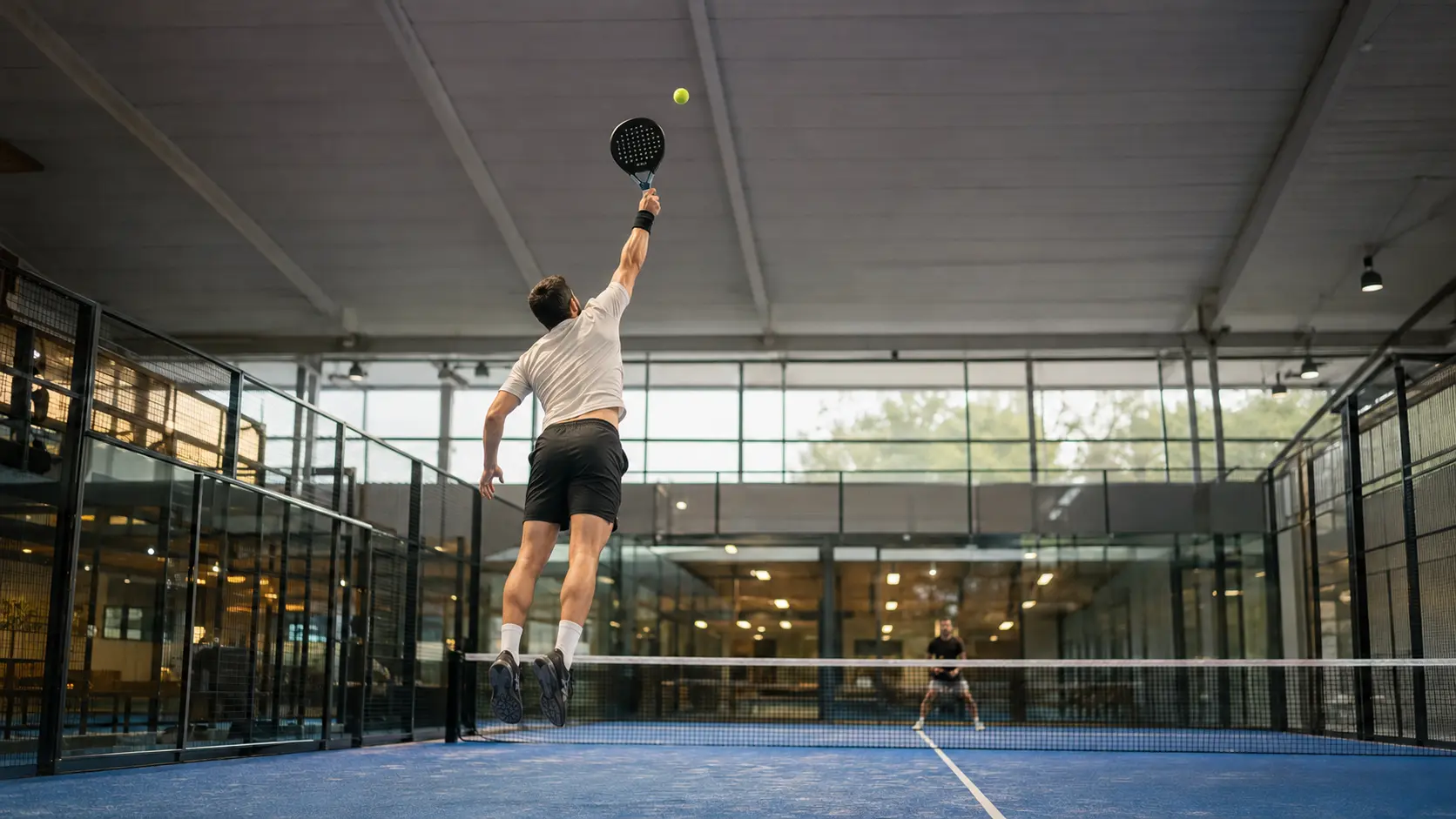
Balls off the back wall. The signature of the sport and the reason behind-the-glass works so well. From behind, the rebound reads as one continuous movement. From the side, the ball vanishes into the glass and reappears, which looks like an editing cut to anyone watching.
The ball played outside the court. Out over the wall or through the door and played back in, legal on courts that allow out-of-court play, and the highest-value clip padel produces. It only survives on camera if the frame is wide enough to include the space outside the court. A tight frame turns the best point of the night into a ball that left and came back for no visible reason.
Volleys at the net. Fast, close, and the case where being centred earns its keep. Off-centre, the near player covers the far one during exactly the exchange you wanted.
Angles That Cannot Work
Not "worse" ones. Positions where the geometry of the court makes good footage impossible, so no amount of camera quality rescues them.
Ground level behind the glass. The most common attempt and a guaranteed failure. You are inside the reflective band, and the near pair blocks the far pair for the whole match. Both problems, at once, permanently.
Handheld from inside the court. Someone is not playing, the frame moves constantly, and on a 20 by 10 court there is nowhere to stand that is not in the way. Padel is doubles; sitting a fifth person out to film is a bad trade every time.
Phone against the glass. It seems to solve the reflection problem by eliminating the gap. It does not: you get glare from the contact point, a lens flat against a surface that vibrates on every wall hit, and a frame too low to see over the near players.
The far corner, outdoors, at the wrong time of day. Padel glass reflects the sky. A corner that is perfect at 6pm can be unusable at 4pm on the same court. Check the actual light before mounting, not the position in the abstract.
Zoomed in. Digital zoom crops resolution and tightens the frame at the same time, and the tight frame is what loses the smash and the ball played outside the court. Wide and slightly too far back beats zoomed and correctly framed, because you can crop later and cannot un-crop.
The structural problem behind all of this. Every angle above assumes someone brought a phone, mounted it, and is not playing. That is why fixed cameras took over: with 50,436 courts worldwide and a new one opening roughly every two and a half hours, according to Playtomic's 2025 report, the venues growing fastest are the ones where filming is part of the court rather than a favour someone does. Courts with video replay lists the places where the angle is already decided, and what VISU Network is explains how the venue side works.
Fixed at the Right Height, Every Match
VISU Replay puts the camera where this whole article says it should be and leaves it there. Press the button after a good point and the clip is yours, with nobody sitting out to film it.
FAQ: Camera Angles for Padel
What is the best camera angle for padel?
Behind the back glass, centred on the court, around 3 metres up. That height clears the reflective band on the glass and stops the near pair from blocking the far pair, and centring keeps both service boxes evenly in frame. It is the position that works for the widest range of shots, which is why club installations converge on it.
How high should the camera be?
About 3 metres for clips, up to 4 for analysis. Below 2 metres you are inside the reflective band on the glass and filming your own reflection. Above 4 the court flattens out and a lob starts looking like a drive. Covered courts are built with at least 6 metres of clearance under the roof, so indoors there is usually real vertical room to use.
Behind the glass or from the side?
Behind the glass for the match, from the side for one player's technique. Behind the glass keeps the ball readable when it comes off the wall, which is the shot padel is built around. Side-on is the only angle where a bandeja or smash swing is actually visible, but it is poor for the rally, so treat it as a separate recording rather than a compromise.
Why does the glass ruin my footage?
Padel walls are 3 metres of tempered glass, and glass at eye level reflects whatever is behind the camera, including the person holding it. Filming from above the reflective band is the fix. Stand where the camera will go and look at the glass first: if you can see yourself, move higher until you cannot.
Why do I keep losing the ball on smashes?
The frame is too tight at the top. Smashes and bandejas send the ball high, and a frame ending near the mesh line loses it completely for the part of the shot that matters. Leave deliberate headroom above the court even though it looks like wasted picture between points. The same applies to balls played outside the court and back in.
Is one angle enough for both sharing and analysis?
Mostly, if you choose the sharing angle. Behind the glass at 3 metres is watchable and still shows enough court position to be useful for review. The reverse is not true: the higher analysis angle produces flat footage that nobody wants to watch. If you can only mount one camera, mount the shareable one.