

The point you are proudest of is often not the clip anyone watches twice. A clean winning volley means everything to the pair who built the point and little to anyone scrolling past. The padel moments worth keeping follow a different logic, and most of it comes from the glass, the fence and the fact that there are always two of you.
This guide is about choosing, not filming. It sorts padel moments into the ones that travel, the ones for the group chat and the ones worth keeping only for yourself, then covers where to cut a clip and what should stay off the feed.
The Point Is Already a Clip
At a court with VISU Replay, a fixed camera records the session and the point you just played becomes a short clip without anyone standing outside the glass with a phone.
Why the Winning Volley Is Rarely the Clip
Most padel points are won quietly. A volley angled into the side glass, a low ball at someone's feet, a bandeja that kept the net for three more shots until the other pair missed. To the four people on court, that point had a shape. On a phone screen, it is a ball going back and forth until it stops.
The people who care were already there. Your partner and the two opponents saw the point from inside it. Sending it tells them something they already know, which is why the reply is polite rather than excited.
Context does not survive the clip. What made the point feel big was usually around it: the score, a long game at deuce, the fact that it was the first set you took from that pair. None of that is visible in the footage, and a caption that explains it is admitting the clip did not carry it.
Tactics are invisible to people who do not play. The chiquita that won you the net is the smartest shot of the night and the least readable one. It looks like a soft ball that nobody chased. Players who know the game will see it. Everyone else will not.
The test for every moment below: if it needs the story, it is a memory. If it works without the story, it is a clip.
What Makes a Padel Moment Travel
The padel moments that get watched more than once usually carry one of four qualities. None of them is technical perfection.
The walls doing something visible. A ball that bounces, hits the back glass and gets played back is instantly legible, even to someone who has never held a padel racket. The FIP rules keep the ball in play when it hits the walls or the fence after bouncing in the opponents' court, so rallies can continue in ways that look impossible to people who only know tennis.
Surprise. Something nobody expected, including the person who did it. A desperate lob that turned the point around. A ball that should have been dead and came back. Surprise survives poor light and imperfect framing, which is why it beats a well-filmed routine winner.
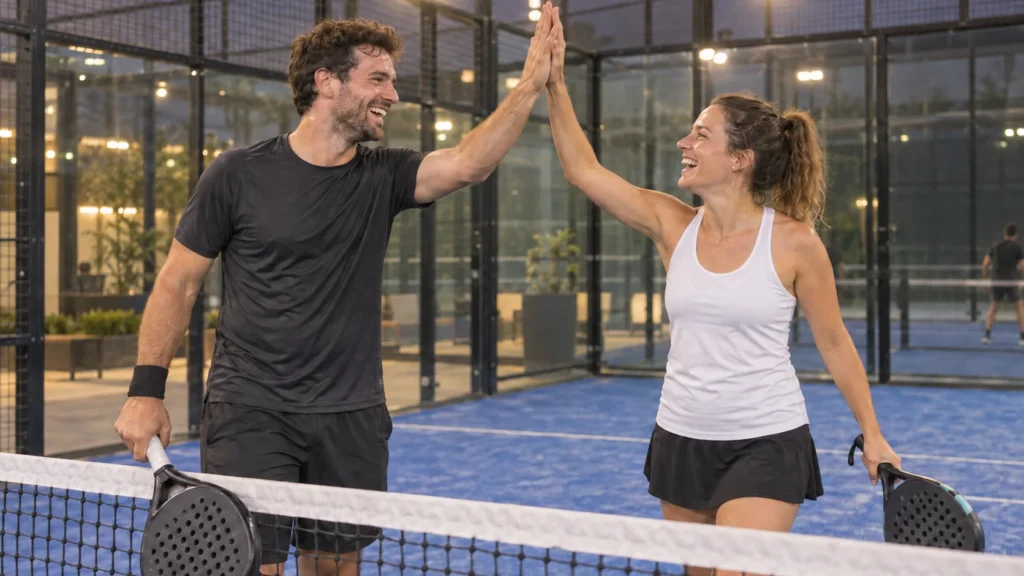
Two people reacting. Padel is played in pairs, so every good point ends with at least two people celebrating, arguing or laughing. A shared reaction tells the viewer the point mattered without a word of explanation.
Visible effort or visible failure. A sprint to the back corner, a stretch at the net, or a smash that sails straight into the glass. Effort and comedy both read without context. Self-deprecation is the safest version of comedy: your own air shot will land better in the group than your partner's.
The Padel Moments Worth Keeping
Roughly ordered from the moments that travel furthest to the ones that mostly matter to players. The order is an editorial judgment, not a measurement.
| Moment | Why It Works | Best For |
|---|---|---|
| The smash that leaves the court | Unusual, loud, instantly readable | Feed and group chat |
| The recovery off the back glass | Only padel looks like this | Feed and group chat |
| The pair celebration | Faces, emotion, two people | Both, and the pair will keep it |
| Four players at the net | Speed and reflexes anyone can follow | Feed |
| The comedy moment | No explanation needed | Group chat, with care |
| The víbora or bandeja | Readable mostly to players | Group chat, your own folder |
| The chiquita that won the net | Clever, but invisible to outsiders | Your own folder |
The smash that leaves the court. The overhead that bounces and flies out of the enclosure, over the wall or through a door, is the sport's signature highlight. Players call it a por 3 or a por 4 depending on where it exits. What happens next depends on the venue. The FIP rules only allow play outside the court where it is authorized, so at one club that smash ends the point and at another it can start a chase out through the door. When someone actually gets the ball back from outside, that is the version people replay.
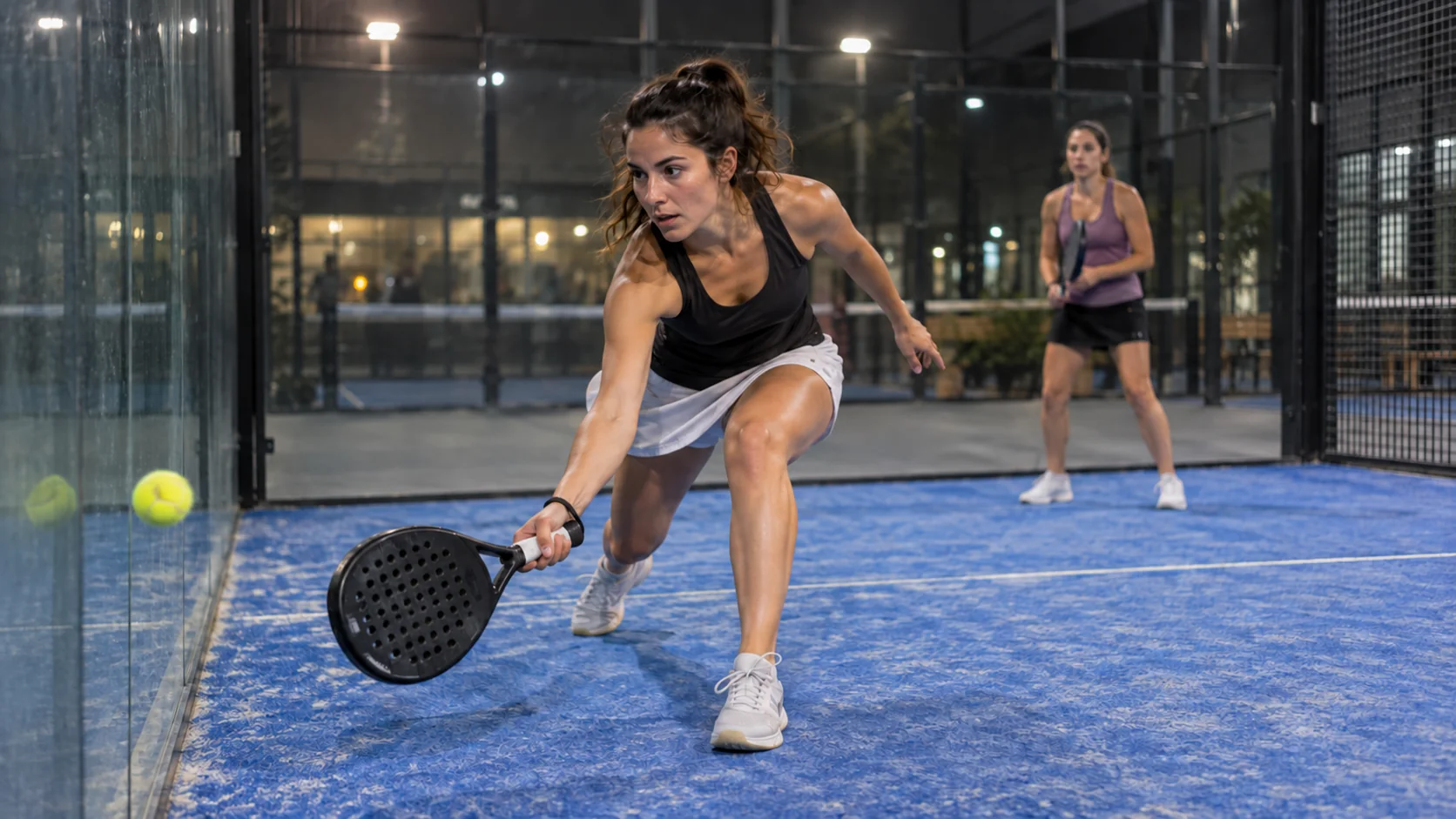
The recovery off the back glass. A player lets the ball go past, waits for it to come off the glass and plays it back, sometimes after two walls. To people who do not play padel, this looks like a rule being broken, which is why it works. A defensive lob hit from deep in the corner after a rebound is often a better clip than the smash that came before it.
The contrapared. When a ball gets behind you, one escape is to hit it into your own back wall so it rebounds over the net. The FIP rules allow a return that hits the wall on the player's own side first and then bounces in the opponents' court. It rarely looks elegant, which is part of its charm.
The pair celebration. The point ends and both players turn to each other. It outranks most winners on its own, and a clip that runs from the winning shot through the celebration gets both.
Four players at the net. When all four players close in and the volleys get faster, anyone can follow the exchange. It needs no knowledge of tactics, only a frame wide enough to show both pairs.
The comedy moment. Both partners going for the same ball and both missing it. A smash that goes straight into the opponents' glass without bouncing, which under the FIP rules loses the point. A ball that bounces and then wedges in a gap in the metal fence, which under the same rules wins it. These need no explanation, but they involve people, so they need the judgment covered further down.
The víbora, the bandeja and the chiquita. The shots that make you a better player are the least shareable ones on the list. Keep them for your own folder, where they become useful when you review a match.
The Frame Is Set Before the First Serve
A VISU Replay camera is fixed in place for the whole court, so wall play, net exchanges and the pair's reaction are recorded without anyone sitting out to hold a phone.
Why Some Great Points Never Reach the Video
The best moment of the night is also the one most likely to be missing from the footage, and the reason is almost always framing rather than the camera.
The smash leaves the top of the frame. Overheads send the ball high, and a frame cut close to the top of the court loses it exactly when it matters. Leaving headroom above the court feels wasteful between points and is what keeps the smash in the shot.
The por 3 leaves the side of the frame. A ball that exits the court only makes sense on video if the frame includes some of the space outside it. Zoom in and the best point of the evening becomes a player running off screen for no visible reason.
The wall play needs depth. Rebounds off the back glass read as one continuous movement from behind the court and break up from the side. The detailed reasoning on height and position is in the best camera angle for padel.
Four players need a horizontal frame. A padel point only makes sense with both pairs visible, and a vertical frame throws away the width where the other pair is standing. Film horizontally and crop later if a vertical version is ever needed. Reflections, focus and evening light are covered step by step in how to record your padel match.
Framing does not change which moments are worth sharing. It changes which of them you will actually have.
Group Chat, Public Feed and Your Own Folder
The same padel clip can be perfect in one place and pointless in another.
The group chat wants people and context. Everyone in it knows the players, the court and the rivalry. Inside jokes and long rallies with no spectacular ending work there because the audience is already invested. Most of your clips belong here.
The public feed wants the moment and nothing else. Nobody scrolling knows you, so anything that needs explaining fails. The por 3, the recovery off the glass and the net exchange work on sight.
Your own folder wants the useful footage. The chiquita that won the net, the moment your pair drifted to the same side, the lob you should have chased. These are rarely shareable and often the most valuable clips you have. Watching them is a different exercise with different rules, covered in reviewing your own padel match. A highlight shows what was unusual. A review looks for what keeps happening.
A quick test: would a stranger who has never played padel understand it? Yes means feed. Only a player means group chat. Only you means your folder.
Where to Start and Stop a Padel Clip
Start just before the shot that sets up the moment. For a smash, that is usually the lob that invited it. For a recovery off the glass, it is the ball that pushed the player back. The viewer needs a beat to orient, not the walk back to the service line.
Keep the whole rally when the rally is the story. Padel produces long points where the walls keep the ball alive, and some of them only make sense in full. Do not trim a long exchange down to its last shot if the tension came from everything before it. Trim the dead time before the serve instead.
Run past the winner, not up to it. The most common mistake is stopping the moment the ball dies. The reaction is the payoff, and in padel it comes from two people at once. Let the clip run until the pair has turned to each other.
One moment per clip. Three good points in one video produce something nobody finishes. Send the best one and keep the others. Several moments in one video is a highlight reel, which is a different job.
Leave the sound on unless it hurts. The ball off the glass and a shout between partners give padel clips their character. Mute only when the audio is distorted or carries conversation never meant to be shared.
What Not to Post
Someone else's costly mistake, in public. Your own air shot is comedy. Your partner's miss on a deciding point, posted to a public feed, is at their expense in a way they cannot answer. In a group chat where they can reply, it is usually fine. Beyond it, ask first.
Collisions and injuries. A clash of rackets, a player hitting the wall or a ball to the face might have been laughed off at the time. It ages badly and there is no upside to posting it.
Arguments over calls. A dispute about whether a ball bounced twice feels dramatic on the night and reflects badly on everyone later, including whoever posted it.
People who did not agree to it. Padel footage always includes other people: your partner, the opposing pair and sometimes players on the next court behind the glass. Sharing inside a group that plays together is usually understood. Anything public needs their agreement, with extra care where children are involved.
The rule that covers most situations is simple: a clip should be something everyone in it would be happy to see. If you hesitate before posting, that hesitation is usually the answer.
Every Point Stays Available After the Match
At a court with VISU Replay, the clip is there when you walk off, so choosing what to share happens with a clear head instead of mid-match with a phone in your pocket.
FAQ
What Is the Best Padel Moment to Share?
The one that works without context. A smash that bounces and leaves the court, a recovery off the back glass or a fast exchange with all four players at the net can all be understood by someone who has never played. A clip that also runs through the pair's celebration gets the moment and the reaction together.
Why Do My Best Points Get So Few Reactions?
Because the people who care were on court and already saw them, and because many good padel points are won with tactics that outsiders cannot read. A chiquita that won the net or a patient bandeja looks ordinary on video. Keep those for yourself and share the moments that are visible on sight.
What Is a Por 3 in Padel?
It is what players call a smash that bounces and leaves the court, with por 3 and por 4 describing where the ball exits. Whether the opposing pair can chase it outside depends on the venue: under the FIP rules, play outside the court is only allowed where it is authorized.
Should I Film Padel Clips Vertically for Social Media?
Film horizontally. A padel point needs both pairs in frame, and a vertical frame loses the width where the other pair stands. If a vertical version is needed later, crop it from the horizontal footage rather than filming vertically from the start.
Where Should a Padel Clip Start and End?
Start just before the shot that set up the moment, such as the lob before a smash, and end after the pair has reacted. Keep a long rally whole when the tension came from the whole exchange, and trim the dead time before the serve instead of the play itself.
Is It Okay to Post a Clip of My Partner's Mistake?
In a group chat where they can reply, usually yes. On a public feed it is at their expense in a way they cannot answer, so ask first. The simplest test is whether everyone in the clip would be happy to see it posted there.