


The goal you are proudest of is usually not the clip people watch twice. Amateur footballers post the finish and wonder why it gets three replies, while the clip of somebody falling over gets forty. That is not bad taste on their part. There is a fairly predictable logic to which moments travel, and once you see it you start keeping different twenty-second stretches.
This is about choosing, not filming. If the footage does not exist yet, how to record your soccer game and the best camera angle come first.
The Moment, Without the Editing
Where a pitch has a camera installed, the moment that just happened is already a short clip, cut to roughly the length people actually watch. Sharing it costs nothing.
Why Goals Underperform
A goal is the most important thing that happens in a football match and often the least interesting thing to watch on a phone. The reason is that most amateur goals are, visually, quite plain: a ball crosses a line after a sequence that made sense if you were there.
The people who care already know. Everyone in the group chat played in the match. They watched the goal go in from a better angle than your phone had. Sending them a clip of it is telling them something they already know, which is why the reaction is polite rather than enthusiastic.
Context does not survive the clip. The reason a goal felt good is usually everything around it: the score, the minute, who you beat, the fact that it was the last kick. None of that is visible in twenty seconds of footage, and explaining it in the caption is admitting the clip did not carry it.
The exceptions prove the rule. Goals that do travel are the ones that are visually remarkable on their own: a volley, something from distance, an outrageous angle. If the goal would impress a stranger who knows nothing about the match, post it. If it needs the story, it is a memory rather than a clip.
What Actually Travels
The moments that get replayed share one of three qualities, and none of them is technical quality.
Surprise. Something nobody expected, including the person who did it. A shot that was clearly a cross. A defender who somehow ended up scoring. Surprise survives compression, bad light and shaky filming, which is why it beats a well-shot routine goal every time.
Someone looking foolish, ideally the person posting. Comedy is the strongest currency in a group of friends, and self-deprecation is the safest form of it. A clip of your own air shot will outperform your own goal, reliably. It also has a social function: it gives everyone permission to laugh without anyone feeling singled out.
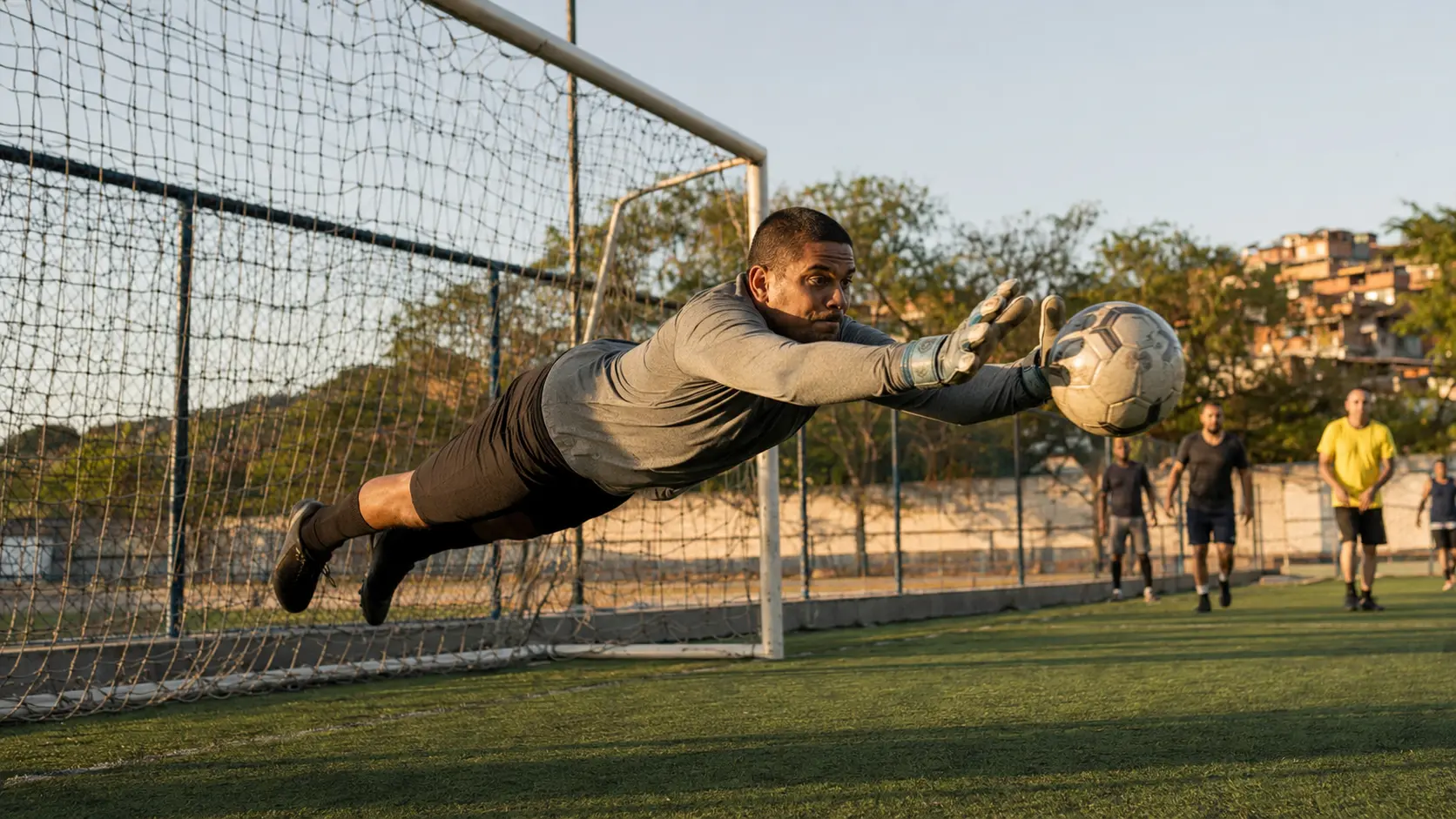
Genuine physical effort. A goalkeeper fully extended, a last-ditch tackle, someone sprinting back fifty metres to stop a counter. These read instantly even to people who were not there, because effort is legible without context.
Notice what is missing from that list: skill. Technically excellent play is enjoyable to the people who understand it and invisible to everyone else. That is why what professionals do that amateurs can copy is a different article from this one.
The Moments, Ranked by How Far They Go
Roughly in order of how reliably each one gets watched more than once.
| Moment | Why it works | Best for |
|---|---|---|
| The celebration | Emotion, faces, everyone involved | Group chat and feed |
| A spectacular miss | Comedy, surprise, no ego risk | Group chat |
| A big save | Visible effort, clear outcome | Both, and the keeper will keep it forever |
| An unusual goal | Works without context | Feed |
| Someone falling over | Universal, no explanation needed | Group chat, with care |
| A routine goal | Matters to you, not to viewers | Keep it, do not lead with it |
| Good passing sequence | Only legible to players | Nowhere, honestly |
The celebration outranks the goal, and it is not close. It has faces, emotion, several people, and it needs no explanation. A clip that starts at the finish and runs through the celebration gets the goal for free and the reaction as well. This is the single most useful thing on the page: keep filming for five seconds after the ball goes in.
If You Run the Pitch
Every clip a player shares carries your venue with it, into group chats full of other players. It is the cheapest marketing a court has, and it happens without your staff doing anything.
For court and venue owners.
Group Chat and Public Feed Are Different Jobs
The same clip can be perfect in one place and pointless in the other, because the two audiences want opposite things.
The group chat wants context and people. Everyone was there, so the clip is a shared reference rather than a performance. Inside jokes work. Someone's terrible attempt at a rabona works. Length matters less because the audience is invested. This is where most of your clips should go, and sharing clips in your team group covers the etiquette.
The public feed wants the moment and nothing else. Nobody scrolling knows you, so anything requiring explanation fails immediately. The clip has to work for someone who arrives with zero context and leaves in two seconds if it does not. Shorter, more obvious, front-loaded. Posting your best moment on Instagram and Stories versus Reels deal with the format side.
A useful test: would this make sense to someone who does not know anyone in the video? Yes means feed. No means group chat. Trying to make a group-chat clip work publicly is where captions get long and apologetic, which writing captions for sports clips covers in more detail.
Where to Start and Stop the Clip
Start about two seconds before the thing happens. Not at the throw-in that led to it. Enough that the viewer can orient, not enough that they wonder when something will occur. If you are unsure, cut later than feels right rather than earlier.
Run past the moment, not up to it. The most common editing mistake is stopping when the ball crosses the line. The reaction is the payoff, and it happens in the three seconds you just deleted.
Fifteen to twenty-five seconds covers almost everything. Longer than that and people scrub or leave. Shorter and there is no room for the reaction. This holds regardless of how good the moment was.
One moment per clip. The temptation to compile three good things into one video produces something nobody finishes. Send them separately, or send the best one and keep the rest.
What Not to Post
Someone else's serious mistake. Your own air shot is comedy. Somebody else's costly error, posted publicly, is at their expense. The group chat is usually fine because they can respond. A public feed is not, because they cannot.
Injuries. Even minor ones, and even when everyone laughed at the time. It ages badly and there is no upside.
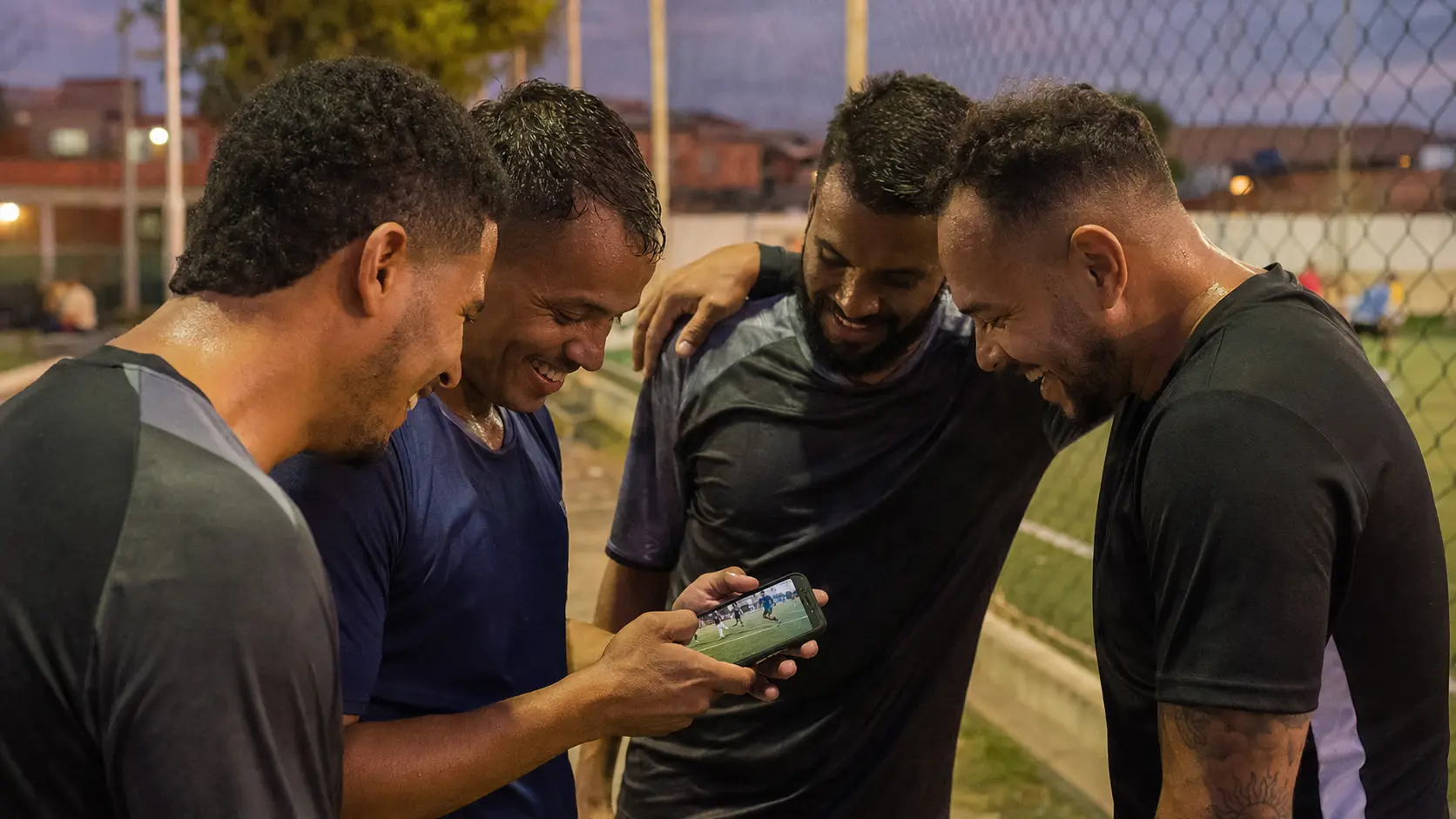
Anything involving someone who has not agreed to it. Other people appear in football footage by definition. Within a team that knows each other, posting is usually assumed to be fine. Beyond that, ask, particularly where children are involved.
Arguments and confrontations. They feel dramatic on the day and reflect badly on everyone a week later, including the person who posted.
None of this needs to be complicated. The rule that covers most situations is that a clip should be something the people in it would be happy to see. If you are unsure, that hesitation is usually the answer. The broader shift in how amateur players treat footage is covered in amateur athlete video culture, and if you want the footage to make you better rather than to share, reviewing your own game is a different exercise entirely.
The Clip Is Already the Right Length
A venue camera cuts to roughly the window people actually watch, with the moment and the reaction both in it. Sharing is free. Watching the full clip and downloading happens in the VISU app.
FAQ: Sharing Soccer Clips
What is the best moment to clip from a football match?
The celebration, more often than the goal. It has faces, emotion and several people in it, and it needs no explanation to someone who was not there. A clip that starts just before the finish and runs through the reaction captures both, which is why the practical advice is to keep filming for five seconds after the ball goes in.
Why does my goal get so few reactions?
Because everyone in the chat was at the match and already saw it, usually from a better angle. Most amateur goals are also visually plain, and the thing that made yours special was context: the score, the minute, who you beat. None of that survives into twenty seconds of footage.
How long should a football clip be?
Fifteen to twenty-five seconds, starting about two seconds before the action and running past the reaction. Longer and people scrub or leave. Shorter and there is no space for the payoff. One moment per clip works better than compiling several into a longer video.
Should I post the same clip in the group chat and on Instagram?
Usually not. The group chat wants context and people, and inside jokes work there because everyone was present. A public feed wants a moment that stands alone, since nobody scrolling knows you. If a clip needs explaining, it belongs in the chat rather than the feed.
Is it okay to post a clip of someone else's mistake?
In a group chat where they can respond, usually yes, and it is a large part of what makes those chats fun. Publicly it is at their expense in a way they cannot answer. The simple test is whether the people in the clip would be happy to see it posted there.
What makes a clip get watched more than once?
Surprise, comedy or visible physical effort. Technical skill does not travel, because it is only legible to people who understand the game well. A great save or a spectacular miss will outperform a well-executed passing move every time, regardless of which one was harder to do.