

There is a group chat I have been in for four years. It exists to organise a Tuesday game, and roughly nine tenths of what gets posted in it is video. Not highlights anyone would call highlights. A misjudged clearance. Somebody slipping. A goal that was mostly luck, replayed six times with commentary from people who were standing three metres away when it happened.
None of this looks like sports media. It is closer to how people used to talk about a game afterwards, except the talking now has footage attached, and the footage changed the conversation more than anyone planned.
What Actually Changed
For most of the history of amateur sport, the game ended and that was it. What survived was memory, argued over in a bar, getting less accurate every year. The good play existed only in the version of it you told.
Now a fraction of it survives as a file. That sounds trivial and it is not, because it changes what the game is for a lot of people. A Sunday match that used to end at the final whistle now has a second life that lasts about three days in a group chat.
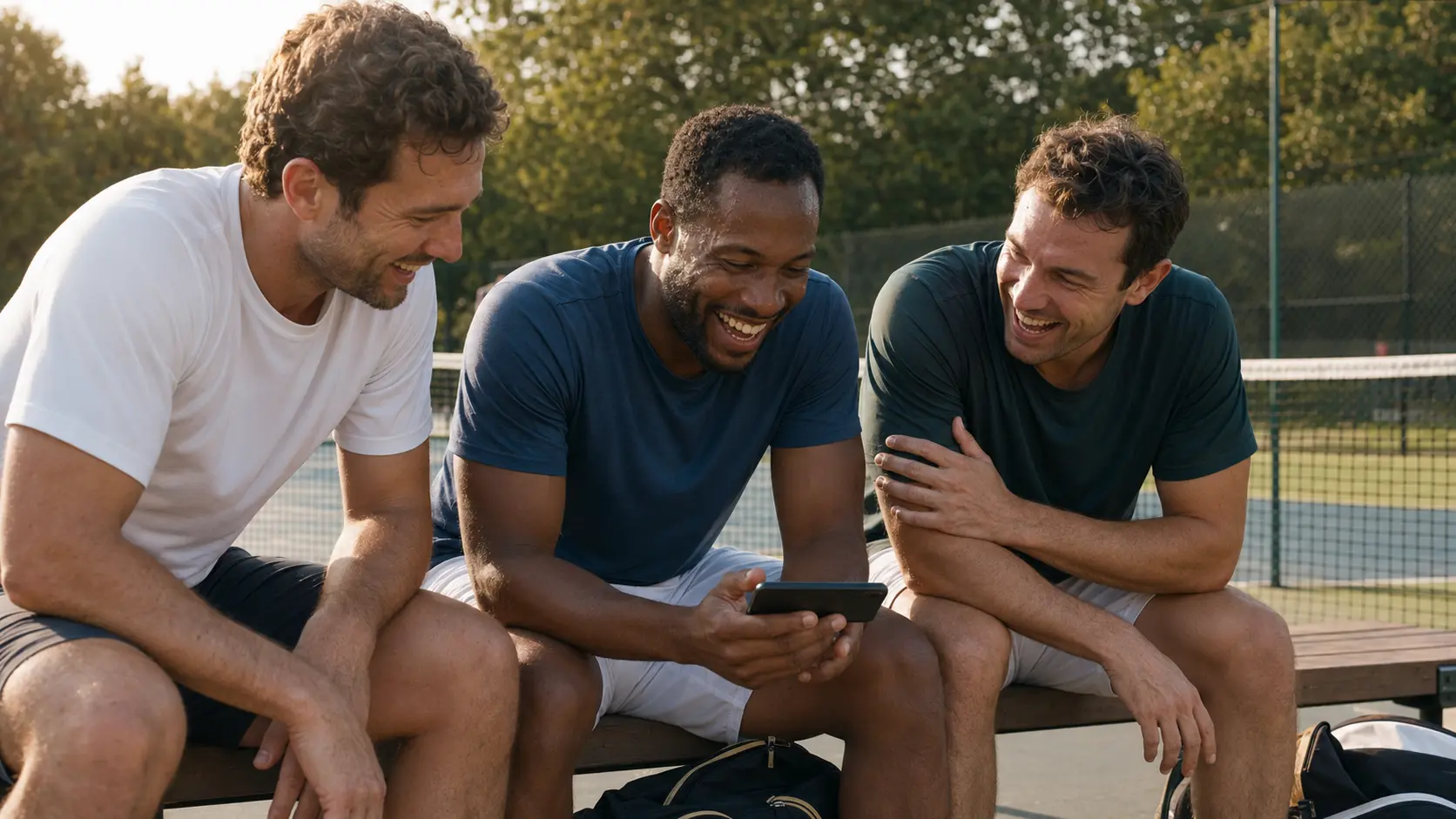
The interesting part is what people actually keep. It is almost never the best play. It is the funny one, the one where somebody got beaten, the one that settles an argument. The archive that amateur sport is quietly building is not a highlight reel. It is closer to an inside joke with a timestamp.
Why It Sticks
The instinct is to treat this as vanity, and the research does not support that reading. A 2025 mixed-methods study of 484 university athletes across twelve sports found sports media use was significantly and positively related to both participation behaviour and long-term commitment to the sport, with participation partly explaining the link.
The qualitative half is more revealing than the modelling. The themes the researchers pulled out include identity building, social support and motivation. One participant put it as: "Seeing sports content online makes me feel more connected to the culture of my sport. It reminds me why I fell in love with it in the first place." Another described media as a constant reminder of being an athlete, which sustained commitment when training got hard.
That is the mechanism worth naming. Clips are not really about the play. They are about staying attached to a thing you do on Tuesdays that has no league table, no crowd and no record of ever having happened.
The Part That Is Not Good
The same study recorded the other side plainly, and it would be dishonest to write this without it. Alongside motivation and identity, the researchers found performance pressure and anxiety driven by comparison. One participant said watching elite athletes constantly "can make you feel like you'll never measure up". Another named entertainment as a distraction that displaced actual practice time.
At amateur level the comparison is usually sideways rather than upward, and that has its own edge. Somebody at your level, in your league, posting something better than anything you did that week. Nobody in the group chat intends that. It happens anyway.
There is a second, quieter cost. Once a game is being filmed, a few people start playing for the clip. Trying the shot that would look good instead of the pass that was correct. It is a small distortion and it is real, and it is worth noticing in yourself rather than legislating against.
The reasonable position is that this is a normal trade rather than a problem to solve. A group chat that celebrates a terrible attempted rabona is doing something useful. The same chat, if it becomes a place where people perform, stops being useful very quickly.
The Etiquette Nobody Wrote Down
Every group that films has arrived at roughly the same unwritten rules, without discussing them.
- The subject of the joke gets a say. Clips of somebody falling over stay in the group unless they are happy for them to travel. This one is close to universal and almost never spoken aloud.
- Filming everything makes you the person filming. The one who always has the phone out ends up watching rather than playing, and the group notices before they do.
- Nobody wants your full match. Twenty minutes of footage posted to a group chat gets no replies. Ten seconds gets twelve.
- Consent gets fuzzy in public spaces. A shared court has other people on it, including people who did not agree to appear anywhere. Venues that record properly have thought about this; a phone pointed across two courts usually has not.
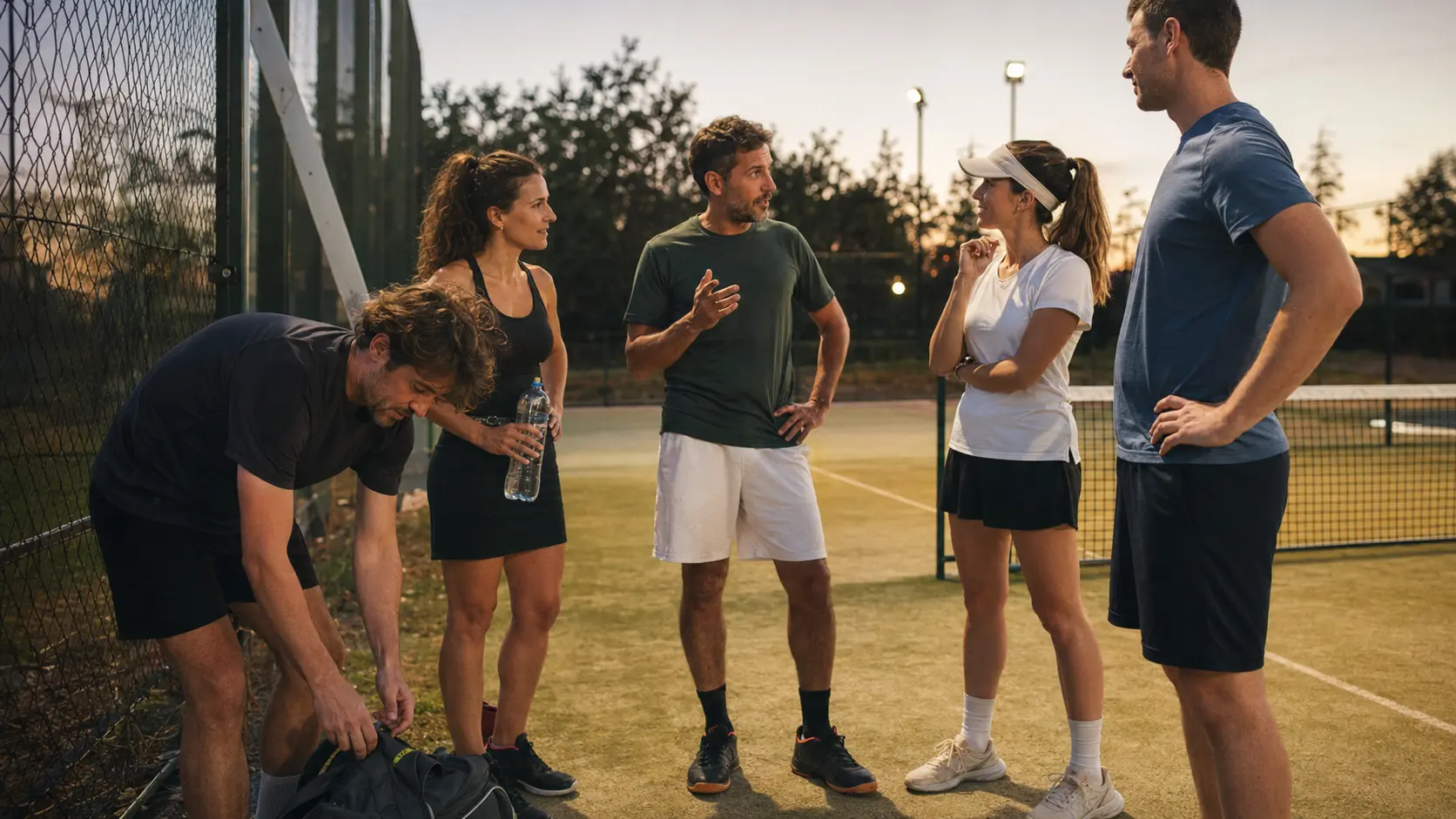
The last one deserves more attention than it gets. The line between filming your own game and filming other people's is thin on a busy court, and it moves the moment a clip leaves the group.
Where This Ends Up
The direction of travel is that filming stops being something a person does. Fixed cameras at venues remove the one real cost of the habit, which was never storage or editing but the fact that somebody had to sit out and hold a phone.
What that changes is not volume so much as who appears. When one person films, the archive is shaped by whatever they pointed at. When the venue records, the person who never gets filmed because they are always the one filming finally shows up in it.
The thing I would resist is the framing where this makes amateur sport more professional. It does not. Nobody in my Tuesday group is building an audience. The archive is for about eleven people, most of the clips are unflattering, and that is precisely why it works. If it ever starts looking like content, the group chat will have lost the thing that made it worth having.
If you are trying to make your own clips land better with those eleven people, the practical version of that is in what makes a good sports clip, and whether any of it improves how you actually play is covered in does filming improve your game.
Nobody Has to Sit Out to Film
The cost of this habit was always one person watching instead of playing. Courts with VISU Replay record continuously, so the clip is there after you press the button and everyone stays in the game.
FAQ: Amateur Sports Video Culture
Why do amateur players film games nobody will watch?
Because the audience was never strangers. Clips circulate inside a group of teammates who were there, and they function as shared memory and as a reason to stay attached to something with no league table or season. Research on sports media use links it to sustained commitment and to athlete identity, which is a better explanation than vanity.
Is posting clips of your own games bad for you?
It cuts both ways. The same 2025 study that found media use related to motivation and identity also recorded performance pressure and anxiety from comparison, with participants describing feeling they would never measure up. Clips shared inside a group that was present tend to be positive; clips posted for a wider audience invite the comparison that causes the harm.
Should I ask before sharing a clip of a teammate?
Inside the group, most people accept it as part of playing together. Outside it, ask. The near-universal unwritten rule is that clips of somebody looking bad stay in the chat unless that person is happy for them to travel, and ignoring it is the fastest way to make people stop wanting to be filmed.
Does filming change how people play?
Sometimes, and usually slightly. A few players start attempting the shot that would look good rather than the one that was correct. It is a small distortion rather than a crisis, and it is worth noticing in yourself. It tends to fade once filming becomes routine instead of an event.
What about other people on a shared court?
That is the genuine grey area. A phone pointed across a busy venue captures people who never agreed to appear anywhere, and it matters more once a clip leaves the group. Venues that record for players are expected to make that visible with signage; an individual filming widely across shared space usually has not thought about it at all.
Is this making amateur sport more like professional sport?
Not really, and the difference is worth protecting. Almost nobody filming a Tuesday game is building an audience, most of what gets kept is unflattering, and the archive exists for the handful of people who were there. The habit works because it is private and low-stakes, and it loses that as soon as it starts being made for strangers.