

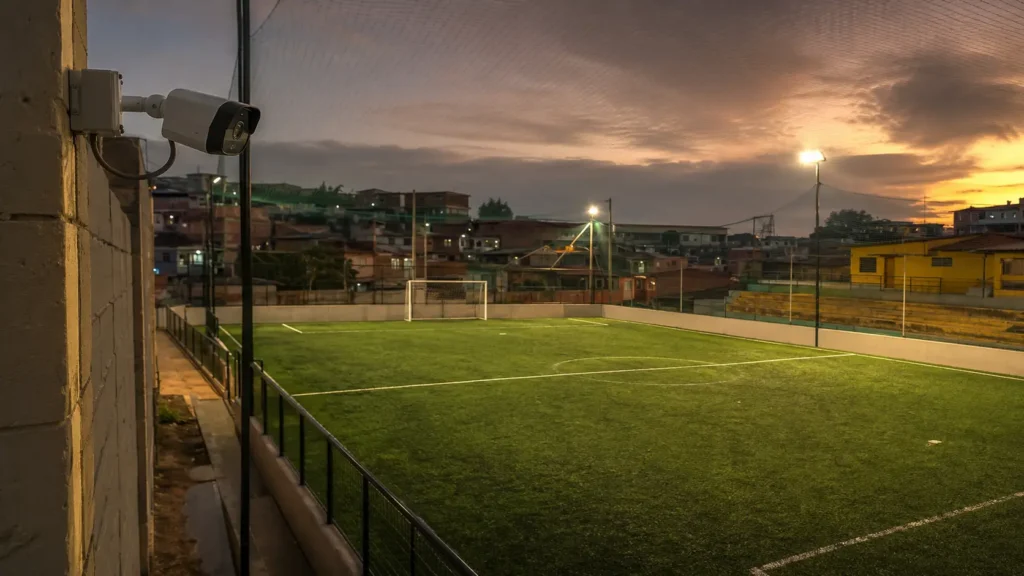
A growing number of courts now have a camera pointed at the play, so the goal you just scored becomes a clip without anyone leaving the game to film it. It is not everywhere yet, and pretending otherwise would waste your time. But it is spreading faster than most people realise, and knowing how to find a venue that has one, and what to expect when you get there, is worth the five minutes this takes to read.
This is the honest version. There is no single national directory of camera-equipped courts yet, so finding one is still partly detective work. Below is how to do that detective work efficiently, plus what actually happens at a venue that has a camera, so you know whether it is worth seeking out. The wider context on filming your own game, if you cannot find one, is in the amateur sports video guide.
See What a Clip Actually Looks Like
Before hunting for a venue, it helps to know what you are hunting for. VISU turns the moment that just happened into a short clip you can share straight away, at the courts that have it installed.
Why This Is Spreading Now
The technology to put a camera on a court has existed for years. What changed is that it stopped requiring a person. Early setups needed someone to operate them, which meant they only appeared at professional or semi-professional level. The current generation clips automatically, triggered by a button or by the moment itself, so a venue can offer it without staffing it.
The economics finally work for the venue. A camera that runs itself and gives every group a clip to share is cheap marketing that keeps producing. That is why the venues installing them are increasingly ordinary local courts rather than elite facilities, and whether replay cameras actually attract players looks at the honest version of that claim from the owner's side.
Players started expecting it. Once a few venues in an area have cameras, players notice their clips coming from those courts and start choosing accordingly. That pressure is what turns it from a novelty into something a venue feels it needs, which is why the spread tends to accelerate once it begins in a city.
How to Find a Court With a Camera
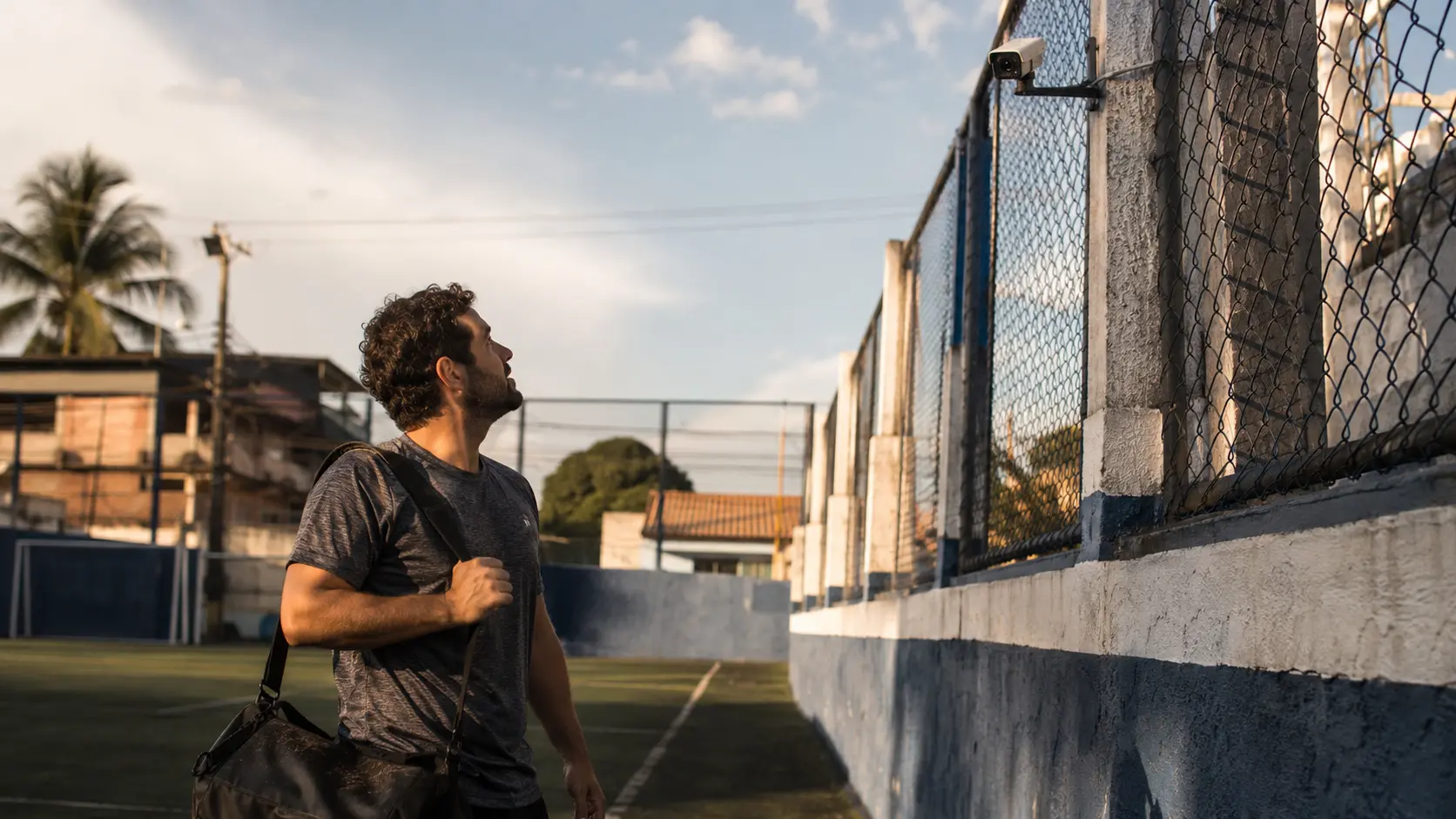
Since there is no complete directory yet, this is a matter of knowing where to look. In rough order of how well each method works.
Check the venue's own Instagram. This is the single best signal. A court with a camera posts clips, or its players do and tag it. If a venue's profile is full of match footage from inside the court, it has a camera. If it is all promotional graphics, it probably does not. This works because the whole point of the camera is that footage travels, so the footage is visible if it exists.
Ask in your local player groups. The WhatsApp or Telegram group your games are organised in already knows. Someone has played somewhere with a camera and will tell you where. This is faster than any search because the information is local and current.
Search with your city name. Combining the sport, your city and a term like replay or camera surfaces venues that have marketed the feature. It is hit or miss, because not every venue with a camera advertises it well, but it costs nothing to try.
Just ask the venue directly. The most reliable method and the most overlooked. Message the courts you already play at and ask whether they have or plan to install one. Venues that are considering it move faster when players ask, so the question itself helps.
Run a Court? Be the One They Find
The venues players seek out are the ones that show up when someone searches for a court with a camera. Putting your court on VISU makes it findable and gives every group a clip that carries your name.
For court and venue owners.
What to Ask Before You Book
Not all camera setups are the same, and a few questions save you from booking somewhere that films the game in a way that does not give you what you want.
Does it clip automatically or record the whole match? These are very different. A system that clips the moment you or a teammate triggers it gives you shareable footage instantly. A camera that records the whole match hands you an hour of video to sift through, which is closer to the old problem than the solution.
How do I get the clip afterwards? The good answer is that you share it or download it from an app. Ask how it works before you play, so you are not standing on the court afterwards trying to figure out where your goal went.
Is sharing free? On the better systems, sharing the clip costs nothing, because the venue wants it to travel. If a venue charges to even see your own clip, that is worth knowing before you book. On VISU, for example, sharing is free and only the full download runs through the app.
Does it cover the whole court? One camera covers an enclosed court well and a large pitch only partly. If you play on a full-size field, ask what it actually captures, since the answer might be one half rather than the whole thing. The reasoning behind that is in what a replay camera is.
What to Expect When You Get There
Assuming you found one, here is roughly how it goes, so there are no surprises.
You trigger the clip in the moment. A physical button at the court or a virtual one in the app captures the last stretch of play, which is how you get the goal without having recorded the buildup. You press it just after the thing you want happened, not before.
The clip is short by design. Around half a minute, cut to roughly the window people actually watch. That is deliberate, and it is why it works socially where an hour-long recording does not. What makes that length right is covered in how the replay button works.
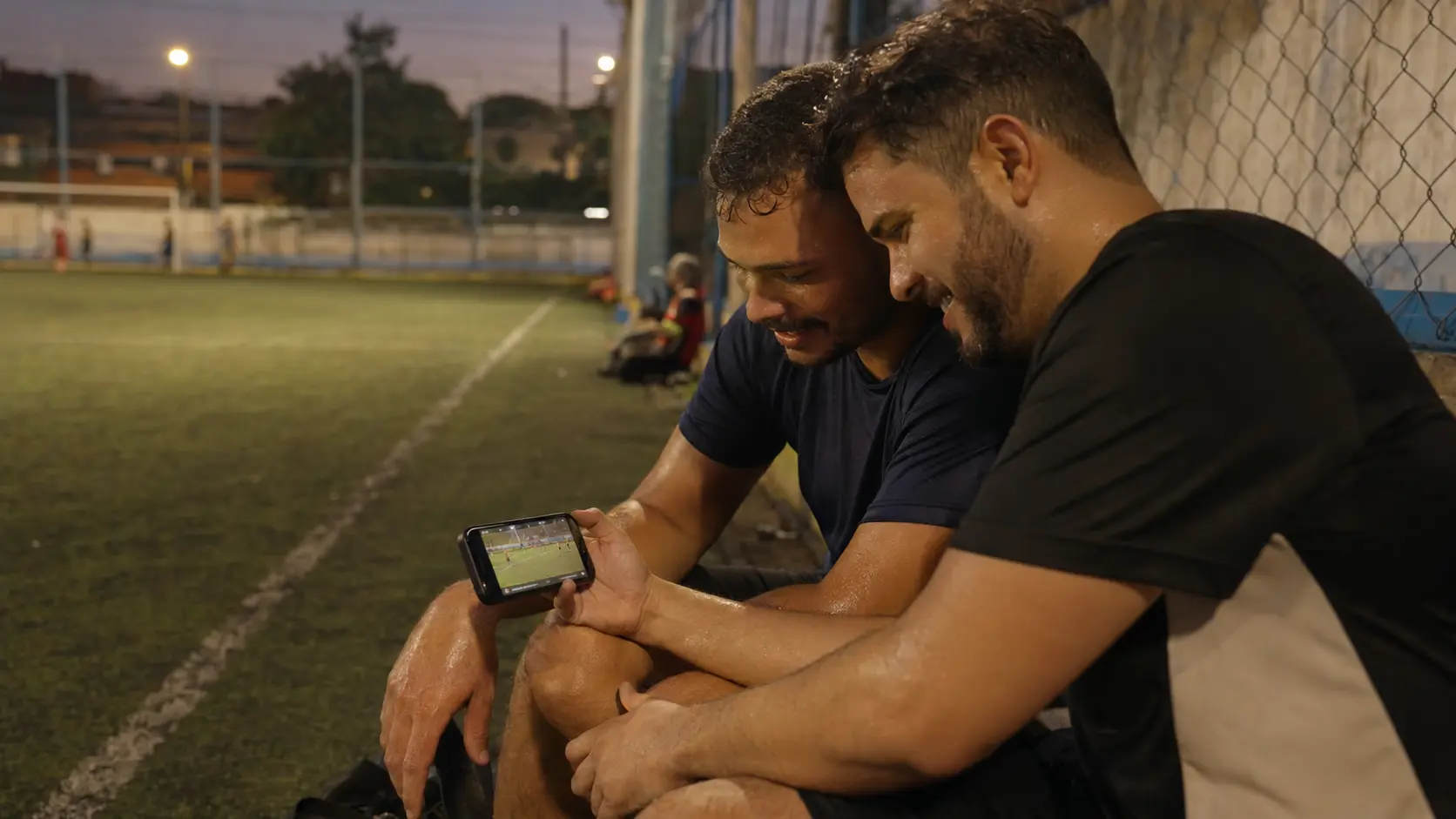
Sharing is instant, watching in full is app-based. On the setup VISU uses, you can share the moment straight away for free. Watching the whole clip and downloading it happens in the app, which is worth knowing so the web preview being short does not surprise you.
Everyone in the clip is in the clip. This is worth a thought before posting anywhere public. Within a team that knows each other it is usually fine. Beyond that, the normal courtesy applies, particularly where children are playing.
Which Sports Have It First
Cameras appear first where they work best, which is enclosed courts a single camera can cover completely.
Five-a-side and futsal lead. The pitch is small and walled, so one camera captures everything cleanly. This is where you are most likely to find a camera today, and where filming your own game is easiest if you cannot, covered in recording your futsal game.
Padel is close behind and arguably ideal. The court is enclosed by glass, the space is compact, and the sport photographs well. Padel venues have been quick to adopt, partly because the sport itself is growing fast.
Beach tennis and footvolley are arriving. Sand courts are compact and social, which fits the model, though bright light makes the footage trickier. If you play these, it is worth asking, since adoption is newer.
Full-size football is hardest and slowest. One camera cannot cover a full pitch, so these setups are more involved and less common. If you play eleven-a-side, temper expectations and consider that the best camera angle for soccer may still be your most reliable route for now.
Found One? This Is What Happens Next
At a court running VISU, you trigger the moment and the clip is ready before you have caught your breath. Sharing it costs nothing. Watching in full and downloading happens in the app.
FAQ: Courts With Video Replay
How do I find a court with a replay camera near me?
Start with the venue's own Instagram, since a court with a camera posts clips or its players tag it in match footage. Then ask in your local player groups, which usually already know. Searching your sport plus your city plus a term like replay can surface venues that market it, and asking the courts you already use directly is the most reliable method.
Is every court going to have this?
Not immediately, but it is spreading quickly because it now runs without staff and works as marketing for the venue. Enclosed courts like futsal and padel are getting it first, since one camera covers them completely. Full-size football pitches are slower because a single camera cannot cover the whole field.
How do I get my clip after the game?
On the common systems you trigger the moment with a button, then share or download the clip from an app. Sharing is typically free because the venue wants the footage to travel. Watching the full clip and downloading it is usually app-based, so it is worth asking how it works before you play rather than after.
Does the camera cover the whole match?
On an enclosed court, effectively yes, because one camera can see the entire space. On a large pitch, often only part of it, since no single camera reaches both ends of a full-size field usefully. If you play on a big pitch, ask specifically what the camera captures before assuming it covers everything.
What if no court near me has one yet?
Ask the venues you already play at whether they have or plan to install one. Player demand genuinely moves the decision, and venues considering it act faster when people request it. In the meantime, filming your own game well is entirely possible with a phone, which the wider guide covers.
Is it free to use the camera at a venue?
It depends on the setup, so ask. On the better systems, sharing your clip is free because the whole model relies on footage spreading. Some may charge for downloads or full-length video. Knowing the venue's specific arrangement before you book avoids any surprise about what costs what.