


A camera does not attract anybody by existing. What it does is turn a moment that used to disappear into something a player can hold and send, and sending it is what puts the court in front of people who were not there. That chain has steps, and each one can break. This page follows it from the play to the new booking, without claiming a number nobody has measured.
Worth saying plainly before anything else: there is no study here proving cameras fill courts. What follows is a mechanism, not a measurement.
See What Players Actually Share
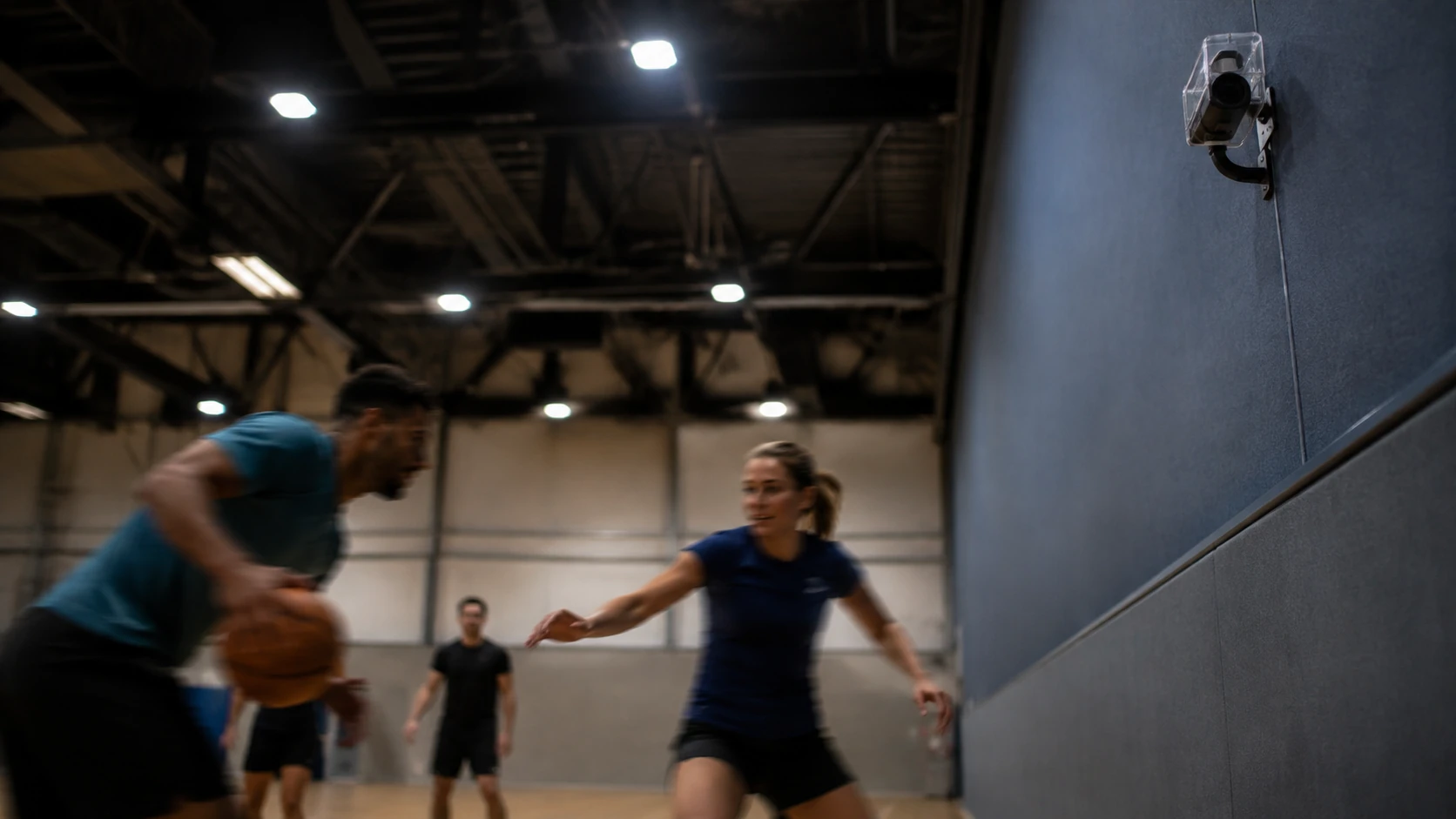
VISU Replay records continuously and cuts the clip after a player presses the button. No operator, no editing, nothing for your staff to run during a session.
The Chain, Step by Step
The mechanism is not "camera, therefore players". It is a sequence, and it only works when every link holds:
- A play happens that somebody wants to keep. This is rarer than it sounds: much of a session is unremarkable.
- It becomes a clip. Somebody presses the button, or the system produces it. Without this step the moment is gone in the usual way.
- The clip reaches a phone quickly enough that the game is still the topic of conversation.
- It gets sent to the group chat, a story, a feed. This is the step that leaves the court.
- Somebody outside the game sees it and asks where that was.
Steps one to three are about the venue's setup. Step four is entirely up to the player, and step five is up to strangers. That is why this is a mechanism and not a lever: a venue can make the chain possible, and cannot make it complete.
Why a Clip Travels and a Recommendation Does Not
Players have always recommended courts to each other. The difference a clip makes is not that it is more persuasive, but that sending it costs nothing and happens for a different reason.
Nobody opens a group chat to recommend a venue. They open it to show a goal. The recommendation rides along, unprompted, attached to something the sender wanted to share for their own reasons. That is a much lower bar than asking a satisfied customer to tell their friends.
It also arrives differently. A recommendation is a claim about a place. A clip is evidence about a game, and the place is context. The people who see it are not evaluating a venue; they are watching a friend play, which is a thing they already wanted to do.
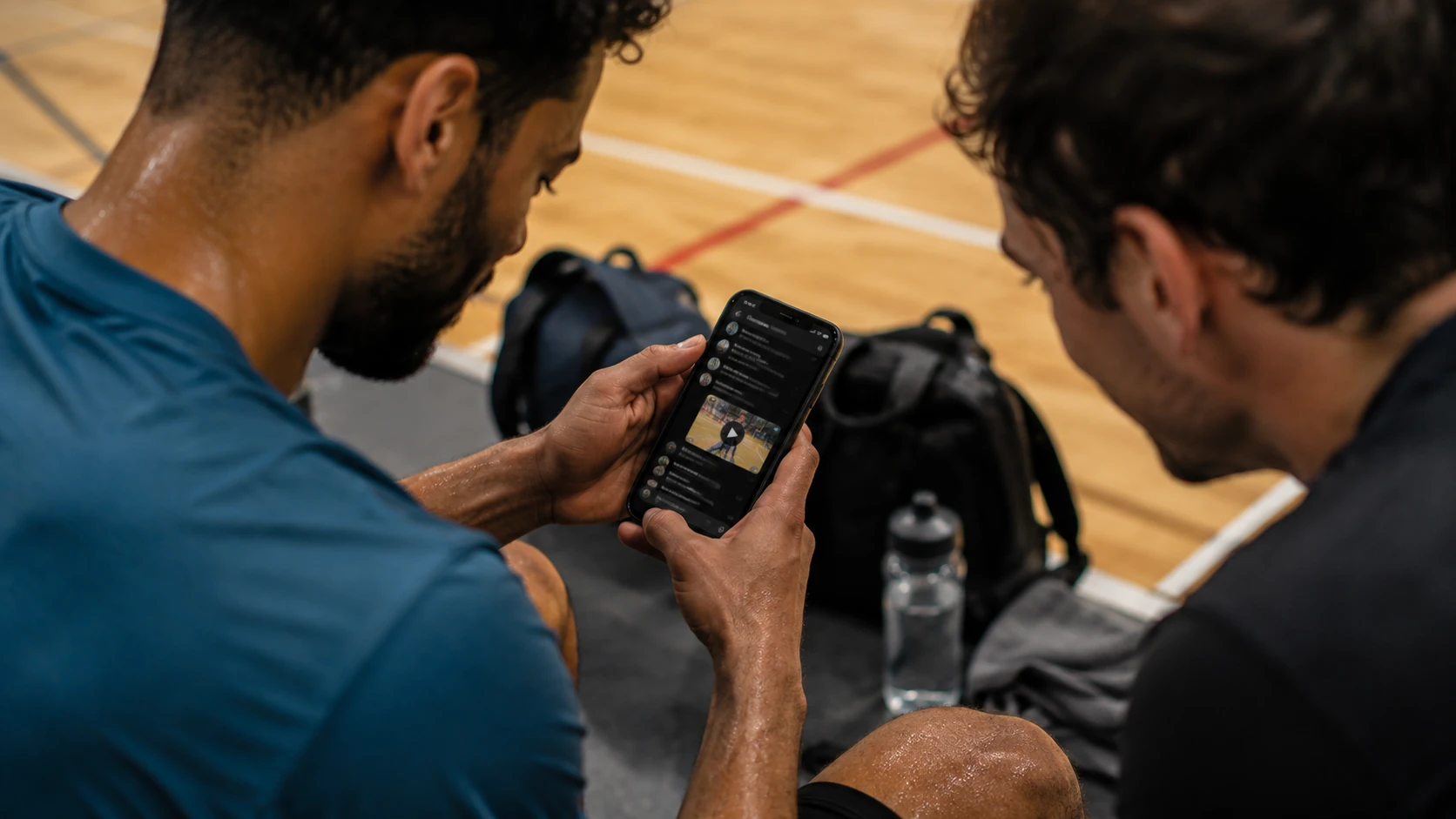
The format matters here, and it is the one part of this the venue does not control. A clip that is too long does not get watched to the end, and one that never leaves the court's list never enters the chain at all.
The Court Gets Named
The step people underestimate is the question that follows the clip: where do you play?
A clip creates a specific opening for the venue's name that ordinary word of mouth does not. Someone watching a good point has a concrete reason to ask, and the answer is a place rather than an opinion. If the clip carries the court's identity with it, the question is answered before it is asked.
This is the part of the chain a venue can actually influence, and it is mostly about not losing the association: a clip that circulates with no indication of where it came from still reaches people, but arrives anonymous. What travels is the play; whether the court travels with it is a choice made when the system is set up.
Let the Court Travel With the Clip
Clips leave your venue carrying where they were filmed, so the play and the court arrive together instead of the play arriving alone.
Who Actually Brings People
Not every player is a source of new players, and the difference is not enthusiasm. It is position.
- The organizer. Every recurring game has one person who books the court and chases people to confirm. When that person has clips, they are not sending a reminder, they are sending a reason. The organizer is especially important in this chain.
- The player with a group outside this game. Somebody who plays in two different circles carries the clip from one to the other, which is how a court reaches a set of people with no other connection to it.
- The one who was good that day. A clip of your own best moment may have a stronger reason to be shared beyond the game than a clip of somebody else's.
The practical consequence is that the chain does not scale with the number of players on court. It scales with how many of them have a reason and an audience, which is why a venue can have busy courts and very few clips leaving them.
Where the Chain Breaks
When the chain does not reach step five, the failure can happen earlier than the player's decision to share, and it is usually duller than "players did not like it":
- Nobody knows the camera is there. One obvious break. A system nobody was told about produces no clips, and the venue concludes that players are not interested.
- The clip arrives too late. The conversation about a Tuesday game is over by Wednesday. A clip that shows up two days later has missed the window in which anybody would have sent it.
- Getting it takes too many steps. Every additional tap adds friction, especially for casual players, who are exactly the ones with audiences outside the game.
- The image is not worth sending. Nobody shares a dark blur. Covered courts are a harder lighting problem than they look, and a clip that is technically produced but visually poor breaks the chain as effectively as no clip at all.
- The clip is anonymous. It circulates, it gets watched, and nobody learns where it happened.
None of these are player behavior problems. They are all upstream of the player, which is the useful part: they are the failures a venue can see and fix.
What This Does Not Prove
Everything above describes how a camera can participate in bringing new players to a court. It does not establish that it does, or by how much, and the difference matters if you are deciding anything expensive.
What can be said with confidence is narrower and still useful: a camera creates a shareable artifact where none existed, that artifact travels through channels players already use, and it carries the court's name if the setup lets it. Whether that turns into bookings depends on the venue, the sport, the local market and how many organizers you have among your regulars.
If you are weighing this as an investment rather than a mechanism, that is a different question with different evidence, and the business case is worked through separately.
Start With One Court
Most venues begin on a single court and watch what players do with the clips before deciding anything wider.
FAQ: Replay Cameras and Attracting Players
Do replay cameras attract more players?
They can create a mechanism for it, which is not the same as a guarantee. A camera turns a moment into a clip, players send clips to people who were not at the game, and those people sometimes ask where it was played. Every link in that chain can break, and there is no measurement here proving how often it completes.
How does a clip actually reach someone who has never been to the court?
Through channels players already use: the group chat for the recurring game, a story, a feed. The clip is not sent as a recommendation, it is sent because somebody wanted to show a good play. The venue rides along with something the sender had their own reason to share.
Which players are most likely to bring new people?
The organizer of a recurring game, because they already message everyone. Players who belong to more than one circle, because they carry the clip between groups. And whoever had the best moment that day, because people share their own highlights more readily than other people's.
Why do some venues install cameras and see nothing happen?
One possibility is that the chain broke before the player ever decided anything. Nobody knowing the camera was there is an obvious candidate. Others are clips arriving after the conversation has moved on, too many steps between the play and the phone, or footage too dark to be worth sending.
Does the clip need to identify the court?
It helps considerably. A clip that circulates without any indication of where it came from still gets watched, but it arrives anonymous, and the person watching has no easy way to act on it. Carrying the court's identity is decided when the system is set up, not by the player sending it.
Is this the same as saying cameras are worth the investment?
No. This page describes a mechanism, not a return. Whether cameras pay for themselves depends on cost, court count, local market and how your venue operates, which is a separate question with separate evidence.