

Search how many cameras it takes to record a football pitch and you get answers built for stadiums: twenty, thirty, a production truck outside. None of that helps if you run a five-a-side pitch, a futsal court or a beach court and want players to leave with clips. The honest answer is between one and four, and which number depends on the shape of the space more than on its size. If you are still weighing the decision itself, start with cameras as a venue differentiator.
The short version: cover the goal mouths and you cover most of what players want. Everything beyond that is refinement, not necessity.
See a Recording Setup That Fits Your Court
VISU Replay records continuously and cuts the clip when a player presses the button. No operator, no editing, no staff time during a session.
For court and venue owners.
Why Stadium Answers Mislead You
Broadcast camera counts solve a different problem. A televised match needs continuous narrative coverage: replays from several angles, close-ups of faces, wide shots that show shape and formation. That justifies twenty cameras and a crew.
An amateur venue needs one thing. When something happens, a player wants that moment on their phone. Nobody is cutting between angles, and nobody is watching the ninety minutes.
That difference collapses the requirement dramatically. You are not covering a match, you are covering the places where things worth keeping tend to happen. On most amateur spaces, that is a much smaller area than the pitch itself. For a soccer court specifically, the soccer camera setup page walks through mounting and coverage for that shape.
The practical consequence: ask what you want to capture before asking how many cameras. Goals and points are a narrow target. Full tactical coverage is a wide one, and costs accordingly.
Five-a-Side and Small-Sided Pitches
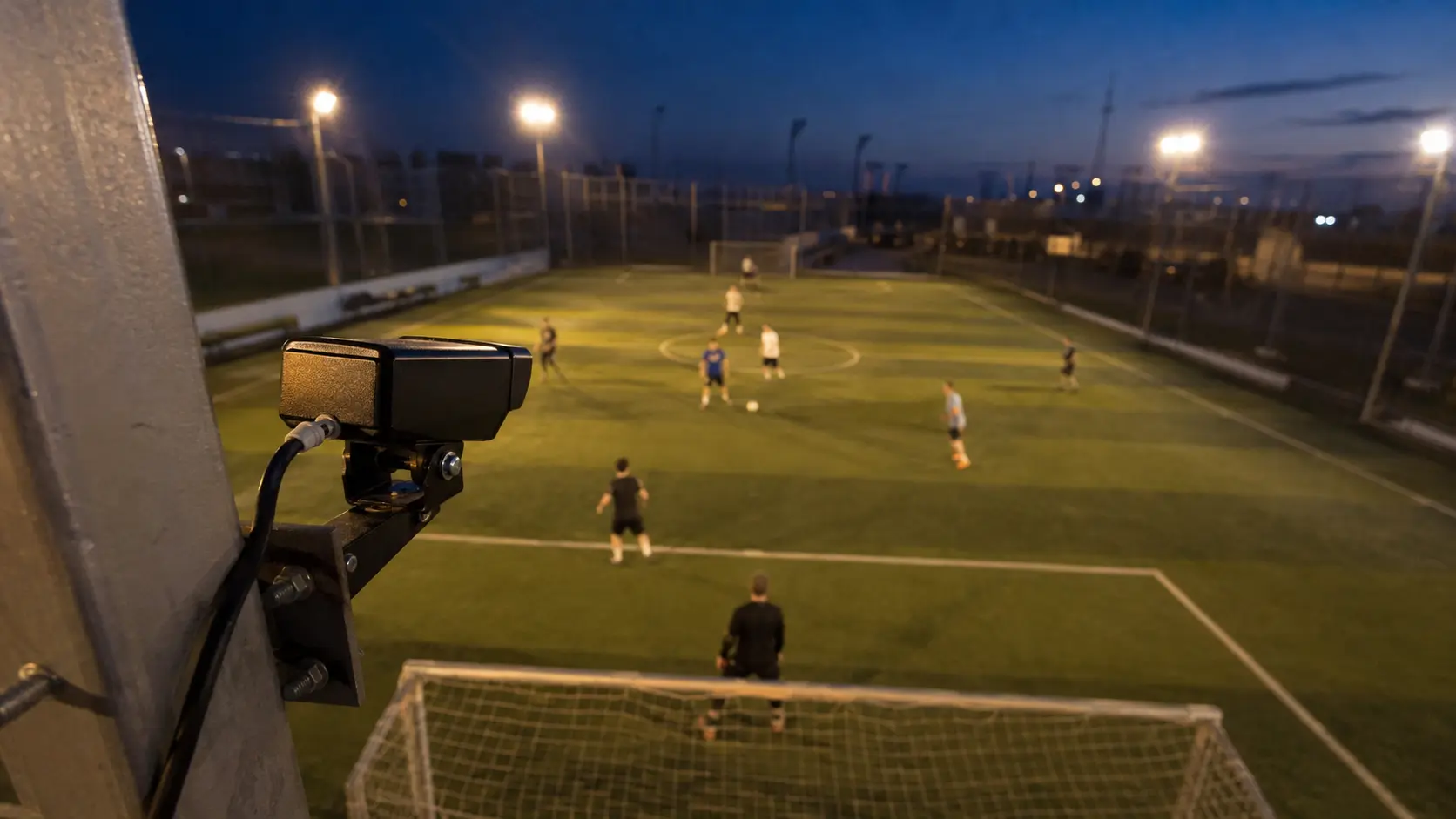
Two cameras, one behind each goal, mounted high. This is the standard configuration and it covers most of what matters.
The reasoning is simple: goals happen at goals. A camera positioned above and behind the goal line sees the buildup approaching it, the finish, and the reaction. Two of them, one at each end, and no goal at either end goes unrecorded.
Height matters more than resolution here. A camera mounted at three to four metres looks down into the box and keeps players separated in frame. The same camera at head height gets bodies overlapping and loses the ball behind them constantly.
When one camera is enough: a narrow pitch where a single high corner position sees both goals. Test this before assuming it, since a corner view flattens the far end and small figures at distance are what most disappoints owners after installation.
When you want a third: a midline camera adds the wide view for anything that is not a goal. This is a refinement, and it is the first thing to add once the two-camera setup is proven, not part of the initial install.
Not Sure What Your Layout Needs?
Coverage depends on the shape of your space, not just its size. Talk it through before buying hardware.
For court and venue owners.
Futsal and Indoor Courts
Two cameras behind the goals, same as five-a-side, with lighting as the deciding variable.
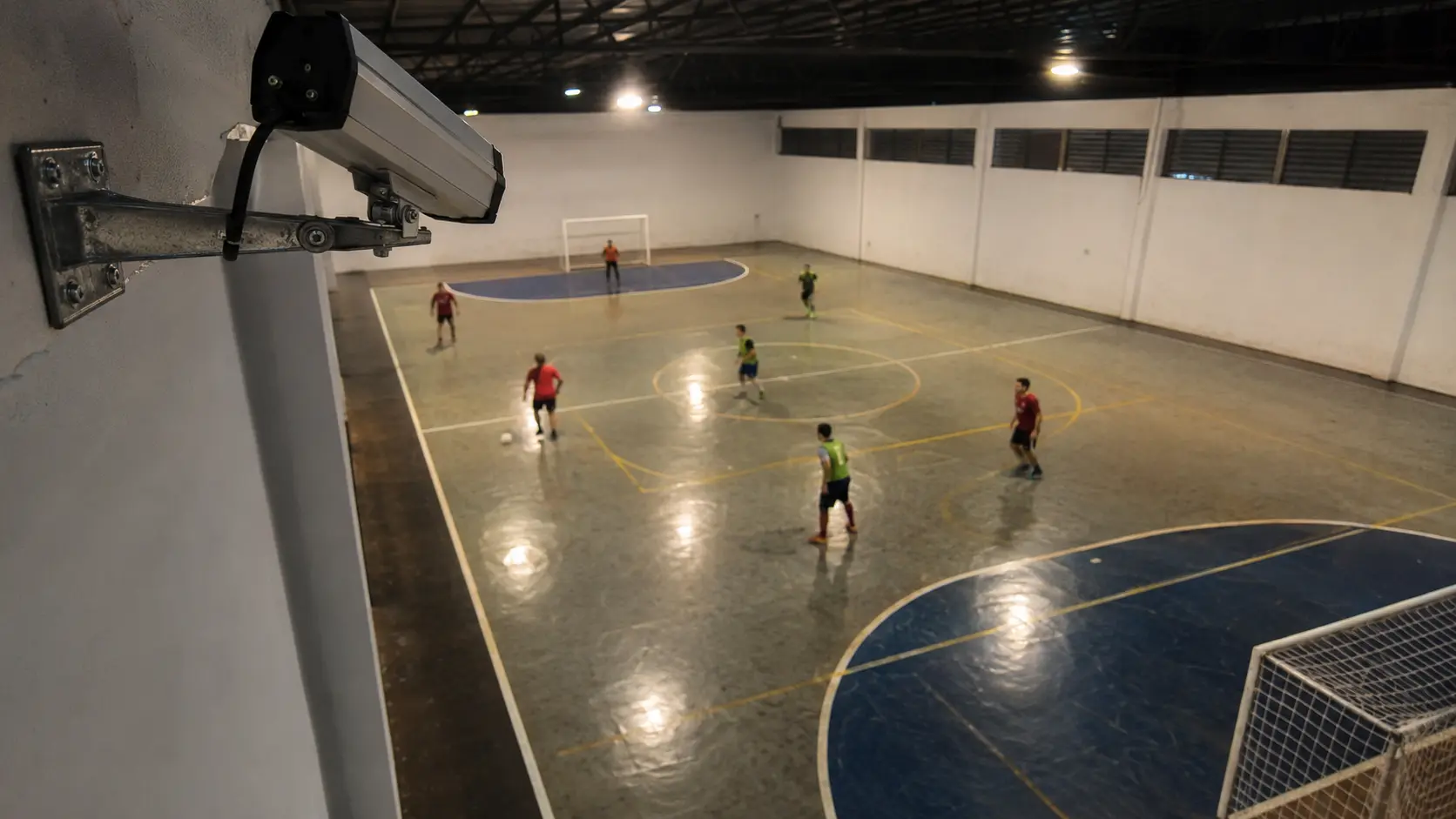
Indoor play is faster and more contained, which helps: less ground to cover and the action concentrates near the goals. The complication is light. Indoor lighting is usually dimmer and less even than it looks to the eye, and cameras are far less forgiving than eyes about that difference.
Two practical points that decide image quality indoors:
Frame rate over resolution. A sharper still image is worth less than smooth motion when a ball is crossing the frame. In low light, cameras drop frame rate to compensate, and that is exactly when fast action turns to blur.
Mounting position against the light, not with it. A camera pointing at a bright window or an open doorway will silhouette every player in front of it. Check what is behind each goal at the time of day the court is busiest, not at the time you happen to be installing.
Beach Football and Beach Volleyball
Two cameras for beach football, one or two for beach volleyball.
Beach volleyball courts are small and the action is vertical and concentrated. A single camera on the long side, mounted high, sees both halves of the court and the play at the net, which is where the moments people want actually happen.
Beach football is wider and returns to the goal-based logic: one camera behind each goal.
Sand courts bring two problems the indoor ones do not. There is often no permanent structure to mount to, so the position depends on posts or a wall that may not sit where the ideal angle is. And outdoor light swings from harsh midday glare to nothing at all after sunset, which means the camera has to handle a far wider range than an indoor unit ever faces.
If evening play is a meaningful part of your bookings, that decides your camera specification more than the sport does.
Padel and Enclosed Courts
One camera per court, mounted high behind the back glass.
Padel is the simplest case in this whole article, and the enclosure is why. The court is small, fully bounded, and the play stays inside a predictable box. A single camera at the back, high enough to look down over the glass, sees the entire court and both pairs.
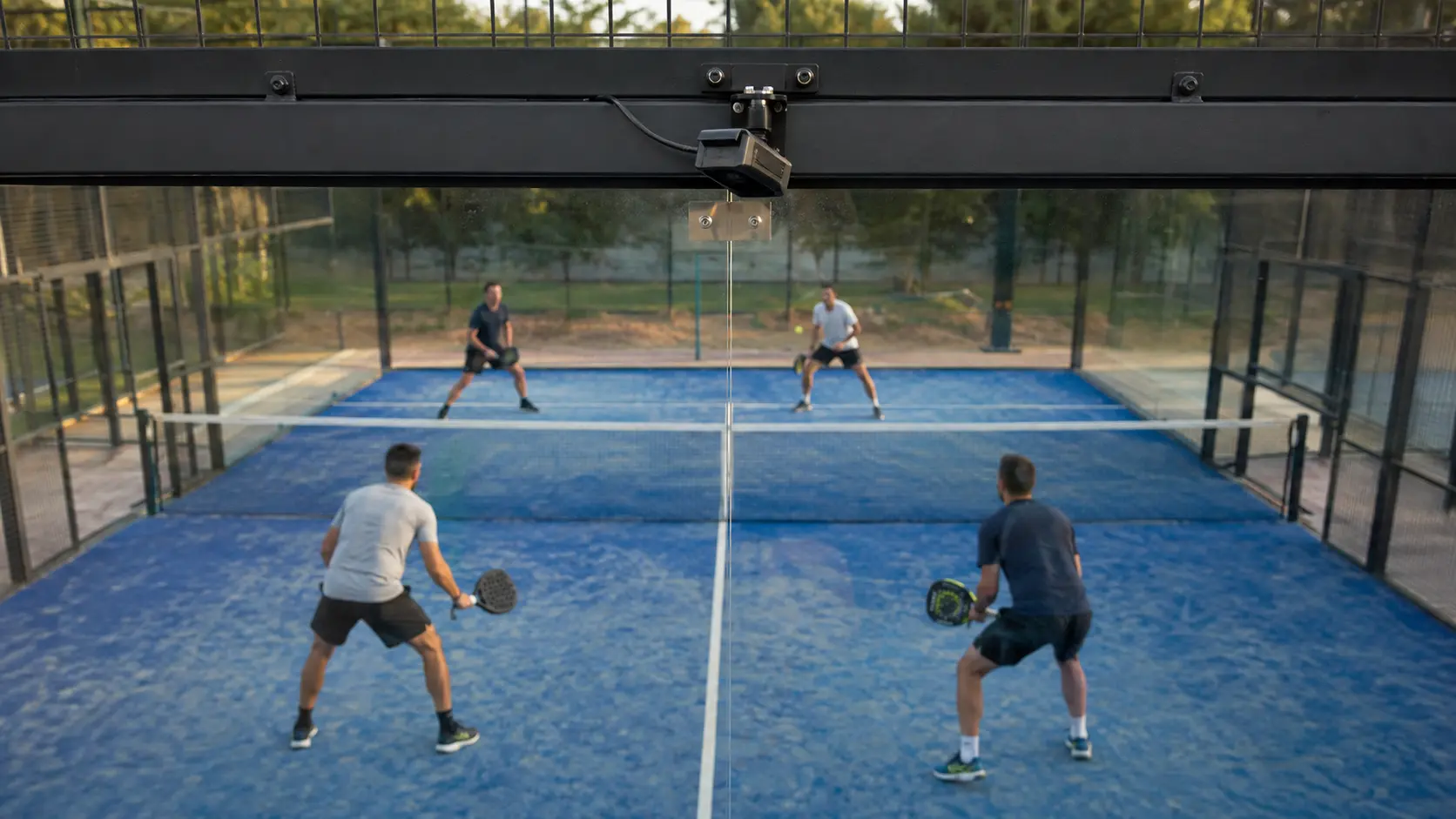
The rule that matters here is per court, not per venue. A four-court padel club needs four cameras, because play on court three is invisible from court one. This is the point owners most often miss when budgeting, and it is also why starting with your busiest court rather than covering everything at once is usually the better first move.
The glass creates its own issue: reflections. A camera positioned to shoot through or over glass will catch light bouncing off it, and the fix is angle and height rather than a better camera.
How to Decide for Your Space
Three questions, in order.
What do you want players to leave with? If the answer is goals and points, cover the goal mouths and stop. If it is full match footage for teams reviewing play, that is a different and more expensive system, and worth being honest about which one you are buying.
Where can you actually mount? The ideal position is often unavailable. Existing structure, power access and cable runs constrain this more than the theory does, and a well-placed camera on an available mount beats a perfect angle you cannot reach.
When is your court busiest? If that is evening, lighting decides your specification. A camera that performs well at two in the afternoon and poorly at eight at night is the wrong camera for a venue whose peak is after work.
Start with one court, usually the busiest. A season of real footage tells you more about what your players want than any specification does, and expanding afterwards costs less than replacing a full installation you sized wrong. Once the count is settled, the next decision is commercial: buy, subscribe or loan-for-use.
Start With One Court
Prove it where play is densest, then expand. VISU Replay is priced per court for that reason.
For court and venue owners.
FAQ: Camera Coverage for Sports Venues
How many cameras for a five-a-side pitch?
Two, one behind each goal, mounted three to four metres high. That covers the goals, which is where the moments players ask for happen. A third camera at the midline adds a wide view for everything else, but treat it as a refinement to add after the first two are proven rather than part of the initial installation.
Can one camera cover a whole court?
On a padel court or a beach volleyball court, yes, because the space is small and enclosed. On a five-a-side or futsal pitch it depends on the shape, and a corner position that sees both goals will flatten the far end so players appear small and hard to identify. Test the actual view before committing, since this is the most common source of disappointment after installation.
Do I need a camera on every padel court?
Yes. Coverage is per court rather than per venue, because play on one court is not visible from another. A four-court club needs four cameras, and this is the point most often missed when budgeting. Starting with your busiest court and expanding after a season of real usage is usually cheaper than fitting everything at once.
What resolution do I need?
Frame rate matters more than resolution for sport, because smooth motion beats a sharper still when the ball is crossing frame. A 2MP camera at a high frame rate produces more usable clips than a 4MP camera that drops frames in low light. Resolution becomes the deciding factor only when you want to crop into the image afterwards.
Does it work at night?
It depends entirely on your lighting rather than on the camera specification alone. Cameras compensate for low light by lowering frame rate, which is precisely what ruins fast action, so a venue whose peak hours are after dark should treat lighting as part of the camera decision. Check the image at your busiest evening hour before signing off on an installation.
How high should cameras be mounted?
Three to four metres for most amateur venues, high enough to look down into the action and keep players separated in frame. At head height bodies overlap and the ball disappears behind them constantly. Higher than four metres starts making players small, so the useful range is narrower than it first appears.