

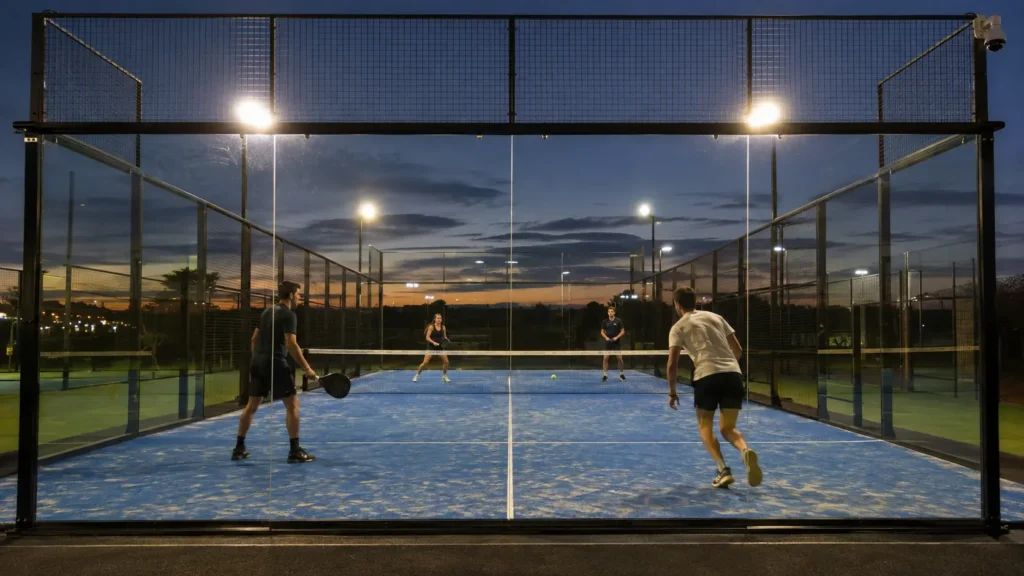
Most courts compete on the two things they can change fastest: price and booking convenience. Both are easy for the venue down the road to copy by Friday. Cameras are one of the few upgrades that is genuinely hard to match on short notice, and the reason has less to do with the hardware than with what players walk away holding. This is the commercial case for recording, what it realistically costs you in attention, and where it does not pay off. If you are earlier in the question, start with growing a sports venue.
The short version: a camera does not fill an empty Tuesday by itself. What it does is give every player who books a reason to talk about your court somewhere you are not paying for.
See What a Recording Court Looks Like
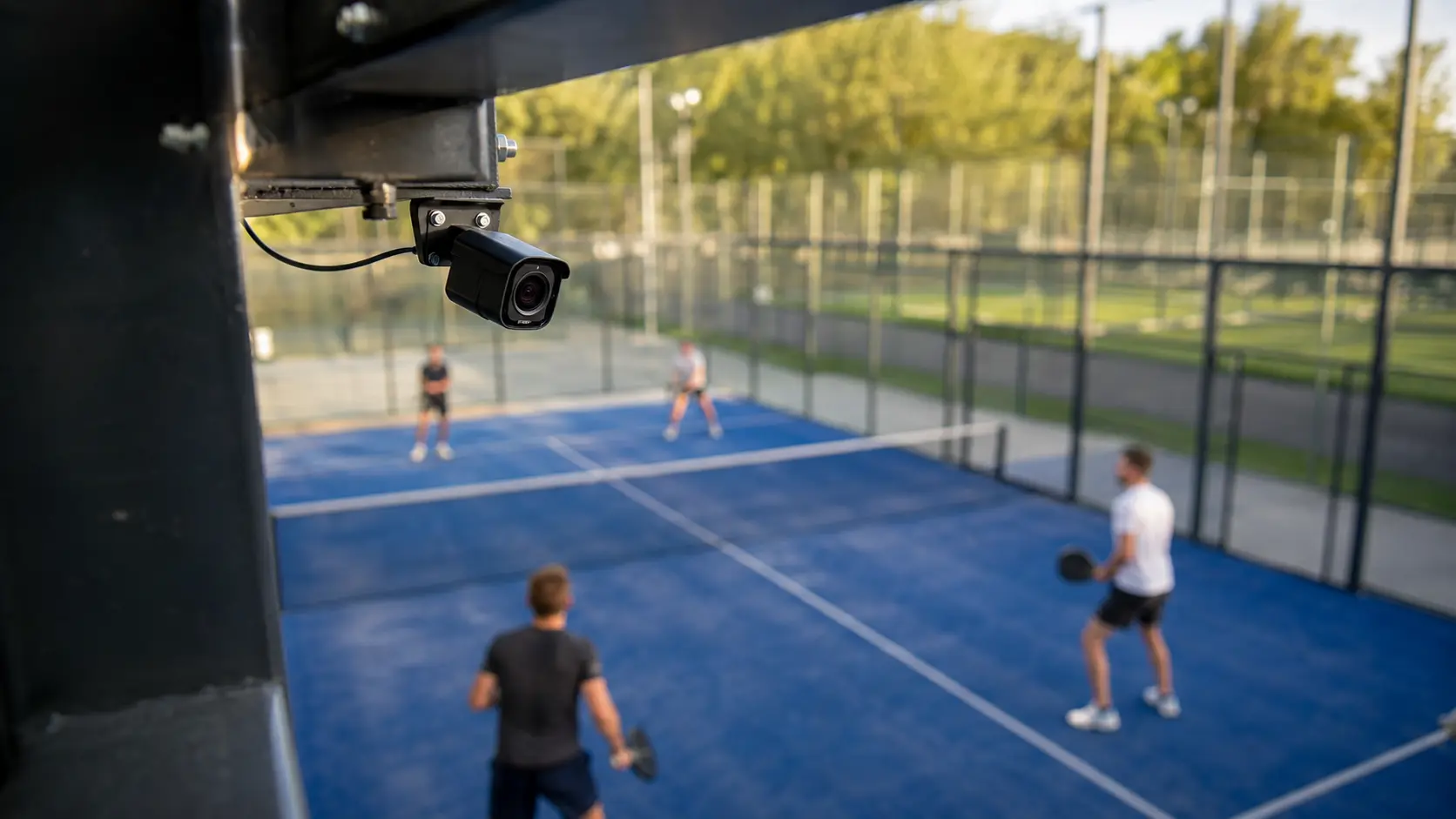
VISU Replay records continuously and cuts the clip after a player presses the button. No operator, no editing, nothing for your staff to run during a session.
For court and venue owners.
Why This One Is Hard to Copy
Think about what a competitor can neutralise quickly. A price cut takes an afternoon. A better booking flow takes a subscription. New nets, better lighting and a cleaner changing room are all a purchase decision. Cameras are the odd one out: the same unit can arrive as a purchase, a subscription or a loan, and which contract fits your court shifts the risk more than the price.
Cameras sit in a different category, and not because the equipment is exotic. It is because the value compounds over time: every week your courts record, players accumulate clips that exist only because they played at your venue. A competitor who installs cameras next month starts that archive at zero.
The demand side supports the timing. Playtomic's 2026 global report counts 58,300 padel courts and close to 20,000 clubs worldwide, six times the 2016 figure, with 7,898 new courts built during 2025 alone. The International Padel Federation puts it higher still, above 70,000 courts. In a market adding supply that fast, price competition gets brutal and differentiation stops being optional.
What It Actually Changes
Three effects, in order of how reliably they show up.
Your venue appears in content you did not make. Players share clips into group chats and social feeds, and those clips came from your court. On a soccer court that starts with the soccer camera setup behind the goals. This is the effect venue owners underestimate, because it does not appear in any dashboard. It is also why the clip needs to be easy to get: footage stuck behind a request form never travels.
Bookings acquire a reason beyond the slot. A group choosing between two courts at similar prices has, for the first time, a non-price tiebreaker. This matters most for the bookings you actually want: recurring groups, small tournaments, birthday and corporate sessions where somebody wants a record of it.
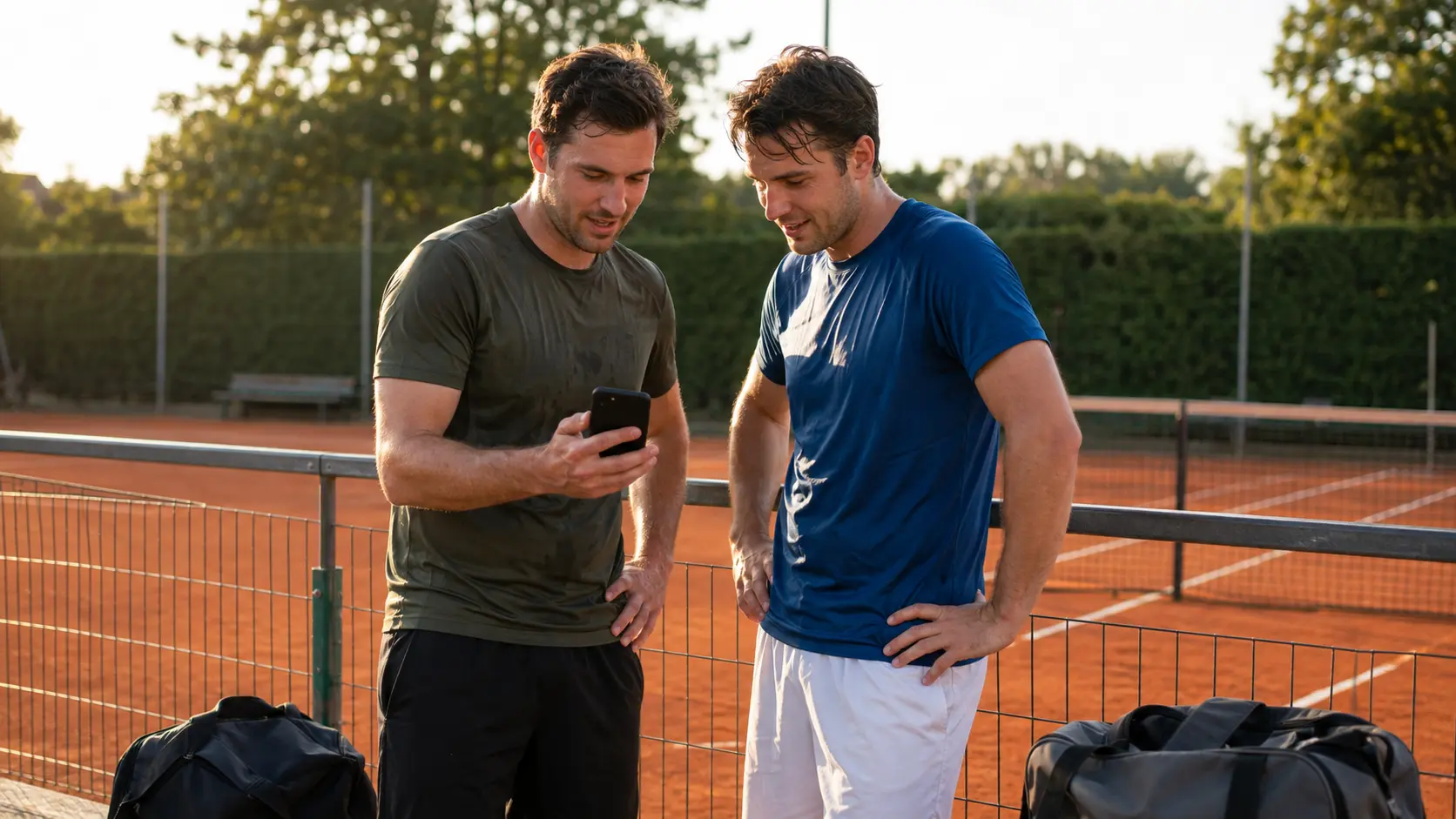
Players stop having to nominate a photographer. The habit of filming amateur sport is widespread and its one real cost is that somebody sits out to hold a phone. Removing that cost is a small thing that regulars notice immediately, and it is covered from the player's side in amateur athlete video culture.
What it does not do, and it is worth being blunt: it will not fill a slot nobody wanted. A court that is empty at 2pm on Tuesday because there is no demand at 2pm on Tuesday stays empty with a camera on it.
Built for Venues, Not Broadcast
VISU Replay is designed around the player pressing a button after the play, which is what produces clips worth sharing. Nothing for your team to operate during a session.
For court and venue owners.
Sizing It Honestly
The case for cameras falls apart when it is sold as a booking machine. Sized correctly it is a retention play, and the numbers below are the ones worth watching.
Some framing that keeps expectations sane:
- Coverage is per court, not per venue. Most venues start with one or two and expand. Starting with your busiest court gets the archive building fastest.
- The cost that surprises people is not hardware. It is storage, retention windows and whoever answers when a player says the clip did not save. Ask about that before the camera price.
- Continuous recording is the whole point. A system where someone has to start the recording has moved the problem rather than solved it, because nobody knows the good play is coming.
- Adoption is gradual. The first month is regulars trying it. The compounding effect needs a season, not a fortnight.
When It Is Not Worth It
Cases where the honest answer is to spend the money elsewhere.
- Your courts are already booked solid. If you turn people away weekly, differentiation is not your constraint. Capacity is.
- Your problem is the surface, lighting or access. Cameras do not compensate for a court people dislike playing on. Fix the reason they leave first.
- You cannot commit to the clip actually reaching players. A camera whose footage nobody can retrieve is worse than no camera, because it creates an expectation you then break.
- Your audience is almost entirely casual walk-ins. The compounding effect runs on regulars who accumulate clips. Pure drop-in traffic never builds that.
There is also a real obligation attached. Recording a shared space involves people who did not individually agree to appear, so signage and a clear policy are part of the installation rather than an afterthought. Venues that handle this well tend to be the same ones that make clips easy to get, because both come from having thought the thing through.
Doing It Properly
What separates an installation that pays for itself from one that becomes a line item nobody defends.
- Mount high and cover the full playing area. Corner or above the back wall. A camera at eye level near the door is a security camera, and players can tell the difference immediately.
- Give players a visible way to trigger it. A button, a QR code, an app. If there is no obvious way to mark a moment, the system is not for players and they will stop trying.
- Make retrieval trivial. Every step between the play and the clip on their phone loses people. This single factor decides whether the archive effect happens at all.
- Tell people it exists. Put it in the booking page, the listing, the sign at the entrance. Half the venues that install cameras never mention it anywhere a prospective player would look, which is why finding courts that record is still awkward for players.
- Start with the busiest court and measure retention. One court, one season, then decide about the rest. What those clips carry when they leave is a separate decision worth making on purpose: branding your venue in every clip.
Talk to Us About Your Court
If you run a venue and want to know what recording would look like on your busiest court, that is the conversation to have before buying any hardware.
For court and venue owners.
FAQ: Cameras as a Venue Differentiator
Do cameras actually bring in more bookings?
Indirectly and slowly. The reliable effect is retention of existing regulars and word of mouth through clips players share, rather than a measurable jump in new bookings. Judge it on whether your recurring groups renew, and treat new-customer acquisition as a slower second-order effect that is hard to attribute.
How many courts should I start with?
One, usually your busiest. Coverage is per court rather than per venue, and starting where play is densest builds the clip archive fastest, which is the part competitors cannot copy quickly. Expand after a season of data rather than fitting everything at once. For the count itself, our guide to how many cameras a sports venue needs walks through the variables.
What is the real cost beyond the hardware?
Storage, how long footage is retained, and support when a player says their clip did not save. Those recurring items decide whether the system stays useful, and they are worth asking about before the camera price. A short retention window in particular frustrates players more than most owners expect.
Do I need consent from everyone on court?
You need to make the recording visible and handle the footage responsibly, which in practice means clear signage and a stated policy rather than individual sign-off for every player. A shared court includes people who did not personally agree to appear, so treat this as part of the installation and check the rules that apply where you operate.
Will players actually use it?
Regulars adopt it fastest, and adoption is gradual rather than immediate. The single factor that decides usage is how easy the clip is to retrieve. If getting the video takes more than a moment on their phone, players try it once and stop, and the differentiation never materialises.
Is this worth it if my courts are already full?
Probably not, at least not yet. If you turn people away every week your constraint is capacity, not differentiation, and the money is better spent there. Cameras earn their place when you are competing for bookings against nearby venues at similar prices.