

A full Tuesday night and a dead Thursday afternoon are not the same problem, and a lower price fixes neither. Peak hours may already attract bookings. The hours around them need a different audience: people who are free when your evening crowd is at work, formats that give them a reason to come every week, and partners who might book blocks in hours that are hard to sell one at a time.
This is the distribution problem from how to fill and retain players at your court: players come, but only at peak. It applies to a beach tennis complex, a padel club, a futsal court, a five-a-side pitch or a multi-sport space. Treat it as a map, not a manual.
Let Every Session Leave With Your Court in It
A camera on the court gives the players of a quiet Thursday the same thing your Tuesday regulars get: a clip of their own game, with your venue in it, to show whoever they play with next.
For court and venue owners.
A Dead Slot Is a Distribution Problem
You can probably name it without opening the booking sheet. Tuesday at seven is full every week. Thursday at three has not had a booking in a long time. Same court, same price, same lights. Nothing about the venue changes between those two slots. What changes is who is available to play.
A court sits empty for one of four reasons: nobody knows you exist, people came once and did not come back, they play only at peak hours, or they chose the venue down the road. This post is about the third. If players tried you and left, or a competitor is winning the groups, those are different problems with their own fixes, and nothing below will reach them. Diagnosing the wrong one is how owners spend money without moving occupancy.
Peak hours sell themselves because the after-work crowd lives nearby and arrives on its own. Organisers book at the one time their friends are all free, and for working adults that is evenings and weekends. No price moves that crowd to three in the afternoon, because at three in the afternoon they are at work. You need people for whom three in the afternoon is the good time. Each of those groups also has one person who books for the others, and that organiser optimises for not having hassle. Finding the daytime organisers and making their job easy is the whole task.
Why an Off-Peak Discount Does Not Fix It on Its Own
Charging less for an hour fewer people want is a reasonable instinct. The problem is expecting the discount to do the work of an audience.
A cheaper hour nobody hears about reaches nobody. Without a new audience, a discount only changes the price for people who would have come anyway. The evening player who sometimes shifts to the afternoon now pays less for a game they were already going to play.
It can pull bookings out of your good hours. A group that could play at five or at seven has a reason to pick five once five is cheaper. You have not filled an empty hour. You have moved a full-price booking into a discounted one.
It resets the reference price. Players who get used to the lower rate treat it as the real price, and going back feels like an increase. It also attracts the players most likely to leave for the next discount, the opposite of the weekly group you want in that slot.
Once a real daytime audience exists, a daytime rate can be part of what you offer them. But find the audience first, then decide what the hour costs. Better still, keep the rate and change what the hour includes: a coach at the beginners' session, balls provided, the same court every week, a clip of the game.
Start With Your Own Grid
Before choosing any lever, write down which slots are actually dead, by hour and by day. An overall occupancy figure hides the weekday morning that has been empty for months. A paper grid on the counter is enough.
Next to each dead slot, note who is around your venue at that hour. Not in the city: around the venue. Distance beats almost everything in how players choose, and that holds for the daytime audience too. A school two streets away, an office building across the road, a university campus, a hospital with rotating shifts, a residential street with retired neighbours: that is your daytime market.
A weekday morning, a weekday mid-afternoon and a late Sunday evening are three separate small problems with three separate audiences. Treating "off-peak" as one block ends in one generic promotion that fits none of them.

Who Is Free When Your Evening Crowd Is Not
Daytime belongs to different people. They are a separate audience, not a discounted version of your evening players.
Shift workers. Nurses, factory staff, security guards, restaurant workers: people whose "after work" falls in the morning. Their schedules often rotate, so a session they can drop into on free weeks can suit them better than a rigid slot.
Retired players. Free during the day and usually glad of a routine. They notice what the evening crowd forgives: shade, water, a place to sit, an easy entrance, a punctual start.
Students. University students often have afternoon gaps and form groups fast. They move as a pack, organised by whoever runs the class group chat.
Remote workers. People working from home nearby can play at lunch or early afternoon, if the game fits cleanly in the time they have.
Parents during school hours. The window between drop-off and pickup is real free time with a hard end. A session that finishes before the school run is useful; one that runs over is not.
None of them find you through a price list. They are reached where they already are: the notice board at the hospital or university, the neighbourhood group, the school gate, the office next door, a friend who already plays. That is a message problem, not a discount problem.
Partnerships: Schools, Academies and Company Blocks
A partnership can replace several individual bookings with one decision if a school, academy or company needs a recurring slot. It may help use daytime hours that are hard to sell one at a time; try a defined block and check whether the bookings repeat.
Schools. A school without its own sports space needs somewhere to take students during school hours, which is exactly when your court is empty. What they need most is certainty: the court ready and free every time the class arrives.
Youth academies. A training programme runs on a fixed weekly schedule by nature, usually in the late afternoon before your evening crowd. It also brings parents through your door every week, and some of those parents play. At map level, it is recurring daytime occupancy filled by someone else.
Companies. A business near you can book a weekly block for staff, a lunchtime game or a small internal league. You sell it once, to one internal organiser.
Two cautions. Keep partner blocks in hours you cannot otherwise sell; a block that eats into Tuesday at seven is a discount on your best hour. And what you agree with a partner is between you, the partner and whoever advises you: this post does not go into terms or agreements.
Give the Daytime Groups Something to Show
A beginners' session or a company game ends like any other: people want to see what just happened. With a camera on the court, each player leaves with a clip that carries your venue into group chats you would never reach on your own.
For court and venue owners.
Events Use the Space Differently
Birthdays, company get-togethers, end-of-season parties and small championships pay well for hours that would otherwise be empty. They use the court as a venue rather than a booking, and people pay for the whole occasion rather than the hour.
The bigger value is who walks in. Every event brings people who have never seen your venue, and among the guests there is usually someone who organises a game somewhere else. An event needs a few things a normal booking does not, such as somewhere to sit, a staff member who knows the plan and a clear finish time so the next slot is not affected.
Recurring Formats That Hold a Slot
A one-off booking fills an hour once. A recurring format at the same day and time fills it every week once it is established.
A weekly tournament. Players sign up as individuals or pairs, you form the matches, and it happens at the same time every week. It solves the problem of the player who wants a game but has no full group.
A beginners' session. Some people would like to start a sport but have no group and do not know the rules. A regular session run by a coach or an experienced player gives them both. The daytime audiences above are exactly the people most likely to be beginners.
An open game. Anyone can turn up, pay for their place and play with whoever is there. Over time some of them start playing together outside it. Turning those people into a fixed weekly group is its own subject; the open game is where that group is born.
All three share one rule: same day, same time, week after week, long enough to become known. The first sessions are usually thin. Judge the format by whether the same faces come back, not by the first week's turnout.

Making the New Audience Come Back
Finding a daytime audience is half the job. Keeping it takes what keeps any group, and daytime is when venues get careless.
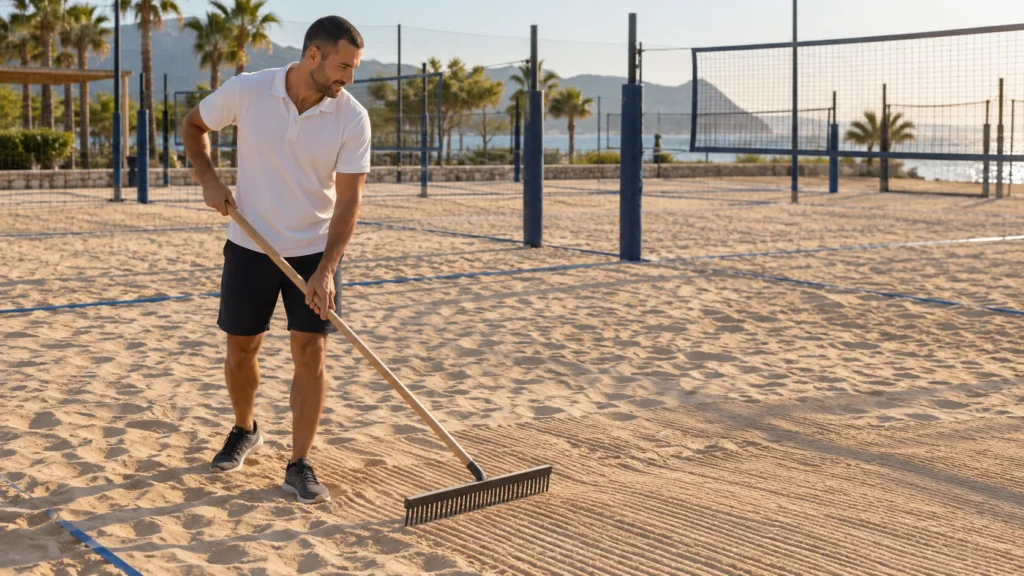
Certainty beats quality, at three in the afternoon too. The lights work, the gate is open, someone is at the desk, the sand is raked. A retired group that finds the entrance locked once, or a school class that arrives to a court still being cleaned, draws its own conclusion.
The same slot and the same court every week. A new group becomes a regular group when its time stops being a question. The weekly group is the whole business, and every lever above is an attempt to create one. Keeping players loyal without cutting price is a subject of its own.
Monthly members or drop-ins. A monthly plan can tie a daytime group to its slot, and some groups prefer paying once to settling up every week. Whether it beats paying per game depends on your venue, and that comparison deserves its own analysis.
Something to take home. A camera is one lever among several, not a cure for dead hours. It gives a beginners' group or a birthday party a clip of their own game to show in their group chat, which is where the next organiser is sitting. Cameras as a venue differentiator covers the honest case for and against, and branding your venue in every clip covers making sure your name goes with it.
Test One Slot at a Time
Pick one dead slot, one audience and one format. Launching a tournament, a beginners' session and an off-peak rate in the same month means you will not know which one worked.
Tell the right people. A beginners' session announced only on your own profile reaches people who already follow a court, which is not who you are looking for.
Do not cancel the thin weeks. A session cancelled because only a few people showed up teaches everyone that it might not happen and destroys the certainty that makes a slot worth planning around.
Watch the right signals. Occupancy of that specific slot week by week, whether the same people return, and whether someone new arrives because a previous player brought them.
If a slot is still dead after an honest test, try a different audience or format before you touch the price. The hour was never empty because it was too expensive. It was empty because nobody who could play at that hour had a reason to.
Make the Quiet Hours Travel
Every group that plays in a slot you just filled can leave with a clip of its own game, and your court goes with it into the next conversation about where to play. Get your court on VISU.
For court and venue owners.
FAQ
How Do I Fill Empty Hours at My Court?
With a different audience rather than a lower price. Map which slots are dead, then match each one to people nearby who are free at that hour: shift workers, retired players, students, remote workers and parents during school hours. Recurring formats, partnerships and events give them a reason to come.
Should I Discount Off-Peak Hours?
Not as the first move. Without a new audience, a discount only lowers the price for people who would have come anyway, can pull bookings out of your peak and resets the reference price. Find the audience first; changing what the hour includes often works better than changing what it costs.
Who Plays Sports During the Day?
People whose free time falls outside the evening: shift workers, retired players, students between classes, people working remotely nearby and parents between school drop-off and pickup. Each group has different needs and is reached in a different place.
What Kind of Recurring Format Fills a Dead Slot?
A weekly tournament, a beginners' session or an open game anyone can join. All three work the same way: same day, same time, every week, until the slot becomes known. Judge a format by whether the same people come back.
Are Partnerships Worth It for Off-Peak Hours?
They can be if a school, youth academy or company needs a recurring block in a quiet slot. Agree on a trial period and check whether bookings repeat; keep partner blocks away from your peak hours.
Can a Camera Help Fill Off-Peak Hours?
Indirectly, as one lever among several. A camera does not bring an audience to a dead slot on its own. It gives the groups who do come a clip of their own game to share in their group chat, where other organisers see your venue.