

Putting replay cameras on a sports court has no list price, and any guide handing you a round number is guessing. What does exist is a set of factors that decide the cost, and you can estimate yours before asking for a quote. This guide covers them.
Short version: the investment splits into three parts that often get confused. Equipment, installation and the recurring system fee. The first depends on how many courts and how many cameras each one needs. The second depends almost entirely on the infrastructure already at your venue. The third depends on the contract model. Rolling all three into a single number is what makes a quote look expensive or cheap for the wrong reason.
Get an initial assessment of your venue
The maths changes from court to court. Send your venue details and we will estimate cameras, infrastructure and next steps.
For court and venue owners.
The three parts of the investment
Almost all confusion about price comes from mixing things that follow different logics.
Equipment means the cameras, the computer that processes the video, the physical button at the court and the networking hardware. It is the most predictable part, because it comes down to counting: how many courts, how many cameras each one needs.
Installation is the physical work: mounting, cabling, power, configuration and testing. It is the least predictable part, because it depends entirely on what already exists at your venue. Two identical courts in different cities can carry very different installation costs.
The recurring fee is the system running: processing, clip storage, streaming capability, platform support and ongoing operation. It repeats monthly and usually scales with the number of active cameras.
How many cameras your court needs
This is the first factor, and the one that moves the total most.
A covered indoor soccer pitch with standard dimensions usually needs fewer cameras than a larger open field with irregular structure. If soccer is what your space runs, the soccer camera page covers what a proposal for that shape includes. Padel and pickleball courts change the calculation again, because the available mounting height is different. Outdoor courts with no roof shift it once more.
What decides the count is not the sport itself but a combination of three things: the court dimensions, where mounting points exist at sufficient height, and which angle covers the playing area without blind spots. A court with a roof and well-placed posts can need fewer cameras than a smaller court with nowhere to mount.
There is also a quality decision. Higher resolution produces a better clip but demands more upload bandwidth and more processing. For replay specifically, frame rate often matters more than raw resolution: it is what determines whether the play looks fluid or choppy. Ask for both numbers in any proposal.
Audio is separate. Not every camera captures sound, and sound changes how a shared clip feels. If that matters to you, confirm it upfront, because changing it later means changing hardware.
Installation: where quotes vary most
This is the part nobody can estimate over the phone, for a simple reason: it depends on what is already built.
The factors that weigh most:
- Distance between the court and where the computer sits. The further apart, the more cable and the more routing work.
- Is there existing conduit or cable pathway? If yes, cost drops significantly. If a new route has to be opened, it rises.
- Mounting height. A point reachable with a ladder is one cost. A point requiring working-at-height equipment is another.
- Power and network availability. PoE cameras draw power through the network cable itself, but the switch, computer and other equipment need proper supply and protection. Missing that infrastructure can add electrical or network work to the quote.
- Existing network. A switch, rack and cabling already in place can often be reused.
- Location and travel. A team travelling to install costs differently from a local one.
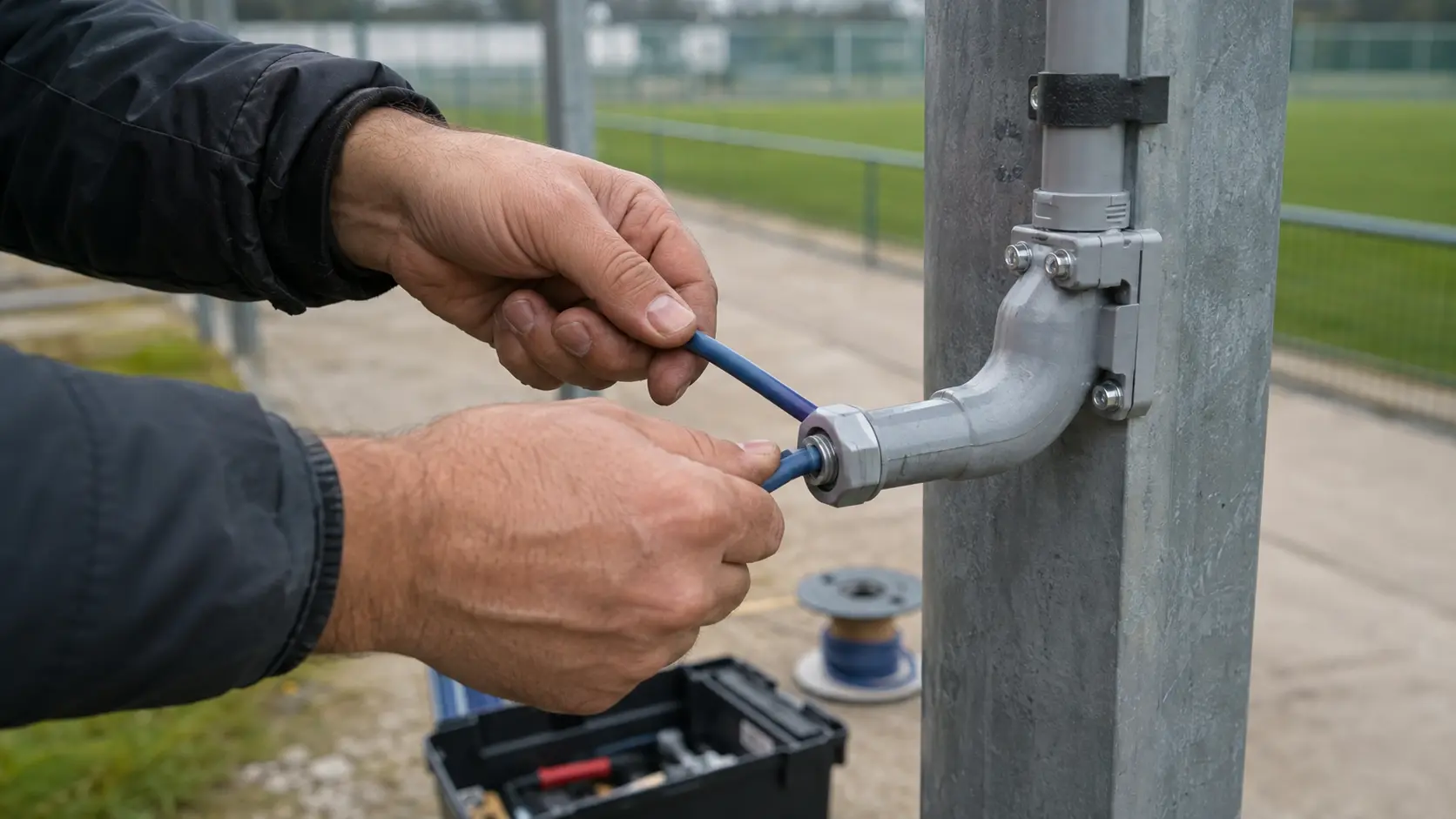
Worth knowing: in many cases equipment can arrive pre-configured, leaving the physical work to a local electrician or installer with remote support during activation. That usually reduces travel cost, but it requires someone reliable in your area.
Internet and power
Two costs that already exist at your venue and that people routinely forget to account for.
Live streaming and clip delivery consume upload, not download. That is the number almost nobody checks when signing an internet contract, and it is the one that matters here. A plan with high download and low upload may not sustain several cameras streaming at once. Before deciding anything, run a speed test on site and note both figures.
Fibre with stable upload is the comfortable scenario. Fixed wireless or mobile connections tend to be unstable for continuous streaming, which shows up as buffering on the live feed and failed clip generation at exactly the moment someone pressed the button.
Power is a smaller, continuous cost. With PoE cameras, consumption concentrates in the switch and the computer, which stay on through opening hours and sometimes beyond. It is worth ensuring stable supply and surge protection at that point, since it carries everything else.
Where the video is processed
There is an important difference between recording and generating a clip.
A standard CCTV system records everything to a DVR and you search for the moment afterwards, manually. A replay system has to hold a recent window in memory, cut the right segment when someone triggers the button, process the video and deliver it within seconds. Those are technically different jobs.
That is why a dedicated computer sits on site rather than just a recorder. And it is why "can I use the cameras I already have?" has an answer that depends: existing cameras sometimes work, depending on model, resolution, frame rate and whether they deliver the stream in the format the system needs. Always give make and model during the assessment, because reusing what exists lowers the upfront investment.
In architectures with cloud storage, clips sit separately from the on-site equipment. That reduces dependence on local disks and protects the content if the computer develops a fault.
Buying, renting or loan-for-use
The same system costs very differently depending on how you contract it.
Buying the equipment means a high upfront investment and the hardware is yours. It also means faults, obsolescence and replacement become your responsibility. How those trade-offs play out clause by clause is the subject of buying, subscribing or taking cameras on loan.
Loan-for-use (comodato in some markets) means the equipment remains the provider's property and is made available to the venue for the duration of the contract. That lowers the upfront hardware investment, which is the main barrier for anyone wanting to test before committing capital. Responsibility for faults, damage, replacement and return depends on the terms set in the contract. Replay can operate under this model, subject to the proposal made for each venue.
Under any model, read carefully what the contract says about damage, loss, minimum term and cancellation conditions. Those clauses change the real cost more than the monthly difference between one provider and another.
When the investment pays off
Replay cameras are not a security cost. They are a marketing and retention investment, and the maths works from that side.
Three effects tend to appear, and each is worth measuring at your own venue rather than taking on promise:
Differentiation. In a market where venues compete on price and time slots, having video of the game is an objective reason to pick yours. This shows up in occupancy of slots that used to sit empty.
Marketing that runs itself. Every shared clip can promote the venue where the play happened, whether through visual identification, the context of the post or the source link. That is reach you did not pay for, aimed at people who already play. Track how many clips are created per week and how much of that turns into social mentions.
Retention. A group with a video history at your venue has one more reason to return to the same place. This is harder to measure and usually shows up over the medium term.
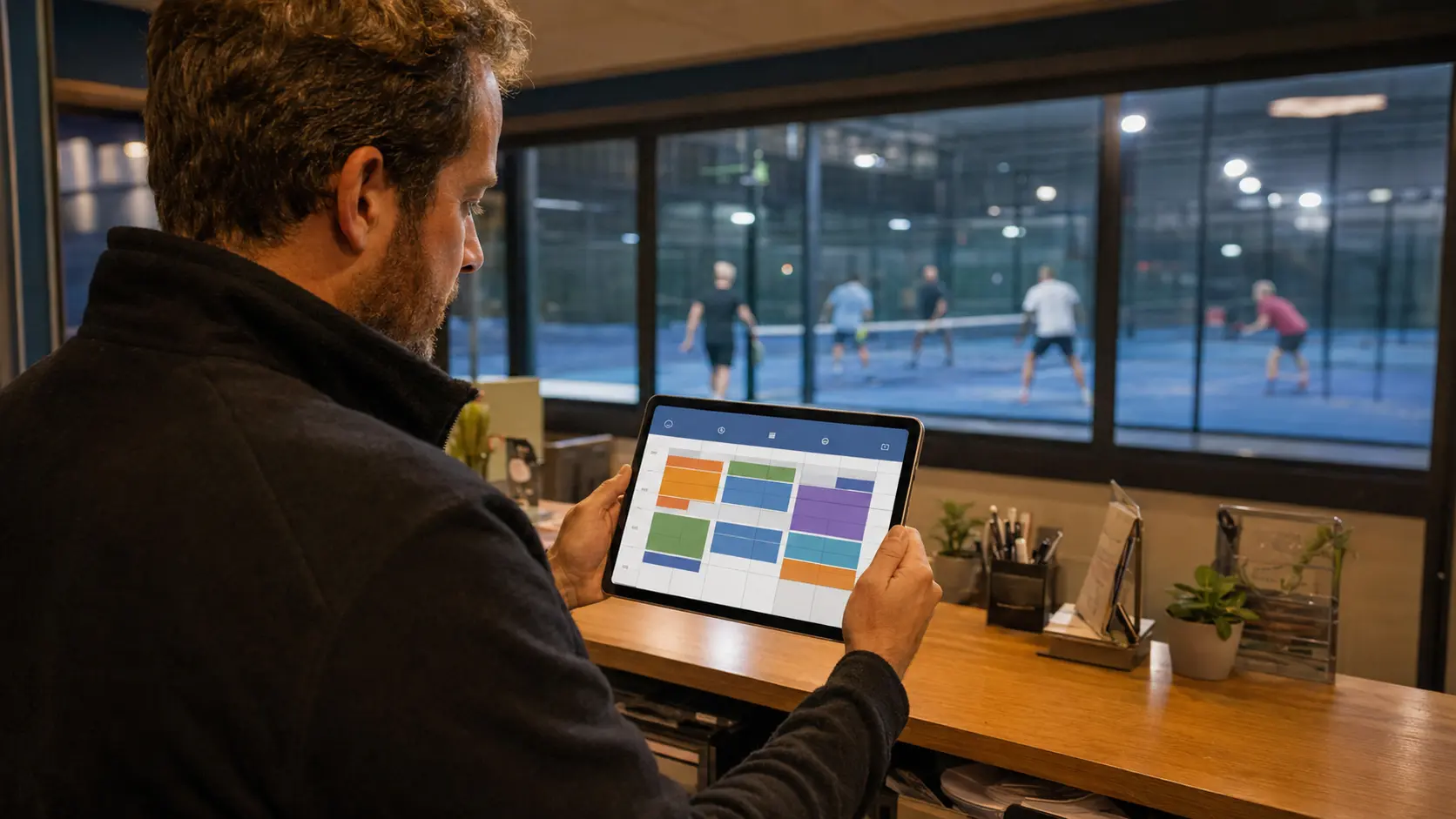
The sensible calculation compares the recurring cost against margin generated by additional bookings, group retention and marketing value. Depending on your hourly rate and current occupancy, a few extra bookings per week may cover a meaningful share of the system. That calculation has to be made with your own numbers, and nobody should be quoting you a payback period without them. If your court is already fully booked with no competition, the argument shifts from occupancy to experience and brand.
What to gather before requesting a quote
The more complete the survey, the more accurate the quote and the fewer surprises later. Worth collecting:
- Number and type of courts: indoor, outdoor, synthetic turf, sand, covered or open.
- Approximate dimensions of each one.
- Photos from all four sides of each court.
- A continuous video walking through the venue, including the route to reception or the technical room.
- Estimated distance between the courts and where the computer would sit.
- Height and possible mounting points: posts, walls, roof structure.
- Available power near the courts and at the technical point.
- Existing network infrastructure: conduit, cabling already run, switch, rack.
- Internet: provider, plan and a screenshot of a speed test showing download and upload.
- Equipment you already have: cameras with make and model, DVR or NVR, computer.
- Whether any mounting point requires working at height.
- Contact for a trusted electrician or installer in your area.
This is the same list a technical assessment collects. Having it ready speeds up the proposal and avoids quote revisions mid-installation.
Availability, installation logistics and commercial models vary by country and region. Confirm what applies to your location before planning around a specific timeline.
Find out what your venue needs
Get an initial assessment separating system, equipment and installation.
For court and venue owners.
Frequently asked questions about replay camera costs
How much does it cost to install replay cameras at a sports venue?
There is no list price, because the cost splits into equipment, installation and a recurring fee, and each part depends on variables at your venue. Camera count comes from dimensions and mounting points. Installation depends on distance, existing cabling, power and working height. The recurring fee depends on how many cameras stay active and on the contract model. A technical assessment settles all three.
Can I use the cameras I already have?
Sometimes. It depends on the model, resolution, frame rate and whether the equipment delivers the stream in the format a replay system needs. Standard CCTV records for later review, while replay has to cut and deliver a clip within seconds. Give make and model during the assessment, because reusing existing hardware lowers the upfront investment.
What internet connection is required?
Upload matters, not download. Live streaming and clip delivery push data out, and it is common for a plan to have high download with low upload. Fibre with stable upload is the comfortable scenario. Run a speed test on site and note both figures before deciding anything.
How many cameras does each court need?
It depends on dimensions, available mounting points and the angle needed to cover the playing area without blind spots. A court with a roof and well-placed posts can need fewer cameras than a smaller court with nowhere to mount. That is why the count comes from a site assessment rather than a table by sport.
Do I have to buy the equipment?
Not necessarily. Under a loan-for-use model, the equipment remains the provider's property and is made available to the venue for the contract duration, which lowers the upfront hardware investment. Responsibility for faults, damage, replacement and return depends on the contract terms. Under any model, read the clauses on damage, loss, minimum term and cancellation, because they change the real cost more than the monthly difference between providers.
How long until the investment pays for itself?
It varies with the recurring cost, your hourly rate, current occupancy and how the clips get used. The correct way to calculate is comparing total cost against additional bookings, group retention and the marketing value generated. Return comes from three directions: differentiation against competing venues, distribution through clips players share, and retention of groups that build a video history at your venue.