

Camera courts are spreading faster than any directory has kept up with, which is why searching for one is still awkward. There is no single map, the venues that have cameras rarely say so on the sign outside, and the booking apps that list them bury the detail three screens deep. This is how to actually find one near you, what to check before you turn up, and how to tell a real recording setup from a webcam pointed at a net. If you want the wider context first, start with the guide to filming amateur sports.
The short version: booking platforms are the fastest route, the venue's own social media is the most reliable confirmation, and asking directly still beats both.
Play Somewhere That Films for You
Courts with VISU Replay record continuously, so a clip is waiting after you press the button. No tripod, no friend on the sideline, nobody sitting out to hold a phone.
Why This Is Harder Than It Should Be
The number of venues has grown far faster than the ability to search them. Playtomic's 2026 global report counts 58,300 padel courts and close to 20,000 clubs worldwide, six times the court count of 2016, with 7,898 new courts built during 2025 alone. The International Padel Federation puts the figure higher still, above 70,000 courts and more than 23,000 clubs.
Cameras arrived into that expansion as an upgrade some venues bought and others did not. There is no registry, no certification, and no standard label. A venue with four courts might have cameras on two of them.
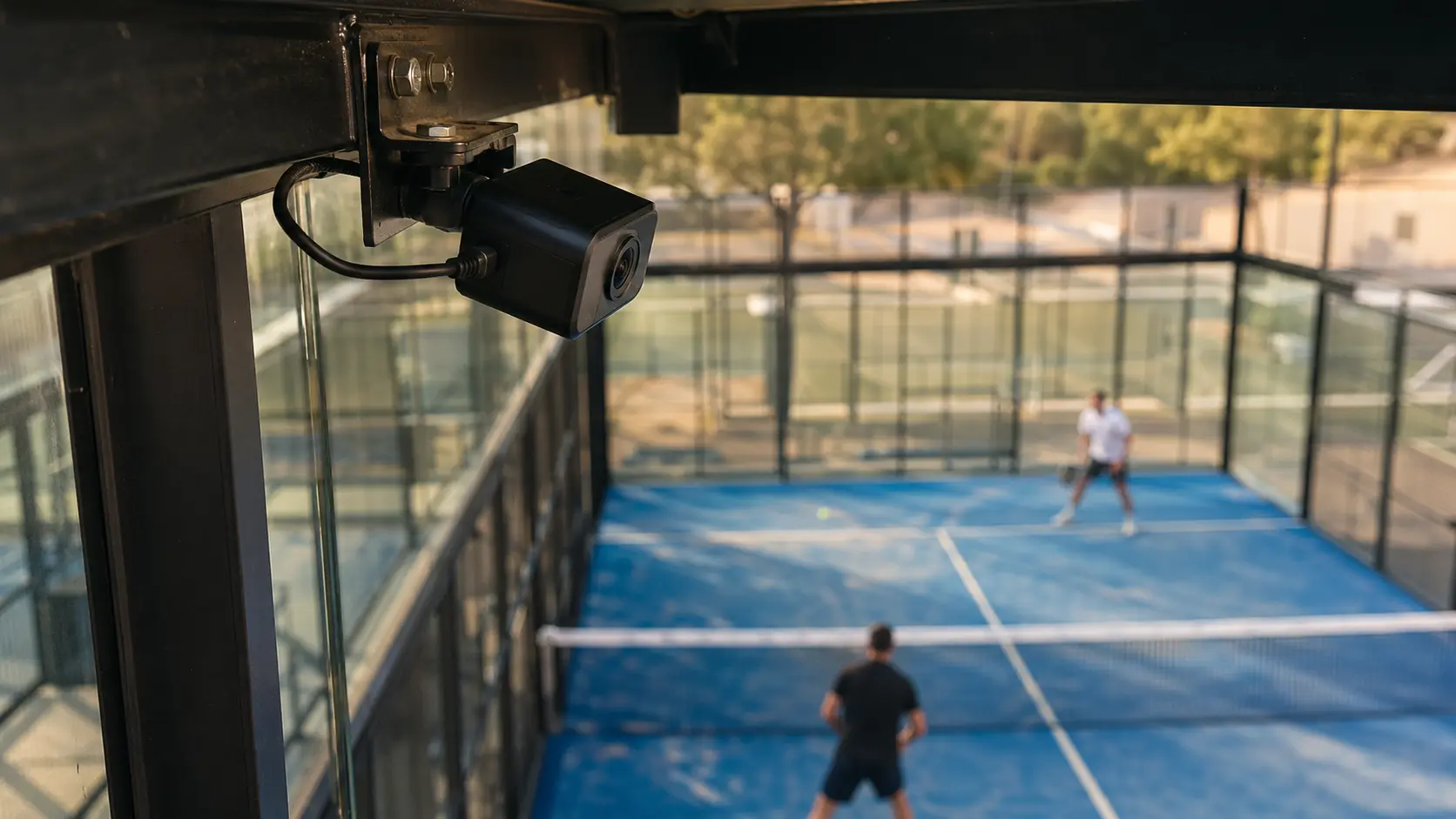
The result is a search problem with three specific traps:
- The venue does not advertise it. Many treat the camera as an operational detail rather than a selling point, so it appears nowhere in the listing.
- "Video" means several different things. Security cameras, a livestream for spectators, and a system that produces clips you can keep are all described with the same word.
- Coverage is per court, not per venue. Booking the wrong court at the right venue is the most common way to arrive and find nothing.
Where to Actually Look
In rough order of how quickly each one gets you an answer.
Booking apps, filtered. The platforms that handle court reservations are the closest thing to a directory. Look for a filter or an amenity tag rather than searching the free text, because venues describe the feature inconsistently. Where a filter does not exist, the venue's own page usually lists facilities near the bottom.
The venue's Instagram. The most reliable signal available, and underused. A venue with a camera system posts clips from it, because those clips are free marketing. Scroll the tagged photos as well as the grid: players posting their own clips from that court is proof the system produces something shareable, which a facilities list cannot tell you.
Google Maps and reviews. Search the venue and read reviews for the word video or camera. Player reviews mention it when it works and complain when it does not, which is more informative than any description written by the venue.
Ask the group chat. Unromantic and effective. Amateur sport is organised through group chats, and somebody in yours has already played somewhere with cameras. This finds venues that no platform lists.
Ask the venue directly. A message asking whether the courts record and whether you can keep the clips gets a straight answer in minutes and skips the ambiguity entirely.
What to Ask Before You Book
Venues answer these in seconds over a message, and the answers decide whether the booking is worth making. Ask before you reserve, not when you arrive.
After that, the questions that change the outcome:
- Which courts? Not all of them, usually. Book by court number, not by venue.
- How long is the footage kept? Retention windows are often short. A clip you cannot download for a week may be gone by then.
- Is it included or extra? Some venues charge separately, some bundle it, some offer it free and cap the downloads.
- Do I need an app? If the clips live behind an app, install it before you play rather than in the car park afterwards.
- Does it record continuously? This is the difference between pressing a button after a good play and having to start a recording before it. Continuous recording is what makes the whole thing usable, because nobody knows the good play is coming.
That last point is the one worth insisting on. A system that requires someone to start filming has moved the problem rather than solved it.
Press the Button After the Play
VISU Replay courts record the whole session, so the clip is cut around the moment you ask for, after it happened. That is the difference between catching your best play and remembering it.
Telling a Real Setup From a Webcam
Once you are there, a few things separate a system built for clips from a camera that happens to exist.
- Position. Recording cameras sit high and cover the whole playing area, usually from a corner or above the back wall. Security cameras point at doors and equipment.
- Count. One camera per court is normal for clips. A single camera trying to cover several courts at once is not producing anything readable.
- A way to trigger it. A button on the wall, a QR code, or an app. If there is no visible way for a player to mark a moment, the footage probably is not meant for players.
- Signage. Venues that record for players say so, because they need consent to be visible. A camera with no sign is a question worth asking at reception.
On that last point: filming in a shared space involves other people, and the venue carries the responsibility for handling that properly. A venue that has thought about consent has usually also thought about how you get your clip.
Angle matters more than specification once you are choosing between courts, which is covered in the piece on camera angles.
If There Is Nothing Near You
Realistically, most areas still have no camera court, and the honest answer is to film it yourself in the meantime rather than wait.
The workable version is not a tripod on the sideline. It is a phone propped on a bag or a bench at the right height, recording the whole game, with clips cut afterwards. It costs nothing and it beats asking somebody to stand out of the match with a phone in their hand.
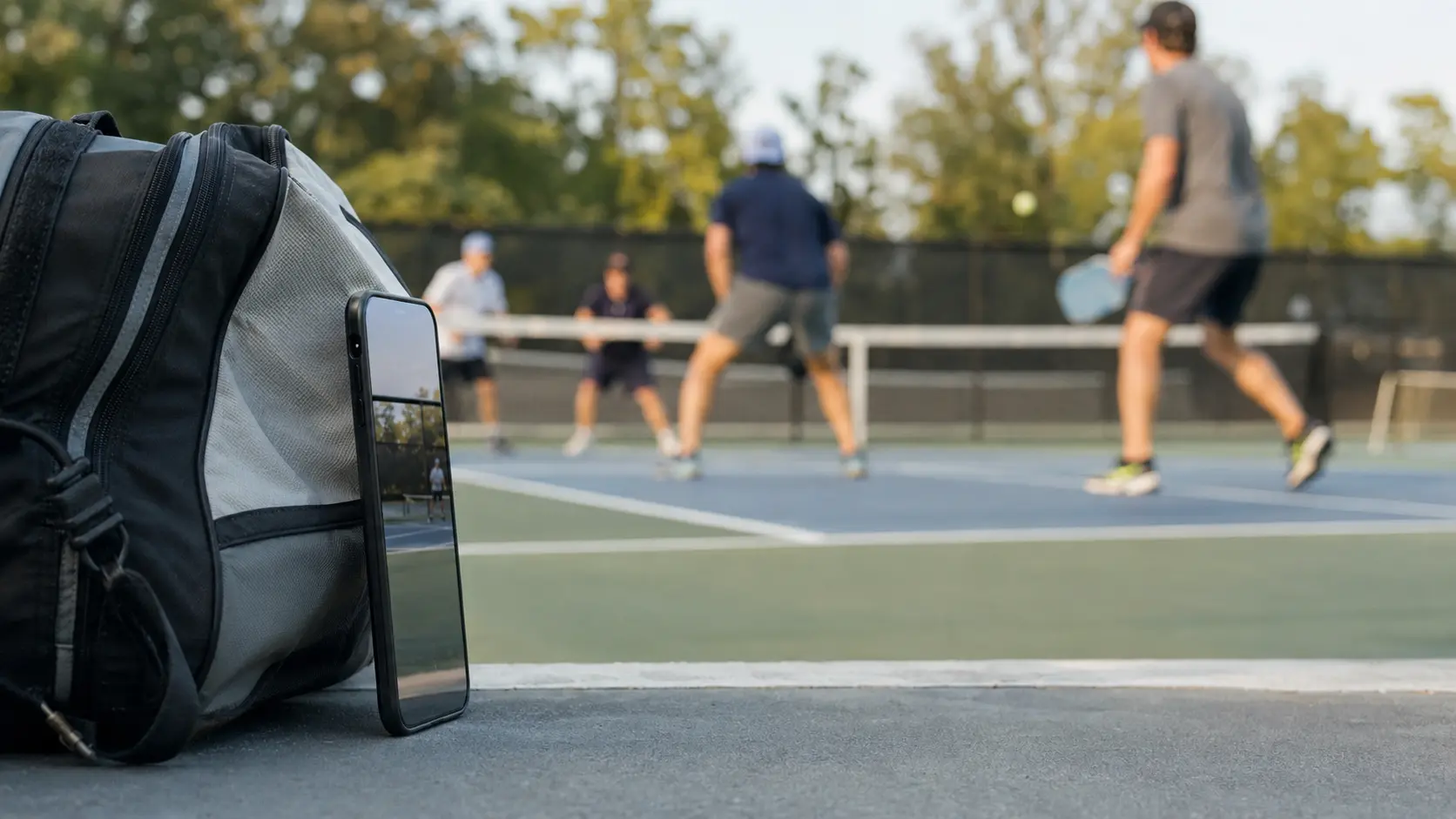
It is also worth asking your venue. Court owners track what players request, and cameras are a competitive purchase driven by demand. Several people asking the same question over a month moves it up the list faster than any marketing does.
The practical setup for filming without a crew is in how to record your game, and what to do with the footage afterwards is in what makes a good sports clip.
Find a Court That Already Records
No setup, no editing, no one missing the game to film it. See which venues near you run VISU Replay and what you get after the match.
FAQ: Finding Courts With Cameras
How do I find a sports court with cameras near me?
Start with the booking app you already use and look for a video or camera filter, then confirm on the venue's Instagram, where a working system produces clips that get posted. Google reviews often mention it, and asking the venue directly is the fastest way to get a definite answer. Coverage is usually per court rather than per venue, so confirm which court before booking.
Do all courts at a venue have cameras?
Usually not. Venues install cameras gradually, often on their main or show courts first, so a club advertising video may only have it on some of them. Book by court number rather than assuming the whole venue is covered, and confirm when reserving.
Is the video free or do I pay extra?
It varies by venue. Some include it in the court fee, some charge per clip or per download, and some offer it free with a limit on how many clips you can save. Ask before playing, along with how long the footage is kept, because short retention windows catch people out more often than the price does.
How can I tell if a camera actually records for players?
Look at where it is mounted and whether there is a way to trigger it. Cameras meant for clips sit high and cover the full playing area, with a button, QR code or app for players to mark a moment. A camera at eye level near the entrance, with no visible way to request footage, is almost certainly security.
What if there are no camera courts in my area?
Film it yourself with a phone propped on a bag or bench at roughly waist height or above, recording the whole match, and cut the clips afterwards. It works better than a person holding a phone, since nobody has to sit out. Asking your usual venue also matters, because demand from regular players is what drives these purchases.
Does the venue need my permission to film me?
Venues that record for players are expected to make that visible and to handle the footage responsibly, which is why proper setups have signage. If you find a camera with no sign and no explanation, ask at reception. A venue that has thought this through will also have a clear answer about how you get your own clips.