

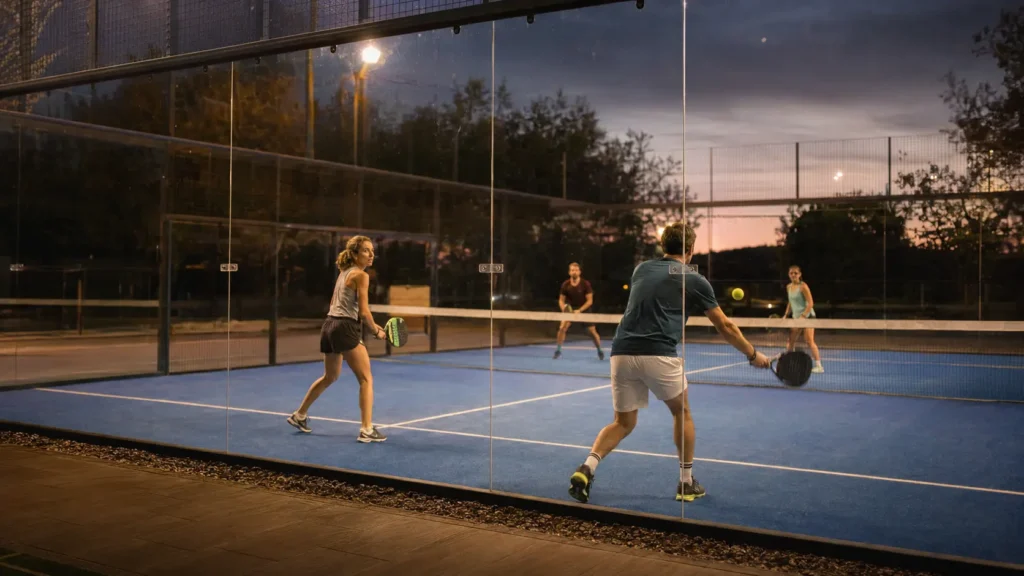
Padel is the easiest sport there is to film well, and most people still end up with footage full of reflections and a camera hunting for focus. The court is twenty metres by ten, enclosed by glass and mesh, and the ball almost never leaves it. One camera in the right place captures the entire match. The problem is not the sport. It is the glass.
That combination is also why padel venues are installing cameras faster than almost anyone else. With over 77,000 courts worldwide and roughly 15 percent growth in 2025 according to the International Padel Federation, it is a sport growing fast enough that venues are competing on features rather than price. This covers filming it yourself, and what changes when the court films for you.
The Court That Films Itself
Padel is the ideal shape for a fixed camera: enclosed, compact, one angle covers everything. At courts running VISU, the point you just won becomes a clip without anyone standing outside the glass with a phone.
Why Padel Is the Easy Case
Compare it to football and the difference is obvious. A football pitch is a hundred metres long and one camera cannot hold both goals. A padel court is twenty by ten, walled on every side, and almost every rally is played inside those walls. Everything that makes football hard to film is absent here.
The walls do the framing for you. You do not have to guess where the action will be, because it rarely leaves the box. Set a frame that includes the whole court and you are done. No panning, no following, no losing the ball.
Four players in a small space read clearly. Unlike a wide pitch where players become specks, padel keeps everyone at a legible size from any reasonable distance. You can tell who hit what, which is the thing that makes footage worth watching.
The rallies are the content. Padel points last longer than tennis points at amateur level, with the walls keeping the ball alive. That means a single point often works as a complete clip, with a beginning and an end, which is rarer than it sounds in amateur sport. The wider principles are in the amateur sports video guide.
The Glass Is the Whole Problem
Everything difficult about filming padel comes down to shooting through or past a transparent wall. Three specific failures, all avoidable.
Reflections. Glass reflects whatever is behind you, which at an evening session is usually a floodlight or a bright doorway. The result is a bright smear across the middle of your footage. The fix is position rather than settings: move until the reflection is out of frame, which usually means a few steps sideways.
Autofocus hunting. The camera cannot decide whether to focus on the glass or on the players behind it, so it oscillates between them for the entire match. Tapping to lock focus on a player solves this in two seconds and almost nobody does it.
Mesh moiré. Filming through the fencing at the sides produces a shimmering interference pattern that looks like a fault in the video. Getting the lens right up against an opening in the mesh eliminates it, because the fence goes out of focus entirely.
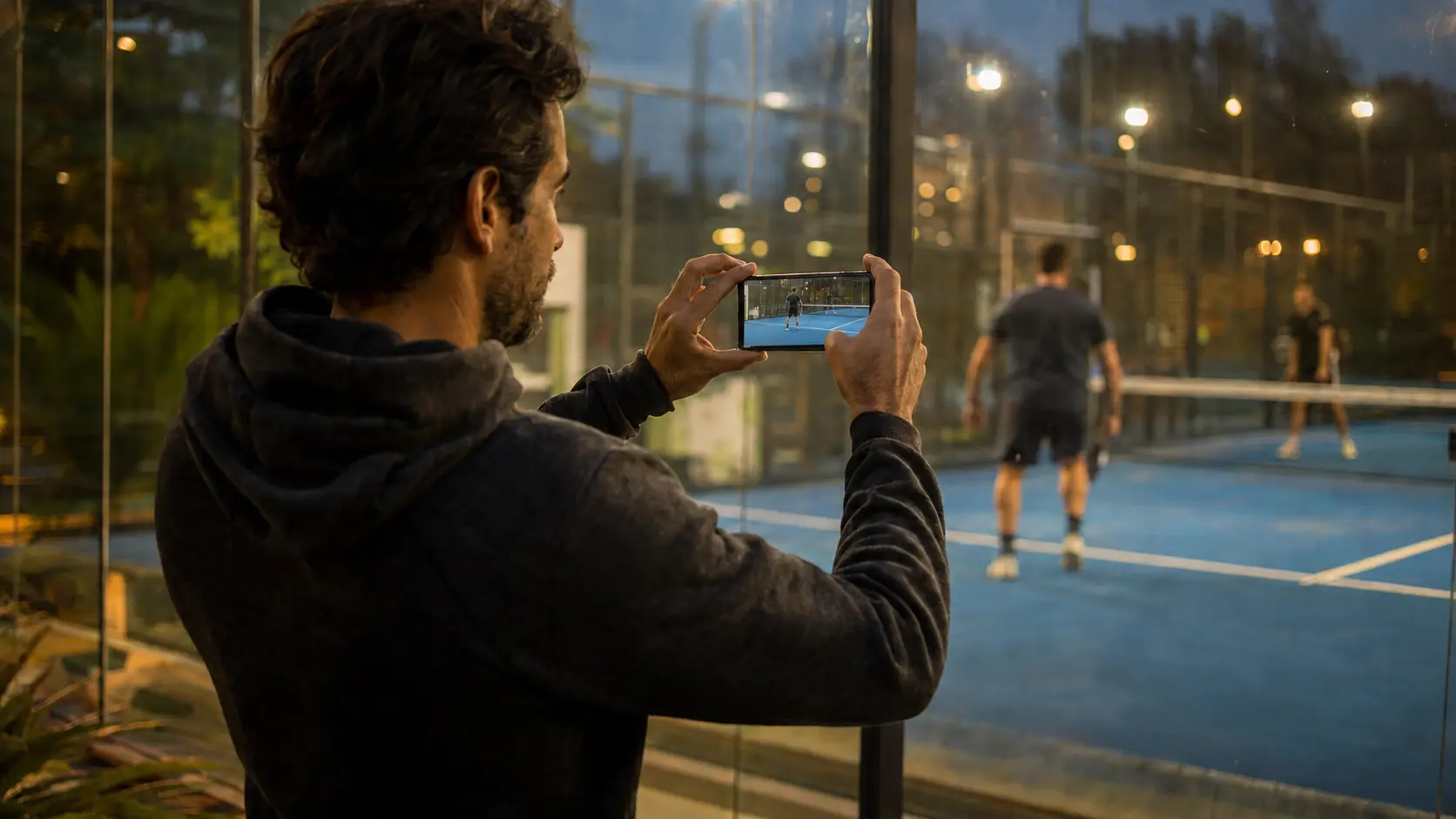
The general fix for all three: get physically closer to the barrier. A phone held against the glass or into a gap in the mesh has almost no reflection, no moiré, and a much easier focus problem than one held a metre back.
Where to Film From
There are three viable positions and they give quite different footage.
Behind the back glass, elevated if possible. The best all-round angle and the one broadcast uses. You see the full court in depth, both pairs, and the rally develops toward or away from you. If the venue has any kind of raised walkway or seating behind the court, that is the best spot available.
Behind the back glass at ground level. Still good, slightly flatter. The near pair partly blocks the far pair during some points, which is the main compromise. Perfectly usable and the most commonly available option.
From the side, through the mesh. Worth it only for a specific purpose, like filming one player's technique. It compresses the court and makes the depth of the rally hard to read, so it is a poor choice for general match footage.
Not from the corner. It seems like a compromise between the two good angles and delivers the weaknesses of both. The full angle breakdown, including what changes for analysis rather than sharing, is in the best camera angle for padel.
If You Run a Padel Club
Padel players share more footage than almost any other sport, and every clip carries the club it came from. A fixed camera turns that into something continuous rather than occasional.
For court and venue owners.
Indoor Courts and Evening Light
Most padel gets played under artificial light, either indoors or on covered courts in the evening. That is manageable but has two specific traps.
Court lighting is dimmer than it appears. Your eyes adapt; the camera does not. In low light the phone lengthens its exposure, and a fast padel volley turns into a smear. Bracing the phone against the glass rather than holding it freehand fixes most of this, since the blur comes from small hand movements as much as from the players.
Mixed lighting confuses white balance. Courts lit by a combination of floodlights and daylight through an open side produce footage that shifts colour as the camera rebalances. Locking exposure and white balance, if your phone allows it, keeps the whole clip consistent.
Outdoor courts have the opposite problem. Low evening sun behind the court turns players into silhouettes and lights up the glass. Film from the side the sun is on, so it lights the players rather than the lens. This is the same rule as every outdoor sport and the one most often ignored. Indoor specifics are covered in filming indoor courts.
Which Points Are Worth Keeping
Padel produces more clippable moments than most sports, because the walls create things that do not exist elsewhere.
Anything involving the back glass. A ball played off the wall, a recovery from a rebound, a shot that goes out and comes back in. These are visually distinctive and instantly legible even to someone who does not play, which makes them the best material for a public feed.
Long rallies with a clear ending. Twenty seconds of genuine back and forth finishing in a winner is a complete story. Padel gives you these regularly, and they need no editing beyond a start and stop.
The smash, and specifically the one that goes out of the court. Hitting the ball out over the fence is the sport's signature moment. It travels because it is unusual and because everyone laughs.
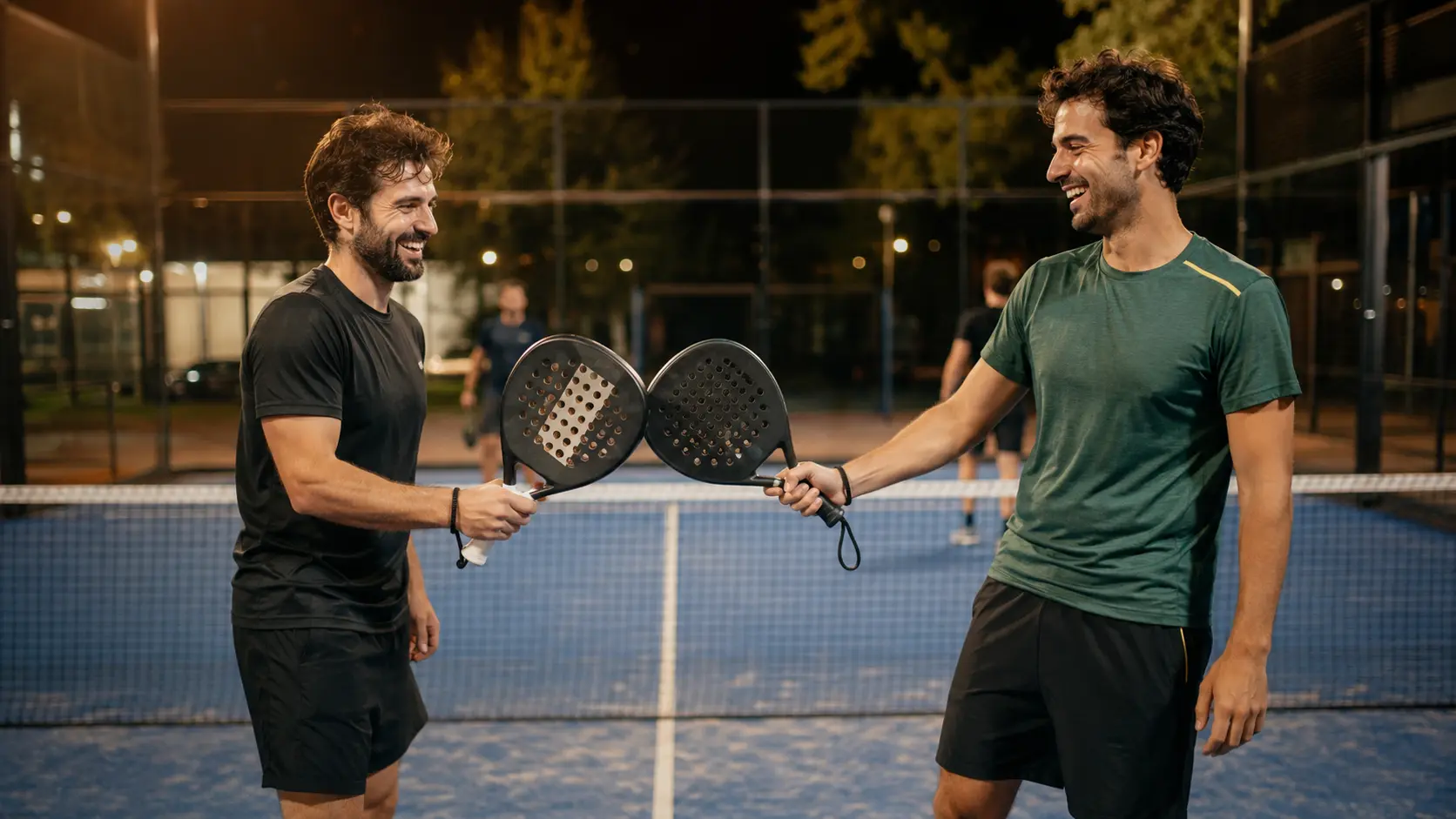
The partner reaction. Padel is played in pairs, so every good point has two people celebrating it. That is more watchable than one person, and it is the same reason celebrations outperform goals in football. More on this in the best padel moments to share.
If you are filming to improve rather than to share, the useful footage is different and usually duller, covered in reviewing your own padel match.
What Goes Wrong
Filming from a metre back. Every reflection problem comes from this. Against the glass, always.
Leaving autofocus on automatic. The camera will hunt between the glass and the players for the whole match. Tap once to lock it.
Filming vertically. A padel court is twice as wide as it is deep. Vertical framing throws away half of it, and the half you lose is where the opposing pair is standing.
Zooming in on one player. Padel is a doubles sport and the point only makes sense with all four visible. Zoom removes the context that makes the rally readable.
Recording the whole session. An hour of padel is a lot of footage and you will never open it. Clip the good points immediately after they happen, while you still remember which ones they were. Why phones handle this badly in general is in why your phone films sports badly, and the fixed-camera comparison is in tripod versus fixed camera.
Sound is worth a mention here because padel is unusually good for it: the ball off the glass and the shout between partners are distinctive noises that make a clip feel alive. Audio in sports video covers what helps.
The Clip Without the Glass Problem
A camera mounted inside the court structure has no reflection to fight and no focus to hunt. At courts running VISU, you trigger the point and the clip is ready. Sharing is free; watching in full and downloading happens in the app.
FAQ: Recording a Padel Match
Where should I film a padel match from?
From behind the back glass, elevated if the venue has any raised seating or walkway. That angle shows the full court in depth with both pairs visible and the rally developing toward or away from the camera. Ground level behind the glass is the next best and the most commonly available. Avoid corners, which combine the weaknesses of both side and back angles.
How do I avoid reflections on the glass?
Hold the phone against the glass rather than a metre back. Almost all reflection problems come from distance, since the glass picks up whatever is behind you, usually a floodlight. If a reflection persists, move a few steps sideways until it falls outside the frame rather than trying to fix it with settings.
Why does my camera keep changing focus during padel?
Because it cannot decide between the glass and the players behind it, so it oscillates between the two for the whole match. Tapping the screen to lock focus on a player fixes it immediately. This takes two seconds and is the single most common thing people forget when filming through a barrier.
Should I film padel vertically or horizontally?
Horizontally, without exception. A padel court is twice as wide as it is deep, so vertical framing loses half the court, and the half it loses is where the opposing pair stands. Film horizontal and crop to vertical afterwards if you want to post it to a feed.
Is padel easier to film than other sports?
Considerably, yes. The court is small and enclosed, the ball rarely leaves it, and one camera in a fixed position captures the entire match with no panning. The only real difficulty is the glass, which causes reflections and focus problems, and both are solved by getting the lens close to it.
What makes a good padel clip?
Anything involving the back wall, since rebounds and recoveries are visually distinctive and legible even to people who do not play. Long rallies with a clear ending work as complete stories. And because padel is a doubles sport, every good point ends with two people celebrating, which is more watchable than one.