

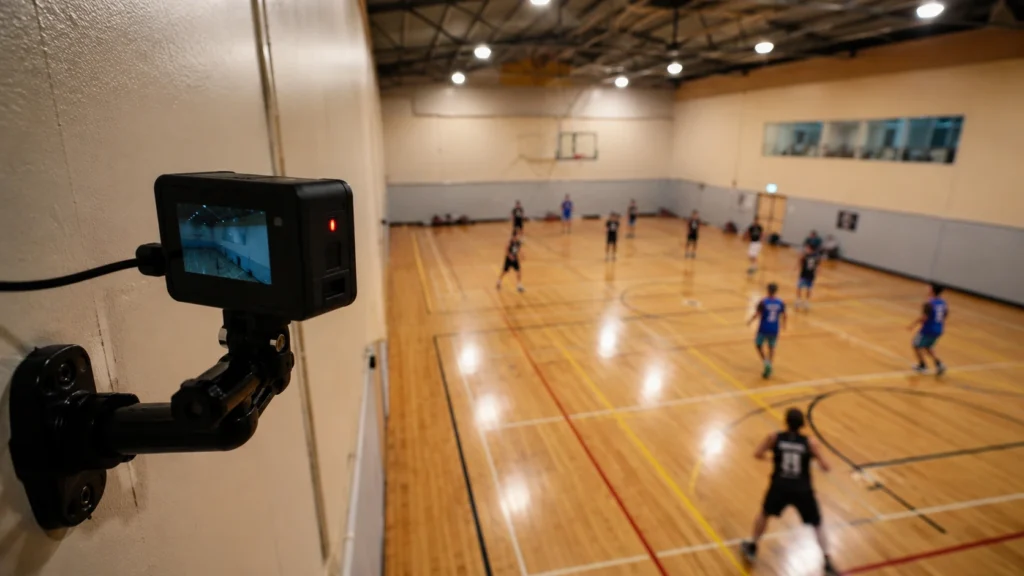
Every recording setup answers one question first: who decides that this stretch of footage becomes a file. It can be nobody, because the system keeps everything. It can be a person, because somebody pressed a button. It can be software, because a detector fired. Three arrangements, three ways of failing, and the choice has almost nothing to do with camera specs.
This article assumes you already know that most replay setups hold a rolling window of recent video and overwrite it continuously. If that part is new, what a replay camera is covers the buffer in detail. Here the buffer is a premise, not the subject.
The Clip Nobody Had to Remember
At a court with VISU Replay, the camera runs continuously and the clip is generated after the play.
There Are Three Modes, Not Two
The comparison is usually framed as continuous recording against triggered clips. That framing hides what matters, because "triggered" covers two arrangements that behave nothing alike.
Continuous, with nobody deciding. The system keeps the whole session. Nothing is selected at the time, so nothing can be missed at the time. Selection happens later, by a human scrubbing footage.
Triggered by a person. Someone watching marks the moment. The clip exists because a human judged, in real time, that it was worth keeping.
Triggered by detection. Software decides: motion, sound, a scoring event, a trained model looking for a class of action. No human is in the loop at capture.
Written that way, the real axis is visible. It is not continuous against clipped. It is who holds the decision, and what happens when that decider is wrong. A distracted person, a model that does not fire, and a scrub session nobody sits down for are three different losses.
There is no universal winner, and this article will not pick one. What follows is what each mode preserves, charges, and how it fails.
What Continuous Recording Preserves
Continuous recording has one property no triggered arrangement can imitate: it does not require anyone to have been right at the time.
Most of what matters in an amateur game is not obvious in the second it happens. The pass three moves before the goal. The rotation that only reads as a mistake once you know the result. The clean touch nobody applauded. All of it survives, because nothing had to judge.
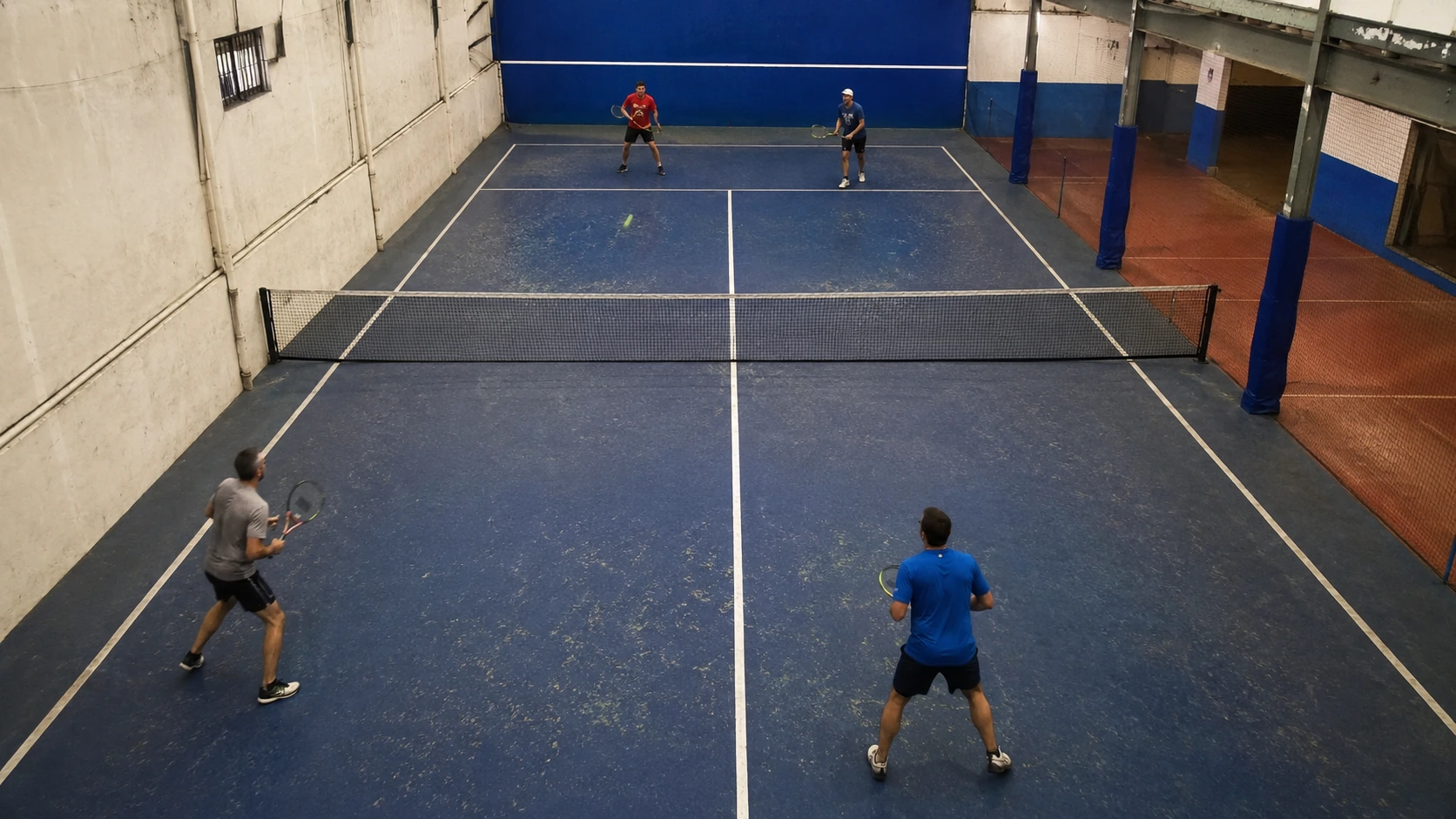
It also preserves context. A triggered clip is a window; the footage around it is what turns a highlight into something you can learn from. Anyone reviewing tactics rather than collecting moments needs that material.
And it preserves the play whose importance changed afterwards. Somebody gets injured, a call is disputed, a result is questioned a week later. This is the only mode where a moment nobody flagged is still recoverable.
That is a genuine advantage, not a consolation prize. If you film to review rather than to share, continuous is often simply the correct answer.
What Continuous Recording Charges You
The bill for continuous recording arrives in two parts, and the smaller one gets all the attention.
The part everybody talks about is the file. Whole sessions are large, they accumulate weekly, and they need a retention policy you can live with. That is real, and it is covered in where to store your sports clips. It is not what kills most continuous setups.
What kills them is attention. A two hour recording is not a clip. Somebody has to open it, find the moment, cut it, and export it. That labour does not schedule itself, and it competes with everything else in a Sunday evening.
This is the honest failure mode of continuous recording: the play is definitely in the file, and nobody ever goes and gets it. Nothing was lost technically. It was lost practically, which is the only kind of lost a player experiences.
It inverts the usual intuition. Continuous recording does not remove the human from the loop. It moves the human from the moment of capture to the evening afterwards, where the work is longer and duller.
What a Triggered Clip Delivers
A triggered clip solves exactly the problem continuous recording leaves open. It arrives already cut.
There is no session to open, no timeline to scrub, no export step. The output is a short shareable file, which is why triggered arrangements dominate wherever the point is to send the moment to somebody within minutes. Length is its own decision, covered in how long a sports clip should be.
The economics follow. Clips are small, so storage stops being a planning exercise, and small files survive casual habits that large ones do not.
There is a quieter benefit too. A triggered clip carries a judgment inside it, so the archive is already curated. A folder of clips is browsable in a way a folder of two hour sessions never is.
All of that is real, and all of it is conditional on one thing: the trigger having actually fired.
See How the Clip Gets Made
VISU Replay records continuously at the venue and cuts the moment afterwards, so the decision does not have to happen live.
The Three Ways a Trigger Fails
This is the part that decides the comparison, and the part most buying guides skip. When a trigger fails, the play does not become a worse clip. It becomes nothing. There is no degraded version to fall back on.
One: nobody pressed it. The human trigger depends on somebody watching, holding a device, and reacting inside a few seconds. Players are playing. Parents are talking. The one person paying attention looked down.
Be honest about the evidence here. There is no published study measuring how many amateur plays are lost because nobody pressed the button. The argument is structural, not statistical: the failure mode is real, and it scales with how busy the operator is.
Two: the detector did not fire. A 2025 study on automated highlight detection from audio and video sources reported roughly 89% accuracy on audio and 83% on video, and its authors describe combining the two signals specifically to improve robustness against false positives and false negatives.
Two labels belong inside that sentence. Those figures come from research datasets of professionally broadcast sport, with commentary and controlled camera work. An amateur court has none of that, so the numbers do not transfer to your Sunday game. What transfers is the shape: the people building these systems treat the false negative as an open problem.
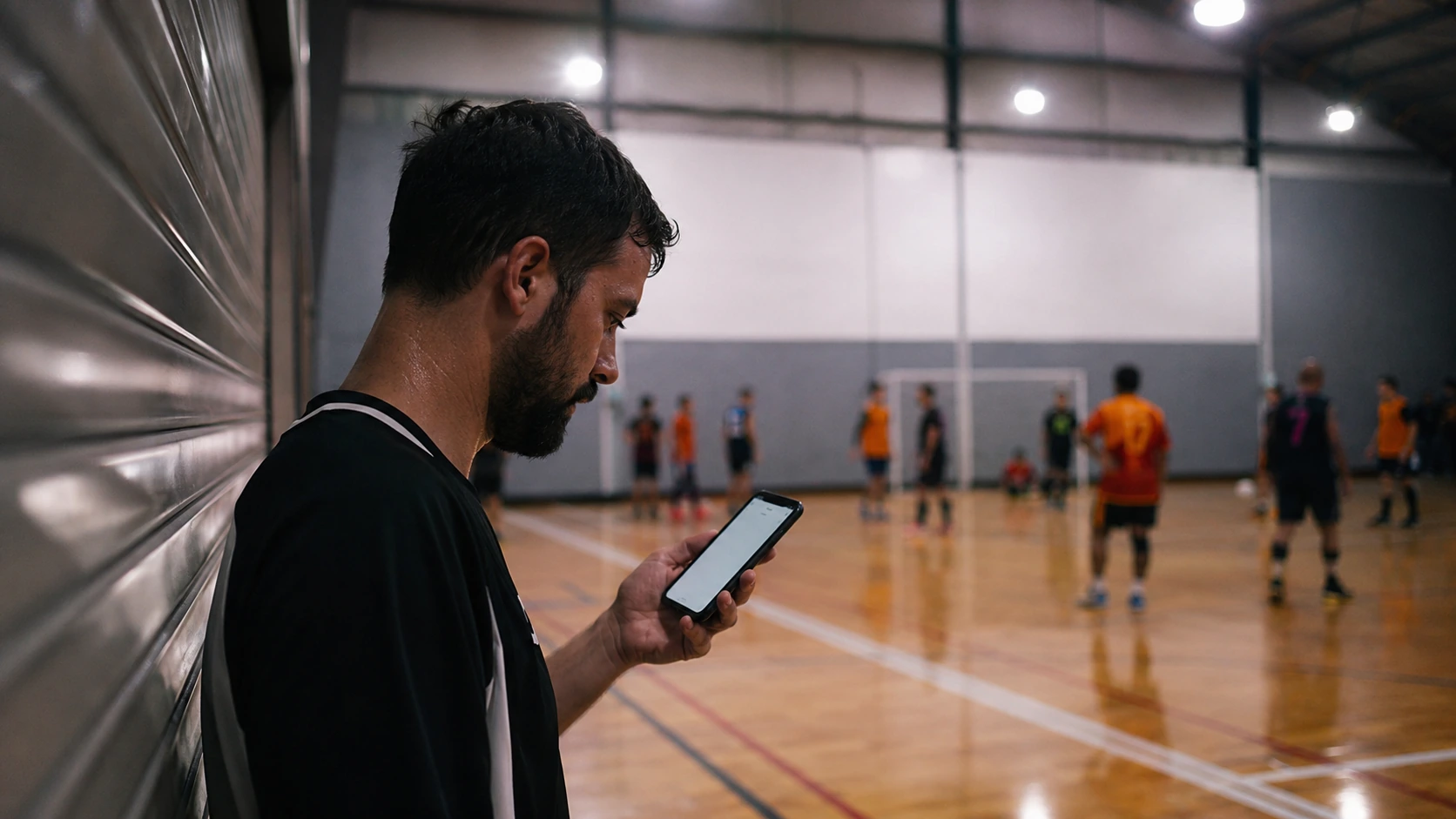
Three: it fired, and the window missed the play. This one is the least intuitive and the most common source of disappointment. Detecting an event and capturing it are not the same achievement.
A 2025 survey of action spotting in sports makes the gap explicit. In these benchmarks a detection counts as correct if it lands inside a tolerance window, and that window is wide, typically ranging from 5 to 60 seconds.
The stricter task of precise event spotting works to a tolerance of 0 to 2 frames, where the survey notes that even small errors in frame prediction can result in a miss. Again, these are professional broadcast datasets, not amateur court footage.
Read that against a clip. A system can be scored as having detected the goal while the file it produced starts after the ball crossed the line. The metric is satisfied. The clip is useless.
The pre event window has a hard limit too, and it can shrink without telling you. Axis documents a rule configured to start recording five seconds before detected motion and stop one minute after. The same page states that the prebuffer will be shortened automatically if there is insufficient memory when the recording starts.
That is vendor documentation describing a mechanism, not a recommendation for sport, and five seconds is an example rather than a correct number for a fast court game. The behavior is the point: the amount of past you get back is finite and negotiable by the device, not guaranteed by you.
Put the three together and the asymmetry is clear. Continuous recording fails loudly, because you know the footage exists and you have not cut it. Human triggers fail visibly, because somebody remembers the play and remembers not pressing. Detection fails silently: the clip is simply absent, and nobody knows to go looking for it.
The Three Modes Side by Side
Everything above, compressed. The last two rows are the ones worth reading twice.
| Continuous only | Triggered by a person | Triggered by detection | |
|---|---|---|---|
| Preserves | Everything, including what nobody flagged | The play someone judged important, live | Whatever the model recognises as an event |
| Charges | Archive size, and above all the hours of scrubbing | Somebody attentive and free during the game | Trust in a trigger you cannot audit at the time |
| Fails like this | The play is in there and nobody goes to get it | Nobody pressed, so the clip never existed | Nothing fired, or the window opened too late |
| You find out | Immediately, every time you avoid the edit | Right away, and someone remembers the play | Often never, because absence looks like a quiet game |
| Choose it when | Tactical review, and the whole match matters | Someone is free to operate and the play is obvious live | High match volume and nobody available to watch |
No column is empty of cost. That is the finding, not a hedge.
Running Both at Once
The obvious response to all of the above is to refuse the choice: record continuously and cut afterwards. That arrangement is common, and it is what a fixed court camera generating clips after the play actually does, Replay included.
It genuinely removes two failure modes. Nobody has to react inside the moment, because the footage was already being kept. And a missed trigger is recoverable, because the underlying recording is still there for the length of the retained window.
It is not free, and pretending otherwise would contradict everything above. The rolling window is still finite, and a device under memory pressure can quietly serve you less past than you configured. Whatever falls outside that window is gone as if it had never been recorded.
It also inherits the continuous side of the bill: storage, a retention policy, and a decision about how far back the window reaches. If you are assembling this yourself, the question is not which brand, it is how much past the buffer holds and what happens to it under pressure.
Find a Court With Cameras
Continuous capture with the cut made afterwards is one arrangement among several. See how it works in practice.
How to Choose for Your Situation
There is no correct mode, only a mode that matches four facts about your setup. Answer these in order.
Who is free during the game? If nobody can watch and react, the human trigger is not an option however much you like the idea. This question eliminates more setups than any technical consideration.
Do you want a play or a match afterwards? If the answer is the match, continuous is not a compromise, it is the requirement. If it is a handful of moments to send, a triggered arrangement saves you an evening every week.
What does missing it cost? A training session and a decisive game are not the same risk. Where a missed play is merely a shame, silent detection failure is an acceptable trade. Where it is unrecoverable, you want the footage to still exist.
How much scrubbing will really happen? Be pessimistic. Most people overestimate this badly, and continuous recording without a scrubbing habit produces an archive nobody watches.
Read the answers together and the mode usually picks itself. High volume with no operator points to detection, accepting that some plays vanish unnoticed. A coach reviewing whole games points to continuous. A parent wanting three clips by dinner points to a human trigger, or to a setup that records continuously and cuts afterwards.
The one conclusion this article will defend is negative. Anyone telling you that one of these modes is simply better has not told you what they are willing to lose. All three lose something, and choosing well means choosing which loss you can live with.
Some of it also depends on what the camera can see at all, which is a separate problem covered in why your phone films sports badly.
FAQ: Continuous Recording and Triggered Clips
Does continuous recording take up a lot of space?
Whole sessions are much larger than clips, which is why most continuous setups overwrite the oldest footage rather than keeping everything forever. The practical constraint is usually retention rather than raw capacity: how far back the recording still exists before it is replaced. Choosing where those files live, and how long they survive, is covered in detail in the guide to storing your sports clips.
What happens if I forget to press the button?
It depends entirely on the arrangement. In a setup that only records when triggered, the play never existed as a file and nothing can recover it. In a setup that records continuously and cuts afterwards, the footage still exists for as long as the rolling window reaches back, so the clip can be produced later. That difference is the single most important thing to check before relying on a button.
Does automatic detection catch every play?
No. Research on automated highlight detection reports roughly 89% accuracy on audio and 83% on video, and the authors describe combining signals specifically to reduce false positives and false negatives. Those figures come from professionally broadcast sport with commentary and controlled camera work, so they do not transfer directly to an amateur court. The honest summary is that false negatives are an acknowledged open problem, not a solved one.
If the system detected the play, did it capture it?
Not necessarily. In action spotting benchmarks a detection counts as correct when it falls inside a tolerance window, and that window is typically 5 to 60 seconds wide. A detection scored as correct can still produce a clip that starts after the decisive moment. Stricter precise event spotting works to a tolerance of 0 to 2 frames instead.
Can I use continuous recording and triggered clips together?
Yes, and it is a common arrangement: the camera records continuously while clips are cut from that recording afterwards. It removes the need to react during the play and makes a missed trigger recoverable. It does not remove every cost. The rolling window is still finite, and keeping the underlying recording still means paying for storage.
Which is better for an amateur court game?
There is no universal answer, and anyone offering one is hiding a trade off. The decision comes down to four questions: whether someone is free to operate during the game, whether you want a play or the whole match afterwards, how badly a missed moment would hurt, and how much footage anyone will realistically sit down and scrub. Different answers point to genuinely different modes.
References
- Axis Communications: get started with rules for events (prebuffer and postbuffer behavior)
- Della Santa and Lalli, Automated Detection of Sport Highlights from Audio and Video Sources (arXiv 2501.16100)
- Xu et al., Action Spotting and Precise Event Detection in Sports: Datasets, Methods, and Challenges (arXiv 2505.03991)
- Circular buffer: definition of the rolling recording structure