
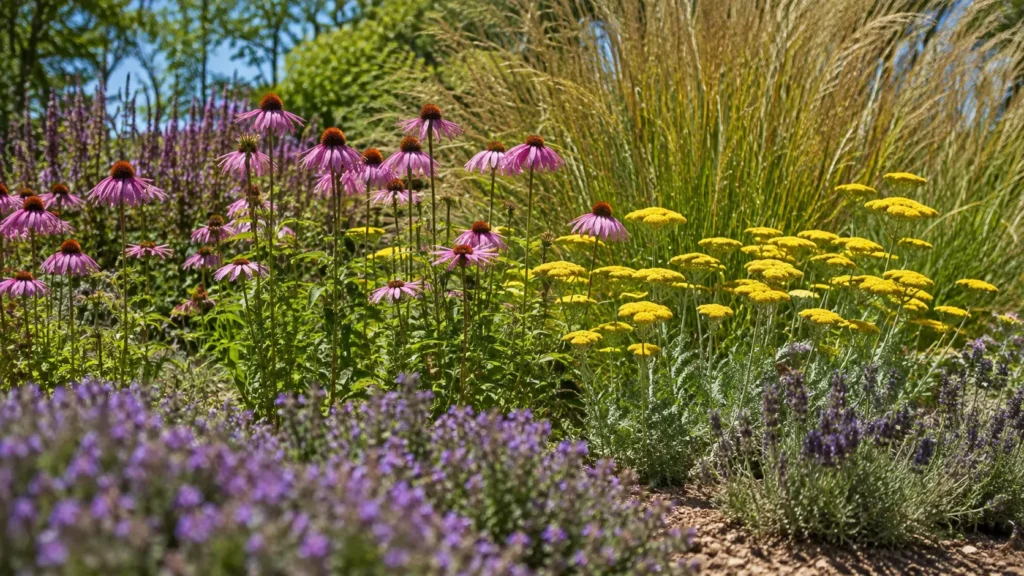
Full sun means six or more hours of direct sun a day. A bed that bakes from ten to four is a different environment from a bed that catches gentle morning light, and the perennials that thrive in the first one are a specific list. These are the species university extension services name for sun, with the height, bloom season and drought tolerance that decide where each one goes.
Looking for one plant in particular? Whether garden mums come back every year is its own question, answered in are mums perennials.
One Link for Your Whole Garden
A short address you control, pointing to your plant list, your photos and everything else you share.
What Full Sun Actually Means
Full sun is six or more hours of direct sunlight per day. Illinois Extension uses that threshold when siting perennial mums, specifying "full sun (greater than 6 hours of sunlight per day)."
Two beds can both qualify and still behave differently. Morning sun until noon is gentler than afternoon sun from noon until evening, because afternoon heat compounds. A bed beside a wall that receives strong afternoon sun gets reflected heat on top of direct sun. That is why drought tolerance appears in almost every recommendation below: in the hottest sunny spots, the real stress is moisture, not light. Where that heat lands depends a good deal on how the bed itself is laid out.
Watch the spot for a full day before planting. Note when the sun arrives and when it leaves.
The Reliable Ten
Iowa State University Extension publishes a list of easy-to-grow perennials, describing them as plants that "perform reliably with basic care." Their list runs: hosta, daylily, salvia, purple coneflower, stonecrop, catmint, yarrow, coreopsis, Shasta daisy and iris.
Of those ten, hosta is the exception. Iowa State's own summer bloom table lists hosta as part shade to shade, so leave it out of a full sun bed. The other nine are sun candidates, and a few carry extra notes worth knowing.
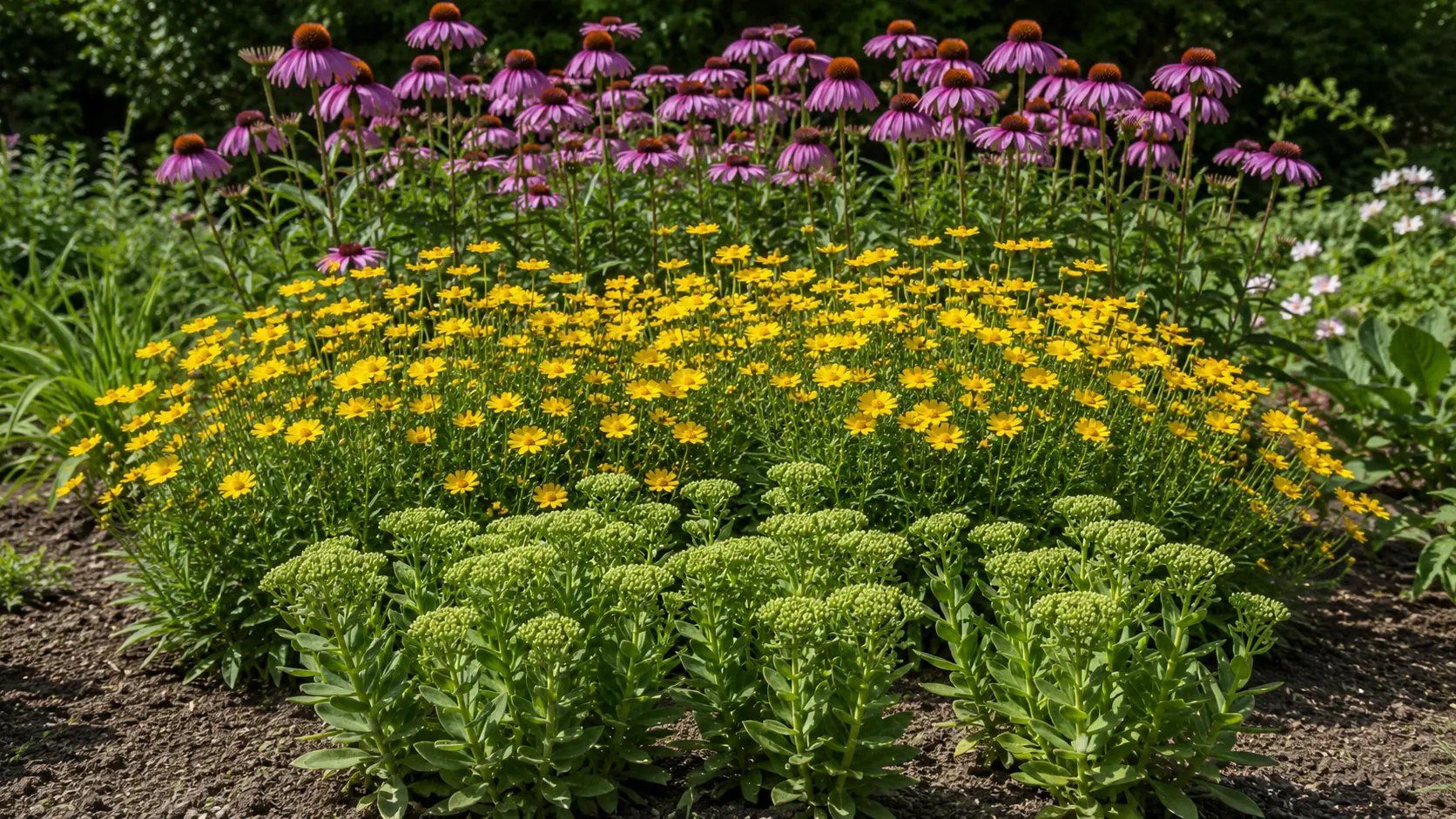
Purple coneflower (Echinacea purpurea) "grows best in full sun and average to dry, well-drained soils," blooming from early summer through late summer.
Stonecrop (Sedum and Hylotelephium) is the drought specialist of the group. Iowa State: it prefers "full sun and dry to average, well-drained soils" and is "highly drought-tolerant." Bloom comes late: "upright types flower from late summer into fall, with pink to rusty-red blooms." Size varies enormously, from "groundcovers under 6 inches tall to upright forms 18 to 24 inches tall," so read the cultivar label rather than the genus.
Threadleaf coreopsis gives fine-textured foliage and a long bloom. Iowa State: it "grows best in full sun and average to dry, well-drained soils," and "blooming begins in early summer and often continues into late summer."
If the Spot Is Dry as Well as Sunny
Iowa State keeps a separate list for this, opening with the reason: "Many landscapes have hot, dry sites that are difficult for many perennials."
Two from that list are worth naming precisely. Perennial bachelor's button (Centaurea montana) provides early summer bloom, "prefers full sun to partial shade and well-drained soils" and "possesses good drought tolerance." It comes with a warning attached, and it is a real one: "Centaurea can be very invasive and should be divided every two years." Plant it knowing that maintenance is part of the deal.
Illinois Extension groups several more. Lamb's ear (Stachys), Russian sage (Perovskia), yarrow (Achillea) and lavender cotton (Santolina) cultivars "all prefer well drained, hot planting sites." Daylily (Hemerocallis) cultivars "withstand hot and dry conditions."
Penn State Extension, in its Exceptional Perennials series, names two with specific hardiness ranges. Calamint is "hardy in Zones 5 to 7" and "prefers full sun and will tolerate drought and poor soil," with flowers that "bloom from June until frost." Little bluestem, a warm-season ornamental grass, is described as drought-tolerant: "Hardy in Zones 3 to 9, it thrives in full sun and poor soil."
Notice the pattern in that last one. Poor soil is listed as a feature, not a problem.
Keep the Plant List in One Link
What you planted, where it went and what actually came back, behind a single address.
Choosing by Height
Iowa State publishes a summer bloom table organized roughly by height, which is the practical way to plan a bed. These are the full sun entries.
| Common name | Genus | Height (ft) | Light | Flower notes |
|---|---|---|---|---|
| Yarrow | Achillea | 1 to 2 | Full sun | Yellow or creamy white flat-topped flowers; dries well |
| Threadleaf coreopsis | Coreopsis | 1 to 2 | Full sun | Lemon or golden yellow daisy flowers; long blooming |
| Ornamental onion | Allium | 1 to 2 | Full sun | Lavender or purple globe-shaped flowers |
| Spike speedwell | Veronica | 1 to 2 | Full sun | Blue, purple, pink or white flower spikes |
| Blanket flower | Gaillardia | 1 to 3 | Full sun | Red, gold, peach and bicolor daisies; long blooming |
| Butterfly milkweed | Asclepias | 1 to 3 | Full sun | Clusters of bright orange or yellow flowers |
| Big betony | Stachys | 1 to 2 | Full sun to part shade | Lavender or white flowers on short spikes |
| Daylily | Hemerocallis | 1 to 3 | Full sun to part shade | Wide color range, lily-like flowers |
Heights are the ranges Iowa State publishes for Iowa conditions. Elsewhere the same species can run shorter or taller, so treat them as proportions for planning rather than guarantees.
Spreading the Bloom Across the Season
A bed that peaks all at once in July looks empty in September. Iowa State's summer list shows how to avoid that.
Some species start early and keep going: coneflower (Echinacea), Shasta daisy (Leucanthemum), spike speedwell (Veronica), queen-of-the-prairie (Filipendula) and yarrow (Achillea) "started to bloom in June and often continue into the summer months."
Others arrive late and cover the back half: hardy hibiscus (Hibiscus), milkweed (Asclepias), balloon flower (Platycodon) and whirling butterflies (Gaura) "sometimes wait to emerge until late May, but they are reliable July and August bloomers."
And stonecrop closes the season, flowering "from late summer into fall."
Three purchases, three bloom windows. An early group, a midsummer group and one late anchor is enough structure for a small bed to stay interesting from June to frost. Turning that into an actual planting takes spacing and bloom planning on paper first.
Soil and Drainage Come First
Read the recommendations above again and one phrase repeats: well-drained soil. Coneflower wants "average to dry, well-drained soils." Stonecrop wants "dry to average, well-drained." Bachelor's button wants "well-drained." Illinois' hot-site group wants "well drained, hot planting sites."
Several of the recommendations above specifically call for well-drained soil. Check the requirement for the plant you choose rather than treating full sun as the only condition.
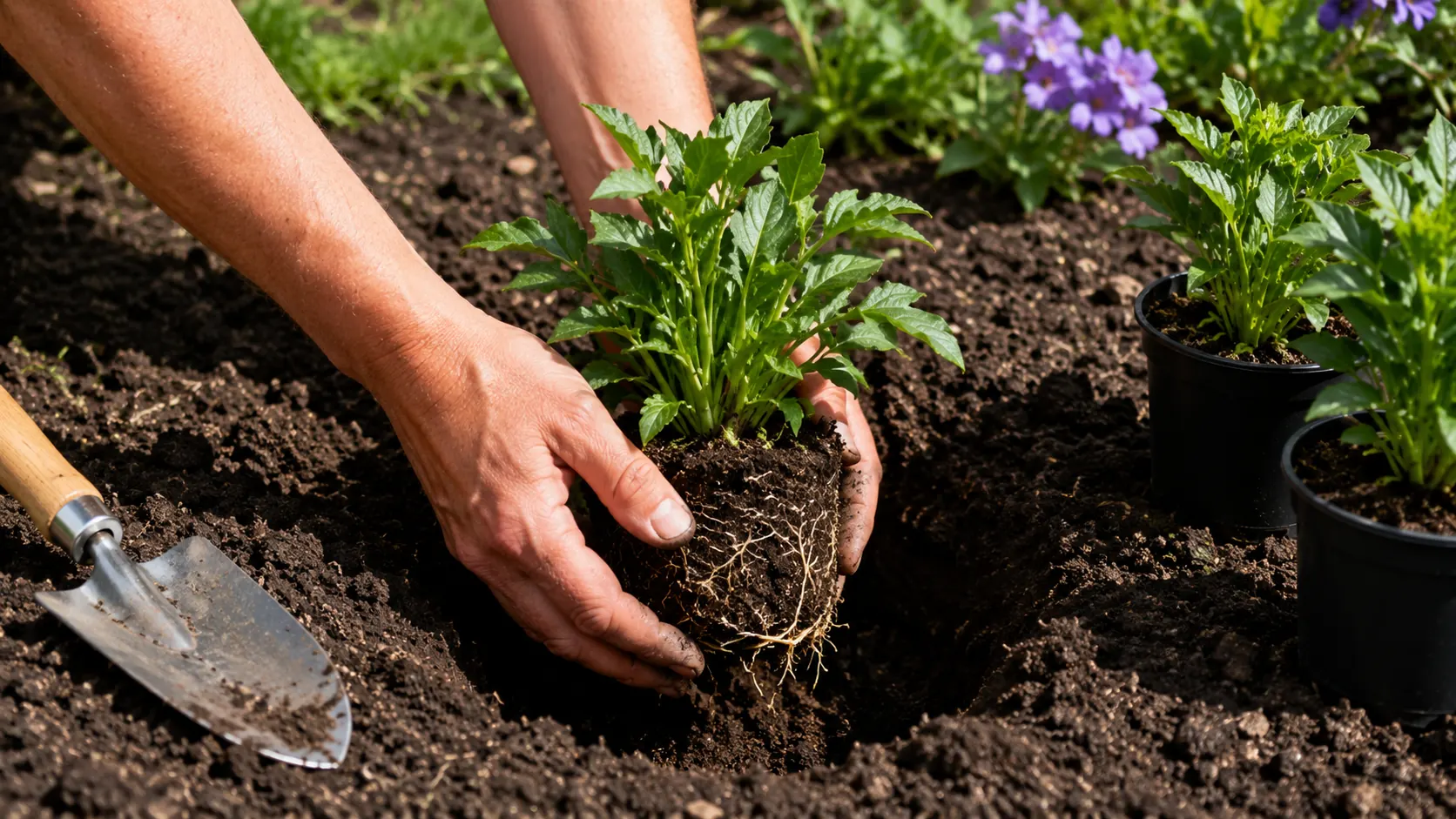
The practical test costs nothing. Dig a hole about a foot deep, fill it with water and let it drain. Fill it again and watch. If water is still sitting there hours later, that spot needs different plants or a raised bed, not a coneflower.
Four Mistakes in Sunny Beds
Treating six hours and ten hours as the same thing. Both are full sun on a label. A plant that is happy with morning sun and afternoon relief can struggle in a west-facing bed against a brick wall.
Improving the soil too much. Rich, moisture-holding soil suits vegetables. For yarrow, sedum, Russian sage and little bluestem, lean and sharply drained is closer to what they want. Penn State lists poor soil tolerance as a virtue of both calamint and little bluestem.
Ignoring the invasiveness note. Iowa State's caution that Centaurea "can be very invasive and should be divided every two years" is part of the recommendation, not a footnote.
Buying everything in one bloom window. Buy at least one late bloomer deliberately.
Show the Garden You Grew
One link for your plant list, your photos and the notes you want to pass on.
FAQ
How many hours of sun is full sun?
Six or more hours of direct sun per day. Illinois Extension uses "greater than 6 hours of sunlight per day" when setting the site for perennial mums.
What is the easiest perennial for a hot, sunny spot?
In this guide's view, stonecrop is the strongest candidate. Iowa State calls Sedum and Hylotelephium "highly drought-tolerant," happy in full sun and dry to average soil, with cultivars valued for low maintenance.
Which full sun perennials tolerate poor soil?
Penn State names calamint and little bluestem as tolerating both drought and poor soil. Illinois Extension groups lamb's ear, Russian sage, yarrow and lavender cotton as preferring well drained, hot planting sites, and daylily as withstanding hot and dry conditions.
What blooms latest in a sunny bed?
Upright stonecrop. Iowa State places its bloom from late summer into fall, with pink to rusty-red flowers.
Do full sun perennials need a lot of water?
Once established, many of these prefer dry to average soil. The recurring requirement is drainage, not irrigation. Standing water around the crown is a bigger risk than drought for most of this list.
Is hosta a full sun perennial?
No. Iowa State lists hosta as part shade to shade, even though it appears on their easy-to-grow list. Keep it out of a full sun bed.
References
- Iowa State University Extension, Easy to Grow Perennials
- Iowa State University Extension, Summer Blooming Perennials
- Iowa State University Extension, Perennials Tolerant of Dry Conditions
- Penn State Extension, Exceptional Perennials
- Illinois Extension, The Garden Scoop: Planting and Maintaining Perennial Mums