

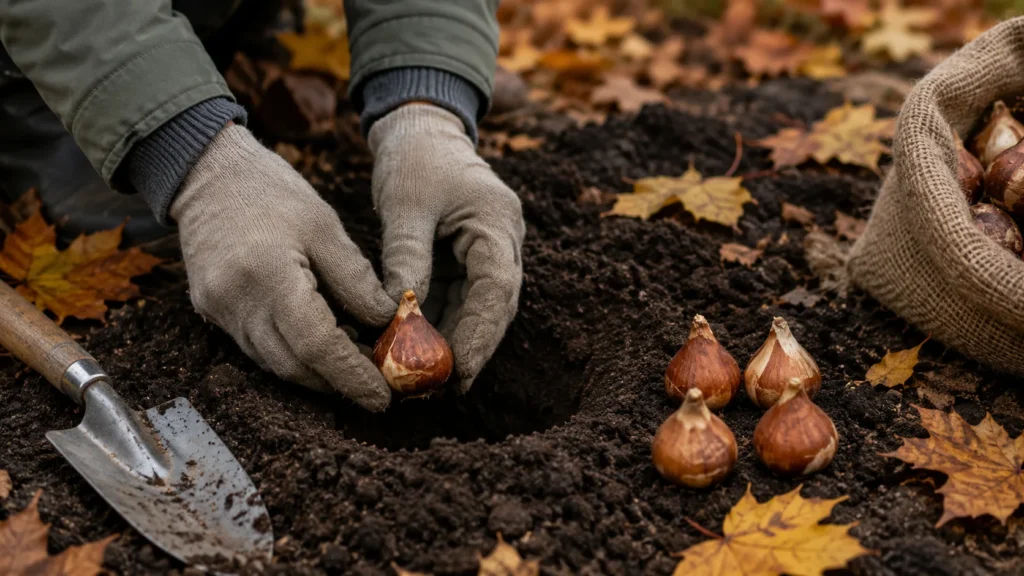
Tulips are planted in fall, bloom in spring, and demand one thing in between: weeks of real cold. This guide covers the planting itself, 6 to 8 inches deep, pointy end up, in a spot that drains, plus the part most guides skip: what to do when your winter is not cold enough, and why year two is usually weaker no matter what you do.
Every number here comes from university extension sources, read in full. Tulips share the fall-bulb calendar with garlic, whose zone-by-zone timing lives in our when to plant garlic guide; this post stays with the ornamental side of the bed.
One Link for the Whole Garden
A short address you control, pointing to your garden notes, your pages and everything else you share.
What You Need Before You Start
Firm bulbs with no mold or bruising, per Clemson's spring bulb guide; Colorado State adds the buying rule that matters most: there is a direct correlation between the size of a bulb and the size of the flower it produces, so big bulbs earn their price. Beyond that: a trowel, a spot with sun and drainage, and, if animals dig in your garden, a piece of wire mesh. Until planting day, store the bulbs somewhere cool and dry, below 60 °F (15 °C); Georgia's extension warns that temperatures above 70 °F (21 °C) can damage the flower buds inside.
When to Plant: Reading the Season, Not the Calendar
The signal is not a date; it is the soil cooling down with enough weeks left for roots to grow before the ground freezes. Colorado State's rule captures it: plant early enough in fall that bulbs root well before freeze-up, because a bulb planted too late may not root adequately, may bloom unevenly, and can even be pushed out of the ground by freeze-thaw cycles. In the Northern Hemisphere that window usually falls around September and October; in the Southern Hemisphere the same logic points to March through May. Clemson's general storage line doubles as a thermometer trigger: bulbs wait in a cool spot below 60 °F, and planting time arrives as the soil itself settles into that cooling curve.
The Cold Requirement (and What to Do If Your Winter Is Warm)
This is the part that decides whether your tulips bloom at all. Clemson's forcing guide states the biology plainly: most hardy bulbs must be exposed to temperatures between 35 and 50 °F (2 to 10 °C), during which roots form and the stem elongates, with an optimum cooling period of 12 to 16 weeks. Shortcut it and you pay in flowers: with fewer than 14 weeks of cold, stems come up short and blooms can abort entirely.
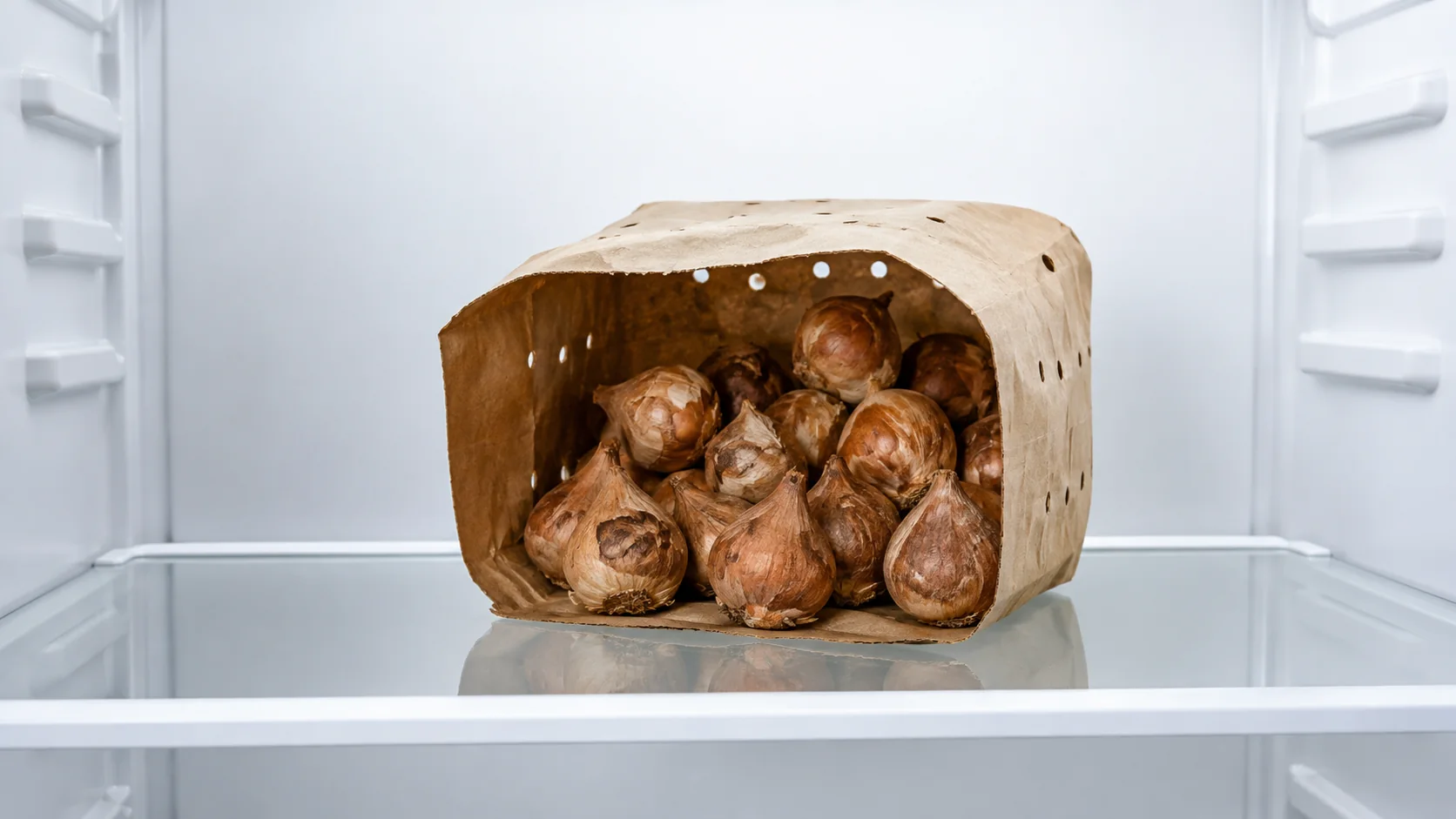
If your winter delivers that cold, the ground does the work. If it does not, Georgia's extension documents the workaround: give bulbs a 12 to 16 week cold period in ventilated packages in the bottom of the refrigerator at 40 to 50 °F (4 to 10 °C) before planting, or ask your supplier for pre-cooled bulbs. Clemson recommends exactly that for its own mild coastal areas: refrigerate from purchase until planting time. Count backwards when you plan: twelve or more weeks of fridge time means the chilling starts a full season before planting day.
Choosing the Spot: Sun and Drainage
Georgia's extension asks for a site with 6 to 10 hours of direct light a day; Clemson adds a refinement worth stealing: flowers last longer if they miss the harshest midday sun. Drainage is non-negotiable, because a bulb sitting in wet soil rots before it roots. If in doubt, run Georgia's test: dig a hole about a foot (30 cm) deep, fill it with water, let it drain, fill it again the next day, and if the second fill drains within 8 to 10 hours, the spot is good for bulbs. Heavy soil improves with 2 to 3 inches (5 to 8 cm) of organic matter worked deep into the bed, per Clemson, and both sources put the ideal pH between roughly 6 and 7.
Track the Bed, Share One Link
Your planting notes, your pages and everything else you share, behind one short address.
How Deep and How Far Apart
For tulips the number is direct, from Clemson: plant 6 to 8 inches deep and 4 to 6 inches apart (15 to 20 cm deep, 10 to 15 cm apart in metric). That is the whole instruction, and it is worth executing with a ruler the first time, because beginner holes run shallow.
For other bulbs there is a rule of thumb, and honesty requires noting the two universities state it differently: Georgia says two to three times the bulb's greatest diameter for large bulbs (three to four times for small ones), while Colorado State says four times the bulb's height. Either gets you close; for tulips, the direct number above wins.
Pointy End Up: Planting Step by Step
Dig to depth, loosen the bottom of the hole, and set each bulb with the growing tip up, per Colorado State. The why is in Georgia's definition of a bulb: the flat basal plate at the bottom is where roots emerge, so it faces down, and the pointed tip carries the shoot. Set the bulb, do not screw or press it hard into packed soil, cover, and water once to settle the bed. In cold-winter regions, Colorado State adds a final touch after the ground freezes: a 3 inch (8 cm) mulch layer to prevent the freeze-thaw cycling that breaks new roots. Where the ground never freezes, skip that step; the fridge already did winter's job.
Planting Tulips in Pots
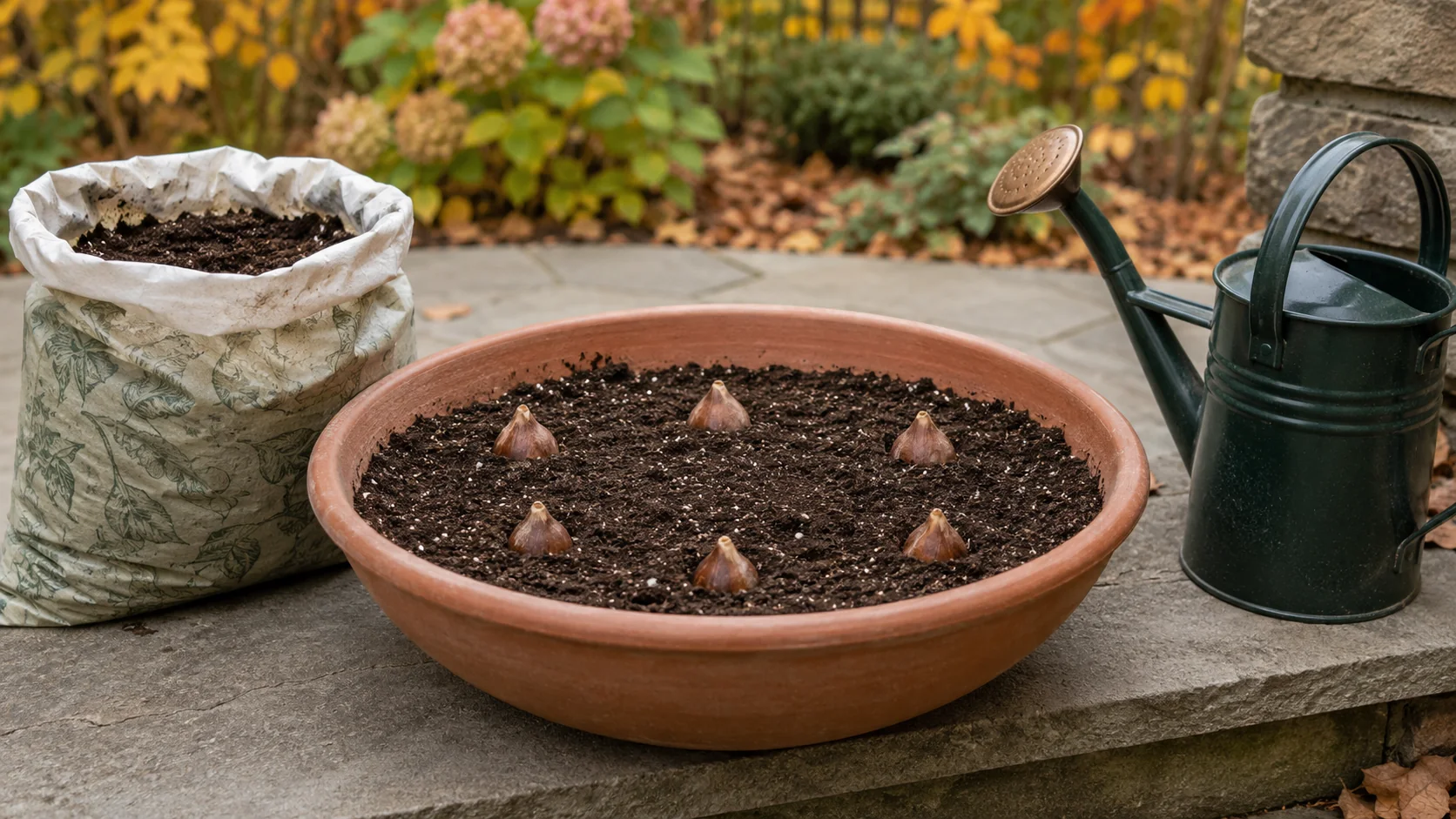
Pots follow the same rules with less soil: clean containers with drainage holes, and a mix that drains while holding moisture; Clemson suggests equal parts potting soil, sphagnum peat moss and perlite, or plain commercial potting mix at minimum. Density is generous: a 6 inch (15 cm) pot accommodates six tulips, with at least 1 to 2 inches of soil beneath the bulbs and the tips allowed to show at the surface. Keep the mix loose so roots push through easily. One pretty detail from Clemson's forcing guide: face the flat side of each tulip bulb toward the outside of the pot, because the first leaf always emerges from that flat side and will arch neatly over the rim.
The pot has a second job in warm climates: it is a chilling vessel. Plant the bulbs in the pot and give the whole pot its 12 to 16 weeks of cold, in a refrigerator or the coldest spot you have, and the bulb roots while it chills. For general container craft, pot sizes and watering, the container gardening pillar is the deep dive.
Protecting Bulbs from Squirrels and Rodents
Clemson does not hedge here, and neither will we: animals often dig and eat tulip and crocus bulbs in winter, and the only sure way to protect them is to enclose the bulbs in wire mesh at planting time. Repellents are not endorsed by any source this guide uses. The planning tip hiding in the same sentence: animals rarely eat daffodil bulbs, so if your garden is a battlefield, daffodils hold ground that tulips lose.
After the Bloom (and Why Year Two Is Often Weaker)
When flowers fade in spring, remove them before seed forms; Colorado State explains that developing seed diverts the food the foliage is making, food that should be rebuilding the bulb. Then comes the discipline: leave the leaves in place for at least six weeks after bloom, or until they brown naturally, per Clemson. Cutting the foliage early is one of the classic reasons a bulb fails to bloom the next year, along with wet soil, crowding and heavy shade.
And the honest ending: in warm regions, tulips usually decline after their first year. Clemson says they can generally be counted on for a single season in its state and are treated like annuals, dug and discarded after bloom; Georgia's extension records the same decline. A weak second year is the tulip's normal life cycle in mild climates, not your failure of care. Bulbs that were forced in pots indoors are a certain case: discard them, as they seldom flower well replanted. Buy fresh bulbs, chill them properly, and treat the spring show as the annual event it is.
Show Off the Spring Bed
One VisuLink holds your garden photos, your pages and everything else you share.
FAQ
How deep do you plant tulip bulbs?
6 to 8 inches deep (15 to 20 cm) and 4 to 6 inches apart (10 to 15 cm), per Clemson's spring bulb guide, with the pointed tip facing up and the flat basal plate down.
When should tulip bulbs be planted?
In fall, early enough for roots to grow before the ground freezes. Read the season, not a date: the soil cooling down is the signal, which usually means September or October in the Northern Hemisphere and March through May in the Southern.
Can you grow tulips in a warm climate?
Yes, with borrowed cold: give the bulbs 12 to 16 weeks in ventilated packages in the refrigerator at 40 to 50 °F (4 to 10 °C) before planting, or buy pre-cooled bulbs. With fewer than about 14 weeks of chill, stems come up short and flowers can abort.
Do tulips come back every year?
Often not, especially in mild climates. University extensions record that many tulips decline after the first year and are treated as annuals in warm regions: one strong season, then dig, discard and replant fresh bulbs the next fall.
How do I keep squirrels from digging up tulip bulbs?
Wire mesh around the bulbs at planting time, which Clemson calls the only sure way. Daffodils are rarely eaten, so mixing them in protects the ground tulips cannot hold.
References
- Clemson Cooperative Extension, Spring-Flowering Bulbs (HGIC 1155)
- University of Georgia Extension, Flowering Bulbs for Georgia Gardens (B918)
- Colorado State University Extension, Fall-Planted Bulbs and Corms (7.410)
- Clemson Cooperative Extension, Forcing Bulbs Indoors (HGIC 1556)
- Clemson Cooperative Extension, Flowering Bulb Insect Pests (HGIC 2104)