

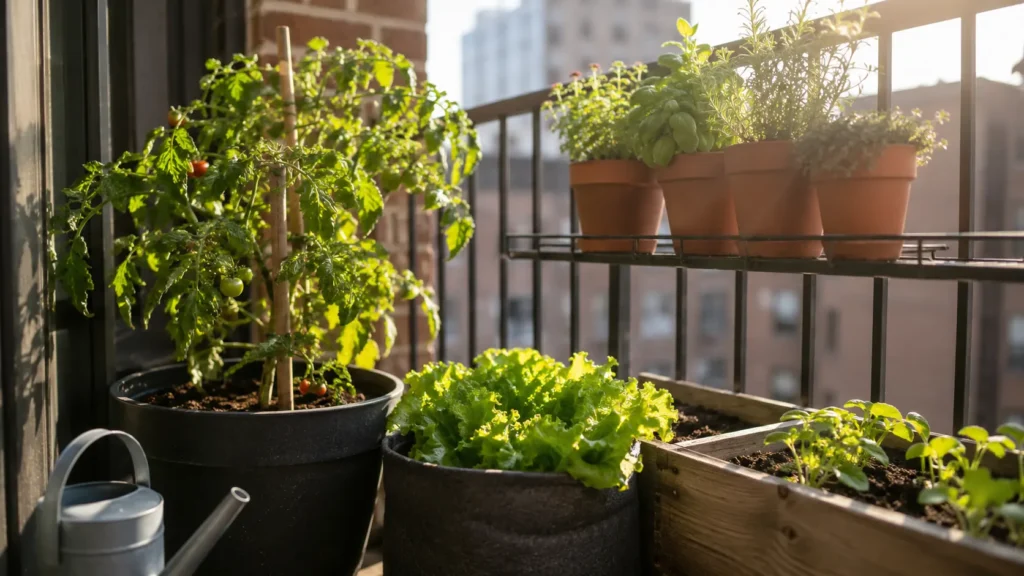
You do not need a yard to grow food. A pot with a drainage hole, decent potting mix and six hours of sun will grow tomatoes on a balcony, herbs on a windowsill and lettuce on a doorstep. Container gardening is the whole garden, shrunk to the size of the space you actually have.
Most beginners fail at container gardening for reasons that have nothing to do with talent: the pot was too small, the soil was wrong, or the plant never had a chance in that light. All three are decisions you make before anything is planted, which means all three are fixable before they cost you a season.
This guide covers the containers, the soil, the light, the watering rhythm and the plants that forgive mistakes, in the order you will actually face those decisions.
One Link for Everything You Grow
A short address you control, pointing wherever your garden photos and notes already live.
Choosing Containers That Fit the Plant
The pot is not decoration; it is the root system's entire world. The single most common beginner mistake is a container that looks generous on the shelf and is cramped by July. Size the pot to the mature plant, not the seedling you are holding.
As a working rule: herbs, lettuce and other shallow-rooted greens are happy in small and medium pots. A full-size tomato wants something in the range of a five-gallon container, and peppers, eggplant and other large fruiting plants sit close behind. When in doubt, go one size up: a slightly oversized pot holds moisture longer and buys you forgiveness on hot days.
Material matters less than beginners fear, but it changes your watering rhythm. Terracotta is porous and dries out fast, which is kind to plants that hate wet feet and cruel in a heat wave. Plastic and resin hold moisture longer. Fabric grow bags drain freely, air-prune roots and are the cheapest way to get a big container.
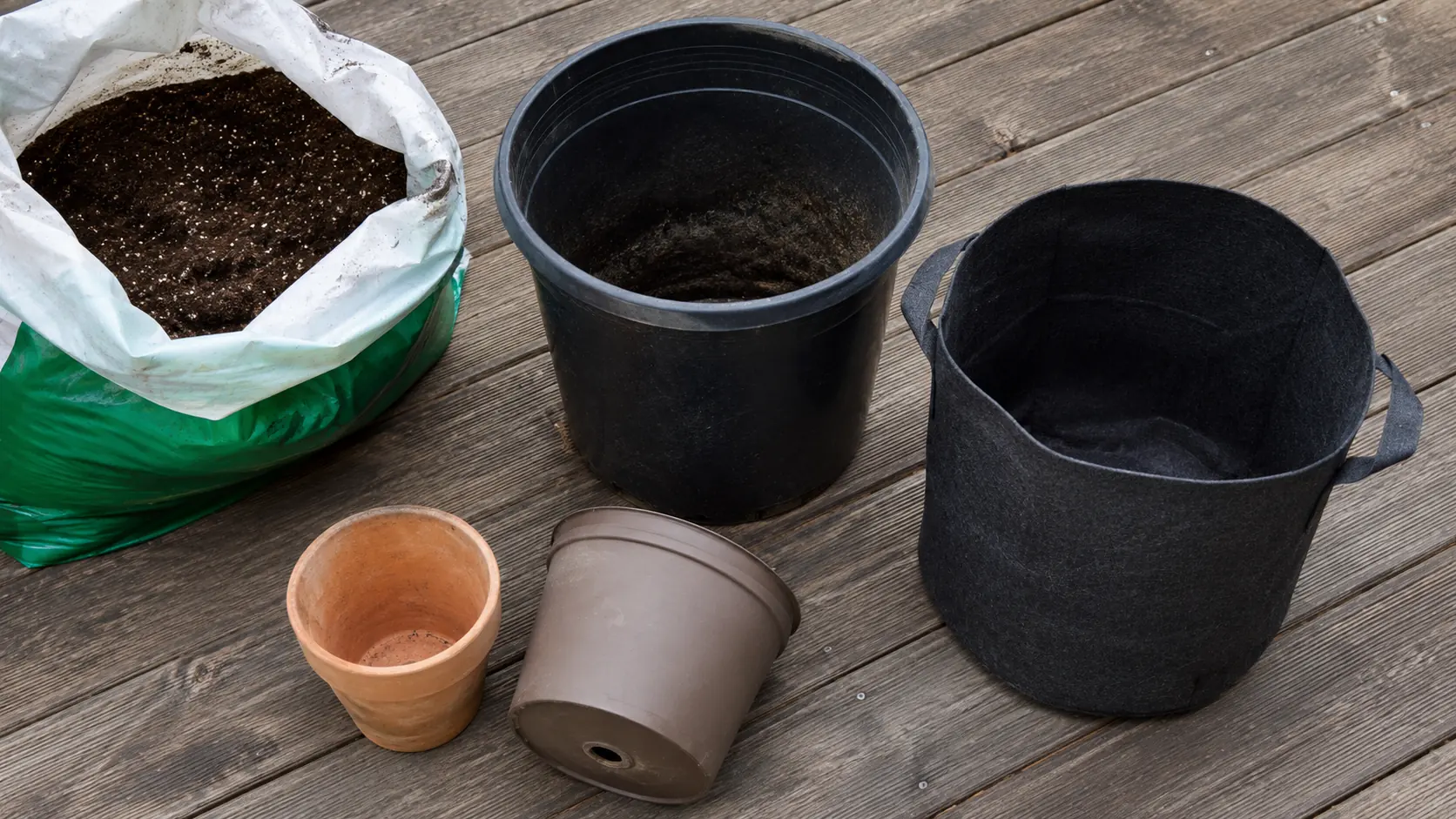
Whatever you choose, one thing is not negotiable: a drainage hole. Without it, water pools at the bottom, roots sit in the puddle, and the plant drowns from below while the surface looks dry. A pot with no hole is a vase.
The Soil Decision: Potting Mix, Never Garden Dirt
Do not fill containers with soil dug from the ground. Garden soil compacts inside a pot, squeezes the air out of the root zone, drains badly and often carries weed seeds and disease. In a bed it works because worms and structure keep it alive; in a container it turns to brick.
Buy potting mix, sometimes labeled container mix. It is engineered for pots: light, fluffy, moisture-holding but free-draining. If you press a handful and it stays airy instead of forming a dense clod, that is the texture you want.
Two upgrades pay for themselves. Mixing in slow-release organic fertilizer at planting feeds the plant for weeks, because nutrients wash out of containers faster than out of ground beds every time you water. And topping the pot with an inch of mulch, straw, shredded leaves, even torn cardboard, slows evaporation dramatically in summer.
Reading Your Light Before You Buy Plants
Light is the budget everything else spends from. Before buying a single plant, watch your space across one sunny day and count the hours of direct sun that actually land where the pots will sit. Balconies lie: a railing, a neighboring wall or an overhang can cut a "sunny" spot to three real hours.
The math is simple. Fruiting plants, tomatoes, peppers, cucumbers, squash, want six or more hours of direct sun. Root vegetables handle four to six. Leafy greens and many herbs are productive at three to four, and lettuce actively appreciates afternoon shade in hot climates.
The honest version of this exercise saves the most money: if your space gets three hours of sun, you are a salad-and-herb garden, not a tomato garden, and you will be far happier growing what your light can feed than fighting what it cannot.
Keep Your Garden Notes in One Place
Link your progress photos, plant lists and sources from one short address.
Watering: The Habit That Decides Everything
Containers dry out faster than any garden bed, from every side, all day. The habit that keeps them alive is not a schedule, it is a check: push a finger an inch into the mix. Dry at that depth means water now; damp means come back tomorrow. In midsummer, small pots can need this check daily.
Water until it runs out of the drainage hole, then stop. Shallow sips train shallow roots; a full soak pulls air down through the mix and reaches the bottom of the root ball. Morning is the best time, because the plant faces the heat of the day already supplied and leaves dry quickly, which discourages disease.
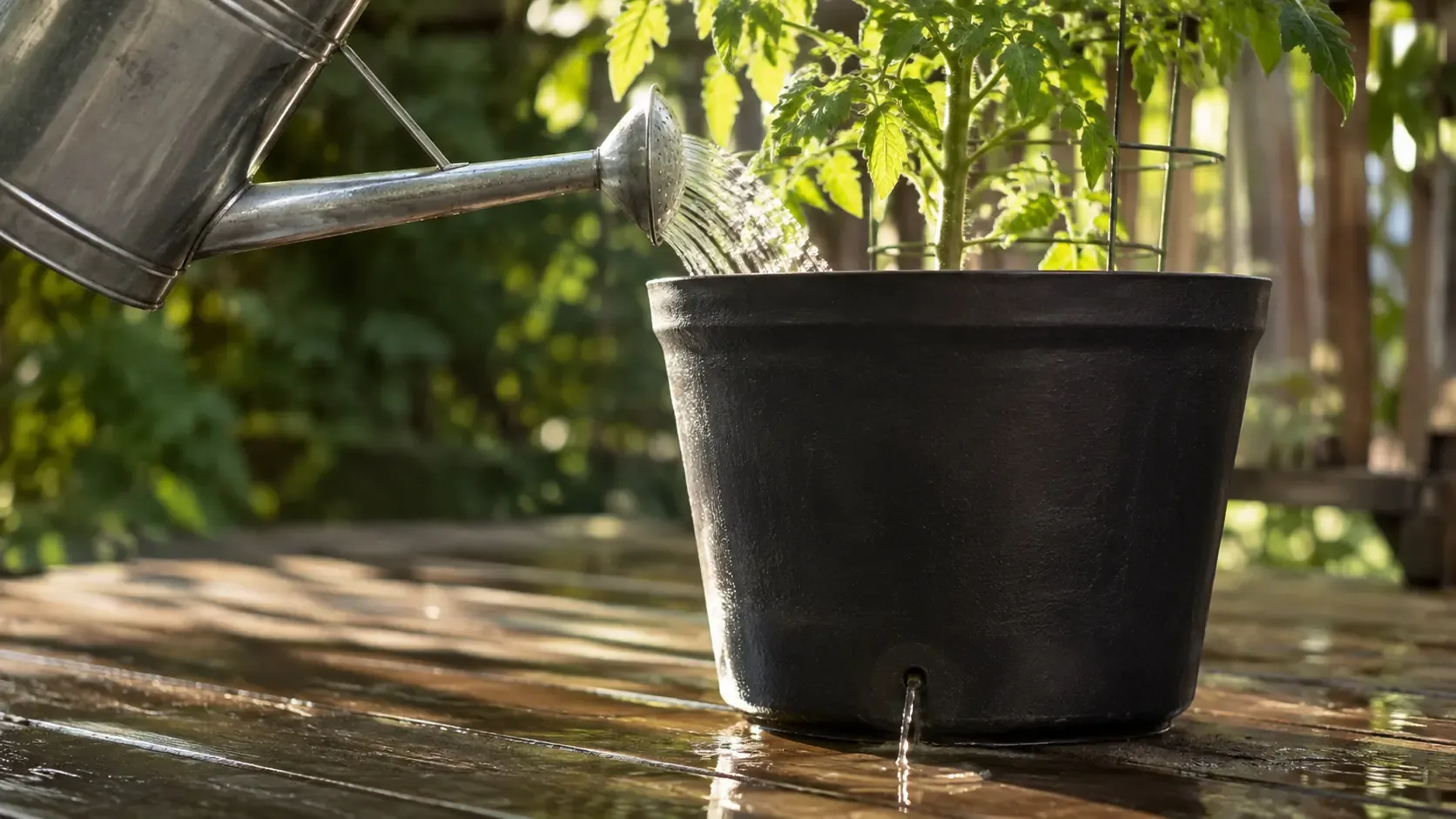
If daily checks sound like too much, design around it: bigger pots, plastic instead of terracotta, mulch on top, and self-watering containers with a reservoir at the bottom. Every one of those choices stretches the interval between waterings.
The Most Forgiving Plants to Start With
Start with plants that tolerate beginner rhythm and give quick feedback. Speed matters psychologically: a harvest in the first month keeps a new gardener watering in the third.
Herbs are the easiest wins. Basil, mint, chives and parsley grow fast in small pots, and cutting them regularly makes them bushier. Keep mint in its own container; it colonizes anything it shares.
Leafy greens come next. Lettuce, spinach and arugula go from seed to salad in weeks, need only modest light, and regrow after harvesting the outer leaves.
Radishes are the fastest vegetable most people will ever grow, roughly a month from seed, and they make the whole process legible to kids.
Cherry tomatoes are the step up: they need a big pot, real sun, a stake or cage, and steady water, but they out-yield full-size tomatoes for beginners and shrug off imperfect care. One healthy plant produces all summer.
Peppers and bush beans round out a first season, both compact, both productive, both tolerant of a missed watering once established.
The Five Mistakes That End First Gardens
Pots without drainage. Already covered, and still the number one killer. Drill a hole or use the pot for something else.
Garden soil in containers. The cheapest-looking option costs the most in dead plants.
Too many plants in one pot. Crowding looks lush for two weeks, then everything competes for water and light, and everything loses. Follow spacing advice as if the seedlings were already full size.
Buying plants before counting sun hours. Light is the one input you cannot buy later.
Feeding nothing. Frequent watering rinses nutrients out of the pot. A diluted liquid feed every week or two, or slow-release pellets at planting, keeps the second half of the season as productive as the first.
Share the Harvest, Not Ten Different Links
One VisuLink holds your garden gallery, your favorite guides and everything else you share.
FAQ
What vegetables grow best in containers for beginners?
Herbs (basil, mint, chives), leafy greens (lettuce, spinach, arugula), radishes, cherry tomatoes, peppers and bush beans. They combine fast feedback with tolerance for imperfect watering, which is what a first season needs.
How big should a container be for tomatoes?
A full-size tomato wants a container in the five-gallon range or larger; cherry tomatoes accept slightly less but still need a large pot, a stake or cage, and six or more hours of direct sun. Small pots are the main reason container tomatoes fail.
Can I use garden soil in pots?
No. Garden soil compacts in containers, drains poorly and suffocates roots. Use potting mix, which is formulated to stay light and free-draining inside a pot.
How often should I water container plants?
Check daily rather than following a fixed schedule: push a finger an inch into the mix and water when it is dry at that depth, until water runs from the drainage hole. Small pots in summer heat often need water every day.
How much sun does a container garden need?
Fruiting vegetables want six or more hours of direct sun; root vegetables four to six; leafy greens and most herbs stay productive at three to four. Count the real hours your space gets before choosing plants.