

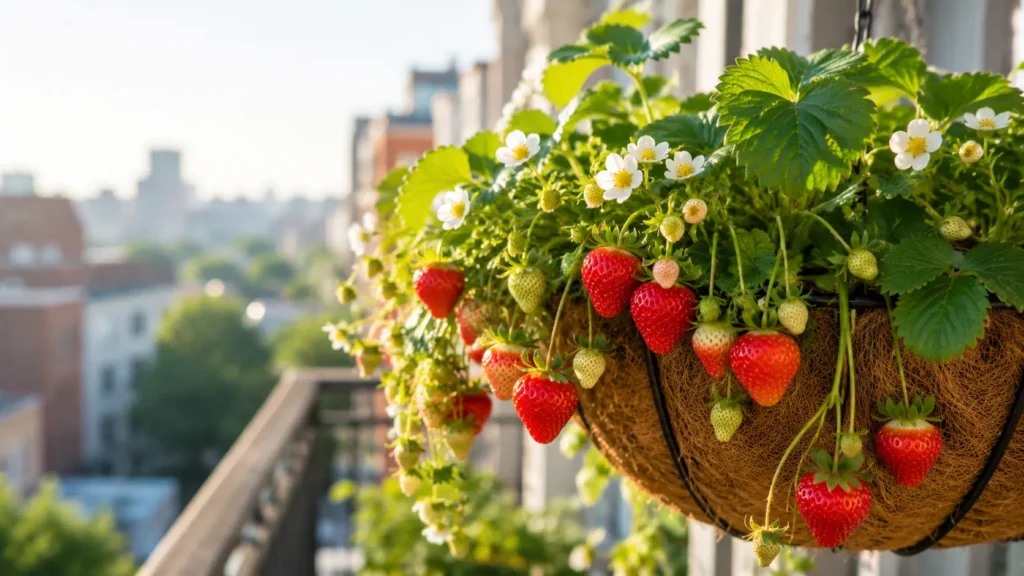
Strawberries are the container fruit. Shallow roots, compact plants, fruit that hates touching wet ground: everything about the strawberry plant argues for a pot. Get three decisions right, the type of plant, the sun, and the watering rhythm, and a balcony produces bowls of them.
Strawberries in containers fail for predictable reasons: the wrong type for pot life, a container that dries into a brick every afternoon, or plants set so deep their crowns rot. All three are avoidable before planting day. This guide walks the decisions in order, from choosing the plant to what to do with the pot in winter.
One Link for Everything You Grow
A short address you control, pointing wherever your garden photos and notes already live.
Pick the Right Type: Day-Neutral Wins in Pots
Strawberry varieties sort into three behaviors, and the choice matters more in a container than anywhere else.
June-bearing types produce one large crop in early summer, on plants that spend their first year mostly building runners. They are the field-and-row choice, and the least rewarding in a pot: a season of care for one flush of fruit.
Everbearing types give two to three smaller flushes across the season, a middle ground.
Day-neutral types are the container pick. They ignore day length and keep setting fruit whenever temperatures stay roughly between 35 and 85 degrees Fahrenheit, which means berries from the first year, spread across the whole season, exactly what a small planting is for. If the label offers a day-neutral variety, take it.
Buy certified disease-free plants from a nursery rather than transplanting from a friend's patch; strawberries carry viruses that ride along invisibly and shrink harvests for years.
Containers That Actually Work
Strawberry roots live in the top inches of soil, so depth matters less than surface and volume. A pot 8 to 12 inches deep is enough; what kills plants is total soil volume so small it dries out by noon.
The classics all work with caveats. Hanging baskets keep fruit clean and slugs away, but dry out fastest of anything on the balcony, in summer they can need water twice a day. Strawberry towers and pocket jars look purpose-built, but the small pockets hold little mix and the lower pockets stay in shade; expect the top plants to outperform the bottom ones. A simple wide pot, trough or fabric grow bag with one plant per 25 to 30 centimeters is the boring option that works best: maximum soil per plant, fruit draped over the edge, easy to water.
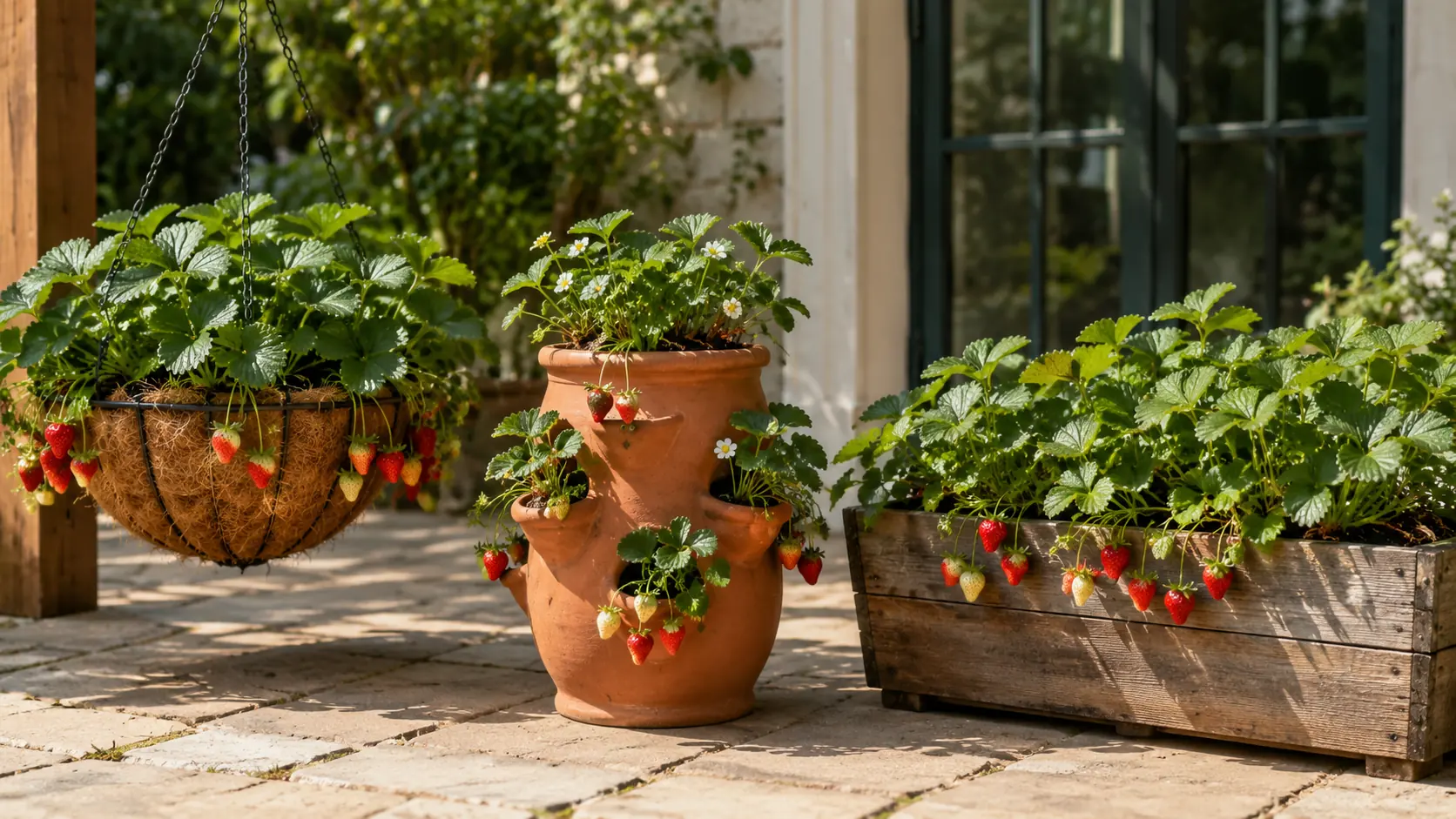
Whatever the shape: drainage holes, always, and quality potting mix, never garden soil. The rules from the container gardening basics guide apply unchanged here.
Planting: The Crown Rule
A strawberry plant has one non-negotiable planting requirement: the crown, the thick knot where leaves emerge, must sit at soil level. Bury the crown and it rots; plant too high with roots exposed and the plant dries out. Set the plant so the mix comes up to the base of the crown and no further.
Spread the roots downward like a fan rather than coiling them in the hole, firm the mix gently, and water until it runs from the drainage hole. In the first weeks, pinching off the very first flowers feels wrong and pays back: the plant invests in roots and crowns first, then fruits harder for the rest of the season.
Sun, Water and Feeding
Sun: strawberries want as much as you can give them, six hours of direct sun minimum, eight or more is better. Fruit set and flavor track sunlight almost linearly. A plant in four hours of sun makes leaves, not dessert.
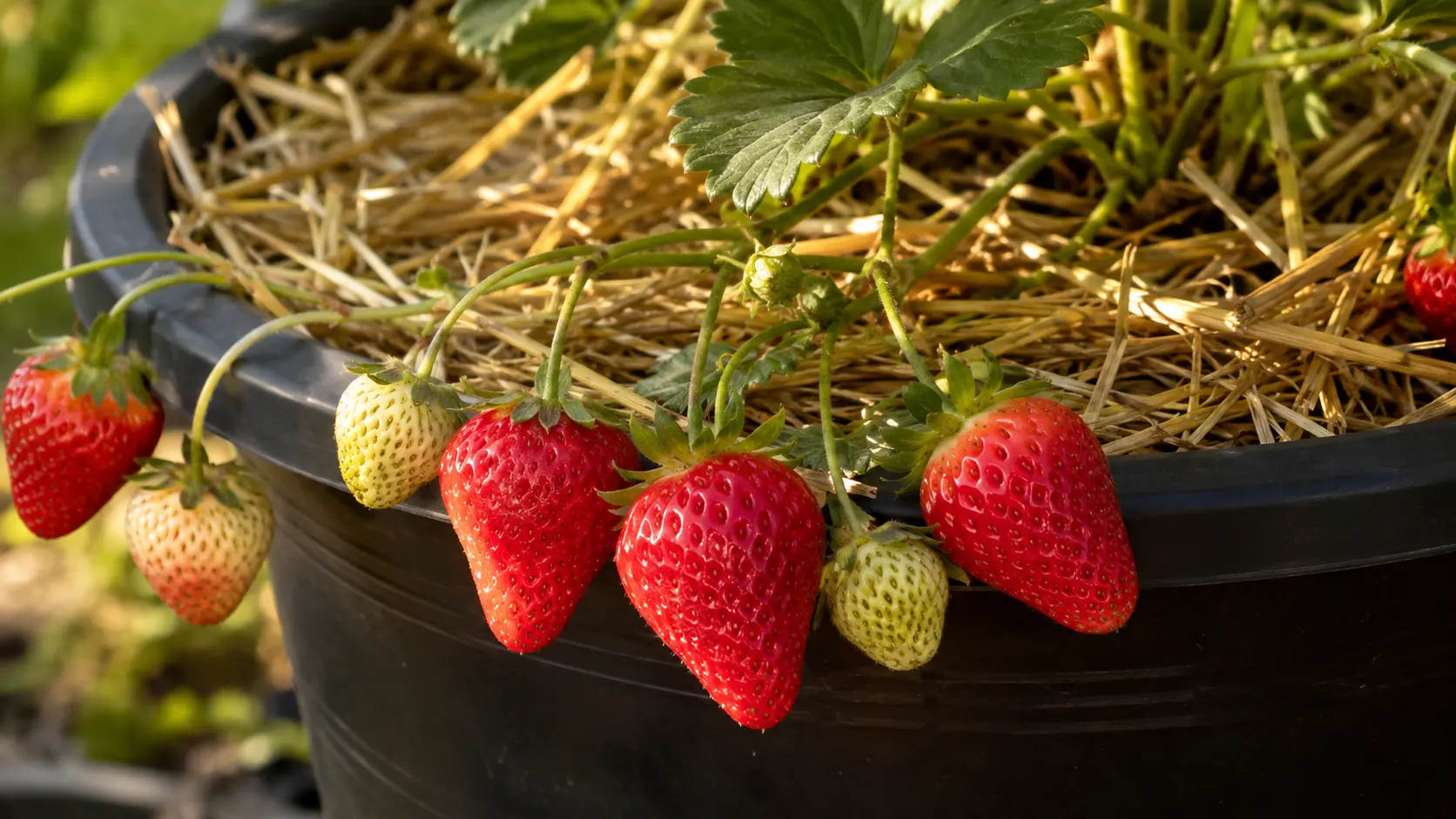
Water: the finger test daily, watering when the top inch is dry. Containers full of ripening fruit are thirsty, and moisture swings, soaked then bone dry, are what produce small, seedy, split berries. Mulching the surface with straw keeps moisture even and fruit clean.
Keep Your Garden Notes in One Place
Link your progress photos, variety names and sources from one short address.
Feeding: nutrients wash out of pots quickly, and a day-neutral plant fruiting for months is working hard. A diluted balanced liquid feed every two weeks through the season keeps flushes coming. Skip high-nitrogen lawn-style fertilizers; they trade fruit for foliage.
Runners: Cut Them or Root Them
Through summer, plants send out runners, long horizontal stems with a baby plant at the tip. In a container they are a fork in the road. Left alone, runners drain energy from fruiting, so the default move in a pot is to snip them off as they appear and keep the plant focused on berries.
Or turn them into next year's plants for free: pin the plantlet at the runner's tip onto the surface of a small pot of moist mix, leave it attached until it roots in a few weeks, then cut the cord. Two or three rooted runners per season quietly renews the whole collection, useful because container strawberries are at their best in years one and two, and worth replacing by year three.
Getting Pots Through Winter
Strawberries are hardy perennials, but a pot is a cold home: roots in a container face winter without the insulation of the ground. In mild-winter climates, plants overwinter where they stand. Where real freezes come, move pots against a sheltered wall, into an unheated garage or shed, or huddle them together and wrap or mulch the containers. The goal is not warmth, the plants need their cold rest, but protection from the deep root-freeze and the constant freeze-thaw swings that open-air pots suffer.
Water occasionally through winter so the mix never turns to dust, and bring the pots back to the sun as growth resumes. The reward for the small ritual is a plant that fruits weeks earlier than anything planted in spring.
Share the Harvest, Not Ten Different Links
One VisuLink holds your garden gallery, your favorite guides and everything else you share.
FAQ
What type of strawberry is best for containers?
Day-neutral varieties. They fruit in their first year and keep producing across the season whenever temperatures are moderate, instead of betting everything on one early-summer crop like June-bearing types.
How deep does a strawberry container need to be?
About 8 to 12 inches of depth is enough, since the roots are shallow. Total soil volume matters more than depth: more mix means slower drying and steadier fruit.
Why are my container strawberries small or misshapen?
Most often moisture swings, soaked then bone dry, or too little sun. Even watering with a straw mulch and six-plus hours of direct sun are the two levers that fix fruit quality.
Should I cut the runners off my potted strawberries?
By default, yes: runners divert energy from fruit. The exception is deliberately rooting a few plantlets into small pots to become free replacement plants for next season.
Do potted strawberries survive winter?
Yes, with protection. Move containers against a wall, into an unheated shelter, or wrap them; the plants need cold rest but not a frozen root ball. Water lightly now and then so the mix never fully dries.