

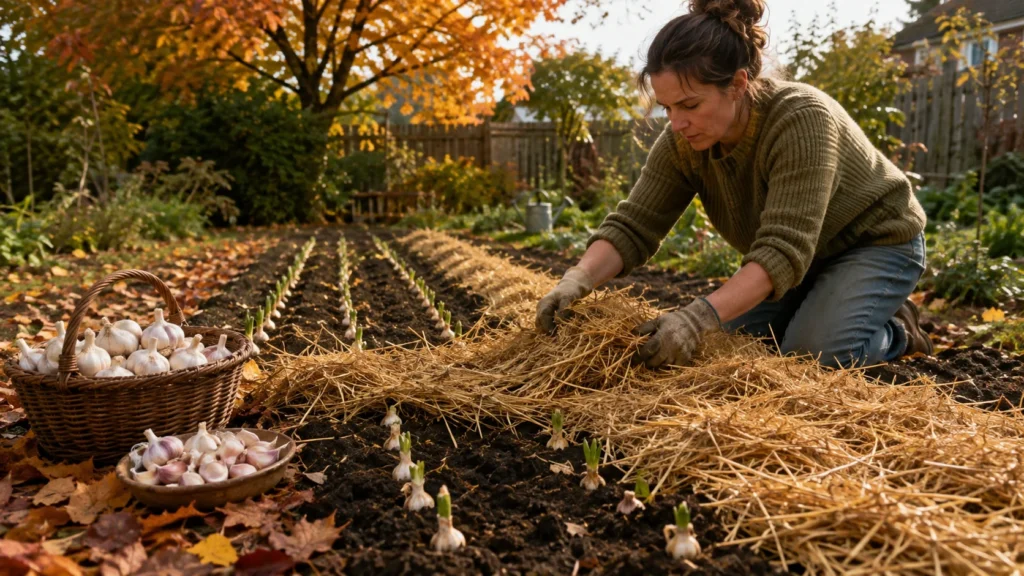
The short answer: in fall, one to two weeks after your first killing frost. Garlic is the backwards crop, planted when everything else is being pulled, and the gardeners who internalize that one inversion get heads next July that the spring planters spend the season envying.
The long answer is a single functional rule from Penn State's growers: cloves should go in early enough to grow a good root system before the ground freezes, but late enough that no shoots emerge above the soil. Everything else in garlic timing, the zone charts included, is approximation orbiting that sentence. This guide gives you the honest version: the rule, the windows, the two types, and the July signal that says dig.
One Link for Everything You Grow
A short address you control, pointing wherever your garden photos and notes already live.
The Real Rule: Roots Yes, Shoots No
Garlic overwinters in the ground on purpose. Planted in fall, each clove spends the weeks before the ground freezes building roots, sits out winter underground, and explodes upward in spring with a head start no spring planting matches. The University of Minnesota's concrete version of the timing: plant one to two weeks after the first killing frost. Cold enough that shoots stay down, warm enough that roots still grow.
Your window, then, hangs on one local number: your average first fall frost. NOAA's 1991 to 2020 climate normals publish first fall freeze dates for US locations, and your county extension office knows yours by heart. Look it up, add a week or two, plant.
What Zones Do and Don't Tell You
Same honesty as always: USDA hardiness zones measure average winter minimum temperatures for perennial survival, not planting dates. What they do give garlic is a rough bracket, because first frost tracks winter severity loosely. As approximations only, overruled everywhere by your local frost date: cold northern zones typically plant from late September into October; the broad middle of the country typically October into early November; mild southern zones typically November into December, where the challenge flips from beating the freeze to getting enough cold at all.
No university source publishes a zone-to-date garlic table, which is precisely why this one is labeled the way it is. The frost date lookup takes two minutes and beats every chart, this one included.
Hardneck or Softneck
Garlic comes in two working types. Hardneck varieties send a rigid stalk through the bulb, produce fewer but larger cloves, and store for a shorter time. Softneck varieties, the artichoke and silverskin families, pack more cloves, have no flower stalk, store notably longer and are the braidable kind. Utah State's practical summary: softneck for storage and braiding, hardneck for cold-climate reliability, though the trait expression can shift with where you grow them.
Whichever you choose, buy seed garlic from a garden supplier, not the grocery store: supermarket bulbs are mostly softneck types selected for warehouses rather than your winter, and Minnesota's extension flags them as poor performers in cold climates. One purchased bulb becomes a row; from then on, your biggest and healthiest bulbs each July become next fall's seed.
Keep Your Garden Notes in One Place
Link your planting dates, variety names and progress photos from one short address.
Planting: Depth, Spacing and Soil
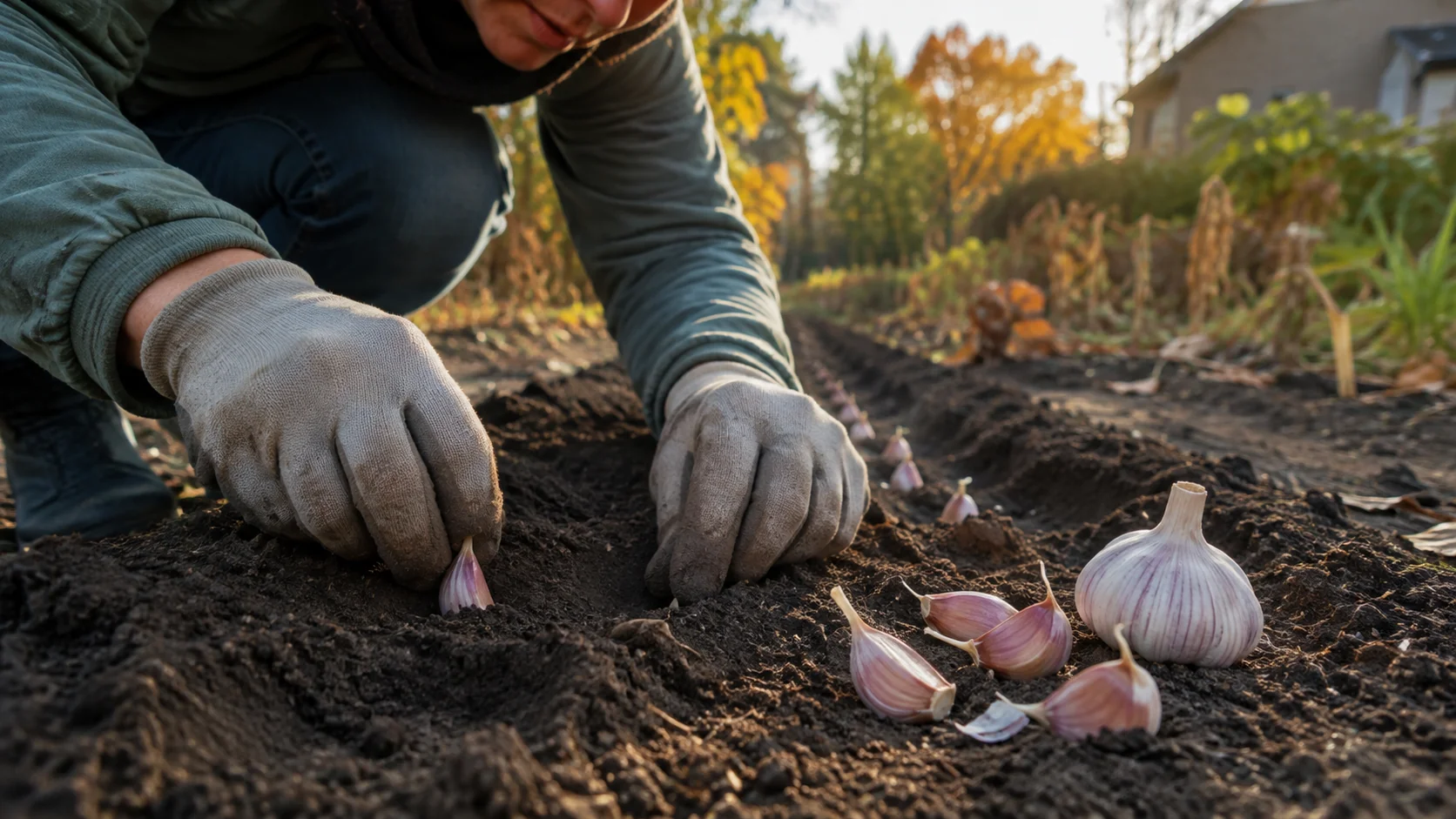
Break bulbs into individual cloves shortly before planting, keeping the papery skins on, and plant the big ones; clove size predicts bulb size. Set each clove pointed end up, with the base about 5 to 8 centimeters (2 to 3 inches) below the surface, the home-garden depth Minnesota recommends. Spacing recommendations run 7 to 15 centimeters (3 to 6 inches) between cloves across the university sources; crowd them only if you can feed and water generously, because high density shrinks bulbs.
Soil does the quiet work: garlic wants well-drained ground rich in organic matter, pH between 6.0 and 7.0. Drainage is the non-negotiable, since waterlogged winter soil rots cloves and invites bulb rot diseases. Garlic is also a hungrier crop than it looks; work compost in at planting and top-dress with nitrogen when shoots emerge in spring, then stop feeding by late spring so the plant finishes bulbs instead of leaves.
Mulch: The Winter Blanket
After planting, cover the bed with 8 to 10 centimeters (3 to 4 inches) of straw or shredded leaves. The mulch is not for warmth exactly; it is for stability, buffering the freeze-thaw swings of winter and early spring that heave cloves out of the ground, while also holding moisture and smothering weeds, which garlic hates competing with.
In spring, once hard freezes are done, either pull the mulch back to let soil warm or leave it in place for weed control and moisture; both are legitimate extension-endorsed plays. What matters is that the shoots come up through spring air, not that the mulch hits a date.
The Spring Exception
Missed the fall window? Spring garlic works, with an honest asterisk from Utah State: plant cloves as soon as the soil can be worked, and expect smaller bulbs than fall planting delivers, because the plant loses the root head start and part of its cold exposure. Smaller is not worthless: spring-planted garlic still makes real bulbs, and the green shoots are a harvest of their own for cooking.
Treat it as the backup play, and set a phone reminder for late September. The best garlic move of any spring is planning the coming fall.
Harvest and Curing
Garlic tells you when. The signal, consistent across the extension sources: dig when the lower leaves have browned while roughly half the upper leaves are still green, typically between late June and late July depending on variety and region. Too early and the cloves have not filled their skins; too late and bulbs split open and store badly. In doubt, sacrifice one bulb and cut it: cloves filling the wrappers means go.
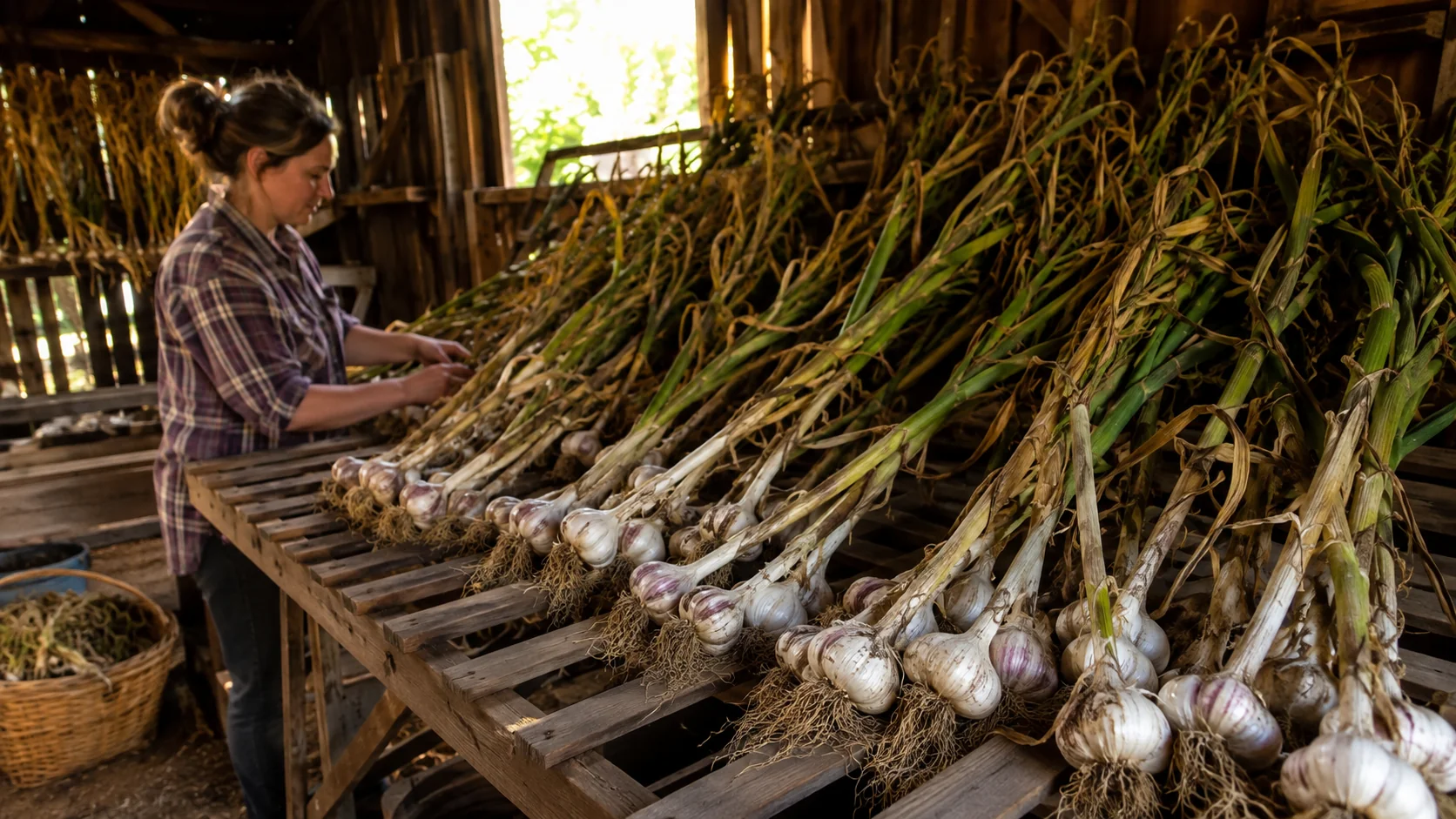
Then comes the patience step: cure the whole plants in a warm, dry, airy spot out of the sun for two to four weeks, until the outer wrappers are papery and the roots dry. Trim stems and roots after curing, not before, and store cool and dry; properly cured softnecks carry a kitchen deep into winter. And set the best bulbs aside first, because next year's crop is already in your hands.
Share the Harvest, Not Ten Different Links
One VisuLink holds your garden gallery, your favorite guides and everything else you share.
FAQ
When should I plant garlic?
In fall, one to two weeks after your first killing frost: early enough for roots to establish before the ground freezes, late enough that shoots stay below the surface until spring. Look up your local first fall frost date and count from there.
Can I plant garlic in spring?
Yes, as soon as the soil can be worked, with the honest tradeoff that bulbs come out smaller than fall-planted ones. Fall is the main event; spring is the backup.
Can I plant garlic from the grocery store?
Not the smart bet: supermarket garlic is mostly softneck stock selected for storage, flagged by extension sources as a poor performer in cold climates. Buy seed garlic once, then replant your own best bulbs each year.
How deep and far apart do garlic cloves go?
Pointed end up with the base about 5 to 8 centimeters deep, spaced roughly 7 to 15 centimeters apart depending on how generously you can water and feed. Bigger cloves make bigger bulbs.
How do I know when garlic is ready to harvest?
When lower leaves have browned and about half the upper leaves are still green, typically late June to late July. Pull a test bulb and cut it: if the cloves fill their skins, dig the row, then cure whole plants for two to four weeks before trimming.