

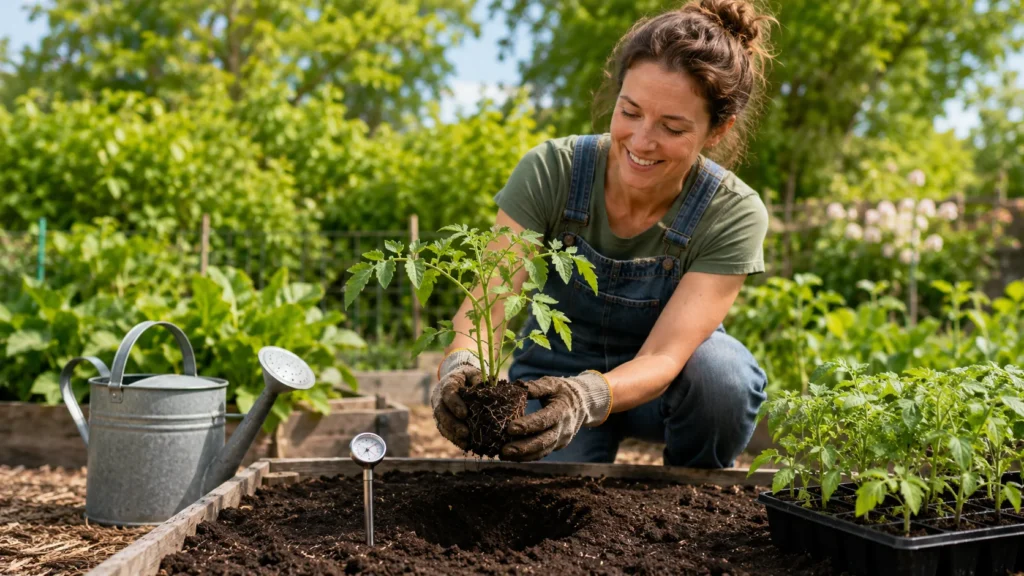
The short answer: one to two weeks after your last spring frost, once nights stay above 45°F and the soil hits 60 to 65°F. The long answer is why that beats every calendar and every zone chart on the internet, and how to find your own dates instead of borrowing someone else's.
Most "when to plant tomatoes" tables hand you a date for your USDA zone and call it done. Here is the honest version: zones were never designed to answer this question, frost dates are coin flips rather than promises, and the two tools that actually decide your planting day are a frost-date lookup and a soil thermometer. This guide gives you the zone table anyway, clearly labeled as the approximation it is, and then the real method underneath it.
One Link for Everything You Grow
A short address you control, pointing wherever your garden photos and notes already live.
What USDA Zones Actually Tell You
The USDA Plant Hardiness Zone Map divides the country into 13 zones based on the average annual extreme minimum winter temperature, in 10 degree bands split into "a" and "b" half zones, using 1991 to 2020 weather data. Read that definition again: it is about how cold winter gets. It exists to tell you which perennials survive your winters.
A tomato is a tender annual that will be dead by winter no matter what you do, so your zone number does not encode your planting date. What the zone gives you is a rough bracket: low-number zones have short seasons and late frosts, high-number zones the reverse. Useful orientation, not an instruction. The USDA itself notes that many other factors, including warm-season heat, decide what thrives where, and points gardeners to their local extension service for specifics.
Your Last Frost Date Is a Coin Flip
The number that actually matters is your average last spring frost date, the date temperatures last dip to 32°F. And the key word is average: NOAA's published date for any location is the date past which the chance of another freeze drops below 50 percent. Half of all years, frost comes later than "your date".
NOAA's climate normals also publish more conservative thresholds, the dates where freeze probability falls under 30, 20 and 10 percent. The gap is real: in NOAA's own example for Boulder, Colorado, the 50 percent date is May 6 and the 10 percent date is May 18, nearly two weeks apart. That gap is exactly why the safest simple rule, from Cornell's vegetable program, is to wait at least a week or two after your average last frost, until nights hold consistently above 45°F, rather than planting on the average date itself.
Approximate Planting Windows by Zone Group
With all caveats above, zones do bracket the season. The windows below are approximations for orientation only, they are not sourced planting dates, and your local last-frost lookup and soil thermometer overrule them everywhere:
Zones 3 to 4 (short northern seasons): transplants typically go out from late May into early June. Zones 5 to 6 (much of the Midwest and Northeast): typically mid to late May. Zones 7 to 8 (the upper South and mild West): typically April. Zones 9 to 10 (the Gulf, Florida, low desert, coastal California): late winter to early spring, and heat, not frost, becomes the limit on the calendar. In far southern Florida, NOAA data shows the last freeze typically lands before mid January, which is why the zone-to-date logic gets fuzziest exactly where winters are mildest.
One more honesty note from NOAA: in the western US, elevation and coastal effects scramble the pattern so thoroughly that two gardens in the same zone can be weeks apart. Look up your town, not your zone.
Keep Your Garden Notes in One Place
Link your planting dates, variety names and progress photos from one short address.
The Soil Test That Beats Every Calendar
Ohio State's extension calls soil temperature probably the single most important factor in planting decisions, and for tomatoes the thresholds are well established: 60°F soil is the floor for transplanting, with 65°F soil and daytime air averaging 55 to 60°F the more comfortable target. Measure about 4 inches down, in the morning, for a few days running.
The cost of jumping the gun is not just frost death. Cold soil gives you seed rot, root decay, stalled growth and disease pressure, and chilled plants carry the setback for weeks: chilling injury begins below 50°F, and nights under 60°F can deform early fruit with catfacing. A tomato planted two weeks "late" into warm soil routinely overtakes one planted a month early into cold mud.
Counting Back: When to Start Seeds Indoors
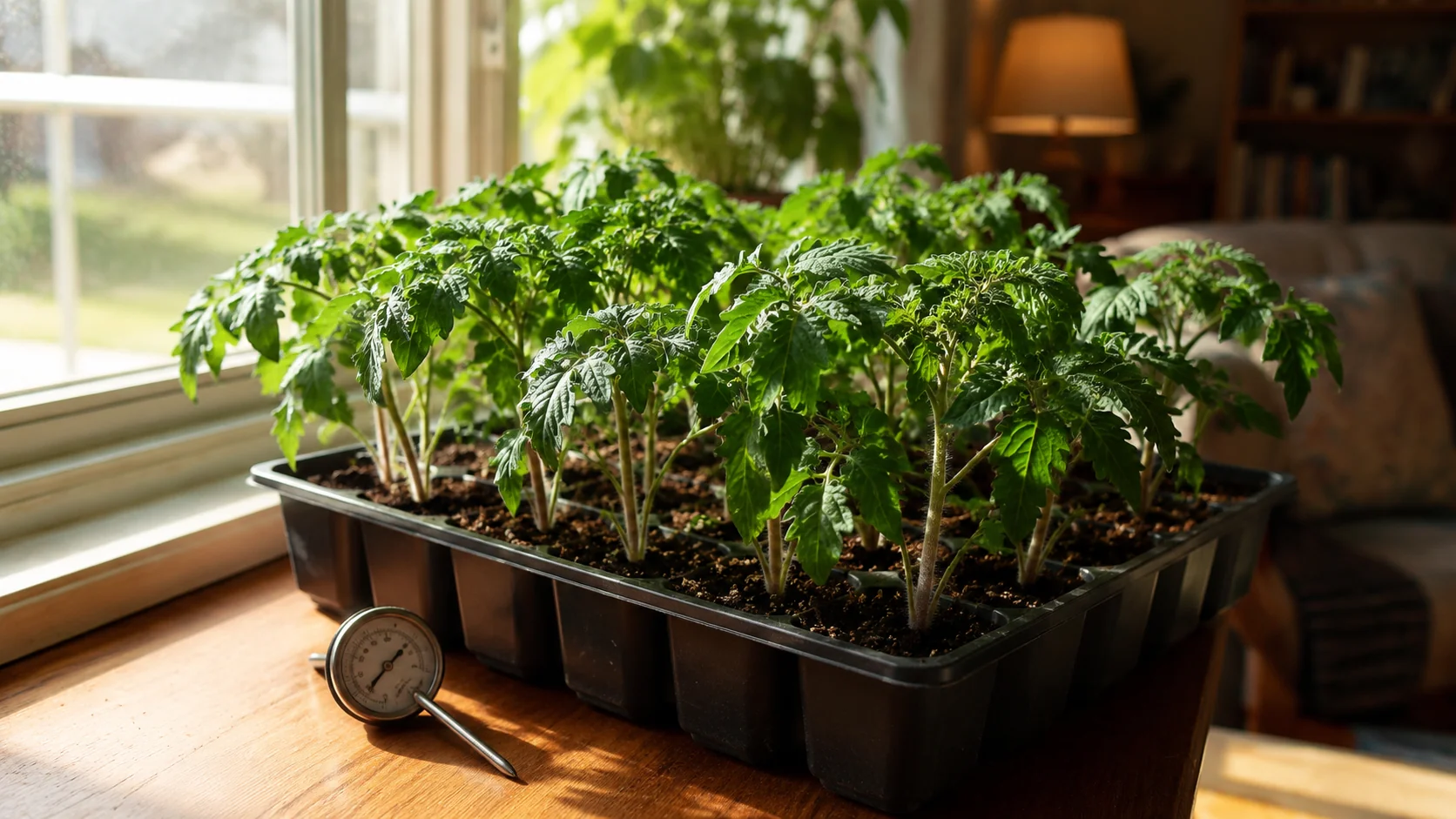
Seed starting is simple arithmetic: pick your realistic transplant date using everything above, then count back 6 to 8 weeks. That is when seeds go into trays indoors.
The mechanics, per Cornell: sow about 1/8 inch deep, germinate warm, 75 to 90°F is the happy range, expect emergence in 6 to 12 days, then grow the seedlings on around 70°F with as much light as you can give. The goal at transplant time is a stocky plant roughly as wide as it is tall, with 5 to 7 true leaves; leggy, flower-bearing transplants establish slowly and yield poorly, so pinch early flowers off rather than prizing them.
Hardening Off and Planting Day
Indoor seedlings meet real sun and wind badly unless introduced gradually. Harden off over about 10 days: a few sheltered outdoor hours daily, increasing exposure, back inside on nights and days under 60°F.
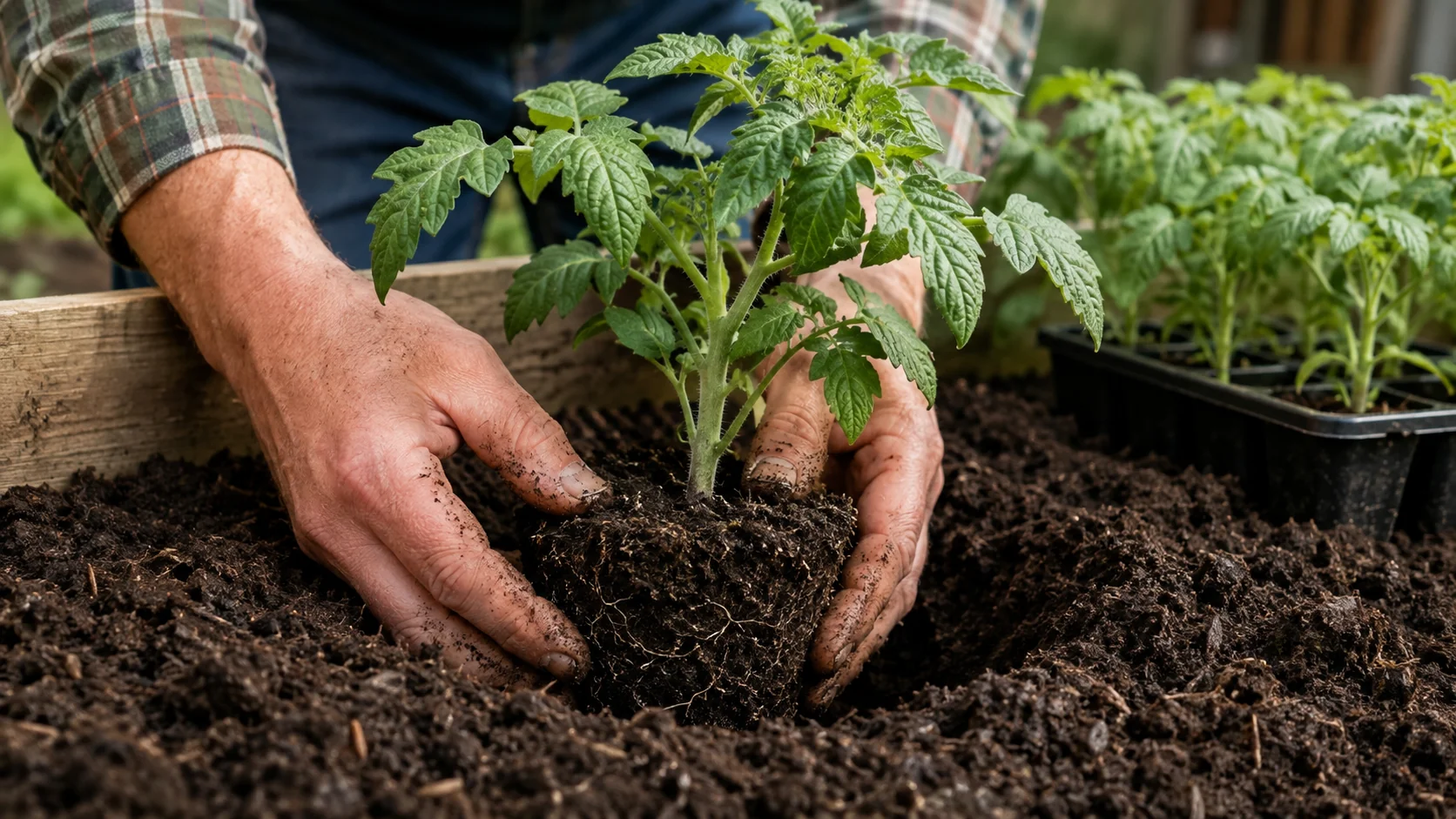
On planting day, bury tomatoes deeper than they grew, up to the first leaves, or lay a leggy stem sideways in a shallow trench; tomatoes root along the buried stem and repay the trick with a stronger plant. Space standard plants roughly 18 to 24 inches apart in rows if staked or caged. Then the boring, decisive part: water in well and keep the moisture steady.
Planting Early on Purpose
There are honest ways to cheat the calendar. Black plastic mulch warms the soil ahead of schedule, and paired with row covers it can move planting several weeks earlier. The covers come with their own rule: vent or remove them once temperatures pass 85°F, or you trade frost protection for heat stress.
Heat is the other end of the window that the zone charts forget. Fruit set suffers when days run above 90°F and nights above 70°F; nights of 59 to 68°F are the sweet spot. In hot-summer regions that makes earliness valuable for the opposite reason northern gardeners chase it: the crop needs to set fruit before deep summer arrives. Choosing by days to maturity helps everyone: the number on the label counts from transplanting, not seeding, with early varieties at 65 days or less, midseason 65 to 80, late 80 plus.
Share the Harvest, Not Ten Different Links
One VisuLink holds your garden gallery, your favorite guides and everything else you share.
FAQ
When should I plant tomatoes outside?
One to two weeks after your average last spring frost, once nights stay consistently above 45°F and soil at 4 inches deep reads at least 60°F, ideally 65°F. The frost date alone is a 50 percent probability, not a guarantee.
Can I just use my USDA zone to pick the date?
Only as a rough bracket. Zones measure average winter minimums for perennial survival, not frost dates. Two gardens in the same zone, especially in the West, can have planting windows weeks apart. Look up your local last frost date instead.
When do I start tomato seeds indoors?
Six to eight weeks before your planned transplant date. Sow 1/8 inch deep, germinate at 75 to 90°F, and aim for a stocky plant with 5 to 7 leaves by planting day.
What happens if I plant tomatoes too early?
Cold soil brings seed rot, root decay, stalled growth and disease, and chilling injury starts below 50°F. Later plantings into warm soil routinely overtake early plantings into cold soil.
How can I plant earlier safely?
Warm the soil with black plastic mulch and protect plants with row covers, which together can buy several weeks. Vent or remove covers above 85°F.
References
- USDA, how to use the plant hardiness zone maps
- NOAA Climate.gov, average date of the last spring freeze
- Cornell University, tomato growing guide
- University of New Hampshire Extension, growing tomatoes
- University of Connecticut, tomatoes fact sheet
- Utah State University Extension, tomatoes in the garden
- Ohio State University BYGL, soil temperature and planting