
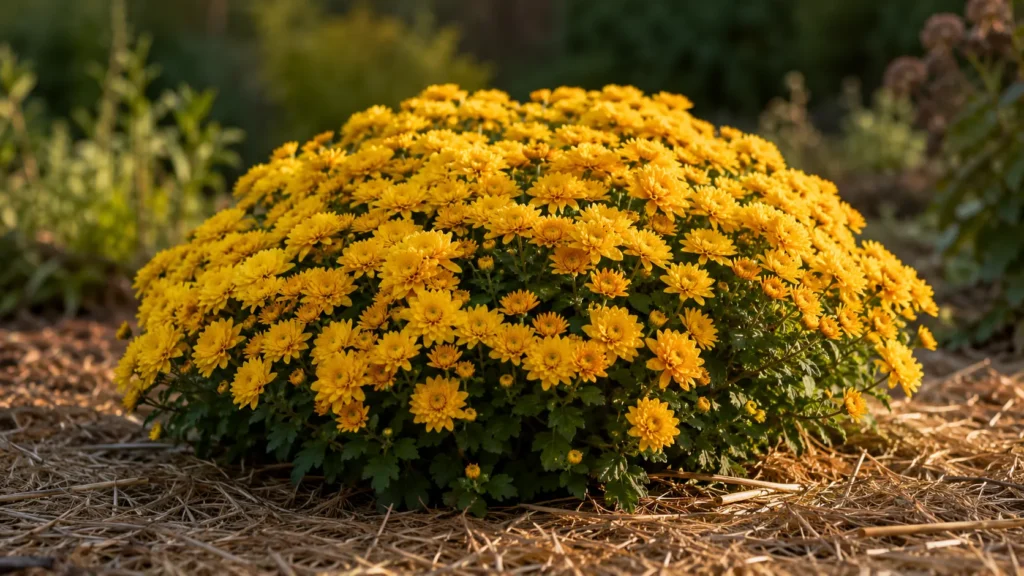
Yes, garden mums are perennials. That is the botanical answer, and it is also the reason so many gardeners think it is wrong. The plant is classified as a perennial and rated for USDA zones 5a through 9b, yet the pot bought in September may fail to return in spring. That gap is not a contradiction. It comes down to when the plant was bought, what kind of mum it is, and one root characteristic worth knowing.
This answers the specific question about mums. If you are choosing sun-loving perennials more broadly, that is a different question and it lives in full sun perennials.
One Link for Your Whole Garden
A short address you control, pointing to your growing notes, your pages and everything else you share.
The Short Answer
The North Carolina Extension Gardener Plant Toolbox lists Chrysanthemum × morifolium with a life cycle of Perennial and a USDA hardiness range of 5a, 5b, 6a, 6b, 7a, 7b, 8a, 8b, 9a, 9b. By that entry, a mum planted inside zones 5 through 9 is a plant that can return.
So the honest answer to "are mums perennials" has two halves:
- Botanically, yes. It is a perennial species, hardy across a wide band of the United States.
- In practice, often no, because the way mums are sold and planted works against the thing that makes a perennial a perennial: an established root system going into winter.
Illinois Extension puts the practical failure in one sentence: "The biggest reason mums fail to overwinter is that we typically try to plant mums when they are most commonly available in the fall." The plant is not failing. The calendar is.
Garden Mum or Florist Mum
Before the calendar, there is a category question, and it changes the answer. Iowa State University Extension separates the two directly, noting that garden mums are "more cold-hardy than florist mums."
| Type | Bred for | Realistic outdoor outcome |
|---|---|---|
| Garden mum (hardy mum) | Landscape planting | Can overwinter in zones 5 to 9 with the right timing and care |
| Florist mum (exhibition type) | Indoor bloom and cut flowers | Less cold-hardy than garden mums |
If a mum came from a florist counter or arrived as a gift plant in foil, treat it as a seasonal plant. If it came from a nursery labeled as a garden or hardy mum, it has a real chance outdoors. The label matters more than the flower.
Why Fall Mums Die Over Winter
Here is how the winter-damage sequence can unfold.
Mums appear in stores in September, already in full bloom. It goes into the ground in October with a small root ball, weeks before the soil cools. Then winter arrives and the plant has no established root system to hold it in place.
Illinois Extension is direct about the fix: "Spring is the ideal time to plant mums. Planting in spring gives the plants ample time to establish themselves in the landscape." The same source adds the fallback for anyone already holding a fall pot: "if you're planning on planting your mums in the fall, get them in the ground sooner rather than later."
Iowa State is blunt about the odds, stating that mums "purchased and planted in the fall are not as likely to survive the winter," and that even garden mums "may be severely damaged or completely destroyed in winter."
The Root Problem
This is the mechanism, and it explains why mulch matters more for mums than for many other perennials.
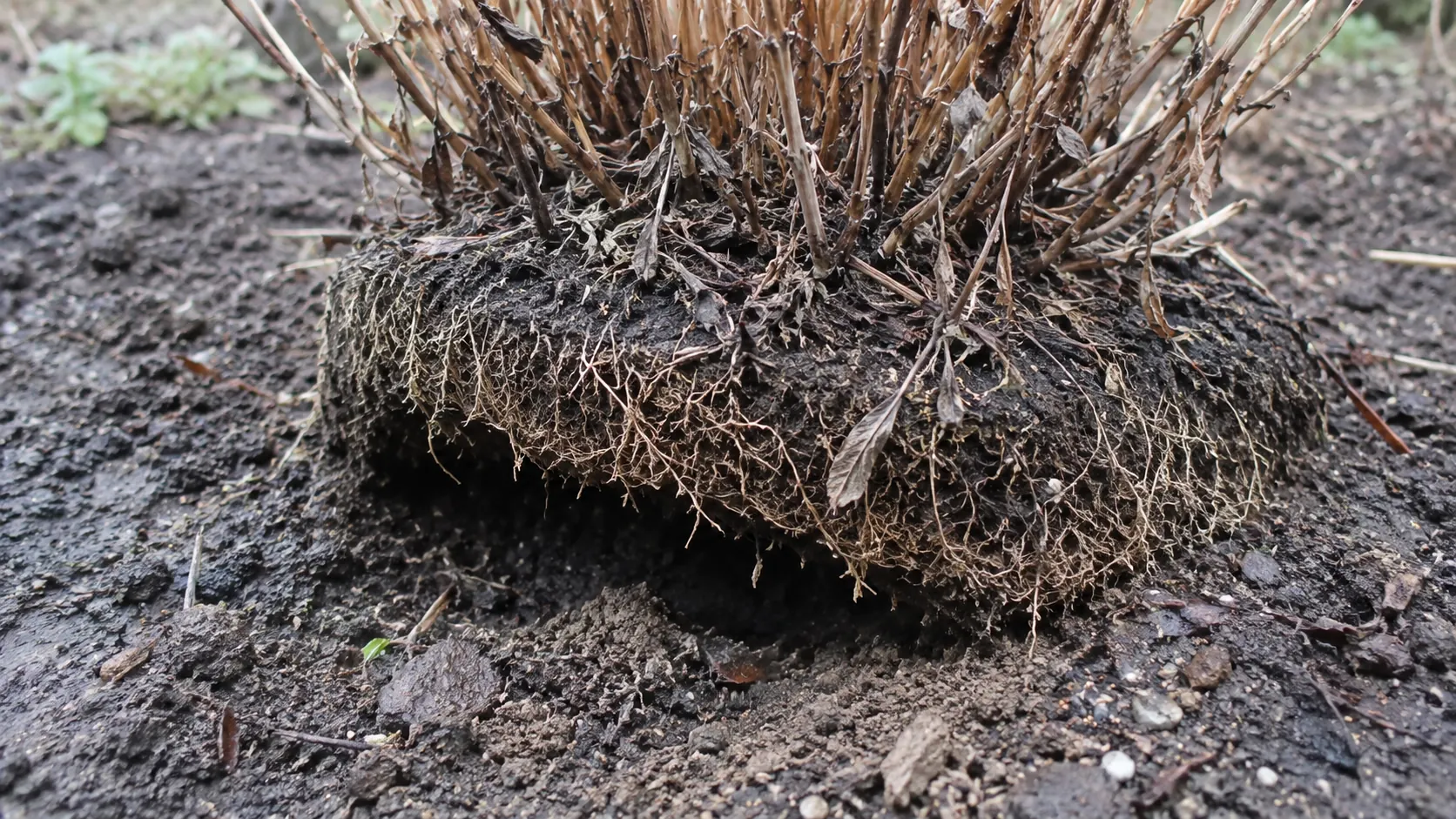
Iowa State: "Chrysanthemums have shallow, fibrous roots. Repeated freezing and thawing of the soil (because of a lack of snow cover) in winter can heave plants out of the ground, making them vulnerable to winter damage."
Iowa State notes that chrysanthemums have shallow roots and that repeated freezing and thawing can heave plants out of the ground, leaving them vulnerable to winter damage. Since the source ties the heaving to a lack of snow cover, a winter with steady snow cover can be kinder to mums than a mild winter that freezes and thaws every week.
That single fact reframes the whole care routine below. The goal of winter protection for mums is not to keep the plant warm. It is to keep the soil consistently cold.
When to Plant Them Instead
Plant in spring. That is the whole recommendation, and it is the one that most changes the outcome.
A mum planted in spring has the entire growing season to build the root system that carries it through its first winter. It will bloom that same fall, on schedule, because mums flower in response to shortening days rather than to how long they have been in your garden. Getting that first season right is mostly the basics of keeping plants alive, applied consistently.
Site selection does real work too. Illinois Extension is specific: mums "prefer well-drained soil, so don't plant them areas with poor drainage or occasional standing water." They also want "full sun (greater than 6 hours of sunlight per day), which is needed for plants to thrive and produce large, extensive roots that can survive winter stress." A protected spot helps, described as "closer to you home, south-facing and out of the wind."
One easy mistake to avoid, from the same source: "Avoid planting mums near outdoor lights as it may confuse day length and inhibit flower formation." Since mums bloom on day length, a porch light or path light can quietly prevent flowering.
Keep the Garden Notes in One Link
Planting dates, what survived the winter and what did not, all behind a single address you can share.
How to Actually Get Them Through Winter
The instruction that surprises people most: do not cut them back in fall.
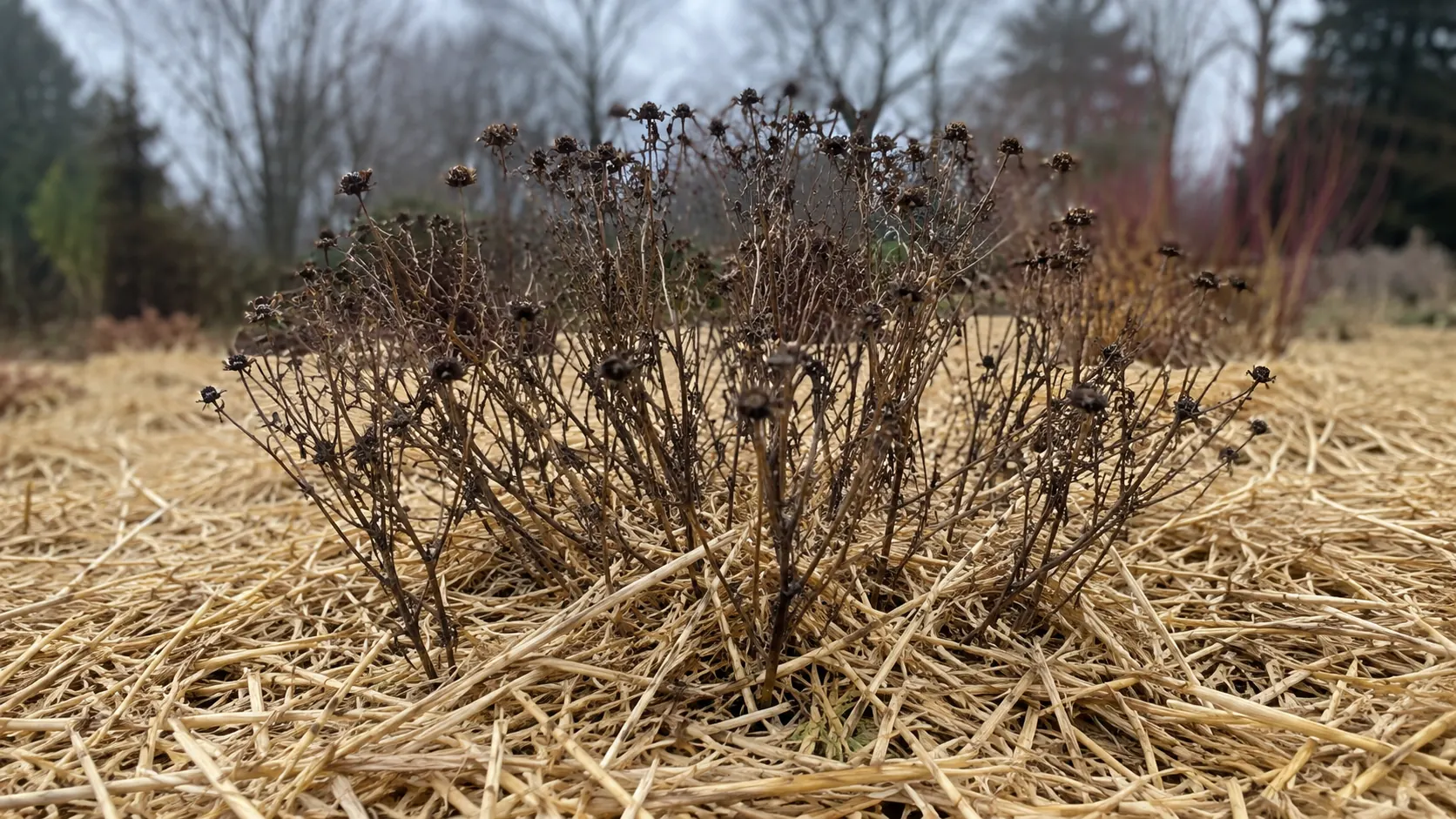
Illinois Extension: "Many mum growers will recommend cutting them back as the end of the season, but research has shown that mums survive better if old growth is left standing for the winter season with an adequate mulch layer (4 in thick)." Iowa State agrees independently: "Do not cut down plants in the fall. Research has found that garden mums survive better if the old growth is left standing through the winter."
Two extension services, same finding. The dead stems are not untidiness to be corrected; Illinois describes the old growth as "an additional layer of protection."
On mulch, Iowa State explains the timing and the reason: "Mulch helps keep the soil uniformly cold after it has frozen, thus eliminating the alternate freezing-thawing cycle and the resulting soil heaving." The practical version: "Apply several inches of straw or pine needles over the plants in late November or early December." Note the material warning that follows: "Leaves tend to mat down, possibly damaging plants."
Timing matters here. Iowa State times the mulch for late November or early December and states its purpose: keeping the soil uniformly cold after it has frozen.
| Action | Timing | Source |
|---|---|---|
| Leave old growth standing | Through winter | Illinois, Iowa State |
| Apply mulch, several inches | Late November or early December | Iowa State |
| Mulch layer depth | About 4 in (10 cm) | Illinois |
| Material: straw or pine needles | Preferred over leaves | Iowa State |
| Remove mulch | Late March or early April | Iowa State |
| Avoid over-fertilization | Creates lanky, floppy plants | Iowa State |
What to Do in Spring
Iowa State sets mulch removal at "early spring (typically late March or early April)." Once growth resumes, Illinois Extension says to "remove the old growth from last year."
Then comes pinching, which is what separates a leggy mum from the dense mound people expect. Illinois Extension: "When mums reach about 4-6 inches of growth in spring, prune off the growing tips of all stems with shears or simply pinch them off with your fingers. This encourages lateral growth which will result in a shorter, but bushier plant."
How often, and when to stop: "Plants can be pinched two to three times, with the last one taking place in late June/early July (July 4 is a common way people remember this)." Iowa State warns that pinching after early July could delay flowering.
Division keeps older clumps vigorous. Illinois Extension: mums "benefit from being divided every few years. This is also best done in spring, as soon as new growth starts to appear on plants. To divide, dig up the entire clump and remove the old center portion of the clump."
When Treating Them as Annuals Is the Right Call
Sometimes the answer to "are mums perennials" is technically yes and practically irrelevant, and that is a legitimate way to garden. If you would rather the color came back on its own, planning the bed around bloom times is the other route.
Treat a mum as a seasonal plant when it is a florist type, when you bought it in full bloom in October and the ground is about to freeze, when it is a container display on a porch, or when you live outside the hardy range. Buying a blooming mum for autumn color and composting it afterward is not a failure. It is the same decision people make with a poinsettia.
The distinction worth keeping: the loss is not necessarily explained by low temperature alone. A mum planted late, with no established roots, is exactly the plant that repeated freezing and thawing can heave out of the ground.
Show the Garden You Grew
One link for your plant list, your photos and the notes you want to pass on.
FAQ
Are mums perennials or annuals?
Botanically perennial. NC State lists Chrysanthemum × morifolium as a perennial hardy in USDA zones 5a to 9b. Whether yours returns depends on the type, when it was planted and how it was overwintered.
Will the mums I bought this fall come back next year?
Possibly, but the odds are lower. Iowa State notes that mums "purchased and planted in the fall are not as likely to survive the winter." Plant them as soon as possible, leave the stems standing and mulch after the ground freezes.
Should I cut back my mums in the fall?
No. Both Illinois and Iowa State extension services report research showing better survival when old growth is left standing through winter.
What hardiness zone do mums need?
NC State lists 5a through 9b for Chrysanthemum × morifolium. Outside that range, treat them as seasonal plants.
Why did my mums not flower?
Check for artificial light nearby. Illinois Extension warns that planting near outdoor lights "may confuse day length and inhibit flower formation." Iowa State also warns that pinching after early July could delay flowering.
What mulch is best for mums in winter?
Iowa State recommends several inches of straw or pine needles, and specifically warns that leaves "tend to mat down, possibly damaging plants."