

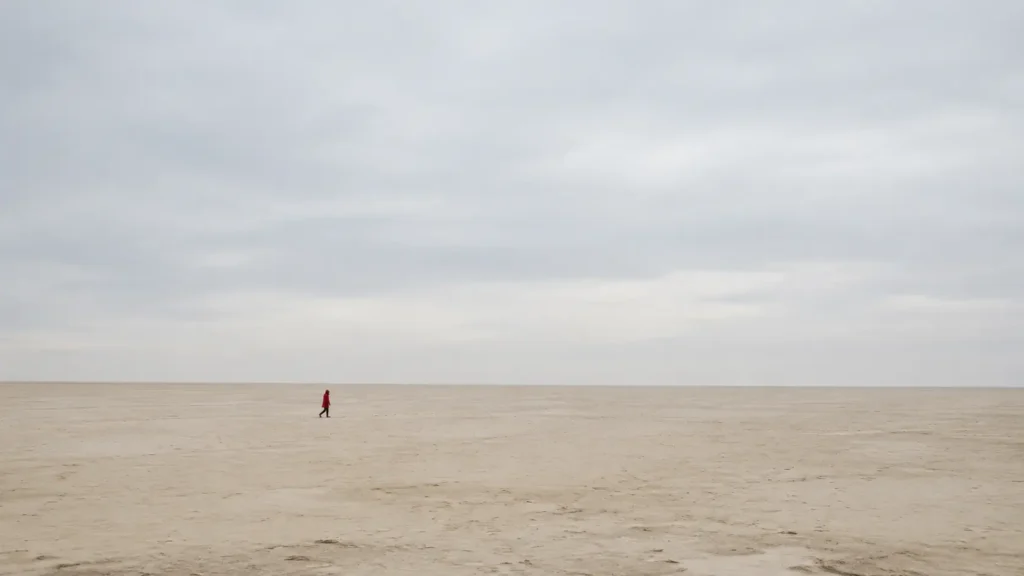
The empty part of the photo is doing work. Negative space is not what is left over after you frame the subject; it is a material you compose with, and the amount of it decides how the subject reads.
Most framing problems are crowding problems: too much in the picture, everything competing. Negative space is the opposite instrument. It is the deliberate use of emptiness, sky, wall, water, shadow, around a subject, and in the photos that use it well, the emptiness is not absence. It is the point.
This page covers why emptiness works on the eye, where to find it in ordinary scenes, how much of it to use, and the line between negative space and a photo that is simply empty.
One Link for Everything You Shoot
A short address you control, pointing wherever your photos already live.
What Negative Space Is
Every photo divides into the thing it is about, the positive space, and everything around it. Negative space is that surrounding area treated as a compositional element in its own right: chosen, shaped and sized on purpose rather than accepted as backdrop.
The material does not need to be literally empty. A clear sky, an expanse of water, a wall, a field of grass, deep shadow: anything visually quiet enough that the eye slides across it instead of stopping counts as negative space, even when it is full of subtle texture.
It sits inside the broader toolkit of photographic composition, and it works hand in hand with the tight-or-loose decision from the framing guide: negative space is what loose framing gives you, used with intent.
Why Emptiness Works
It removes competition. The eye lands on the only thing there is to land on. A small subject against a quiet field does not need lines or frames to be found; the emptiness has already eliminated every rival.
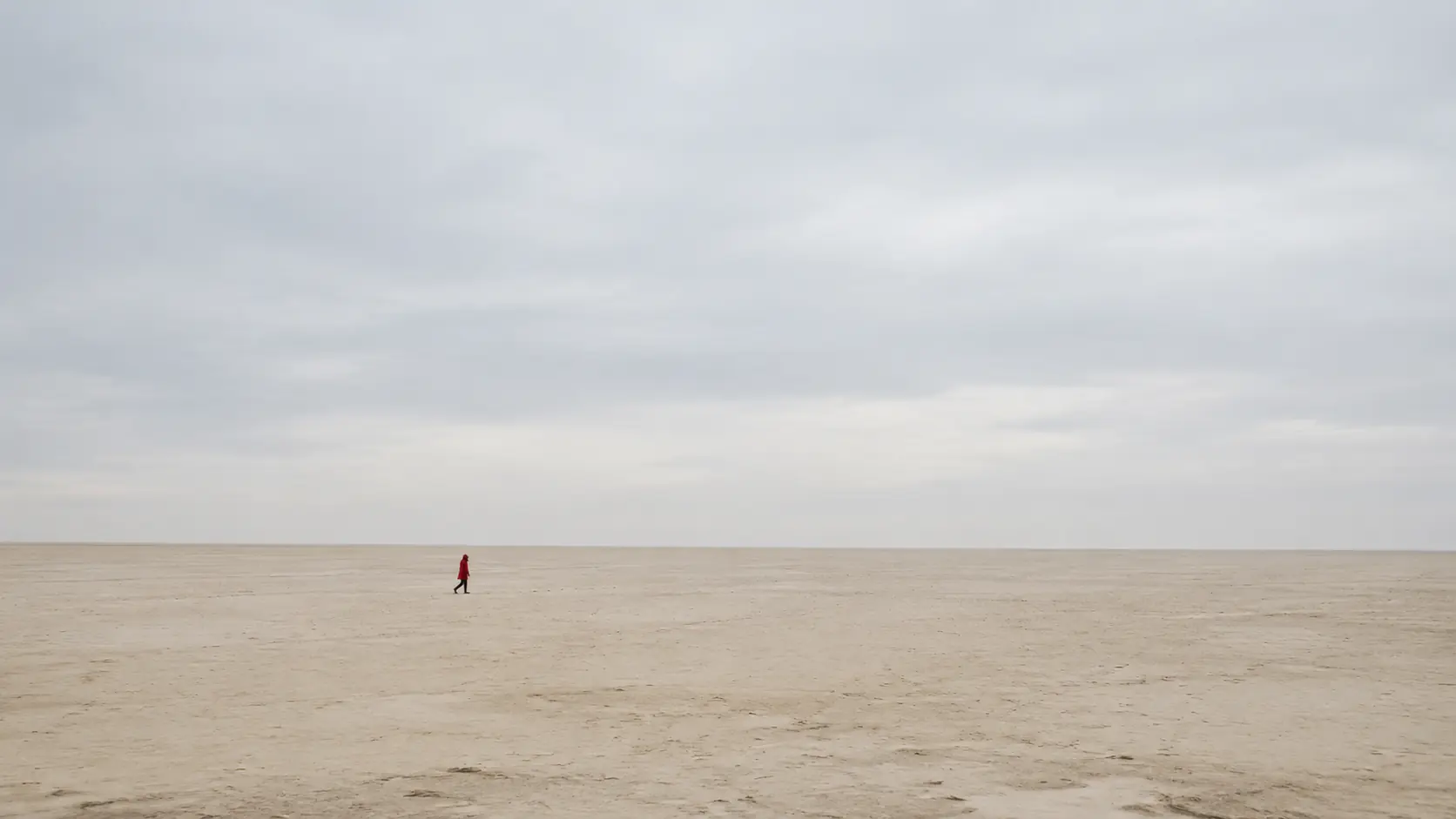
It sets scale and mood. The ratio between subject and space is an emotional dial. A figure filling the frame is intimate; the same figure small against a vast sky reads as solitude, freedom or insignificance, and the photographer chooses which by choosing the ratio.
It gives direction somewhere to go. A subject looking, moving or pointing into open space feels resolved, the breathing-room principle from the framing guide taken to its fullest. The empty area is not wasted; it is where the subject's attention lives.
Finding Empty Backgrounds Anywhere
Negative space rarely arrives on its own. You manufacture it by choosing your angle, and every ordinary location holds more of it than it seems.
Look up. The sky is the largest quiet surface available, and shooting from slightly below places any subject against it. Overcast days, dismissed as flat, are gifts here: an even gray sky is a seamless studio backdrop the size of the world.
Use walls and large surfaces. A painted wall, a metal door, a concrete expanse. Street photographers build entire bodies of work on one good wall, waiting for a subject to cross it.
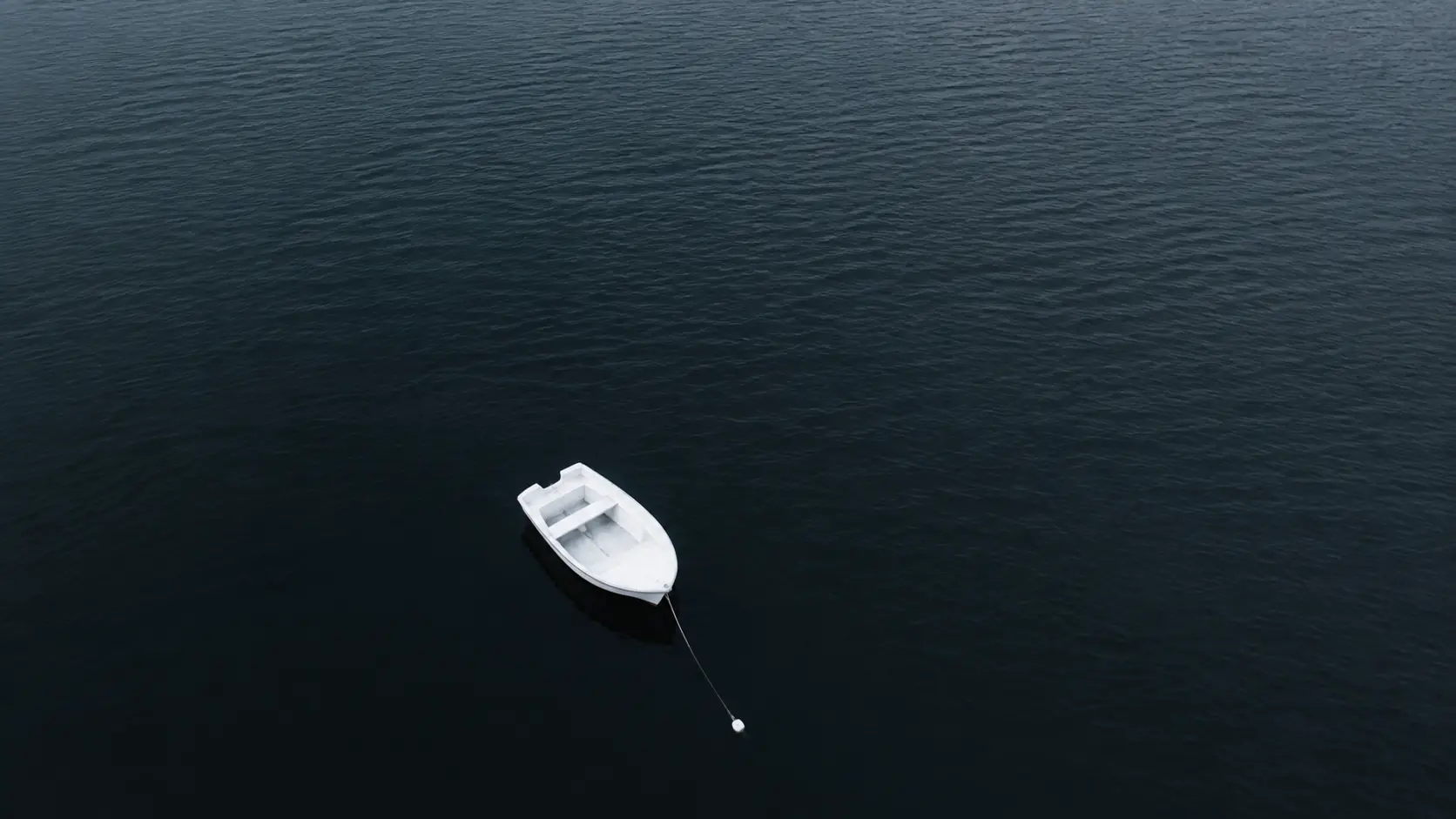
Use water and ground. Shooting from above turns floor, sand or water into background. The high angle is the same move the framing guide suggests for removing clutter, taken further until the background is nothing but surface.
Use shadow. Deep shade reads as black, and a lit subject against unlit background is negative space manufactured from contrast alone. Night work is this principle inverted: a lit subject in darkness, which is why night photography produces so much natural minimalism.
Share the Set, Not Fifteen Links
Point one short address at your gallery, your socials, wherever the work already sits.
How Much Space to Give
There is no correct ratio, but there are legible ones and mumbled ones. A subject at roughly a third of the frame still dominates; shrink it toward a tenth and the space takes over as the theme; anywhere between, the photo can look like an accident, too much space to be about the subject, too little to be about the space.
Commit in one direction. If the photo is about the subject, give it presence and use the space as quiet support. If the photo is about the scale, the solitude, the emptiness, shrink the subject decisively and let the space carry it.
Where the subject sits still matters. A small subject in a large space follows the same placement logic as any other, and off-center placement usually serves it: the guidance in the thirds guide applies with the volume turned up, because with nothing else in the frame, position is the only structure there is.
Negative Space or Just Empty
The failure mode of this technique is a photo that is simply vacant. The difference is always the subject.
The space needs an anchor. Negative space works as a relationship: emptiness around something. Without a clear subject, however small, the quiet field is a picture of nothing, the same no-subject problem the composition guide opens with, arrived at from the opposite direction.
The space needs to be quiet, not dead. Subtle texture, a gradient of sky, faint ripples, keeps the empty area alive without competing. A background that is both busy and meaningless is clutter; one that is smooth and endless is a void; the working range is in between.
Edges still count. One stray element at the border of all that emptiness shouts. The edge scan that closes the framing guide matters double here, because there is nowhere for an intruder to hide.
Toward Minimalism
Push negative space far enough and you arrive at minimalism: pictures reduced to a subject, a surface and little else. In the visual arts, minimalism made reduction itself the point, and the photographic version inherits the discipline: every element that remains has to earn its place, because there is nothing else to look at.
You do not have to live there. But visiting is the best training the technique offers, because a minimal frame has no room for unexamined decisions. One subject, one surface, one placement: when there are only three choices, you notice you are making them.
Keep Your Photos in One Place
One address, updated whenever the work changes, with analytics on how often it gets opened.
Making It a Habit
Shoot one subject at three sizes. Fill the frame, then a third, then a tenth, moving or zooming between shots. The comparison shows the mood shifting with the ratio, which is the entire control this technique offers.
Spend a session on one wall. Find a large quiet surface and photograph whatever passes in front of it. It trains the patience half of the technique: negative space is often found by waiting, not walking.
Subtract to the limit. Take a frame you like and ask what else can leave, changing angle until the answer is nothing. The stopping point teaches you where, for your taste, negative space ends and emptiness begins.
If the wider foundations are still settling, our photography guide for beginners covers the order that makes this easier: light first, then framing, then settings.
FAQ
What is negative space in photography?
The visually quiet area around a subject, sky, wall, water, shadow, used as a deliberate part of the composition. It is not leftover background: its size and shape are chosen to control where the eye goes and how the subject feels.
Does negative space have to be truly empty?
No. It has to be quiet enough that the eye slides over it rather than stopping. Subtle texture, gentle gradients and soft ripples all work; what disqualifies an area is anything that competes with the subject for attention.
How much negative space is too much?
There is no fixed limit, but there is a mumbling zone: enough space that the subject stops dominating, not enough for the space to become the theme. Commit in one direction, presence for the subject or scale for the space, and the photo reads as intended either way.
Is negative space the same as minimalism?
Minimalism is where negative space leads when pushed to its limit: frames reduced to a subject and a surface. Most negative-space photos stop well short of that, using emptiness as one element among a few rather than the entire aesthetic.
How do I find negative space in a busy place?
Change your angle rather than your location. Shoot up to place subjects against sky, shoot down to use the ground, use a wall as backdrop, or expose for a lit subject so shaded areas fall to black. Emptiness is usually available; it is rarely at eye level.
Why does my negative space photo look like I framed it wrong?
Usually the ratio is undecided, too much space to be about the subject, too little to be about the space, or the subject lacks a clear position. Shrink or grow the subject decisively and place it deliberately; commitment is what separates negative space from accident.