


The scene is already full of frames. Doorways, windows, branches and shadows can hold your subject the way the edges of the photo do, and learning to see them costs nothing but attention.
Framing has two meanings in photography, and most advice quietly mixes them. The first is the decision every photo forces on you: where the picture ends. The second is a specific technique, using something inside the scene as a frame around your subject.
Both are worth learning deliberately, because both are decisions the camera will otherwise make for you. This page covers the two, in that order, and the mistakes that undo them.
One Link for Everything You Shoot
A short address you control, pointing wherever your photos already live.
Two Meanings of Framing
The first meaning is unavoidable. Every photograph has edges, and deciding where they fall is framing in the broad sense: what stays in, what stays out, how much room the subject gets. You are doing it on every shot whether you think about it or not.
The second meaning is a choice. You place something from the scene between the camera and the subject, or around the subject, so that it surrounds them inside the picture: an archway, a window, a gap between leaves. Photographers call it a frame within a frame.
The two meanings support each other. The inner frame only works when the outer one is set with intention, and this page treats them as one skill with two layers. What it does not cover is the broader toolkit of arranging elements inside the frame, which is composition, treated separately.
A Frame Inside the Frame
Putting a frame around your subject inside the photo does three jobs at once.
It points. The eye treats an enclosed shape as a signal for where to look. A figure seen through a doorway is read as the subject immediately, because the doorway has already answered the question of what the photo is about.
It adds depth. An inner frame usually sits closer to the camera than the subject, which puts two planes in the picture instead of one. The photo stops being a flat view and becomes a view from somewhere: through the window, under the bridge, past the branches.
It adds context. The frame carries information the subject alone would not. The same portrait reads differently through a kitchen doorway, a car window or a gap in a crowd, because the frame says where you were standing and what the moment was.
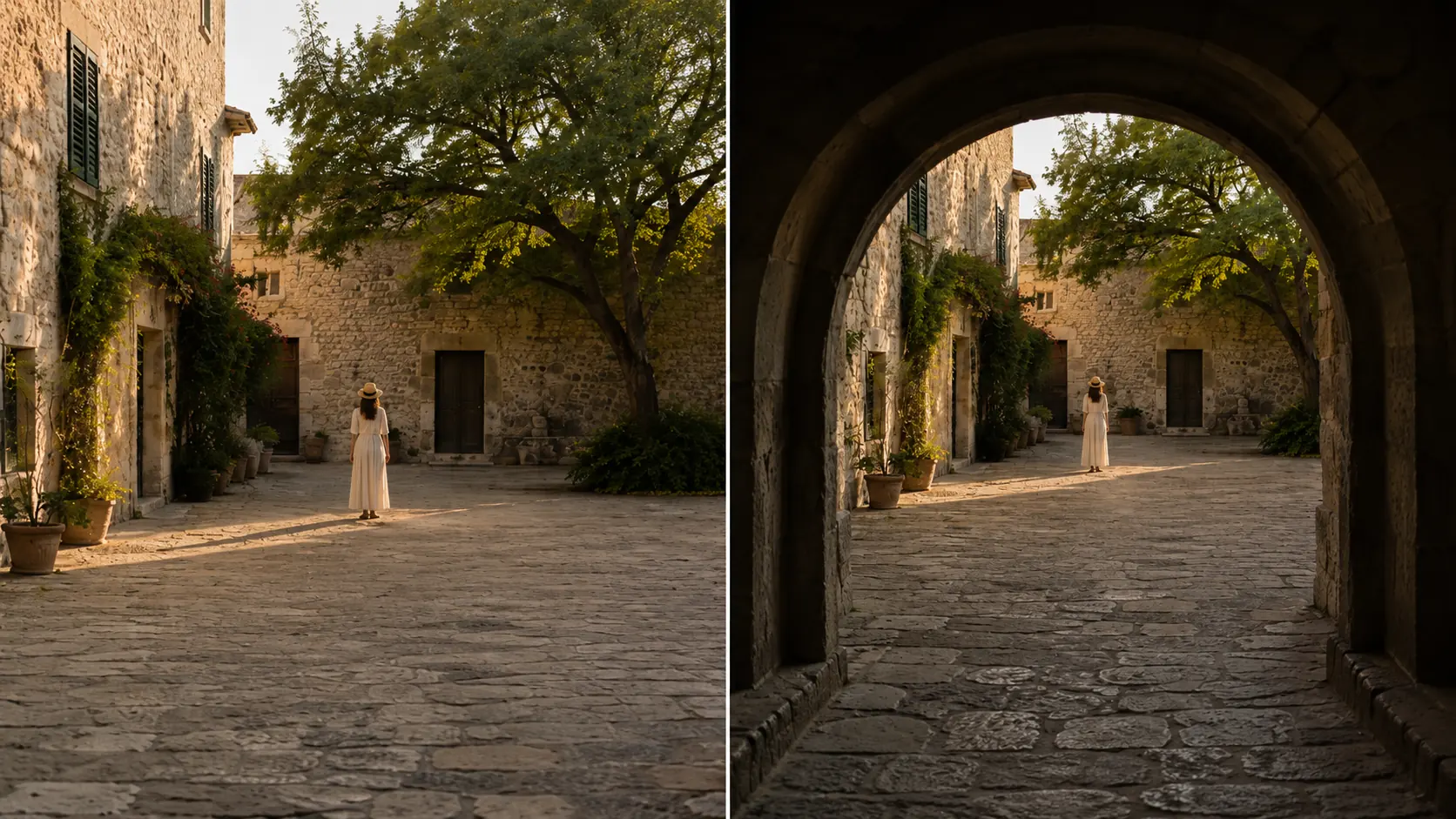
The frame does not need to be sharp, complete or symmetrical. A blurred branch cutting across one corner still reads as a frame. Partial frames, on one or two sides of the subject, are more common in strong photographs than perfect closed ones.
Tight or Loose: How Close to Frame
Where the picture ends is a decision about distance, and it changes what the photo says.
Tight framing fills the picture with the subject. It removes context and forces attention onto detail: an expression, a texture, hands on an instrument. It is also unforgiving, because there is nowhere for the eye to escape to if the detail does not hold.
Loose framing leaves room around the subject. It trades intensity for context: where this is happening, how big the space is, how alone or crowded the subject is. Too loose and the subject stops reading as a subject at all, which is the most common framing problem in beginner photos.
The practical question to ask before shooting: what does the photo need the viewer to know? If the answer is about the subject alone, frame tighter than feels natural. If the answer includes the place, hold back and let the surroundings in deliberately, not by default.
Share the Set, Not Fifteen Links
Point one short address at your gallery, your socials, wherever the work already sits.
Where exactly the subject sits inside that frame, centered or off to one side, is its own decision with its own trade-offs. We cover it in our guide to the rule of thirds.
Vertical or Horizontal
Orientation is part of framing, and the default is whatever way you happen to be holding the camera. That is worth overriding on purpose.
Horizontal suits subjects that spread sideways: landscapes, groups, anything where the relationship between things matters. It matches how we scan the world, which makes it feel neutral.
Vertical suits subjects that stand: a person, a building, a tree, a waterfall. It also crops the sideways context out, which makes it a framing decision and not just a rotation. Turning the camera is often the fastest way to remove a distracting environment.
A useful habit when a scene is worth several shots: take it in both orientations before moving on. The comparison afterwards teaches you more about orientation than any rule, because the subject and light are identical and only the frame changed.
Natural Frames to Look For
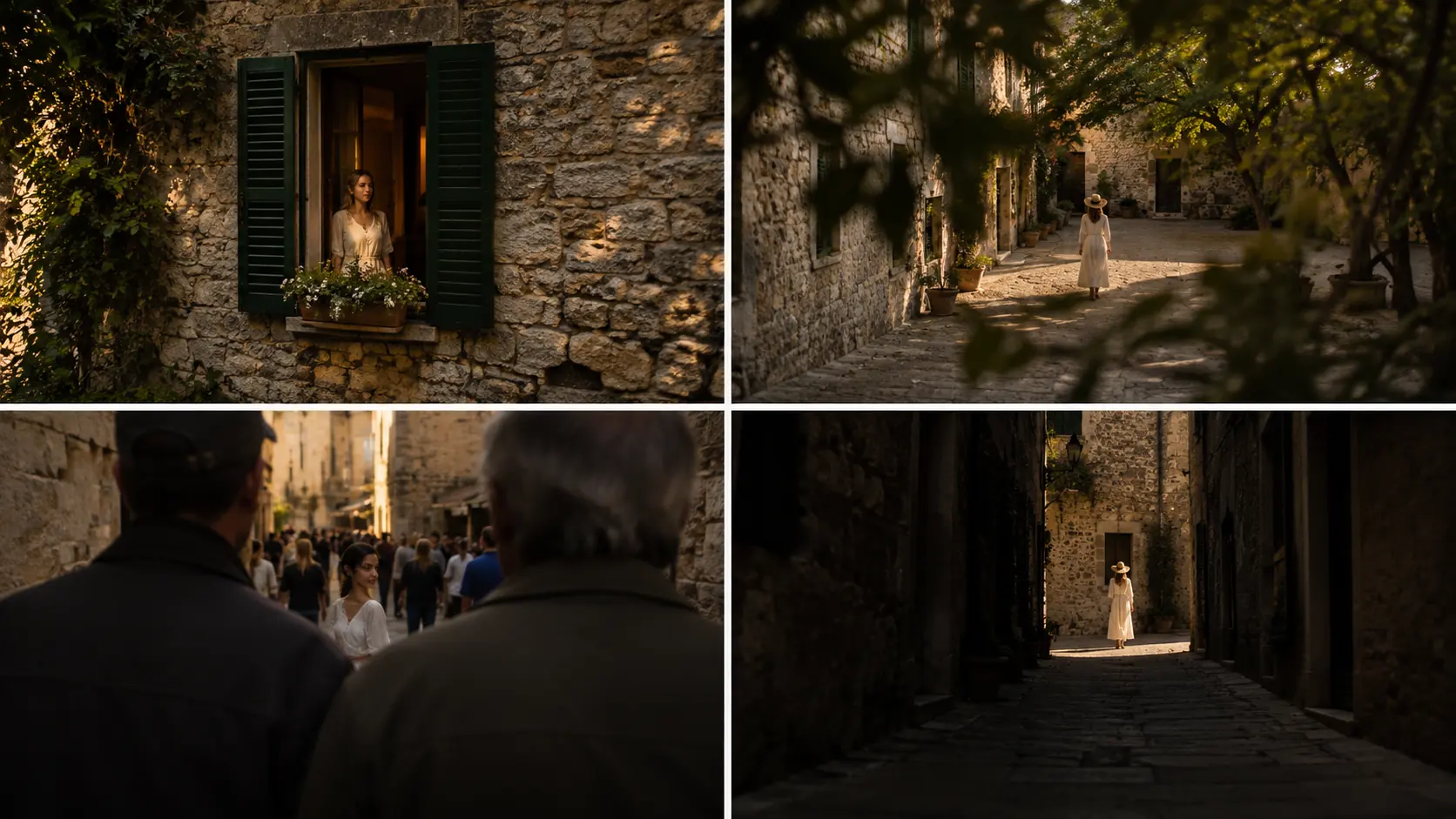
Frames are everywhere once you start hunting them. The ones worth checking a scene for:
Openings. Doorways, windows, arches, gates, tunnels, the gap under a pier. These give closed or nearly closed frames and the strongest sense of looking through into the picture.
Foreground objects. Branches, foliage, fences, shelving, the edge of a table. Usually out of focus, usually covering one or two sides. They frame loosely and add depth without shouting.
People and crowds. Shoulders and heads at the edge of the picture frame whatever is between them. Common in event and street photography, where the crowd is part of the story anyway.
Light and shadow. A patch of light in a dark scene frames whatever stands in it, with no physical object involved. Shadows falling across the edges of the picture do the same job in reverse.
Reflections. Mirrors, puddles and shop windows frame twice: the edge of the reflecting surface is a literal frame, and the reflection itself contains a second version of the scene to compose.
Keep Your Photos in One Place
One address, updated whenever the work changes, with analytics on how often it gets opened.
Mistakes That Break a Frame
The frame competes. If the doorway is more interesting than what is seen through it, the photo is about the doorway. A frame is doing its job when the eye passes through it to the subject and only notices it afterwards.
The frame cuts the subject. An inner frame that slices through a face or removes a limb reads as an accident. Move until the subject sits inside the opening, or commit to a much tighter crop where the cut looks chosen.
The frame has no relationship to the subject. Shooting through any random foreground object adds clutter, not framing. The test is whether the frame explains something: where you stood, what surrounded the moment, why the subject matters.
The edges are ignored. In the broad sense of framing, the classic errors live at the borders: half a stranger, a clipped hand, a bright patch pulling sideways. A slow scan around all four edges before pressing the shutter catches nearly all of them.
Making Framing a Habit
One subject, three frames. Photograph the same subject unframed, framed by an opening, and framed by a foreground object. Comparing the three shows what each frame adds and costs, with everything else held constant.
Hunt frames without shooting. On any walk, count the usable frames you pass: openings, foliage, shadows, reflections. It is the same exercise as watching light without photographing it, and it builds the same reflex.
Review your recent photos for edges. Look at your last twenty pictures and check only the borders. The recurring accidents you find there are your personal checklist for the next time you shoot.
If the wider foundations are still settling, our photography guide for beginners covers the order that makes all of this easier: light first, then framing, then settings.
FAQ
What is framing in photography?
Two related things: deciding where the edges of the picture fall, and the technique of using something in the scene, like a doorway or branches, as a frame around your subject. The first happens on every photo; the second is a deliberate choice.
Does the inner frame need to surround the subject completely?
No. Partial frames covering one or two sides are common and often look more natural than a closed frame. What matters is that the frame directs the eye to the subject instead of competing with it.
Should the frame be in focus?
Either works, and the choice changes the picture. A sharp frame becomes part of the subject matter; a blurred one reads as pure depth and direction. Foreground foliage usually works better soft, architectural openings usually hold sharpness well.
Is framing the same as composition?
Framing is one part of composition. Composition covers everything about arranging the picture, including lines, depth and simplification. Framing is specifically about the edges of the picture and about frames inside it.
How do I frame with a phone?
The same way. Frames in the scene do not care what camera you point through them. The one phone-specific habit worth adding: physically move closer or further instead of zooming, because your position is what changes the relationship between frame, subject and background.
Why do my framed shots look cluttered instead of framed?
Usually the frame has no relationship to the subject, or it competes with it. Check whether the eye travels through the frame to the subject. If it stops at the frame, simplify: fewer elements, a cleaner opening, or no inner frame at all.