


Starting a photography business becomes manageable when the goal is one well-defined paid shoot, not a brand, a studio and a full client calendar at once. This guide takes you from a narrow offer to a permission-based portfolio, a usable brief, a scheduled session and a clear delivery. It provides a workflow, not income, pricing, tax or legal promises.
Give the First Offer a Clear Destination
Use VISU Link to present the offer and route people to an external gallery, inquiry form or booking service.
Define One Offer Someone Can Understand
“Photography services” asks the customer to design the job. A first offer should identify the customer, situation, deliverable, boundary and next step. The US Small Business Administration recommends examining demand, location, market size, saturation and alternatives. Use those questions at a human scale: who nearby already needs images, what do they use now, and what small result can you deliver reliably?
Choose work you can show and repeat with your current skill. If you still need control over exposure, focus and composition, strengthen those foundations in the guide to photography for beginners before promising a paid result.
| Offer | Customer and moment | Deliverable | Boundary |
|---|---|---|---|
| Local maker product set | A small seller launching one product family | Twelve edited images: clean views, details and three contextual frames | One location, supplied products, no model or listing copy |
| Professional profile session | An independent professional replacing inconsistent profile images | Eight edited portraits in horizontal and vertical crops | One person, one setting, two simple looks, no event coverage |
| Small venue story | A café, studio or workshop needing an honest visual introduction | Fifteen edited images of space, process and people with permission | One visit, normal operation, no drone, styling or guaranteed foot traffic |
These are examples, not price packages or reports from real clients. Their value is structural: each can be explained in one breath and checked at delivery. Do not add every possible service. A narrower first offer makes portfolio selection, scheduling and revision rules easier.
Build Proof With Permission
A portfolio must show the work you are offering. Five relevant images can be more persuasive than fifty unrelated favorites. Create a self-assigned sample, photograph your own products or space, or arrange a clearly described practice session. A free session is not automatically permission to publish. Decide in writing what may appear in the portfolio and where.
Keep three layers separate. The public portfolio shows selected work you are allowed to share. The client gallery lets a customer review or receive their own images. Your private archive holds originals, working files and delivery records. An external gallery or proofing service can handle selection and download, but its features and terms belong to that provider.
Never manufacture client praise, business results or a busy calendar. Label a self-assigned project as a personal sample. When a real customer authorizes display, preserve the scope of that permission. Permission to photograph does not automatically mean permission to publish every image.
Use a Brief That Prevents Guessing
Send the brief before confirming the shoot. It should be easy to answer on a phone and specific enough to expose a mismatch.
| Question | Why it matters |
|---|---|
| What will the images help you do? | Separates a profile, listing, announcement or archive need |
| Where will the images appear? | Defines orientation, crop and delivery size |
| Who or what must be photographed? | Reveals people, products, permissions and preparation |
| Which location and access window are available? | Tests time, light, noise and travel assumptions |
| What visual references feel right or wrong? | Creates a shared direction without copying another photographer |
| What must the final set include? | Turns a vague preference into a shot priority |
| Who selects and approves? | Prevents conflicting feedback late in the process |
| What date is the final delivery needed? | Lets both sides test whether the schedule is realistic |
Turn the answers into a short scope note: session, location, date, deliverables, delivery method, selection process, included revision or correction round, exclusions and the next decision. This guide does not supply a contract. Use terms appropriate to the work and obtain local professional advice where needed.
Route Each Client to the Right Tool
VISU Link can act as the public starting point, with links to your external portfolio, inquiry form, gallery and booking service.
Run a Simple Client Workflow
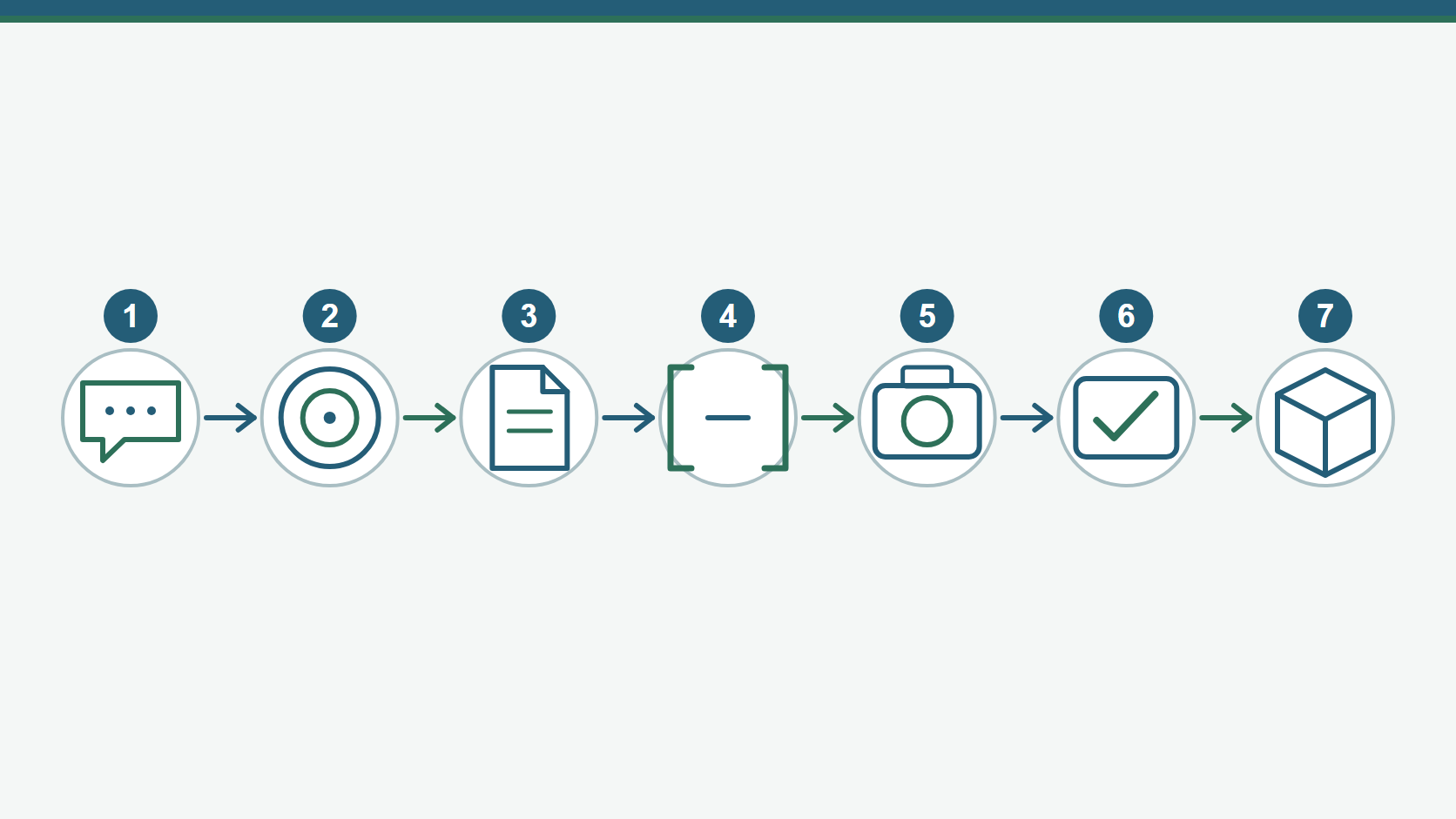
- Inquiry: capture the person's name, contact, desired use and timing in an external form or message.
- Fit check: compare the request with your offer, skill, access and schedule. Decline or refer work you cannot deliver safely.
- Brief: confirm purpose, subjects, location, required images and decision maker.
- Scope: state deliverables, exclusions, schedule, review path and delivery method in writing.
- Preparation: build a short shot list, check equipment and backups, confirm access and send a simple preparation note.
- Shoot: cover must-have frames first, then variations. Record any agreed change while everyone remembers it.
- Review: back up files, remove unusable frames and edit toward a coherent proof set.
- Delivery: send the agreed files and simple instructions, then record completion and approved portfolio use.
Tools support this path, but they are not the path. A booking service can expose available times. An order form can collect a structured request. A proofing gallery can let a customer select images. A delivery gallery can distribute finished files. Confirm what each external provider actually does before describing it to a customer.
Deliver What Was Agreed
Delivery begins at the brief, not after editing. If the customer needs a square profile image and a horizontal website banner, record those uses before the session. If they need a defined number of edited files, state whether the photographer selects them or the customer chooses from proofs.
Use a consistent folder and filename pattern. Include a short note that identifies the final set, file formats, any separate web and print versions, download deadline if the external service has one, and how to report a missing or corrupted file. Do not imply that a gallery provider will preserve files forever unless its current terms say so.
Keep raw files and drafts out of the final gallery unless they are part of the agreement. A large pile of near-duplicates shifts editing decisions back to the customer. Deliver a coherent set that matches the stated purpose.
Your VISU Link page can route visitors to an external portfolio, proofing gallery, order form or booking tool. VISU Link is the public profile and link destination, with a native QR and plan-dependent analytics. It is not a native photography gallery, proofing system, order form or booking engine.
Plan the First Paid Shoot
Seven days before: close the brief, confirm the scope and send the preparation note. Walk through the location if access or light is uncertain. Build a must-have list short enough to finish under pressure.
One day before: confirm time, address, access contact and any participants. Charge equipment, clear cards, prepare backups and review the first three frames you need. Do not add new deliverables casually.
At the start: restate the purpose and the finish time. Check one representative image for exposure, focus, background and intended crop. Then complete the must-have list before experiments.
After the session: create more than one copy before formatting or culling. Follow the selection and review process already agreed. Send the final set through the named external method with a concise delivery note.
After delivery: ask whether every agreed file arrived and served the stated use. Request portfolio permission separately if it was not already settled. Record what caused friction, then improve the brief or scope for the next customer. The goal of the first shoot is a completed promise and a cleaner process, not a claim that the business is already established.
Publish One Honest Photography Offer
Show the work you can deliver, state the boundary and connect the external form that starts a real conversation.
Frequently Asked Questions
What is the best first offer for a photography business?
Choose one customer, one situation and a deliverable you can show and repeat, such as a small product set, profile session or venue story.
Do I need paid clients before building a portfolio?
No. Use self-assigned work, your own subjects or a clearly described practice session. Label samples honestly and obtain permission before publishing other people or their property.
What belongs in a photography client brief?
Record purpose, destination, subjects, location, references, must-have images, decision maker and required delivery date.
Should I use an online proofing gallery?
An external proofing gallery can simplify selection and delivery when its current features fit the job. Explain which provider is used and do not promise functions or storage it does not offer.
Can VISU Link host my photography gallery?
VISU Link is a public profile and link destination with a native QR and plan-dependent analytics. It can link to an external gallery, form or booking tool, but those functions are not native.
How do I know the first paid shoot went well?
Check whether the agreed images arrived, matched the stated use and required manageable corrections. Record process friction instead of inventing testimonials or business results.