

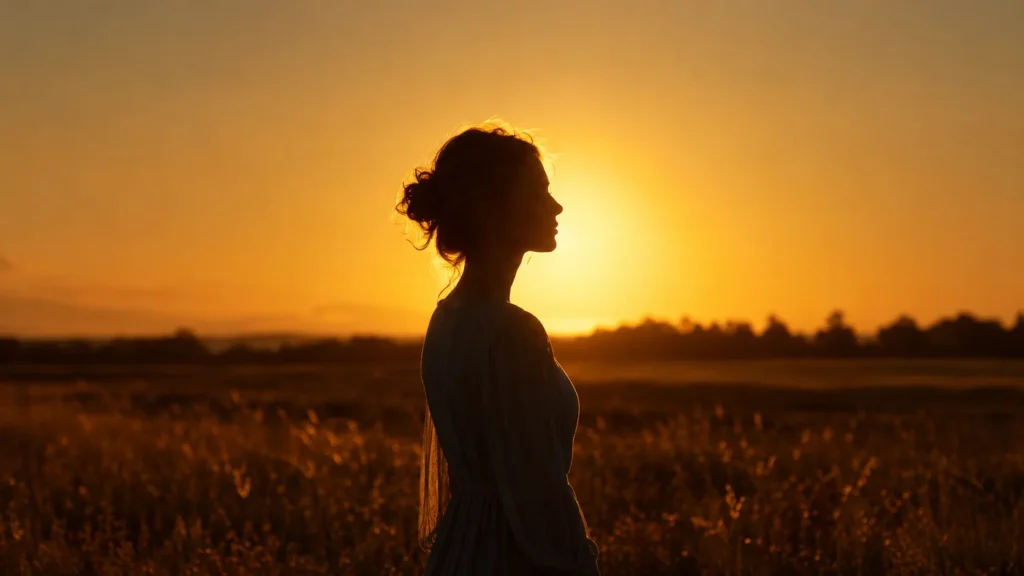
Golden hour is a sun angle, not a time on the clock. The window when the sun sits low changes length with the season and where you stand on the planet, and once you understand what the low sun does to light, the rest is planning.
Ask when golden hour is and you get an answer in hours. Ask what it is and you get closer to using it: it is the stretch after sunrise and before sunset when the sun hangs low, and everything photographers like about it, the warmth, the softness, the long shadows, follows from that low angle.
This page is about the mechanism and the habits: why the light behaves that way, how to be standing in the right place when it happens, and what to do with it once you are.
One Link for Everything You Shoot
A short address you control, pointing wherever your photos already live.
What Golden Hour Actually Is
The working definition: the period when the sun is low in the sky, shortly after it rises and shortly before it sets. The name says hour, and near the equator it can be shorter than that; at high latitudes in summer it can stretch far longer. The clock is not the definition. The sun's height is.
That has a practical consequence: golden hour is local. The same evening gives different windows in different places and seasons, which is why photographers check the day's sunrise and sunset times for the exact spot they plan to shoot rather than assuming yesterday's window.
It is also not a magic filter. Low sun is one kind of light with specific strengths, covered below, and specific costs: it is brief, it changes fast, and restricting yourself to it removes most of your practice time. Our beginner guide makes the broader case that every light teaches something.
Why the Light Looks Like That
Three things happen when the sun sits low, and each one is something you can use.
The light warms. Sunlight near the horizon crosses far more atmosphere than midday light, and the journey scatters away more of the blue. What arrives leans gold and red. Skin, stone and foliage all pick up that cast, which is most of what people mean by the golden look.
The light softens and drops. With the sun low, light rakes across the scene instead of pounding down on it. Shadows stretch long and fall sideways, faces stop carrying the harsh under-brow and under-nose shadows of noon, and textures, grass, sand, brick, light up in relief because every small bump casts its own long shadow.
The light gains direction you can choose. At midday the sun is overhead and your options are limited. At golden hour it sits at eye level, so turning your body swaps front light, side light and backlight in a single step. The whole compass of light directions becomes available at once, which is exactly the skill the beginner guide asks you to practice.
Planning: Being There When It Happens
Golden hour rewards the photographer who arrived early and punishes the one still walking to the spot. The planning is simple and worth doing every time.
Look up today's window for your location. Sunrise and sunset times shift through the year, and solar calculators, including free ones from scientific agencies, give exact times for any place and date. Treat the window as starting earlier than feels necessary: the useful light begins before the color peaks.
Scout in flat light, shoot in gold. The middle of the day is for finding compositions: where the subject goes, where you will stand, what the background does. When the window opens you execute instead of searching, because the light will not wait while you wander.
Know which way the sun leaves. The sun sets in a specific direction from your spot, and the warm side of the scene is the side facing it. A location that faces the wrong way at sunset may be a sunrise location, and the reverse. One evening of paying attention answers this permanently for the places you shoot most.
Share the Set, Not Fifteen Links
Point one short address at your gallery, your socials, wherever the work already sits.
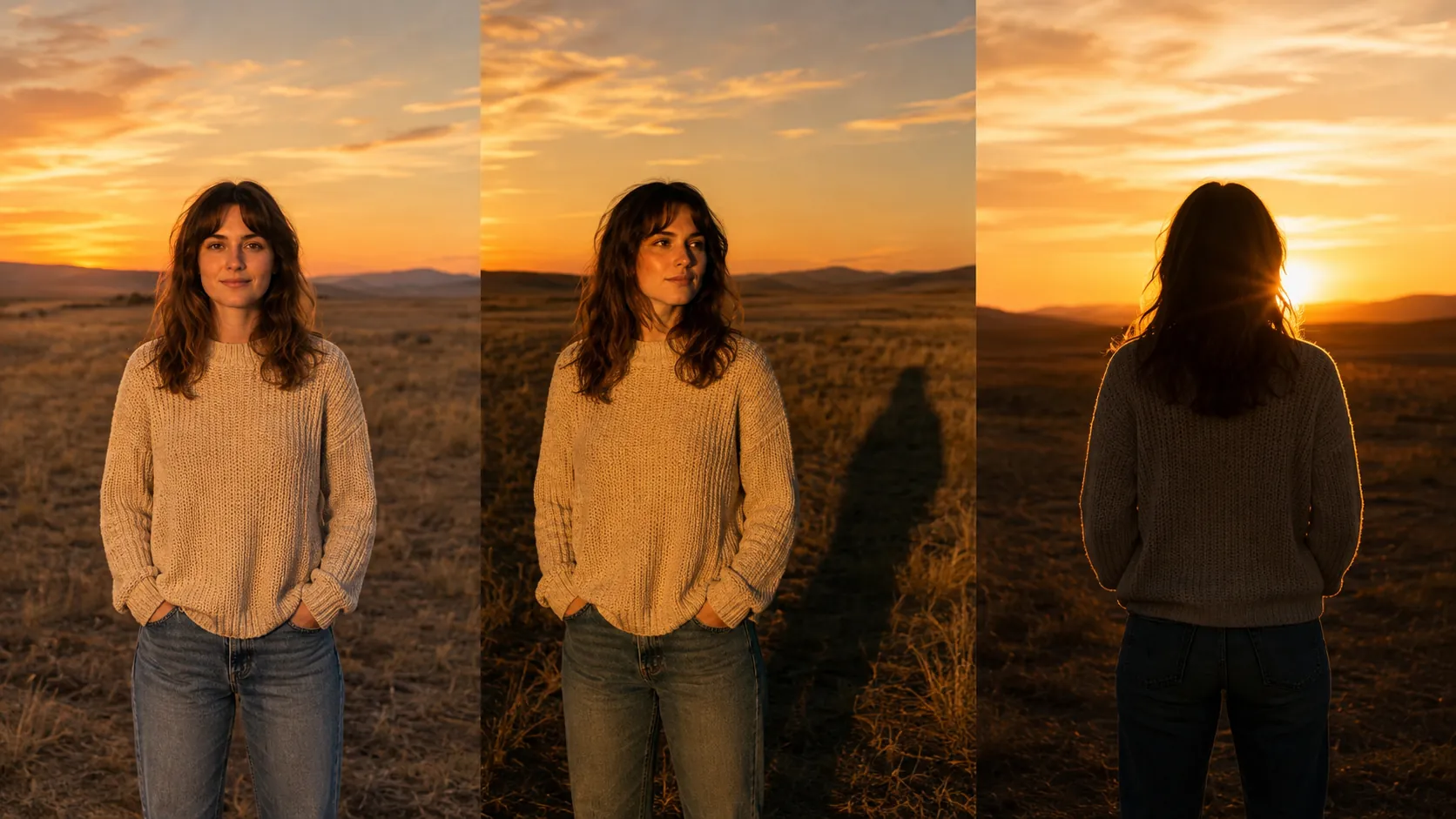
Front, Side and Back: Using the Low Sun
Front light, sun behind you, is the gentle option: even, warm, flattering, with the scene's colors saturated. Its risk is flatness, the same trade the beginner guide describes, softened here because the warmth carries some of the interest on its own.
Side light is where golden hour earns its reputation for depth. The long shadows fall across your frame instead of away from it, and every texture and shape gets modeled. For portraits, it draws the face in light and shadow instead of painting it flat; for landscapes, it is the difference between a field and a field with relief.
Backlight, shooting toward the sun, is the dramatic option. Subjects gain a glowing rim of light, translucent things, hair, leaves, dust, ignite, and exposing for the bright sky turns figures into silhouettes. It is also the hardest to expose and the most rewarding to practice, and the choice of which part to expose for decides the entire picture.
Where the subject then sits inside the frame is its own decision, and the low sun does not change it: the guidance in the rule of thirds guide applies at any hour.
Exposing in Light That Keeps Changing
The defining exposure problem of golden hour is that nothing holds still. The light dims noticeably over minutes, and its color keeps shifting, so settings that were right when you arrived drift wrong while you shoot.
Check exposure often. Whatever mode you use, reconfirm every few minutes rather than trusting the first reading. On a phone, tap the subject again; on a camera, glance at the histogram or the screen after the light visibly changes.
Protect the highlights. The scene's contrast, bright sky against dim ground, exceeds what the sensor holds in one frame more often than at midday. When something must give, let the shadows go dark: a silhouette against a detailed sky almost always beats a lit subject under a blown white sky.
Decide what the photo is about before correcting the color. Automatic white balance may try to neutralize the warmth, which is the point of the hour. If your camera or editing app lets you set white balance, keeping the warm cast is a legitimate choice rather than an error to fix, as the beginner guide's section on editing argues about every automatic decision.
After the Sun Drops: Blue Hour
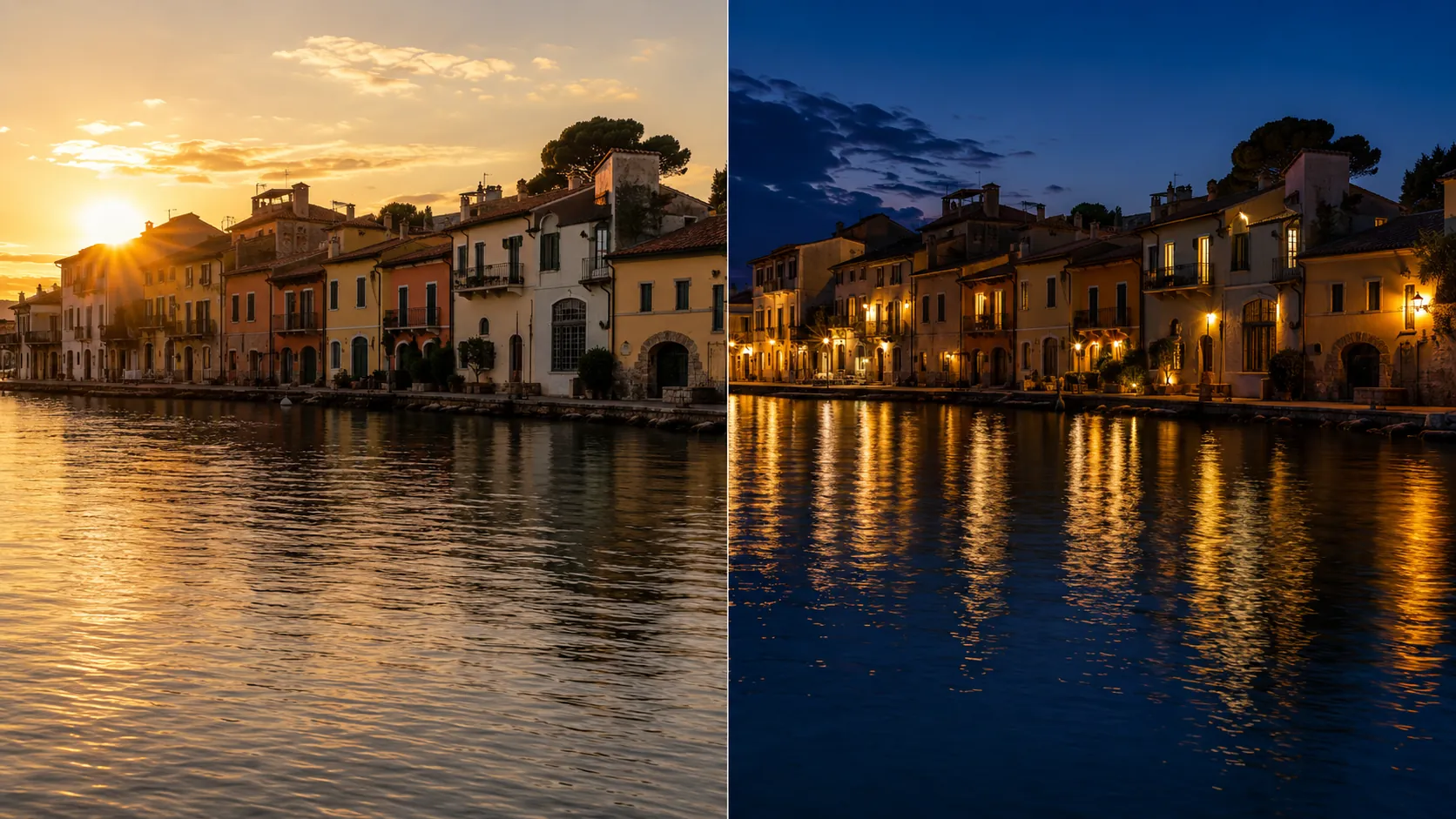
When the sun slips below the horizon, the show is not over. The stretch that follows, before real darkness, flips the palette: the sky turns deep blue, the remaining light goes soft and shadowless, and artificial lights, windows, street lamps, signs, start to read against the blue instead of disappearing in daylight.
It suits different subjects than the golden stretch: cities, buildings with their lights on, water holding the sky's color. It is also brief and dims toward the end, so a steady surface or support helps as exposure times stretch.
The practical habit: do not pack up at sunset. The two windows come as a pair, and the second one is the reason to stay another half hour.
Keep Your Photos in One Place
One address, updated whenever the work changes, with analytics on how often it gets opened.
Making It a Habit
Shoot one full window, arrival to dark. Photograph the same subject every few minutes from before the gold peaks until blue hour ends. The sequence teaches how fast the light actually moves, which no single session at the peak can show.
Rotate through the three directions. In one session, shoot your subject front lit, side lit and backlit by walking a circle around it. The low sun makes this a two-minute exercise, and the comparison is the fastest light education available.
Revisit your best midday photo at golden hour. Same composition, same spot, different light. What changes and what does not tells you precisely what the hour contributes, and what your composition was carrying on its own.
The wider foundations, light, framing, then settings, are covered in our photography guide for beginners, and this hour is simply the friendliest classroom for the first of them.
FAQ
When exactly is golden hour?
It depends on where you are and the date. It is defined by the sun sitting low, shortly after sunrise and before sunset, so the window shifts through the year and with latitude. Check a solar calculator for your location and day rather than assuming a fixed time.
Is golden hour really only an hour?
No. Near the equator the sun rises and sets steeply and the window is short; far from it, especially in summer, the low-sun stretch can last much longer. The name is a nickname, not a measurement.
Is morning or evening golden hour better?
The light mechanism is the same. The practical differences are elsewhere: mornings tend to be quieter with fewer people in the frame, evenings are easier to schedule and flow into blue hour. Which one suits you is logistics, not optics.
Do I need to shoot everything at golden hour?
No, and restricting yourself to it costs most of your practice time. Harsh midday light produces strong graphic shadows, and overcast light suits portraits well. Golden hour is one tool with a specific look, not a requirement for good photos.
Why do my golden hour photos come out too dark?
Usually the bright sky pulled the exposure down, especially when shooting toward the sun. Decide what the photo is about: expose for the subject and accept a bright sky, or expose for the sky and commit to the silhouette. Automatic metering cannot make that decision for you.
Does golden hour work on a phone?
Fully. The warmth, long shadows and rim light are properties of the scene, not the camera. Tap to set focus and exposure on your subject, re-tap as the light changes, and the one thing worth resisting is the phone's automatic tendency to neutralize the warm color.