

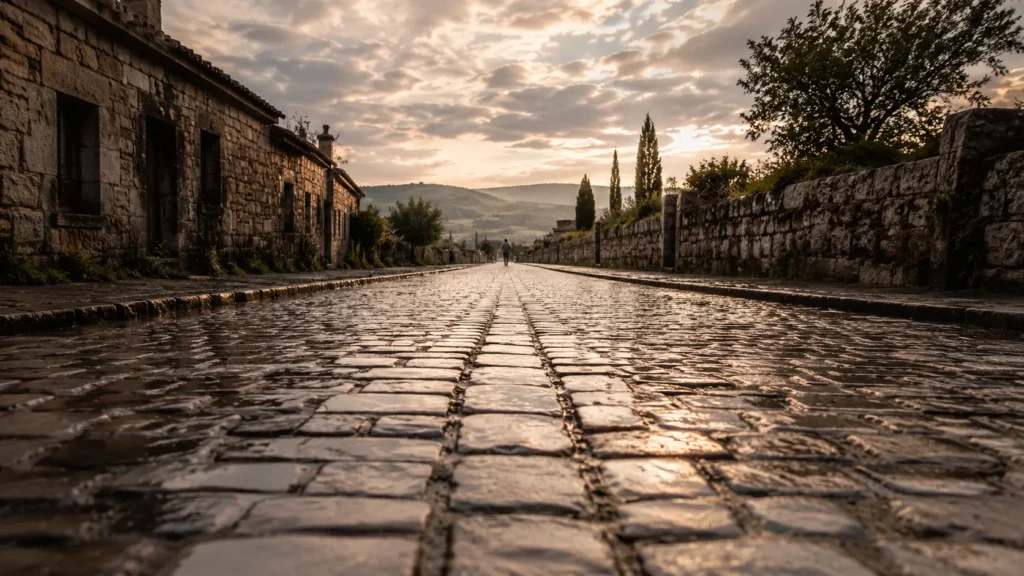
A line in the frame is an instruction. The eye follows roads, rails, fences and shadows whether you planned it or not, and the difference between a guided photograph and a confusing one is where those lines end up pointing.
Of all the tools of composition, leading lines are the most literal. The viewer's eye lands in the frame, finds a line, and travels along it. You do not get to opt out of that mechanism; every strong line in the scene is already steering attention somewhere.
So the skill is not adding lines. It is noticing the ones already there and deciding, before you press the shutter, where they take the viewer. This page covers where lines come from, what different shapes of line do, and the ways they quietly work against you.
One Link for Everything You Shoot
A short address you control, pointing wherever your photos already live.
What Leading Lines Do
A leading line gives the eye a route. Instead of wandering the frame and assembling the picture in whatever order it happens to, the viewer enters where the line starts, travels its length, and arrives where it ends. You are choreographing the first seconds of looking.
That does two jobs at once. It points, because whatever sits at the end of the line inherits the attention the line collected. And it deepens, because a line running from near the camera into the distance drags the eye through the space, which makes a flat rectangle feel like somewhere you could walk into.
Leading lines are one instrument inside the larger toolkit of photographic composition. That guide covers the whole set; this page goes deep on the one tool, the same treatment we gave the rule of thirds.
Where Lines Come From
Once you start hunting them, lines are the most abundant compositional material there is.
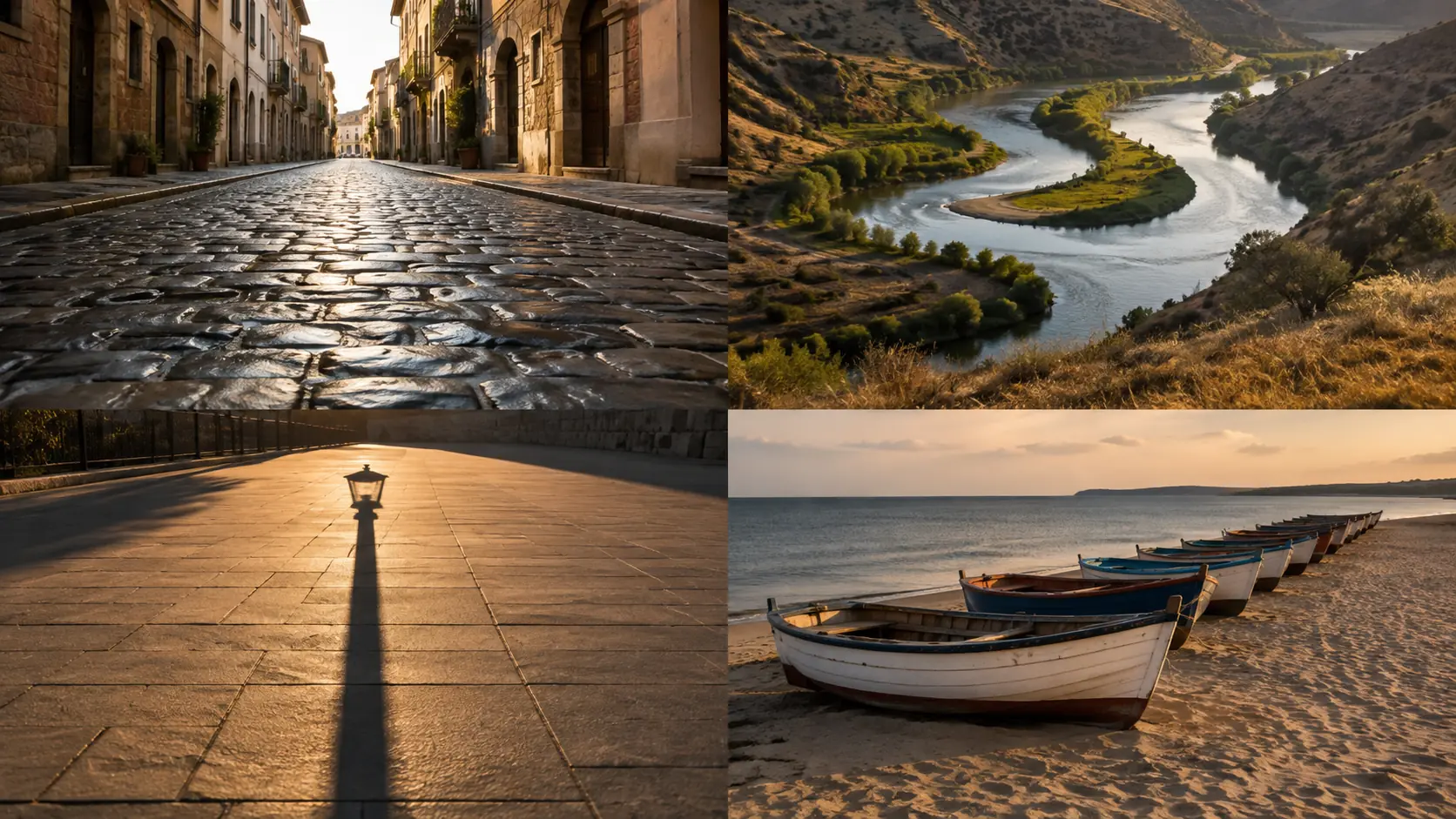
Built ones. Roads, paths, rails, bridges, fences, handrails, corridors, rows of columns or streetlights. The made world is drawn in straight lines, and almost all of them converge helpfully toward wherever you point the camera.
Natural ones. Rivers, shorelines, ridgelines, tree trunks, branches, the edge where surf meets sand. Softer and less obedient than built lines, and often more interesting for it.
Light and shadow. A shadow cast across the ground is a line with no object attached. Low sun stretches every pole and person into one, which is part of why the hour around sunset is such generous compositional terrain: golden hour manufactures leading lines out of everything standing.
Implied ones. A row of separate objects, stones, boats, people, reads as a line even though nothing connects them. So does a person's gaze: the viewer follows where a subject is looking as reliably as any painted stripe.
Straight, Diagonal and Curved
The shape of the line sets the speed and mood of the journey.
Straight lines are fast. A road running from the bottom of the frame to the horizon delivers the eye immediately. Head-on, converging lines read as formal and stable, which is the same energy symmetrical framing trades in.
Diagonals are dynamic. A line crossing the frame at an angle carries movement and tension in a way horizontals and verticals do not. Entering from a corner is the classic version: the eye picks it up at the edge and rides it inward. Tilting the camera to manufacture a diagonal rarely works, though, because the viewer reads the tilted horizon before the line.
Curves are slow. A winding path or river makes the eye work for the destination, and the longer journey holds attention longer. The S-curve, a line that bends one way then the other, is beloved in landscape photography precisely because it turns crossing the frame into a scenic route.
Share the Set, Not Fifteen Links
Point one short address at your gallery, your socials, wherever the work already sits.
Where the Line Should Lead
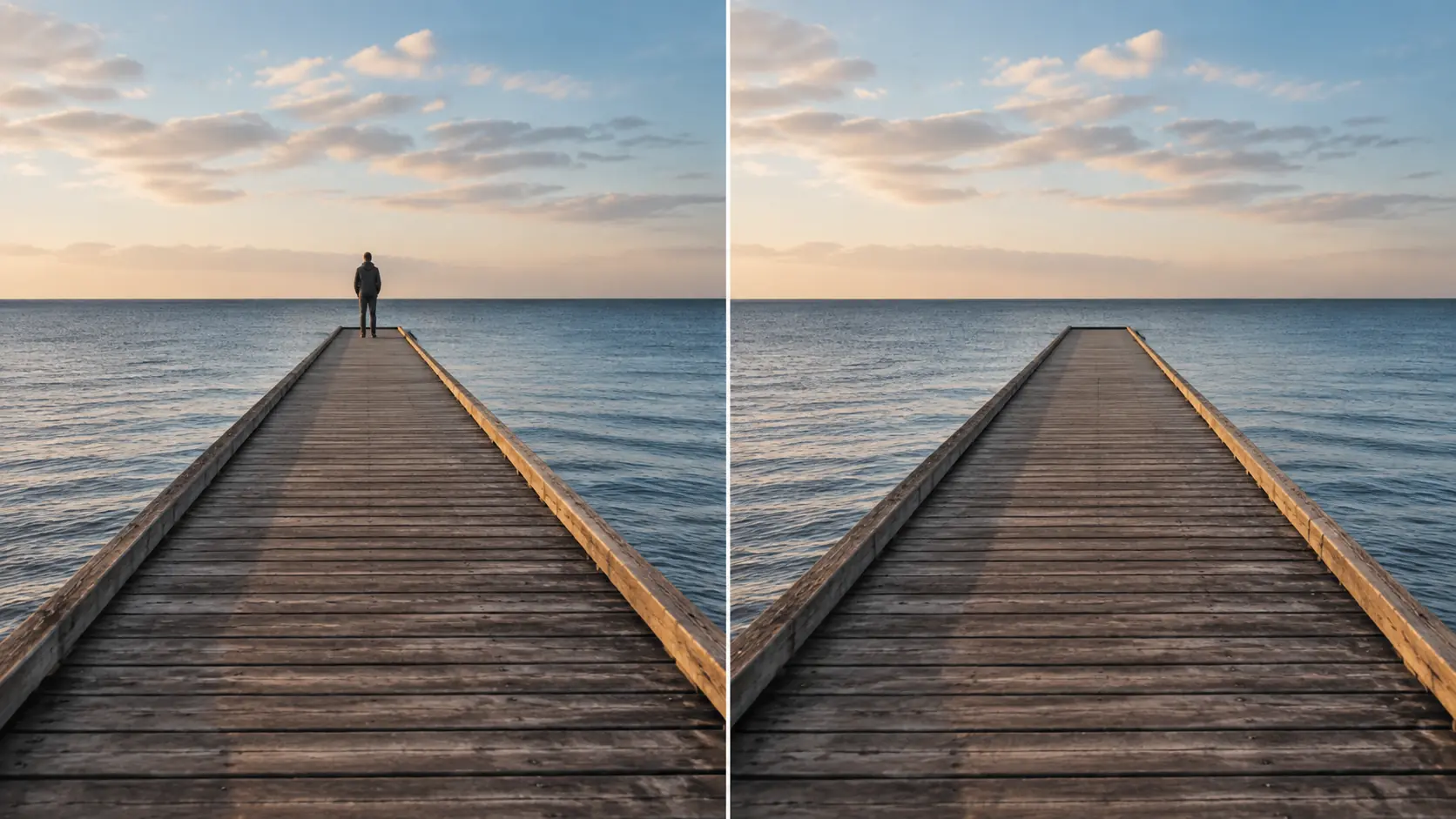
A leading line is only as good as its destination. The eye arrives somewhere; the question every line-driven photo has to answer is whether there is anything there.
Lead to the subject. The strongest arrangement is the simplest: line starts near an edge, travels inward, ends at the thing the photo is about. Path to the person. Rails to the station. Shadow to the door.
Or lead to the deep point. In landscapes without a single subject, lines can converge toward the horizon or a vanishing point instead. Then the destination is depth itself, and the picture is about the space.
Position the destination deliberately. Where the line ends is where the eye rests, so that endpoint deserves the same placement thinking as any subject, centered for symmetry, offset for balance. The trade-offs are the ones covered in the thirds guide, applied to the end of the line instead of the subject directly.
Lines That Work Against You
Because the mechanism is automatic, unnoticed lines cause automatic damage.
Lines that exit. A fence or road running out of the side of the frame escorts the eye out with it. If a strong line leaves the picture without passing anything worth stopping for, the viewer leaves too.
Lines that cut. A horizon slicing through a subject's neck, a pole crossing behind a head, a railing bisecting the frame for no reason. These read as accidents precisely because lines read as intentional.
Lines that compete. Two strong lines pointing at different things give the eye contradictory instructions. One line, one destination is the reliable recipe; more than that needs the lines to agree.
The fix is the same half-second scan that catches edge intruders: before shooting, trace the strong lines in the scene and ask where each one delivers the eye. Moving a step left or right redirects a line more often than you would expect, because convergence depends entirely on where you stand.
Keep Your Photos in One Place
One address, updated whenever the work changes, with analytics on how often it gets opened.
Making It a Habit
Shoot one line from five positions. Take a single strong line, a fence, a path, and photograph it head-on, from each side, crouched low and standing tall. Convergence changes with every step, and the comparison teaches you to steer lines by moving.
Follow the line before shooting. For each frame you compose, consciously trace the main line with your eye and note where you end up. If you land somewhere boring, the viewer will too. Reframe until the line earns its destination.
Hunt implied lines for a day. Rows, gazes, sequences of lit windows. The explicit lines train themselves; the implied ones are where the skill compounds.
If the wider foundations are still settling, our photography guide for beginners covers the order that makes this easier: light first, then framing, then settings.
FAQ
What are leading lines in photography?
Lines in the scene, roads, fences, shadows, rows of objects, that the viewer's eye naturally follows. Used deliberately, they guide attention to the subject and pull the eye through the depth of the picture.
Do leading lines have to point at the subject?
They have to point at something worth arriving at. Usually that is the subject; in landscapes it can be the horizon or a vanishing point, making depth itself the destination. What fails is a strong line that delivers the eye to nothing, or out of the frame.
Are leading lines the same as the rule of thirds?
No. Thirds is about where things sit in the frame; leading lines are about how the eye travels between them. They combine naturally: the line does the guiding, and its destination is placed using the same trade-offs the thirds guide covers.
What is an S-curve?
A line that bends one way and then the other as it crosses the frame, like a winding river. The eye takes longer to travel it than a straight line, which holds attention longer and gives landscapes a sense of unhurried depth.
How do I find leading lines with a phone?
The same way as with any camera: they are in the scene, not the device. The phone habit that helps most is moving your feet, because a line's direction and convergence change entirely with your position, and crouching or raising the phone redirects them further.
Why do my photos with lines still look messy?
Usually more than one strong line is pointing at different things, or the main line exits the frame without a destination. Trace each strong line and ask where it delivers the eye; keep the one that serves the subject and reframe to weaken the rest.