
A winter plan does not need snow or a full day outdoors. Choose one short activity for the conditions you actually have, then keep a window or indoor option ready. These ideas use winter light, local trees, weather observations and simple play rather than a fixed calendar or a temperature rule for every child.
Share Your Winter Break Plans From One Link
A VISU Link page can hold the sign-up forms, outing schedules and family resources you want to share. Send one link or its QR code to the group.
Choose the day, place and indoor backup
Check the local forecast, warnings, route conditions and daylight before choosing an outdoor activity. The National Weather Service’s winter-safety resources are a starting point for U.S. conditions; use your local weather service and site guidance elsewhere. A planned outing can become an indoor day if the route or conditions are unsuitable.
Pick a nearby place with permission to use it, a clear return route and an adult accompanying the group. Keep activities away from roads, moving vehicles, frozen water and snow piled by machinery. Choose clothing and equipment for the activity using their instructions and local guidance; this article does not set a universal outdoor time or medical threshold.
Winter does not happen in the same months everywhere. NASA explains that the hemispheres have opposite seasonal timing because of Earth’s tilt. December is not a winter month for the Southern Hemisphere, and local weather varies even within one season. Use the ideas for your local winter rather than assigning them to every Christmas break.
Four outdoor ideas without snow
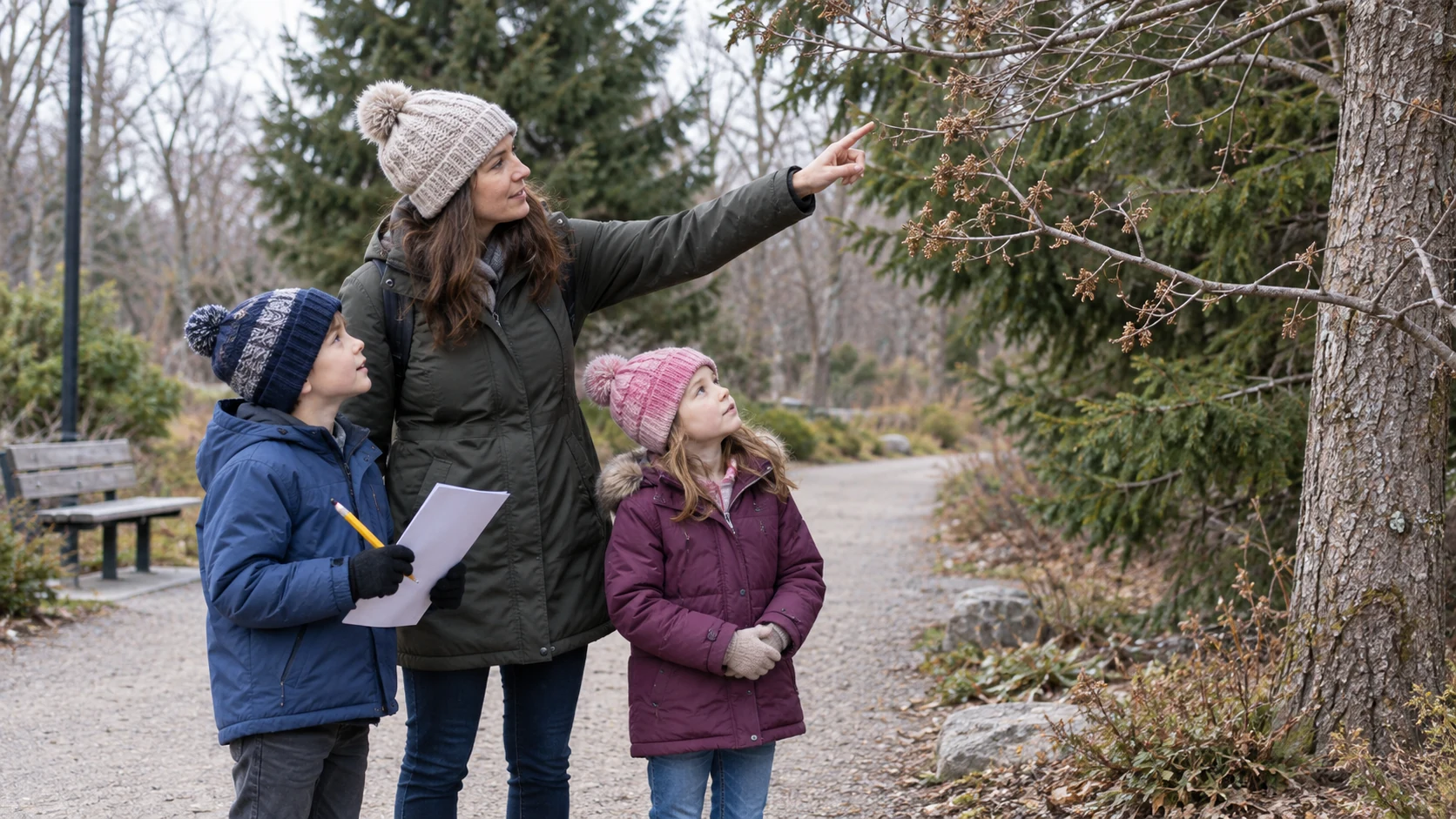
- Tree-shape walk. Pick two trees visible from the path. Sketch their outlines and note whether they have leaves. Do not assume every tree loses its leaves in winter.
- Texture spotting. Look for three different surfaces, such as rough bark, a smooth stone and a patterned wall. Describe or draw them without peeling bark or collecting materials.
- Shadow sketch. Choose a level, clear place and draw a shadow on paper. Return at another time if practical and compare. Look at the shadow, never directly at the Sun.
- Listening stop. Stand or sit at one agreed spot and list what you hear. Each person can draw a sound instead of naming it. Leave birds and other animals undisturbed.
Use the observe-and-leave approach described in the National Park Service’s scavenger-hunt lesson: stay on the path and do not remove or alter natural objects. Its park route is an example, not a route you need to reproduce.
Three options when snow is available
- Surface snow picture. Make a small shape on the ground with gloved hands or an age-appropriate tool chosen by the adult. Keep it a surface picture rather than a tunnel, roof or structure to enter.
- Boot-print comparison. In a clear permitted patch, compare the patterns left by your own shoes. Draw the patterns and count visible grooves; there is no need to identify an animal or follow tracks away from the group.
- Watch a small snow sample melt. Where collection is allowed, put a small amount in a clear non-breakable cup on a tray indoors. Mark its starting level and observe the change without tasting it. Compare your own observations rather than expecting a fixed snow-to-water ratio.
Snow is optional, not a reason to travel to an unsuitable place. If the ground is icy or access is closed, choose the window activities below. For other indoor choices, see indoor activities for kids by age and mood.
One Page for Your Group's Winter Links
Organizing a playgroup or a neighborhood winter walk? Put the meeting point, route details and the carpool form on one VISU Link page and share it with a QR code.
Three winter observations from a window
- Light journal. At the same convenient clock time on a few days, note whether the view is bright, cloudy or dark. Write the date and weather beside the drawing; clouds and observation time matter, so a short journal alone does not measure the duration of daylight.
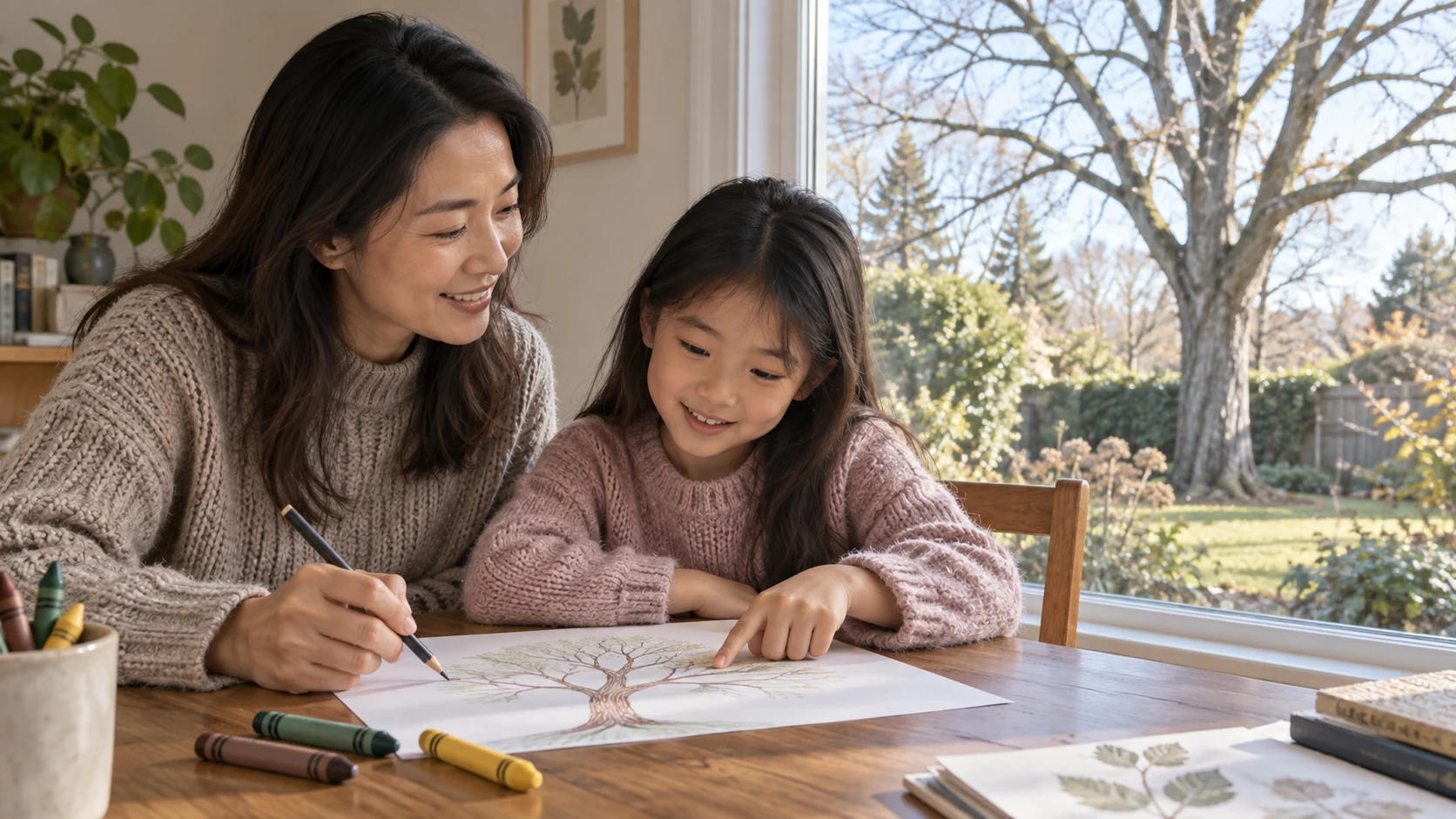
- Tree silhouette page. Draw a tree you can see and add what is visible today: branches, leaves, buds or birds. Revisit the drawing later instead of guessing what every winter tree should look like.
- Bird-visit tally. Watch without adding food or disturbing nests. Count visits during a short period chosen by the group. A bird may return, so label the result as visits, not a count of unique birds.
Children can dictate observations, point or use drawings. A shared page avoids requiring everyone to write at the same speed. Keep photos focused on the observation rather than neighbours or private interiors.
Two indoor projects with a winter theme
- Weather-picture cards. Draw a few conditions your area actually gets, such as rain, wind, sunshine or snow. Sort the cards into “seen today” and “not seen today,” then choose an activity for the first group. No one needs to guess the forecast.
- Winter story map. Draw a character going from home to one familiar place and back. Add a change in weather and let the group decide how the character changes the plan. It can become a spoken story, comic or shared drawing.
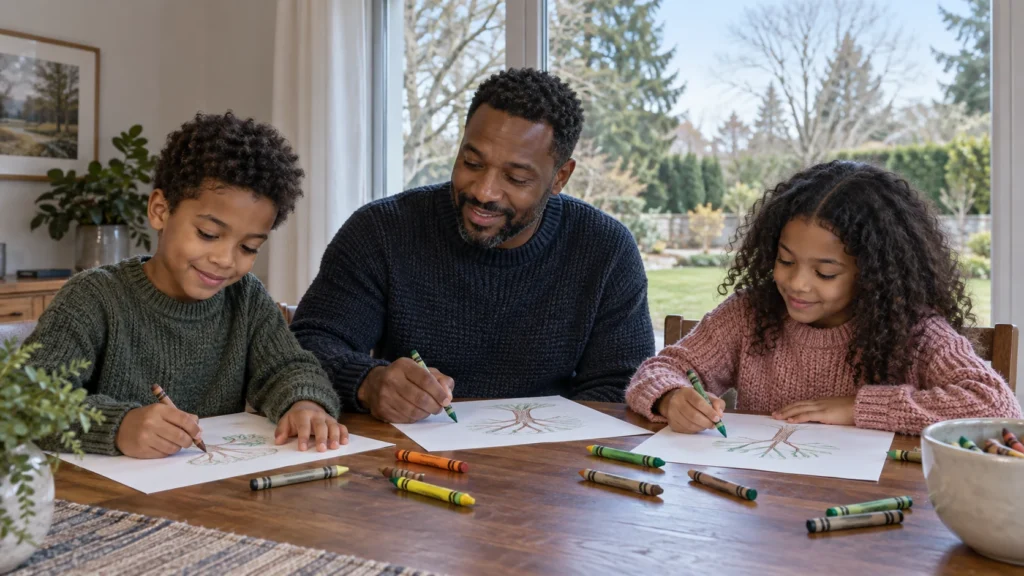
Keep materials simple: paper, large crayons and items the adult has selected for the group. Leave small loose decorations out where they do not suit the participants. For a break that uses no materials, choose from games to play without anything.
Build a flexible half-day plan
Pick one observation activity, one break and one indoor project instead of trying all twelve ideas. For example: a nearby tree walk, a return indoors to put away outdoor gear, then a shared tree drawing and a story. This is a suggested sequence, not a timetable everyone must complete.
- Agree which place you will use and who stays with the group.
- Keep the indoor option ready before leaving.
- Let anyone pause, change roles or finish early.
- Collect materials and leave the place as you found it.
- Use one observation to choose what to do next time.
A winter day can be a window day. If someone is uncomfortable or conditions change, end the activity and use the backup rather than treating the checklist as a target to finish.
Keep Your Public Links in One Place
VISU Link gives you a shareable visu.to/<username> page for the public resources you choose. Share it with families in your group and keep private details off the page.
Frequently Asked Questions
What can we do if there is no snow?
Try a tree-shape walk, texture spotting, a shadow drawing or a listening stop in suitable conditions. The window journal and indoor projects need no snow.
Are these activities tied to December?
No. The hemispheres have opposite seasonal timing. Use the activities during your local winter and adapt to the actual forecast and school calendar.
How long should children stay outside?
There is no universal duration in this guide. Use local weather and site guidance, the actual conditions and the needs of the group; keep an indoor backup.
Do we need a kit or printable pack?
No. The ideas use ordinary paper, drawing materials and, for the optional snow observation, a non-breakable cup and tray.
Does the bird tally count different birds?
It counts visits during the observation period. The same bird may return, so do not present the tally as a count of unique individuals.
Can we do the whole plan indoors?
Yes. Choose window observations, weather-picture cards or the winter story map. Adapt roles and materials to the participants.