
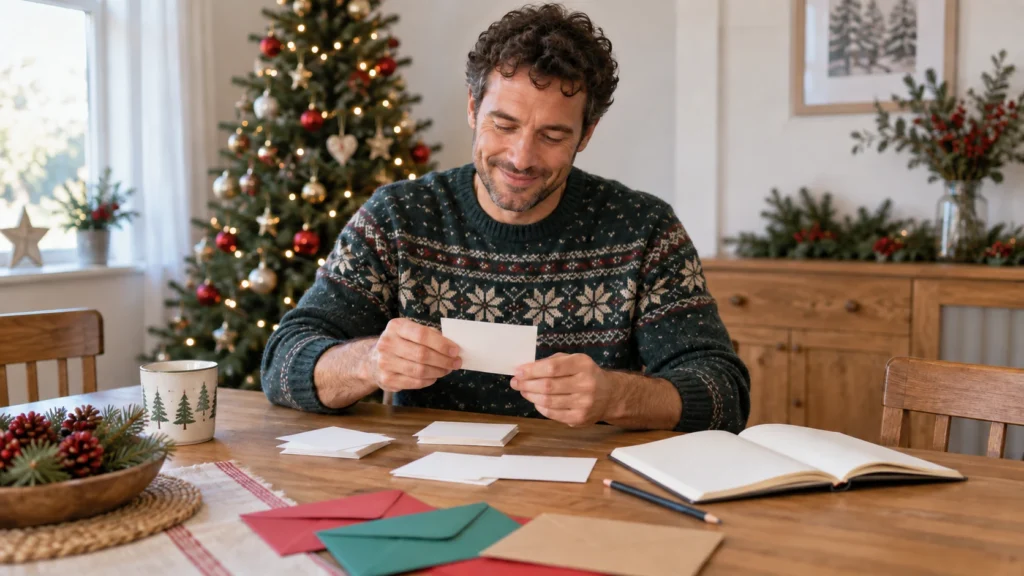
Build a Christmas clue trail around places the group is allowed to use. Below are eight original clue ideas, a five-stop example route and a spotting version for a holiday walk. Copy the ideas onto your own paper and change any clue that does not describe your home; there is no printable download to collect first.
Put the Hunt Details in One Place
A VISU Link page can hold the address, a map link and the contact route for a family or neighborhood hunt, so every helper checks the same public page.
Plan the finish before hiding clues
Choose an ordinary, reachable finish such as a gift bag on a table. Walk the allowed area with the adult who will help. Leave kitchens in use, appliances, vehicles, bathrooms, medication storage and private rooms out of the route. Put clues beside objects rather than inside equipment.
- Choose the finish and the allowed rooms.
- List the stops in order, with one clear destination per clue.
- Write the clue to each next stop, then label the backs with small numbers for the host.
- Walk through the route yourself and check every answer.
- Keep a master list and hand over the opening clue when everyone is ready.
Start with a short route and add stops only if the group wants them. An adult can read clues aloud or hand over the next card at a table, so joining in does not depend on reading quickly or moving around the house.
Eight clues you can adapt
Use these original suggestions as a starting point. The destination labels are for the host; leave them off the players’ cards. Choose only objects that exist in the allowed area. The placement notes describe where the next card waits, not where to put the card bearing that clue.
- Bookshelf: “Stories stand in a row. Find the shelf where their covers show.” Place the card beside a book at a reachable height.
- Sofa: “A soft place to sit and hear a tale. Look beside its arm for the next card.” Use the arm or a nearby side table, not a reclining mechanism.
- Shoe mat: “Boots wait here after a walk. Look beside them for our next talk.” Keep the path clear.
- Gift bag: “Handles up, paper sides; beside this bag the next clue hides.” Use an empty host-marked bag.
- Table place card: “A name marks a place to sit. Your next clue rests beside it.” Avoid a table being used for hot food.
- Paper star: “Five points shine without a light. Find the paper star in sight.” Display it at hand height, away from wiring.
- Soft toy: “A quiet friend with a stitched-on grin keeps the next card close to him.” Place the card beside the named toy.
- Drawing station: “Paper and pencils are ready to go. Look where your next picture can grow.” Use a clearly marked tray.
A five-stop route worked out
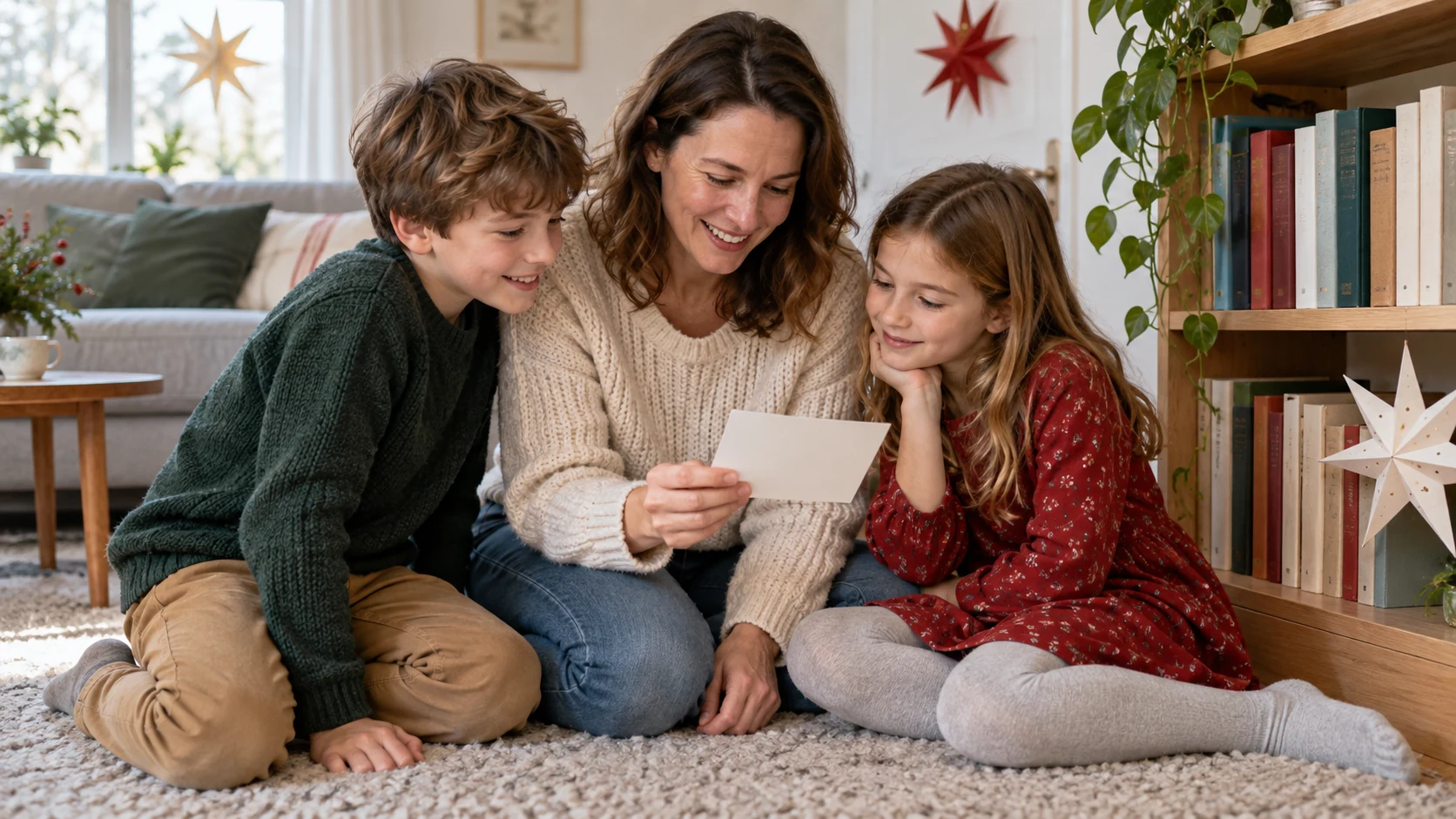
Example: hand the players the bookshelf clue. At the bookshelf, place the sofa clue; at the sofa, the shoe-mat clue; at the mat, the paper-star clue; beside the paper star, the gift-bag clue. For this route’s final card, replace the usual gift-bag wording with: “Handles up, paper sides; our finish waits inside.” Put the finish in the marked gift bag. This replaces the fifth card’s wording; it does not add another card. That is five destination cards, four hidden along the route and one handed over at the start.
On the host sheet, record each card’s number, where you put it and where it sends the group. Numbering cards is an organisation aid, not an extra puzzle. If a card goes missing, read it from your copy and continue.
If a present exchange follows, use Christmas gift exchange games for the separate swapping rules. Reaching the finish does not need to decide who receives a gift.
Share One Plan With Every Helper
When grandparents, neighbors or older cousins help hide clues, a VISU Link page can gather the address, meeting time and a link to your own shared checklist in one place.
Picture clues and shared roles
For a picture route, draw the next object on each card or use a photo of that object alone. Do not include addresses, private papers or people who have not agreed to be photographed. Match each picture to one destination.
- Reader: reads or describes the card.
- Navigator: points out the next allowed stop.
- Card keeper: carries the collected cards.
- Checker: compares the answer with the host when needed.
Rotate roles by agreement. Let a seated player solve and give directions while someone else fetches the next card. Offer a spoken hint without a penalty if the group wants a relaxed game. For a quieter alternative afterwards, try indoor activities for kids.
A spotting walk without hidden prizes
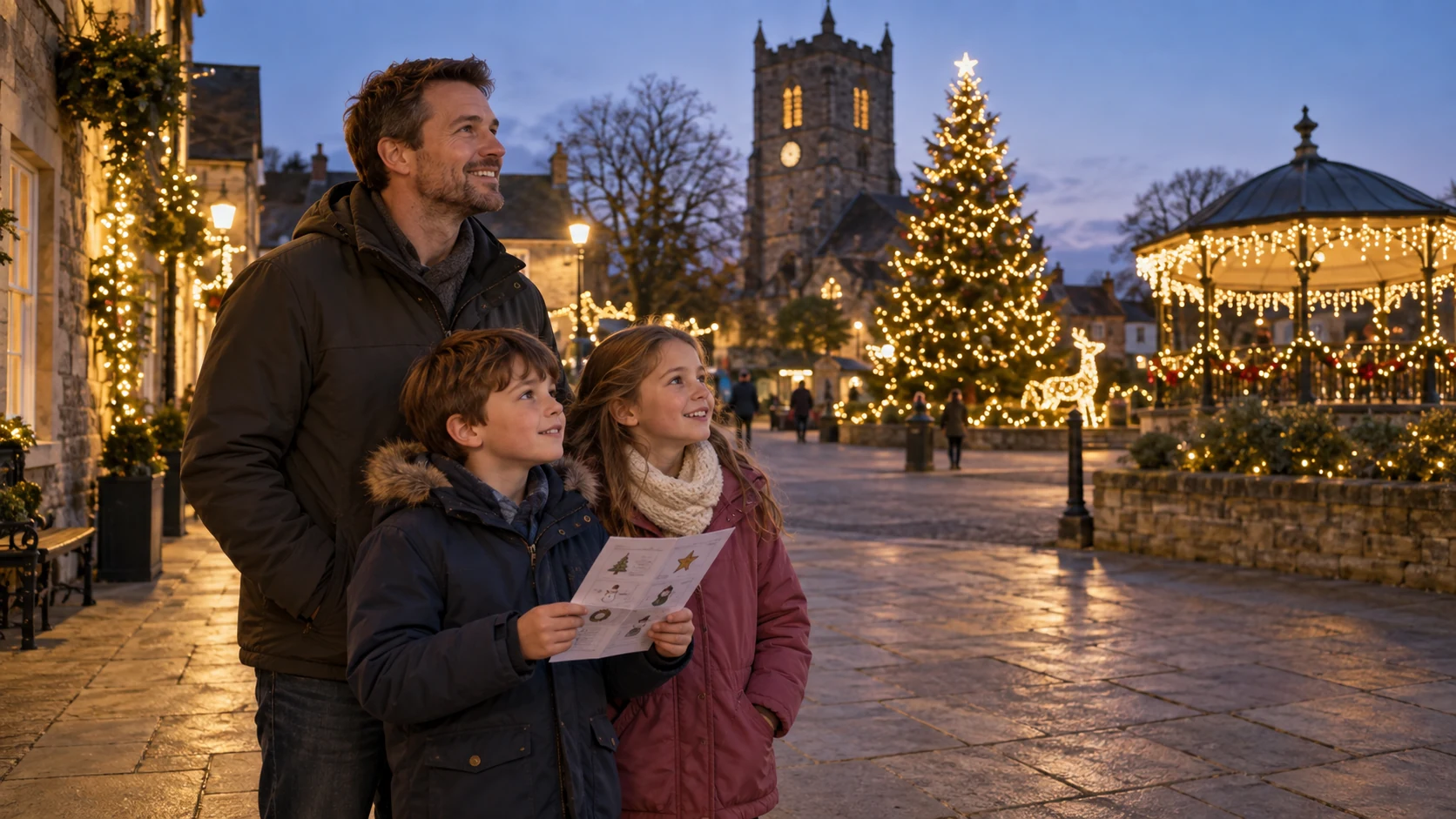
Use a public route you already know and check local weather, light and access before leaving. An adult sets the boundary and turnaround point. Look from the pavement: do not enter gardens or approach someone’s home for a closer view.
- A wreath visible from the public path.
- A paper star in a window.
- A display with two different colours.
- A decorated public tree.
- A bow on a public-facing display.
- A shape the group agrees resembles a snowflake.
Mark or describe what you see instead of collecting decorations. The National Park Service’s observation-hunt example asks visitors not to remove or alter things in the park; use that observe-and-leave approach when your route includes a natural area. A window-spotting or drawing version works when going out does not suit the group.
End with a clear, shared finish
Announce whether the hunt is cooperative or timed before starting. For a family session, one shared route and a group finish avoid a race between routes of different difficulty. A prize is optional: the final card can lead to choosing a story or a group photo, with everyone’s agreement.
Use paper clues instead of loose miniature tokens where younger children are present. The CPSC advises following toy age guidance and keeping toys with small parts away from children under three; a festive theme does not change that. Keep clues away from plugs, candles, fragile decorations and places that require climbing.
Afterwards, collect every card and any tape or string. Ask which clue was unclear and change it for the next occasion before using it again.
Make the Meeting Point Easy to Find
Publish the address, a map link and a contact route for a street or block hunt on one page. VISU Link does not run the hunt or track clues for you.
Frequently Asked Questions
How many clues should I use?
Start with a short route that fits the group. The example here uses five destination cards; add or remove stops after walking the route yourself.
Where should I hide the clues?
Use reachable, permitted places beside ordinary objects. Keep appliances, vehicles, bathrooms, private storage, hot surfaces and climbing out of the game.
Can children play without reading?
Yes. Use pictures, read clues aloud or let players describe and point. Choose the format by the group’s needs rather than a fixed age rule.
Is there a printable clue pack?
No downloadable pack is provided. The original clue ideas and route are written on this page so you can copy and adapt them.
Do we need a prize?
No. The finish can be a shared story, choosing music or another agreed activity. Explain the finish before play if gifts are involved.
Can we play outside?
Use an allowed public route with adult supervision, suitable conditions and a clear boundary. Spot decorations without entering property or collecting objects.