

The best Christmas gift exchange games make the rules clear before anyone reaches for a package. Once the group agrees on the budget, the order of play and whether stealing is allowed, the exchange can be playful without turning one gift into a contest.
This guide gives you nineteen formats for family, friends and work groups. Each includes group fit, time, household materials, steps, a variation and a rule against conflict. If the group wants something to do while the pile forms, general knowledge questions for adults fill the wait without props.
A Reward Where the Celebration Happens
VISU rewards presence at partner locations. Scan the code while you are there and discover a different kind of reward connected to the visit.
Before the Games: Rules Everyone Agrees On
Send one short message before the exchange. State the spending limit, deadline, theme and what is out of bounds. Avoid joke gifts aimed at somebody's body, beliefs, finances, work or private life.
For a named exchange, confirm that everyone received one recipient and provide a private way to report a missing assignment. For an open pile, ask everyone to bring one wrapped gift. Decide how a forgotten gift is handled.
If stealing is allowed, publish the limit before play. When a gift reaches that limit, it stays with its current holder. Decide whether the first player gets a final choice, too.
Choose a host to explain the rules, track the order and settle edge cases. Put the rules where everyone can see them.
Classic Swap Games
1. White Elephant With a Steal Limit
Group: at least four people. Time: one deliberate turn per person. Materials: one wrapped gift from each player and slips numbered for the turn order.
Play: pile the gifts and draw an order. The first player opens any package. Each later player opens a new one or takes an opened gift. Someone who loses a gift chooses again but cannot immediately take back the same one. Lock a gift at the agreed steal limit. End when everyone holds one.
Variation: use an agreed neutral theme. Keep it kind: tally steals visibly and never change the limit during play.
2. One-Steal Yankee Swap
Group: a small or medium circle. Time: shorter than the open version because every player gets one decision. Materials: the wrapped gifts and a shuffled stack of name slips.
Play: draw one name at a time. That person opens a package or steals one already open. A stolen gift locks immediately, and its former holder opens a new package. Continue until the pile is empty.
Variation: let children point to a package for an adult to move. Keep it kind: the rule applies to every gift, even when the group wants to make an exception for a popular one.
3. Theme Secret Santa
Group: any group in which each person can be assigned one recipient. Time: a brief reveal after gifts are handed out. Materials: private assignments, gifts and a theme chosen together.
Play: draw recipients privately. Everyone follows one broad theme, such as handmade, useful at a desk or tied to a shared memory. Recipients open gifts and guess the giver before the reveal.
Variation: choose a theme across ages. Keep it kind: nobody should reveal personal information or find something rare.
Games With Dice, Cards and Numbers
4. The Direction Die
Group: a seated circle. Time: several quick rounds followed by one opening round. Materials: one die, a handwritten action key and one wrapped gift per person.
Play: everyone holds a random package. Assign each face an action: pass left, pass right, swap across, keep, choose two people to swap, or roll again. Complete the announced rounds, then open the gift in hand.
Variation: for children, use passing actions with arrows. Keep it kind: no action removes a player or leaves anyone without a gift.
5. Number Match
Group: any size with a clear display area. Time: a fast draw plus the normal reveal. Materials: matching numbered slips, one set for people and one for gifts.
Play: label packages and matching slips with numbers. Everyone draws and opens in order, with no swaps. Afterward, allow one optional trade period in which both people must say yes.
Variation: draw in several rounds for a large group so fewer people move at once. Keep it kind: a trade is never negotiated after either person says no.
6. Left-Right Gift Story
Group: a circle where everyone can hear the reader. Time: the length of one short story. Materials: gifts and an original paragraph containing repeated uses of left and right.
Play: each person holds a package while the host reads. On left, pass left; on right, pass right. At the end, open what is in hand. Use a fictional story, not embarrassing real events.
Variation: use up and down as cues for people across a table. Keep it kind: rehearse the story once so every package ends with a player.
7. Red or Black Choice
Group: a medium circle. Time: one card draw per turn. Materials: an ordinary deck of cards and the gift pile.
Play: draw a card. Red means take a new gift. Black means swap your unopened package with another unopened one. When every package has an owner, open together. Stop drawing if the pile runs out.
Variation: replace cards with colored paper slips. Keep it kind: all swaps happen while packages are closed, so nobody targets a revealed gift.
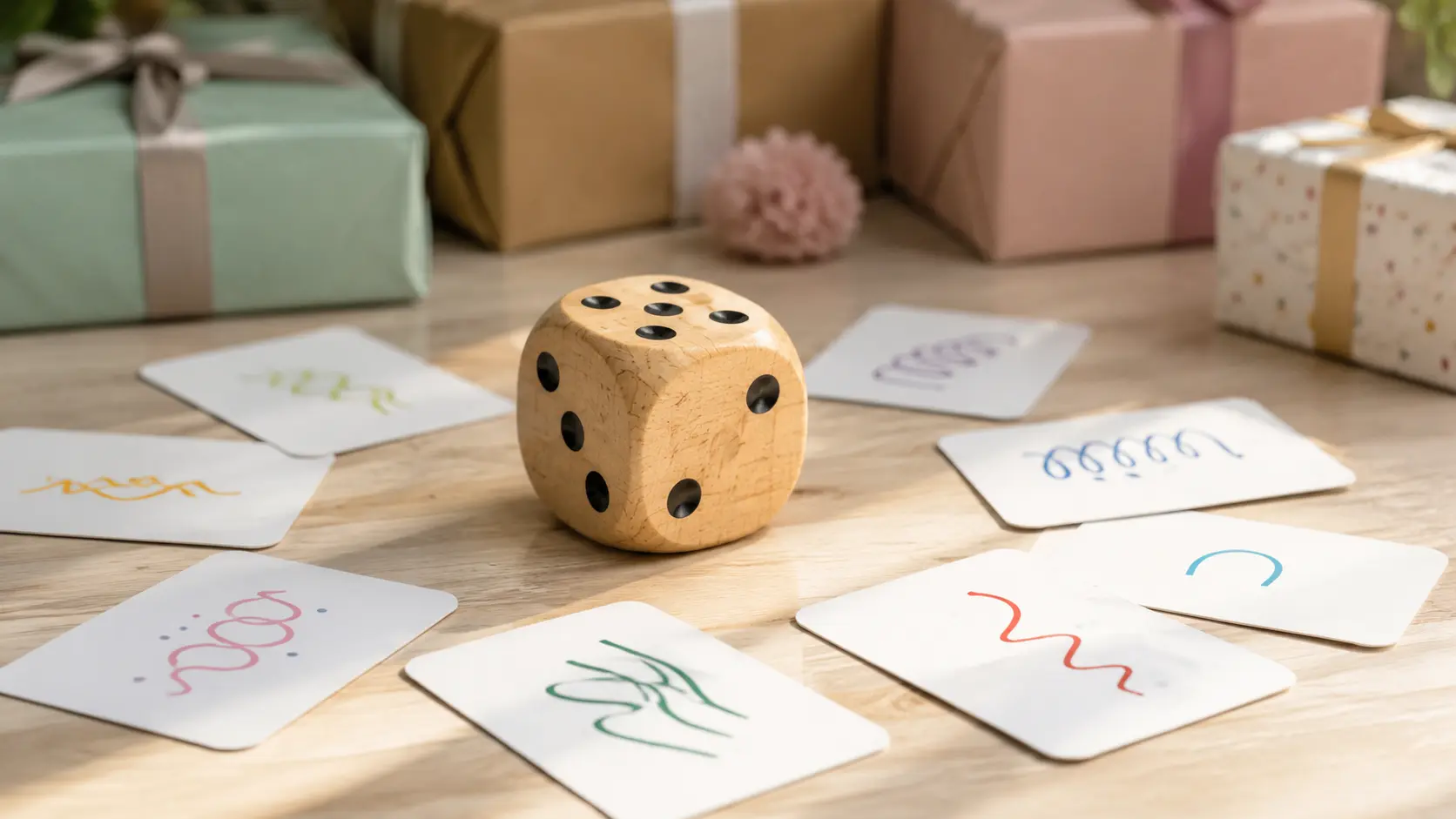
Guessing Games Around the Gifts
If you want a quiz round between gifts, the 104 fun trivia questions for adults work as a tie-breaker.
8. Guess Who Drew Whom
Group: people who know one another well enough to give fair clues. Time: one short clue sequence per recipient. Materials: the assigned gifts and no extra supplies.
Play: the giver describes the recipient without mentioning appearance, salary or a private story. Start broad, add clues until the group guesses, then reveal and open.
Variation: at work, clues can refer only to shared projects, harmless preferences or phrases the person often uses. Keep it kind: let the recipient approve a clue privately if the giver is unsure.
9. Guess the Gift From the Wrapping
Group: any exchange with wrapped packages. Time: a quick guess before each opening. Materials: the gifts as wrapped.
Play: the recipient inspects shape, weight and sound without tearing the paper, makes one guess and opens. Points are optional if the group wants a winner.
Variation: children can ask one yes-or-no question first. Keep it kind: nobody shakes a fragile package, and the giver can quietly say that a gift should stay still.
10. Clues Across the Week
Group: a family, friend chat or work team already using a shared message thread. Time: one clue on each agreed day, then a brief reveal. Materials: the existing group chat.
Play: each giver posts anonymous clues in one format chosen by the host. At the event, everyone gives a final guess before opening. The host keeps the assignment list in case a clue is missed.
Variation: use riddling descriptions instead of personal facts. Keep it kind: forbid clues about attendance, performance, relationships, health or anything the recipient did not choose to share.
The Party Is at a Place, and So Is the Reward
At a VISU partner location, the reward is tied to being there. Scan the available code during the visit and continue with the celebration.
Games for Kids and Mixed Families
11. Pass Until the Music Stops
Group: children and adults seated in one circle. Time: several brief music stops. Materials: wrapped gifts and music controlled by a host.
Play: everyone holds a gift and passes in the announced direction while music plays. At each stop, keep the package closed. Change direction and repeat. After the final stop, open together.
Variation: without music, the host alternates between pass and stop. Keep it kind: there is no elimination, no steal and no empty chair.
12. Layered Wrap for the Whole Circle
Group: a mixed-age circle. Time: one pass for each paper layer, then the normal gift exchange. Materials: one neutral bonus gift wrapped in reused paper layers.
Play: pass the layered package while a sound plays. At each stop, remove one layer. Whoever removes the last receives the bonus. Then run the main exchange so everyone still gets a regular gift.
Variation: place a harmless action between layers, such as choosing the next direction. Keep it kind: the bonus stays small and neutral so it does not eclipse anyone's main gift.
13. Color Circle
Group: children who can match colors, with adults helping as needed. Time: one matching round. Materials: colored paper scraps attached to gifts and matching scraps in a bowl.
Play: each participant draws a color and finds its matching package. For repeated colors, the host sets a quick choice order. Open together after all matches.
Variation: use simple shapes for anyone who distinguishes shapes more easily. Keep it kind: make every marker equally easy to see and have the host solve duplicate choices by redrawing, not arguing.

Games for the Office or a Big Group
14. Team Reveal Relay
Group: ten or more people divided into small teams. Time: one controlled reveal round. Materials: gifts, team labels and the participant list.
Play: use teams only for the reveal. The first giver offers a clue, the recipient guesses, opens and becomes the next giver. Teams proceed together while a host resolves confusion.
Variation: run teams one at a time if the room is noisy. Keep it kind: this is a relay of turns, not a speed race, so no team gets a better prize for finishing first.
15. Draw in Rounds
Group: a big group around one gift table. Time: several short rounds. Materials: gifts and name slips divided into equal piles.
Play: call a small batch of names. They choose packages, open together and clear the area for the next batch. Any swaps stay within the current batch and use the same limit.
Variation: assign batches by table or department. Keep it kind: mix the gift pile before every round so later groups are not visibly left with a rejected corner.
16. The Timed Clue Line
Group: a named office exchange or a large family. Time: one brief clue window for each giver. Materials: assignments, gifts and a timer already on the host's phone.
Play: the giver offers up to three prepared clues within the announced window. The group guesses, then the recipient is named and opens. If nobody guesses, reveal without penalty.
Variation: collect clues in advance and let the host read them anonymously. Keep it kind: review workplace clues before the event and remove any reference to performance, hierarchy or private matters.
Wrapping and Reveal Games
17. The Misleading Shape
Group: any named exchange. Time: a guess and reveal for each gift. Materials: reused boxes, paper and the gift.
Play: use a clean box or empty cardboard to disguise the gift's outline. The recipient guesses from the wrapped shape, then opens. Keep the package easy to open.
Variation: create an exaggerated shape using only lightweight reused paper. Keep it kind: never use packaging that falsely suggests a sensitive, expensive or inappropriate item.
18. Hidden Gift Trail
Group: a household or small gathering in a familiar safe space. Time: one short search per recipient. Materials: handwritten clue slips and the gift.
Play: hide the gift in an accessible place. Each clue points to the next until the package is found. Keep the trail within the agreed area while others watch without shouting answers.
Variation: two recipients can follow alternating clues toward separate gifts. Keep it kind: never hide a gift where reaching it requires climbing, entering a private room or moving something heavy.
19. Rhyme or Riddle Reveal
Group: a named exchange with time to prepare. Time: one short verse per person. Materials: the gift and a handwritten rhyme or riddle.
Play: each giver writes a few lines pointing to the recipient. Read them, let the group guess, then hand over the gift. Clear clues matter more than a polished rhyme.
Variation: younger players can complete a repeated final word supplied by an adult. Keep it kind: write about shared, public details and remove any line that gets its laugh by exposing the recipient.
How to Keep It Fun and Avoid Hurt Feelings
Make the spending limit visible and treat it as a ceiling. Allow handmade or reused gifts only by group agreement. Do not reward overspending with extra attention.
Track steal limits in plain sight. Decide whether a neutral backup for a forgotten gift joins the pile or goes to the affected person. Never take from someone who followed the rules.
Let anyone skip guessing, performing or rhyming while remaining in the exchange. Reject jokes about salary, promotion, identity, relationships or stories the subject kept private.
End with voluntary trades. Both people agree without persuasion, and a no closes the conversation. The procedure can feel fair even when tastes differ.
If the presence-based reward mentioned above is new to you, this guide explains what VISU Network is and how it works.
Keep the Exchange Playful
If the gathering happens at a VISU partner location, a scan can connect the visit to a reward. It is a light extra, separate from the gifts and the game.
FAQ
How does White Elephant work?
Everyone contributes a wrapped gift. Players open a new package or take an opened one under a prior steal limit. Someone who loses a gift chooses again. It ends when everyone holds one.
How many people do you need for a gift exchange game?
Named exchanges can work with any group that can give every person one recipient. Steal games become easier to understand with at least four people, while round-based formats keep ten or more people from crowding one table.
What is a good gift limit?
There is no universal amount. Choose an accepted limit, state it clearly and treat it as a ceiling. Do not turn spending into competition.
Can children play gift exchange games?
Yes. Use passing, colors, shapes or number matching. Remove stealing and elimination, make sure every child receives a gift, and have an adult handle confusing ties or fragile packages.
How long does a gift exchange take?
It depends on the number of turns and whether a stolen gift creates another choice. To control the length, use one-steal locks, simultaneous opening, small rounds or a short clue window for each giver.
What if someone forgets a gift?
Use the policy sent with the invitation. A neutral backup gift is the smoothest option when the host can prepare one without charging the group. Otherwise, keep the person included and arrange delivery later instead of taking another participant's gift.
Is Secret Santa the same as White Elephant?
No. Secret Santa usually assigns each person one recipient, and the giver may stay secret until the reveal. White Elephant uses a shared pile and allows opening or stealing gifts according to the group's rules.