


When a group leaves your court for the one down the road, the price is rarely the reason. Something there makes showing up easier or better for the one person who books, and that something can usually be found, named and fixed.
This is the competition problem, one of four reasons a court sits empty, and it is the one owners are least comfortable looking at. It is easier to assume the other venue is cheaper than to accept that its booking is quicker or its lights always come on. This guide goes through what the other court tends to have and ends with a method for finding out which of those applies to you, whether you run a five-a-side pitch, a padel club or a multi-sport space.
Let the Clip Carry Your Court
When two courts are otherwise similar, small things decide where a group keeps booking. A camera gives every player a clip of their own game, and the court's name goes wherever that clip is sent.
For court and venue owners.
First, Make Sure It Is Competition
An empty court has only a few real causes, and each one calls for a different response. Nobody knows you exist, which is visibility. People came once and did not return, which is retention. The evening is full and the afternoon is dead, which is distribution. Or the players are still playing, just somewhere else, which is competition. The four are laid out in how to fill and retain players at your court.
The competition problem has a specific signature. The group has not stopped playing. You know, or suspect, that the same people are booking a court a few streets away. Someone mentions it at the counter, or a group that used to call every week goes quiet while the sport is doing fine in your area.
Keeping the players you have without cutting the rate is its own subject, and so is filling the hours nobody books. This guide stays with one question: what does the other court offer that yours does not?
The honest starting assumption is that the answer is not price. When a group moves, something else usually tipped it, and the price was only the explanation easiest to say out loud.
The Organiser Chooses, and Wants No Hassle
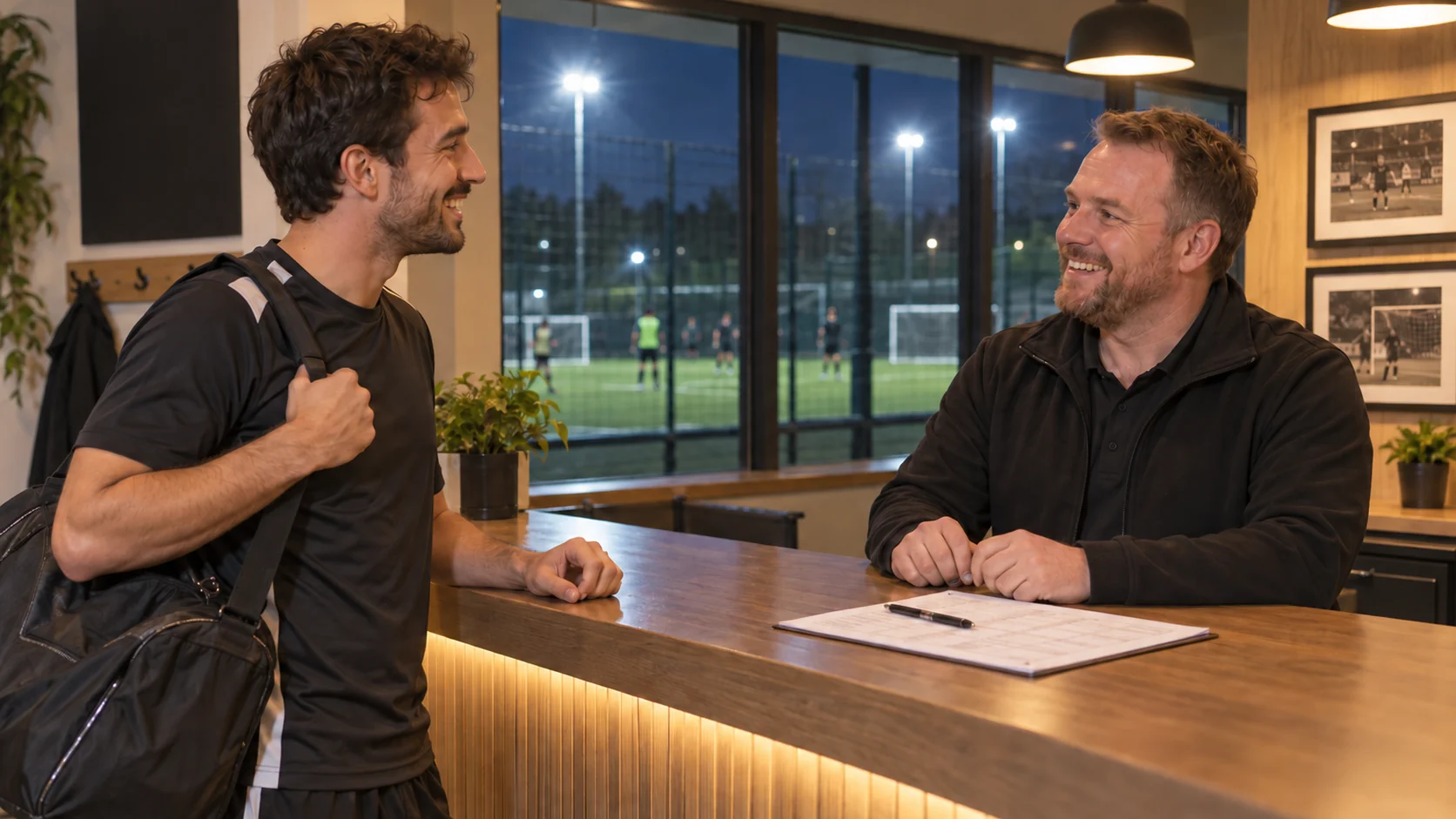
Ten players do not vote on a court. One person books it. Every regular game has an organiser who finds the slot, confirms the numbers and chases the late payers. It is an unpaid admin job done for friends, and that person wants one thing above all: no hassle.
So when a group leaves, ask what made the organiser's week easier somewhere else. Lose that person and the group leaves with them, even the players who liked your court better.
The organiser weighs things in a fairly stable order:
- Distance first. A slightly worse court that is closer to where the group lives or works wins most of the time.
- Certainty second. The booking is honoured, the lights come on, the gate is open. A mediocre surface is forgiven far more easily than one evening standing outside a locked gate.
- Quality third. Surface, nets, goals, changing rooms. It matters, but only once the first two are settled.
- Price last. It decides between two options that are otherwise similar. It rarely creates a decision on its own.
Each factor below is one of those four seen from closer up.
Booking Friction: How Hard Is It to Say Yes?
The organiser often books late in the evening, after a round of messages to confirm who is in. At that moment the court that answers first and most clearly beats the court with the better surface. Friction is anything between wanting a slot and knowing it is yours:
- How availability is seen. Can the organiser see which hours are free, or do they have to ask and wait? A venue that needs a phone call during office hours loses the booking made at eleven at night.
- How fast a request is answered. A reply the next afternoon is often too late.
- Whether the confirmation is clear. "Should be fine" is not a confirmation. Day, time and court are.
- How the deposit or payment works. Every extra step and every rule explained differently each time adds a small doubt.
- How easy it is to change or cancel. A court where moving the slot is a negotiation makes the organiser look bad in front of friends.
None of this requires a particular reservation system. A small venue with one person who answers quickly and confirms in writing can have less friction than a large one with a system nobody understands. The test is how many steps, and how much waiting, stand between "we want Tuesday" and "Tuesday is yours".
Reliability: The Booking Is Honoured and the Lights Come On
Certainty sits second in the organiser's order, above quality, and it is the factor where a competitor with an older facility most often beats a newer one. One broken promise costs more than many small improvements earn, because the organiser takes the blame in the group chat.
The failures that move groups:
- The double booking. Two groups turn up for the same slot.
- The surprise court swap. The group booked their usual court and is sent to a different one, with a worse surface or less space, without warning.
- The previous game that runs over. Standing at the side waiting for the slot you paid for feels like the venue does not respect your time.
- The lights, the gate, the key. Floodlights that take a while to come on, a gate that is locked when the group arrives, nobody on site who can open the changing room.
The difficult part is that owners rarely see these failures. They happen at night, on the busiest shift, and the group does not complain. It just books elsewhere next week. The court down the road may simply be the place where none of this has happened to them lately. Reliability is also the cheapest advantage available: it costs attention and routine, not renovation.
Distance, Access and the Hour the Group Can Make
You cannot move your court, and distance sits first in the organiser's order. But distance is the whole trip from the end of work to the first touch of the ball, and parts of that trip are yours to change:
- Parking. A court with easy parking can feel closer than a nearer one where everyone circles the block.
- Finding the entrance. A pin that drops people at the wrong side of the building, an unlit side gate or a reception hidden behind another business all make the trip longer than it looks.
- The hour itself. If the group can only make it after a certain time because of work, and the rival court has a slot at that hour while yours is booked or closed, the rival wins regardless of anything else.
The last point is easy to miss. Sometimes the other court is not better, it simply offered the one hour that fits everyone's week. Distance also tells you where your real competition is: the venues close to where your groups live and work, not the best court on the far side of the city.
Every Clip Carries Your Venue
When a player sends a moment from your court to the group, your space is in the frame. VISU Replay turns that into clips that travel with your venue attached, one reason among several for a group to keep booking where it plays.
For court and venue owners.
Court Condition, Changing Rooms, Water and Light
Quality comes third, but it does come, and the group notices the basics before anything expensive. Think of these as thresholds: players do not reward a court for having them, they punish a court for lacking them.
- The surface. Worn patches, loose seams on artificial turf, a slippery indoor floor, uneven sand on a beach tennis court.
- Nets, goals and fences. A torn net, a goal that wobbles, glass or mesh with a gap the ball escapes through. Small repairs, large irritation.
- Light. Dark corners and lamps that dazzle at head height make evening games worse. On late slots, light is the court.
- Changing rooms and toilets. Clean, open and working. Players forgive modest, not dirty.
- Water. Somewhere to fill a bottle or buy one.
The rival court does not have to be new to win here. It only has to clear these thresholds more consistently than yours. Walk your own court at the hour your most valuable group plays, not at the quiet hour when you usually inspect it.
How the Organiser Is Treated, Group Chat Included
The organiser deals with the venue more than anyone else in the group. A court where that person feels like a valued regular has an advantage price cannot match.
What good treatment looks like from the organiser's side:
- Being recognised. Do staff know the group and its usual slot, or ask for the same details every week?
- Being told first. If a court is closing for maintenance or the lights are being fixed, the organiser hears it before the group arrives, not after.
Then there is the group chat, where the organiser does the job. Whatever the venue sends gets forwarded there, so read your messages as the group will:
- Does the confirmation contain everything the group needs, day, time, court and address, in one message the organiser can forward as it is?
- Does the location link take people to the right entrance?
If the rival sends something the organiser can forward in one tap and yours needs explaining, the rival is doing part of the organiser's job.
The Experience Around the Game, Camera Included
Around the game itself sits the experience: somewhere to sit after the match, staff who seem glad the group is there, and something to take home. These rarely create the first decision, but they shape whether the group feels attached to the court.
A camera belongs in this list as one item, not as the answer to everything above it. A group losing its slot to double bookings will not stay for clips. What it adds is something the rival may not have: every player can leave with a clip of their own game, and when that clip is shared in the group chat, the court comes with it. Cameras as a venue differentiator looks at why that is harder for a competitor to copy quickly than a price cut or a new net.

If you do record, make sure the court's name travels with the footage, which branding your venue in every clip covers in detail. And keep the claim honest: a clip gives the group a reason to talk about your court. It does not fix the booking, the lights or the surface.
How to Find Out Which One It Is at Your Court
Everything above is a list of possibilities. Guessing is how owners end up renovating changing rooms when the real problem was a booking request nobody answered on Sunday evening. Three methods get you to the answer.
Ask the people who left. Contact the organisers of groups that used to play and stopped. No offer, just a question: "You used to play here on Thursdays. Where are you playing now, and what made the difference?" Listen for the concrete detail, the specific night the lights failed or the week nobody answered, rather than the general answer about price that people give when they want to be polite.
Book your own court as a customer. Ask a friend to book a slot, or do it yourself under another name, from a phone, late in the evening. Time how long a clear confirmation takes. Arrive the way a group arrives and look at the entrance, parking, lights and changing room. You will notice things staff stopped seeing long ago.
Visit the competitor. Book a slot at the court your groups moved to and play there, or go with a group. Go through the same steps: booking, confirmation, arrival, the court at that hour. You are looking for the moments where their experience is easier than yours, not for features to copy.
Write down what you find in the organiser's order: distance and access, certainty, quality, price. The first factor where the rival is clearly ahead is usually the one that moved your group. Fix that first, and do not answer it with a discount. A lower price will not win back a group that left because of a locked gate.
Give Groups a Reason That Is Not the Price
Once the booking, the lights and the court are right, a camera adds something players take home. Clips of their own game leave your venue with its name attached and land in the group chats where the next organiser is reading.
For court and venue owners.
FAQ
Why Do Players Choose Another Court Over Mine?
Usually because something there makes showing up easier or more certain for the person who books, not because it is cheaper. The usual reasons are a clearer booking, a court that is always ready, better access, an hour the group can make and better basics.
Is Price the Main Reason Groups Switch Courts?
Rarely on its own. Price decides between two options that are otherwise similar. When a group moves, distance, reliability or booking friction has usually tipped the decision first, and price is simply the easiest reason to mention.
Who Decides Which Court a Group Plays At?
The organiser, the one person who books the slot and manages the group. They optimise for having no hassle: easy booking, a reliable court and no surprises.
How Can I Find Out Why a Group Left?
Ask the organiser directly and politely where they play now and what made the difference. Then book your own court as a customer to see the process from their side, and play a game at the competitor to compare the same steps.
Should I Lower My Price to Win Players Back From a Competitor?
Only if you have confirmed that price is the actual difference. A discount does not fix a booking nobody answered, a court that was double booked or a gate that was locked.
Does Having a Camera Make Players Choose My Court?
It can be one reason among several, not a fix for the basics. Clips carry the court's name into group chats, but a camera will not keep a group that is losing its slot to double bookings or poor lighting.