

About half the walking apps you will find recommended online do not actually work in Australia. They either geo-block registration, quietly stop crediting steps, or let you earn a balance you can never withdraw because the reward catalogue is US-only. This guide covers the ones that genuinely work here, what they pay in AUD, and how to get the money out without discovering the catch at redemption.
Australia is an unusual market for this category. Payout rates are broadly similar to the US, but the reward catalogues are thinner, PayPal is more common than gift cards, and several major apps treat the country as an afterthought. Knowing which is which before you install saves months of pointless step counting.
Earn Twice on the Same Walk
Your step app counts the distance. VISU pays for short verified actions along the route, including codes you scan as you pass them, and the value does not depend on a gift card catalogue built for another country.
How to Tell If an App Works in Australia
An app can fail Australians at four different points, and only the first is obvious before you install.
It will not let you register. The honest failure. You see a country selector without Australia, or the app store simply does not offer it here. At least you find out in thirty seconds.
It registers you but does not count steps properly. Usually a health permissions issue rather than geography, but some apps only integrate cleanly with the health platforms they prioritise in their main markets.
It counts steps but the rewards are unusable. The most common and most annoying failure. You accumulate a balance for weeks, open the catalogue, and every gift card is for a retailer that does not operate in Australia. The balance is real and worthless.
It pays, but the threshold is impossible. A minimum withdrawal set high enough that at Australian earning rates you would need a year of walking. Technically functional, practically not.
The test before installing: check whether the reward catalogue lists AUD or Australian retailers, and check the minimum withdrawal against what the app pays per week. If either looks wrong, skip it. The wider version of this filter is in apps that pay you to walk.
The Apps Worth Installing
1. Step-counting apps that pay into PayPal. This is the category that works most reliably in Australia, and the payout route is the reason. PayPal is the single best signal that an app takes non-US markets seriously, because it removes the catalogue problem entirely. Rates are low, as they are everywhere, but the money is genuinely reachable. Apps that pay instantly to PayPal covers the broader group.
2. Health fund and insurance-linked programmes. Australia has a genuinely stronger version of this category than most countries, because several health funds run their own rewards schemes for members. These pay better than generic step apps and are the most overlooked option here. The tradeoff is eligibility: they are not open to everyone.
3. Step apps with global gift card catalogues. Workable, but only after you check the catalogue. Some maintain proper Australian retailer lists and are perfectly good. Others quietly serve the US list to Australian accounts, which is where the balance you cannot spend comes from.
4. Fitness apps with challenge entry. Rather than paying per step, these let you stake money on hitting a goal. Legitimate, but a different product: you can lose money, which no ordinary step app allows. Worth understanding before installing rather than after.
5. Cashback apps with a movement component. Not walking apps as such, but several operate properly in Australia and pay considerably better than step counting. If your goal is money rather than the specific act of being paid to walk, these deserve a look first.
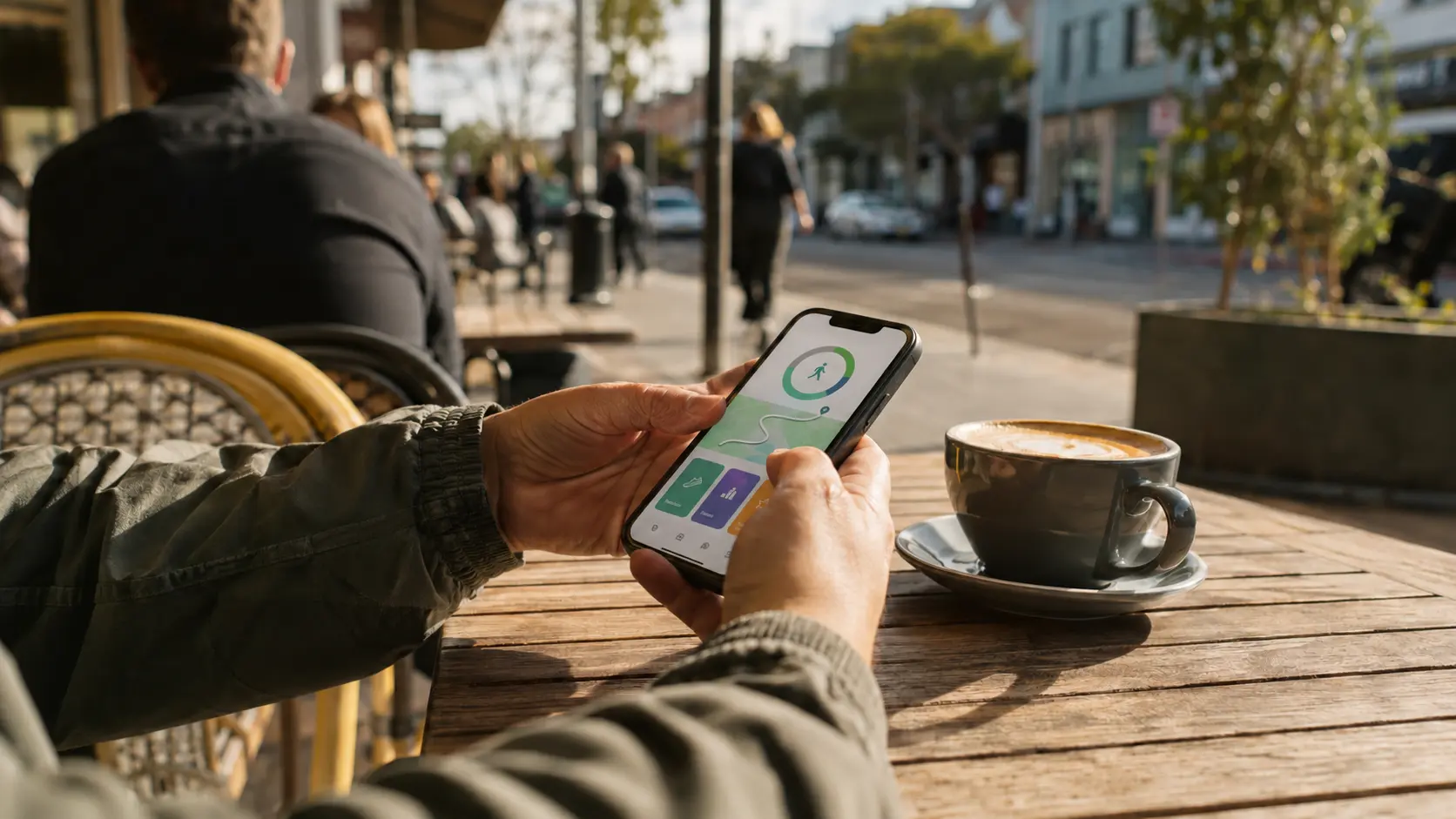
6. VISU, as a complement to a step app rather than a replacement. The distinction matters: VISU does not count your steps. What it does is pay for short verified actions along the way, including scanning codes you pass on the walk, so the same trip earns from two sources at once. That also solves the specific Australian problem, since the value does not depend on a gift card catalogue built for another country. Run it alongside whichever step app you pick, not instead of one.
Where the Money Comes From
Step apps are funded by advertisers and partner offers, which is why the reward depends on their catalogue rather than on you. VISU is funded by real campaigns paying for verified attention, so what reaches you is value rather than a voucher.
What They Actually Pay
Rates vary by app and change often, so treat this as the shape rather than the numbers. What matters is the relationship between effort, payout route and how long you wait.
| Type | Works in Australia? | Pays via | Main catch |
|---|---|---|---|
| PayPal-based step apps | Usually | PayPal in AUD | Low rate, slow accumulation |
| Health fund programmes | Yes, if a member | Member benefits or credit | Requires membership |
| Gift-card-only step apps | Often not usefully | Retailer cards | Catalogue may be US-only |
| Challenge and staking apps | Yes | PayPal, after a stake | You can lose the stake |
| VISU (alongside a step app) | Yes | Direct value, no catalogue | Pays for actions on the walk, not for steps |
The pattern is consistent. Anything paying into PayPal tends to work here. Anything paying into a retailer catalogue needs checking, because that catalogue was probably built for a different country. For the category ranked on speed rather than location, see the highest paying walking app.
Getting the Money Out
PayPal is the default and it works well here. Australian PayPal accounts receive from these apps without issue, and conversion happens automatically if the app pays in USD. Fees on small amounts are the thing to watch, since a conversion fee on a five dollar payout is proportionally large.
Bank transfer is rare and usually slower. Few apps in this category offer direct deposit to an Australian bank, and those that do often set a higher minimum for it.
Gift cards need checking before you earn, not after. Open the reward catalogue on day one and confirm there are retailers you would actually use. If the list is Target US, Walmart and Starbucks, the app was not built with Australia in mind.
Minimum thresholds are where most people quit. A threshold that takes three months of daily walking to reach is a threshold most people never reach, which is arguably the point. Check it before you start rather than at the moment you want the money.
What This Realistically Earns
Modest amounts, and anyone telling you otherwise is selling something. Walking apps pay the lowest rate of any reward category, which is a fair trade because they also ask for nothing: the app counts steps you were taking anyway.
The right expectation is a bonus, not income. Treated as free money on top of a walk you already do, a step app is pure upside. Treated as a way to make money, it pays far below any reasonable hourly rate and will disappoint.
Do not walk more because of the app. This is the one clearly wrong move in the entire category. Adding walking to chase a reward means working for a rate you would refuse anywhere else. Walk because you want to walk; let the app be incidental.
Stacking is how the numbers become noticeable. One step app running passively, plus something that pays for short deliberate actions, produces more than either alone because they draw on different parts of the day. The full method is in the micro income stack, and the honest expectation-setting is in are reward apps worth it.

What to Avoid
Apps promising large daily figures. No step app pays meaningful daily amounts anywhere, Australia included. A large advertised number is either a best case nobody reaches or a signal to leave.
Anything asking for payment upfront. A walking app charging a subscription to unlock higher rewards is charging you for the privilege of maybe earning. Apps that pay you to walk for free covers the versions with no subscription.
Apps with no recent Australian reviews. A store listing with reviews only from the US is a strong hint the app has not been tested here recently, and that catalogue problems are waiting.
Anything requiring extensive personal data before you earn anything. A step counter needs step access. It does not need your contacts, and it certainly does not need banking credentials.
The Same Walk, Paying From Two Places
Keep the step app for the distance. Add VISU for what happens along the route: short verified actions and codes you scan as you pass, paid in value rather than credit against a foreign gift card list.
FAQ: Walking Apps in Australia
Do walking apps work in Australia?
Some do and many do not, and the failure is usually at redemption rather than registration. Apps paying into PayPal generally work well here. Apps paying into retailer gift cards often have catalogues built for the US, so you accumulate a balance you cannot spend. Check the reward catalogue before installing, not after.
Which walking app pays the most in Australia?
Rates across step apps are similar and uniformly low, so the practical difference is whether you can withdraw. An app with a slightly lower rate that pays into PayPal beats a higher rate locked behind US-only gift cards. Health fund programmes tend to pay better than generic step apps if you are eligible.
How much can you earn walking in Australia?
Modest amounts. Walking apps pay the lowest rate of any reward category because they ask nothing of you, counting steps you were taking anyway. Treated as a small bonus on an existing habit, it is pure upside. Treated as income, it pays far below any reasonable hourly rate.
Do these apps pay in Australian dollars?
Some pay in AUD directly and others pay in USD with conversion at withdrawal. Conversion fees matter more than they look on small payouts, since a fixed fee on a five dollar transfer is proportionally large. Waiting to accumulate a larger balance before withdrawing usually costs less overall.
Are walking apps safe to use?
The established ones are legitimate, and the risk is more about data than money. A step counter needs access to step data and nothing else. Any app asking for contacts, extensive personal information or banking credentials before you have earned anything is worth deleting.
Should I walk more to earn more?
No. This is the clearest mistake in the category. The rate per step is low enough that adding walking specifically to earn means working for far less than any reasonable hourly rate. The value of these apps comes entirely from paying you for movement you were already doing.