


Planning a family reunion is easier when someone owns the guest list, relatives help choose the date and the budget is agreed before bookings begin. This guide covers how to plan a family reunion in order, from the first committee call to the shared photo album.
Give the Reunion One Link
A VISU Link page can hold the schedule, the map, the RSVP form and the shared album link in one place, with a native QR code for the printed invitation.
Start With a Planning Timeline
A lunch for two households can come together in a few weeks. A gathering with several branches, flights and time off work usually needs most of a year. The schedule below is a workable rhythm for a large reunion; compress it for a small or local family.
- Nine to twelve months out: form the committee, agree on the rough size and choose two or three candidate date windows.
- Seven to nine months out: collect contacts, run the date poll and announce the chosen date as a save-the-date.
- Five to seven months out: compare venues, agree on the cost-sharing method and book the space.
- Three to four months out: send the full invitation with an RSVP deadline, and start the food plan.
- Four to six weeks out: close RSVPs, confirm numbers with the venue, assign day-of jobs and check accessibility details.
- The final week: send one reminder with the address, parking notes and schedule, and confirm who brings what.
Build a Small Committee With Clear Roles
One organizer carrying everything can become overwhelmed. A committee of three to six people, ideally one from each branch, spreads the work and makes the plan feel shared.
Give each person a named role instead of a vague promise to help:
- Coordinator: owns the timeline, runs short check-in calls and breaks ties.
- Contacts keeper: builds and maintains the guest list and the RSVP tracker.
- Treasurer: collects contributions, pays deposits and keeps a ledger anyone can see.
- Venue and logistics lead: handles the booking, parking, seating and rentals.
- Food lead: runs the menu, the sign-up sheet and the food safety plan.
- Communications and photos lead: sends updates, manages the link page and gathers photos afterward.
In a small family one person can hold two roles. What matters is that every task has exactly one name next to it, and that the committee agrees early on how decisions are made.
Build the Guest List and Collect Contacts
Start by defining who is invited. "Descendants of one set of grandparents plus spouses and partners" is a clear line; "the whole family" is not. Settle former in-laws, family friends and step-relatives in principle before invitations go out.
Then ask one contact person in each branch to supply names, households and the best way to reach each adult. Record households, since invitations, RSVPs and cost shares usually work per household.
Collect only what you need: name, household, contact method, children's age group and any dietary or mobility needs people choose to share. Ask before sharing anyone's phone number or email with the wider family; some relatives have good reasons to keep their details private.
Pick the Date With a Poll
Nobody gets a perfect date. The goal is the option that works for the most people, with key relatives included, and a short poll makes that choice visible and fair.
- Shortlist two to four date windows. Check them against school calendars, religious observances, local holidays and known family events such as a wedding or graduation.
- Send one poll per household, not per person, so large households do not outvote small ones.
- Ask each household to mark every window as "works", "possible" or "impossible", rather than choosing one favorite.
- Set a closing date for the poll and publish the result with the reason for the choice.
If an elder can only attend on specific dates, say openly that their availability carries extra weight.
Choose a Venue Type That Fits the Family
The right venue depends on headcount, climate, budget and how many people are traveling. Each common option solves some problems and creates others.
| Venue type | Works well when | Watch out for |
|---|---|---|
| A relative's home or yard | The group is modest and the host wants to offer the space | Host burnout, limited restrooms and parking |
| Park pavilion or picnic shelter | The family wants open space for kids and a relaxed pace | Reservation rules, weather, shade and distance to restrooms |
| Community or event hall | The group is large or the weather is unpredictable | Rules on outside food, cleanup duties and end times |
| Restaurant private room | Nobody wants to cook and the group fits the room | Fixed menus, time limits and less room to move around |
| Vacation rental or campground | People travel far and want a multi-day reunion | Occupancy limits, deposits and cancellation terms |
Visit the space, or ask a nearby relative to, before booking. Walk the route from parking to seating and restrooms, read the cancellation policy before paying a deposit, and for outdoor venues decide where the group moves if the weather turns.
Split the Budget Without Awkwardness
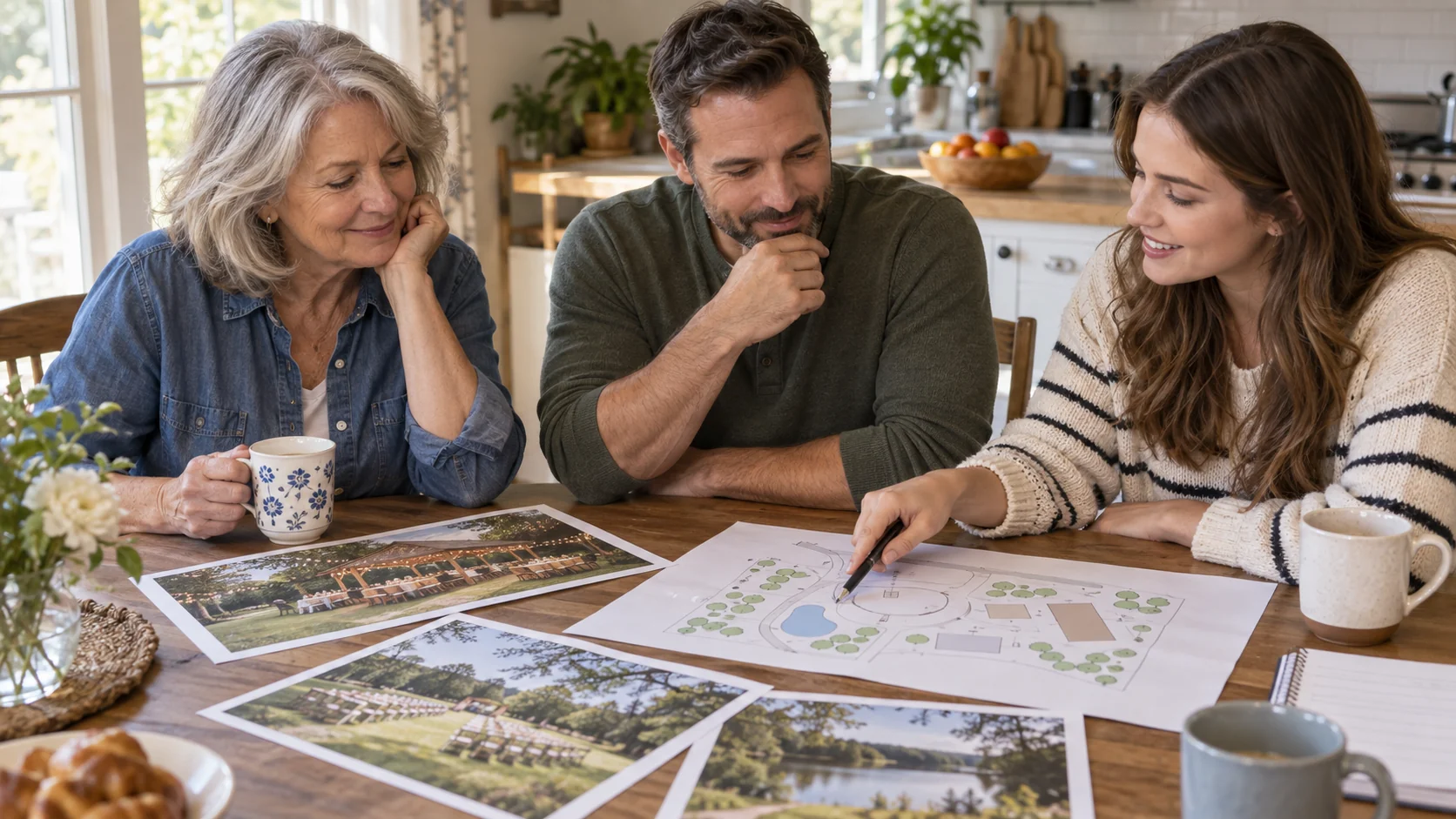
Agree on the sharing method before anyone sees the total, then keep the numbers open.
List cost categories first: venue, food and drinks, rentals, supplies, keepsakes and a small reserve. Then choose a method:
- Per household: every household pays the same share. Simple, but it can weigh heavily on a single person living alone.
- Per adult: each adult pays one share and children attend free or at a reduced share. This tracks actual consumption more closely.
- Base share plus optional extras: everyone covers the core costs, while optional items such as keepsakes or a second-day outing are paid only by those who want them.
- Pooled with quiet flexibility: a family fund where those who can contribute more do so privately, so nobody is excluded by cost.
The treasurer publishes a simple ledger of money in and out, keeps receipts and sets a contribution deadline tied to the venue deposit. Decide in advance what happens to leftover money, such as seeding the next reunion.
Keep Every Reunion Detail Behind One Link
Put the schedule, the venue map, the RSVP form and the contribution instructions on one VISU Link page. Relatives open the same link or scan its QR code, and you update it in one place.
Plan the Food and Keep It Safe
Choose the model first: catered, potluck, a hybrid where the committee covers the main dish and families bring sides, or a restaurant menu. A potluck spreads the cost but needs a list, or you end up with six salads and no main course.
The sign-up sheet should list categories with the number of dishes needed, and each cook should label the main ingredients. Collect dietary needs with the RSVP. The U.S. Food and Drug Administration lists nine major food allergens: milk, eggs, fish, crustacean shellfish, tree nuts, peanuts, wheat, soybeans and sesame. A card beside each dish helps relatives check ingredients, but it does not guarantee a dish is safe for someone with an allergy. Agree on suitable food directly with the guest and the person preparing it.
Food left out through a long afternoon can become unsafe. The FDA advises refrigerating perishables within 2 hours of cooking or purchasing, and within 1 hour if the temperature outside is above 90°F. The CDC gives the same limits and names picnics as an example of the warmer setting. In practice, that means:
- Serve perishable dishes in smaller batches and keep the rest in coolers with ice or in a refrigerator.
- Assign one person to refrigerate perishable dishes within the time limit. Discard food left out longer than the limit unless it has been held safely hot or cold; putting it back in the refrigerator does not reset the clock.
- Keep raw meat for the grill away from ready-to-eat food, with a separate board and plate, as the CDC recommends.
- Provide soap and running water for handwashing before preparing or eating food, and plan where leftovers go and in what containers.
Use One Channel for Every Update
Reunion information scatters fast across chats, emails and texts. Pick one source of truth and point every message back to it.
A good setup has three layers. First, a single page or document with the date, schedule, address, map link, parking notes, RSVP form, contribution instructions and a contact person. Second, one announcement channel, such as an email list or a group chat where only the committee posts updates. Third, direct phone calls or printed mail for relatives who do not use messaging apps, handled by a named person so nobody is forgotten.
Keep messages few: save-the-date, invitation, RSVP reminder, final details and a thank-you. If you print invitations or signs, a QR code that opens the reunion page saves older relatives from typing a long link; our guide to QR codes for events covers where codes help at a gathering and where a printed address is still better.
Plan for Older Relatives and Young Kids
The oldest and youngest guests are easy to plan around if you ask early. Add an RSVP question about mobility, hearing or seating needs, and phone elders who may not answer online.
For older relatives, check the physical route. The CDC notes that falls are the leading cause of injury death for adults 65 and older. Look for level paths, handrails on steps, good lighting in the evening and seating with backs and arms close to the action, restrooms and shade. In the United States, ADA.gov explains that businesses open to the public, including restaurants and hotels, must give people with disabilities an equal opportunity to access their services. Still ask the venue directly about step-free entry, accessible restrooms and parking near the door, because a legal duty is not the same as knowing the exact layout.
Heat matters too. The CDC says people aged 65 or older are more prone to heat-related health problems. For a summer reunion, plan shade, water within easy reach and an indoor or air-conditioned space someone can move to without fuss.
For kids, set up a play area in sight of the adults with named supervisors in shifts, a quiet corner for toddler naps, and seats near the exit for families with babies.
The Day-Of Checklist
On the day, the committee should be hosting, not scrambling. Give each item an owner.
- Arrival time for the setup crew, with keys, access codes and the venue contact number.
- Welcome table with a printed guest list for check-in and the schedule posted nearby.
- Directional signs from parking to the entrance, restrooms and the food area.
- Seating reserved for elders and families with infants, close to shade and restrooms.
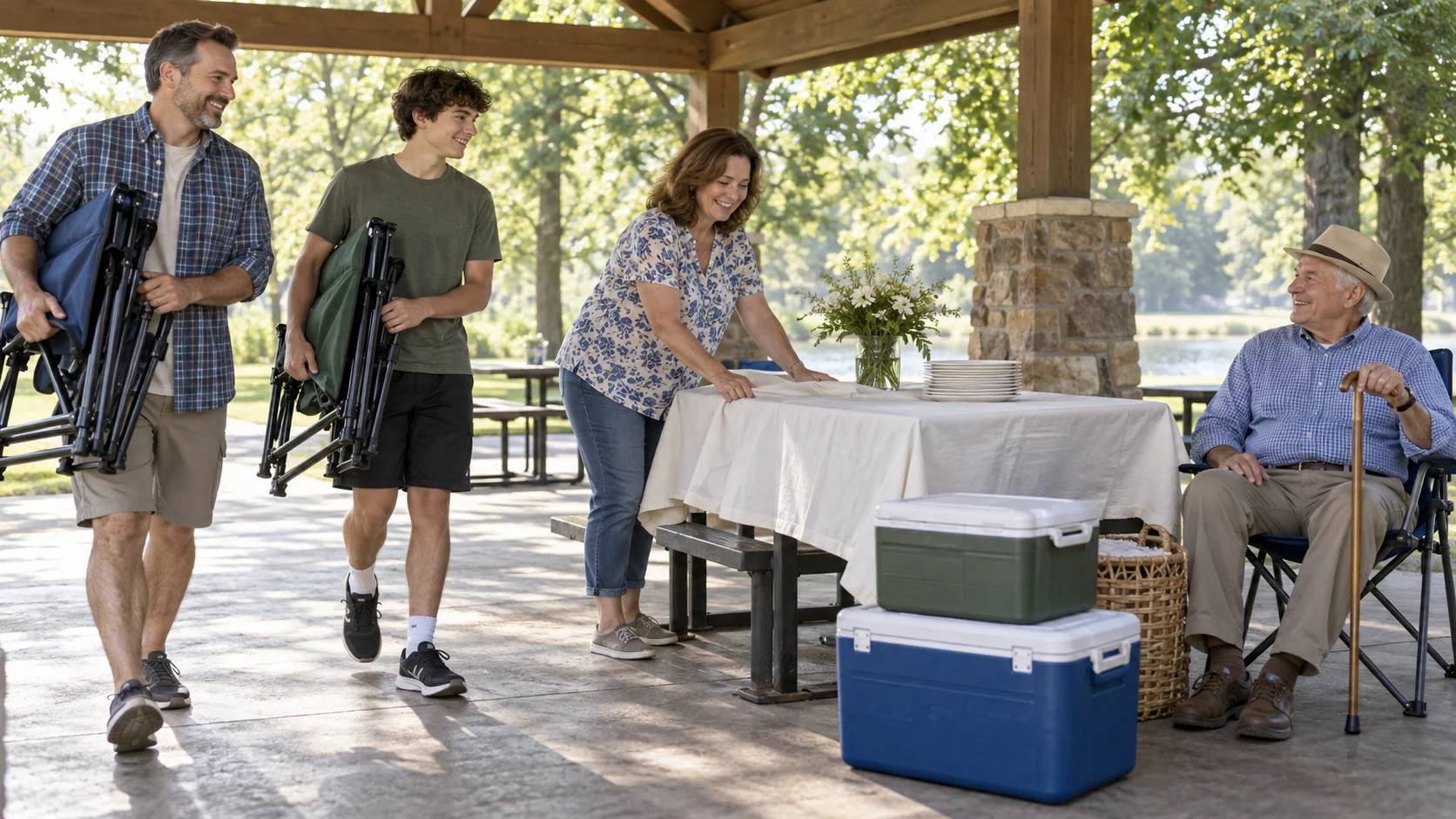
- Coolers, ice, serving utensils, labels for dishes, trash and recycling bags.
- A basic first-aid kit and a list of any medical needs guests chose to share with the organizers.
- A set time for the group photo, announced in advance so people do not leave before it.
- Cleanup assignments and the time the venue must be empty.
Keep the program light: a welcome, the meal, one shared moment such as the group photo, and free time.
After the Reunion: Photos and Thanks
Choose one shared album and put its link on the reunion page before the event, so guests know where their photos go. Set an upload deadline and ask one person to pick highlights. Schedule the group photo for soft light if you are outdoors; the ideas in our golden hour photography guide explain why the low sun late in the day is kinder to faces than midday glare.
Ask before posting other people's children on public social media. Set the album service to allow only invited family members, and test those permissions before sharing its link. A link on a public page is not an access restriction. Keep guest contacts, medical needs and private payment details off that page.
Then close the loop: send a thank-you with the album link, publish the final ledger and ask two questions, what worked and what should change. File the notes in one folder and the next committee starts halfway done.
Share the Album Link With the Whole Family
After the reunion, keep the album, the thank-you note and next year's save-the-date on the same VISU Link page, so relatives always know where to look.
Frequently Asked Questions
How far in advance should you plan a family reunion?
For a large reunion with travelers, start nine to twelve months ahead so people can book time off and travel. A small local gathering can come together in a few weeks. The date and venue are the first things to lock in.
How do you split the cost of a family reunion fairly?
Agree on the method before sharing totals: per household, per adult with children free or reduced, or a base share plus optional extras. Publish a simple ledger of money in and out, and allow private extra contributions so nobody is excluded by cost.
How do you choose a date most relatives can attend?
Shortlist a few date windows, check them against school calendars and holidays, and send one poll per household. Ask households to mark each window as works, possible or impossible, then publish the result and the reason for it.
What is the best venue for a family reunion?
It depends on headcount, climate and travel. Homes suit small groups, park pavilions suit families with kids, halls suit large groups or uncertain weather, and rentals suit multi-day reunions. Check parking, restrooms and step-free routes before booking.
How long can food sit out at a family reunion?
The FDA advises refrigerating perishables within 2 hours, or within 1 hour when it is above 90°F outside. Discard dishes left out longer unless held safely hot or cold. Keep extra portions in coolers with ice.
How do you share reunion photos with everyone afterward?
Pick one shared album before the event, restrict access to invited family members in the album service, and set an upload deadline. Then share its link. Ask before posting other people's children publicly, and send highlights with the thank-you message.