

The best Halloween office games fit the workday and leave room for a comfortable no. These eleven options use ordinary paper, pens, desk objects and a shared screen, with no alcohol, gore, physical scares or compulsory costumes.
Every game below includes a group size, a planning time, materials, a complete rule, scoring and a remote version or a clear in-person label. The times are estimates built into the rules, not measured results. Choose one format, invite people to opt in, and let everyone else continue the day normally.
Start with the time you actually have, then choose the game. A small desk round should not quietly become a meeting, and a team puzzle should not occupy the afternoon. The Halloween theme stays in the fictional names and paper shapes, while the structure stays familiar: one host, one answer and a clear stopping point.
When the Team Meets Outside the Office
An end-of-day team game sometimes moves to a bar nearby. At a VISU partner location, scanning the code turns the visit into a reward.
Before You Plan: Keep It Optional
An office invitation is not automatically optional just because it uses the word. A manager should not collect public yes-or-no answers, assign costumes or ask nonparticipants to explain themselves. Share a time and place, explain what the activity involves, and provide a private way to join if a head count is necessary. Someone who skips it should be able to work, take a normal break or leave the call without becoming part of the joke.
Keep the event inside a stated work window. The desk rounds take 5 to 10 minutes, the team rounds fit a 30-minute break, and the weeklong formats ask for about 2 minutes on any day a person chooses to contribute. Stop at the published time even if a tie remains.
Use fictional creatures and made-up office situations. Do not build clues from a colleague's habits, appearance, background or beliefs. No game requires a costume, touching another person, turning off the lights, eating, spending money or performing alone. A host can also offer a nonplaying role such as reading a clue or keeping the score, but watching quietly is already a complete choice.
Quick Desk Games for 5 to 10 Minutes
1. Pumpkin Pattern Recall. The host draws a 4 by 4 grid and fills eight cells with simple symbols such as a pumpkin, triangle, dot and crescent. Players study it for 2 minutes, then the host covers it. Everyone gets 3 minutes to recreate the symbols and their positions on a blank grid. One point is awarded for each correct symbol in the correct cell; an extra symbol loses one point. Highest total wins, with a tied result left as a tie.
Players: two to twelve. Duration: 7 minutes. Materials: two sheets and a pen per player. Remote: show the filled grid on screen, stop sharing it, then have players hold up or message their finished grids together.
2. Three-Clue Office Map. Sketch six generic places on a simple map: entrance, kitchen, copier, meeting room, supply cabinet and window. One player secretly circles a place and writes three clues using position only, such as “north of the copier” or “not beside the entrance.” Everyone else marks one guess after all three clues are read. A correct guess earns one point for the guesser and one for the clue writer. An impossible or contradictory clue set earns nothing. Play once per person; highest total wins.
Players: three to eight. Duration: 10 minutes. Materials: identical paper maps and pens. Remote: the host shares the blank map and each clue writer sends their chosen place privately before speaking.
3. Haunted In-Tray. Make nine slips labelled with fictional messages: “bat in the break room,” “pumpkin at reception,” “ghost booked Room B,” and six more in the same harmless style. The host announces three folders: building, calendar and supplies. In turn, a player draws a slip, has 10 seconds to file it under one folder and gives a one-sentence reason. The table votes valid or invalid by thumbs up or down. A majority-valid filing scores one point. Each player takes two turns; highest score wins.
Players: three to ten. Duration: 8 minutes. Materials: nine paper slips, three folder labels and a pen. Remote: the host reads slips from a shuffled list and players answer aloud in a fixed order.
Team Games for a 30-Minute Break
These rounds reward a shared answer, not a loud individual. Split people by choice or by a neutral count, never by department rank. Read the ending before the timer starts.
4. The Case of the Missing Nameplate. The host prepares five evidence cards about a fictional office: the nameplate vanished after 2:00, the copier ran at 2:05, the kitchen door opened at 2:10, a purple paper scrap was found in Room C, and the nameplate reappeared beside the plant at 2:20. Add four suspect cards for a vampire carrying white paper, a werewolf carrying purple paper, a ghost who cannot move objects and a skeleton who left at 2:00. Teams get 12 minutes to name the only suspect consistent with every card and write a three-step timeline. The werewolf is the answer. A correct suspect earns three points, each correctly placed event earns one, and a timeline contradicted by a card loses one.
Players: six to thirty in teams of three to five. Duration: 25 minutes. Materials: one printed or handwritten card set per team. Remote: send each breakout room the same card text and collect one answer per team.
A Team Outing That Gives Something Back
When the group celebrates out, the visit itself can be worth something. At a VISU partner location, scan the code and the reward is tied to being there.
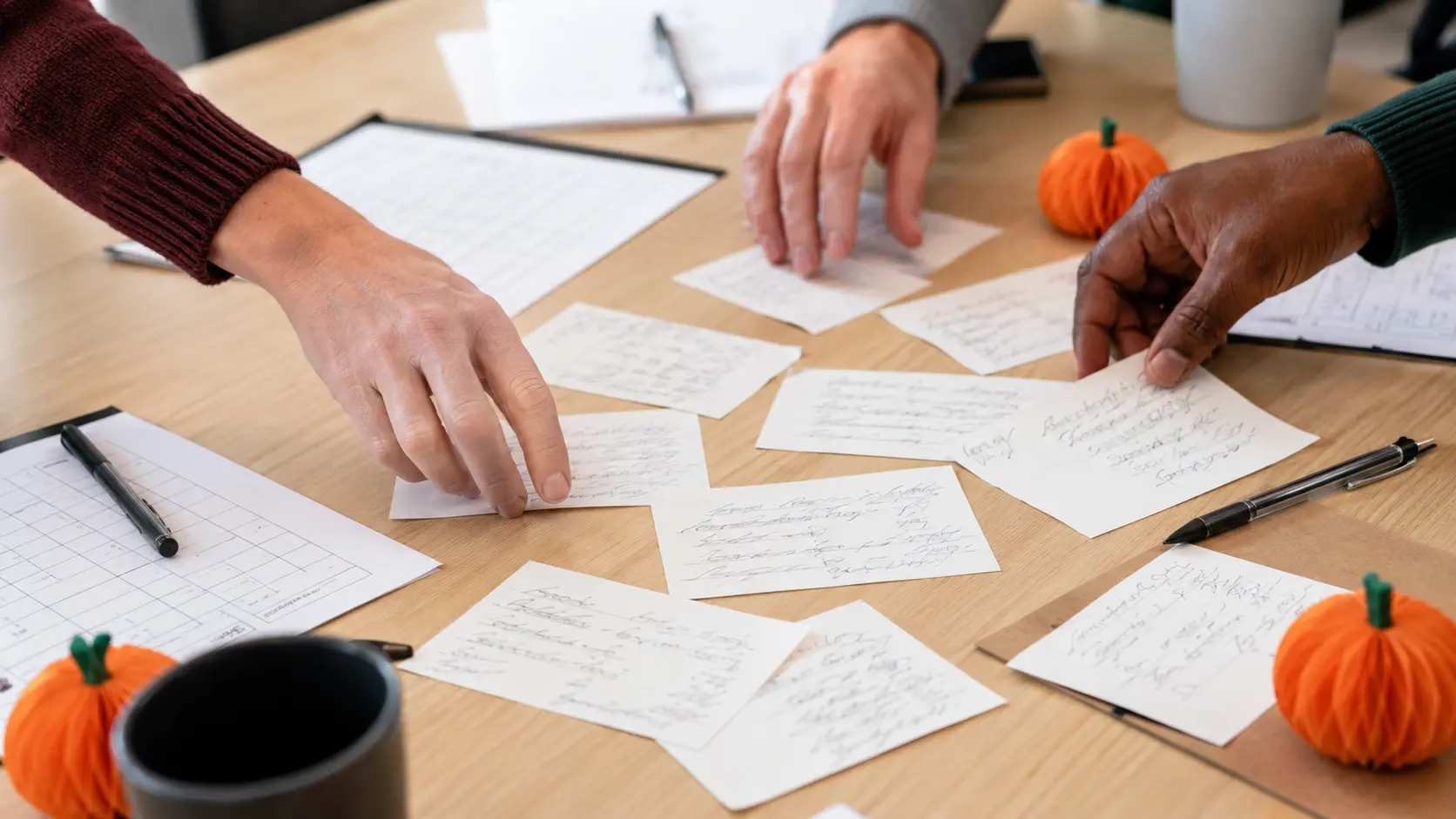
5. Creature Department Draft. Each team must place four fictional applicants into four jobs. The applicants are Bat, Ghost, Mummy and Pumpkin; the jobs are reception, archive, calendar and supplies. Conditions: Bat cannot work at reception, Ghost must work beside the archive role on the team's written row, Mummy cannot handle the calendar, and Pumpkin takes either reception or supplies. Teams have 10 minutes and must produce one valid lineup plus a sentence proving each condition. A valid lineup scores four points and each accurate proof sentence scores one. If several teams earn eight, they share the win.
Players: six to twenty-four in teams of three or four. Duration: 20 minutes. Materials: applicant and job slips, paper and pens. Remote: teams arrange names in a shared text page inside separate breakout rooms.
6. Blackout Memo. Give every team the same invented memo of 80 to 100 words about an ordinary office delivery. Teams cross out words while keeping the remaining words in their original order to reveal a Halloween message of 8 to 12 words. They may not add, rearrange or alter a word. After 12 minutes, the host checks the rule and reads each result without naming the team. A valid message scores one point per retained word, up to twelve; the room then gives one bonus point to the clearest message. Teams may not vote for their own.
Players: six to thirty in teams of two to five. Duration: 25 minutes. Materials: identical memo copies and thick pens. Remote: send the memo as plain text; teams return a numbered list of the words they kept.
Games for Remote Teams on a Video Call
7. Split Clue File. Divide the call into teams and privately give half the team Card A and half Card B. Card A reads Bat-circle, Ghost-square, Moon-triangle and Cat-star. Card B reads circle-meeting room, square-reception, triangle-supplies and star-kitchen. Players may describe their card but may not paste it, forward it or show it to the camera. The team has 8 minutes to match every creature to a room by joining the two lists. One point per correct match, with the first fully correct team receiving one bonus point.
Players: four to twenty in even teams. Duration: 15 minutes. Materials: two short text cards prepared by the host. In person: works at a table with cards kept face down from the opposite half.
8. Cropped Object Mystery. Before the call, each volunteer photographs a close crop of one ordinary home object without showing a label, screen, person or private information. The host presents the images one by one. Everyone writes one guess during a 30-second viewing period, then reveals together. A correct object earns one point; the image maker does not guess their own. After all images, highest total wins. Anyone who does not want to provide an image can still guess.
Players: four to fifteen. Duration: 15 to 20 minutes. Materials: one optional image per player and a score sheet. In person: print the crops or show them on the meeting-room screen.
Let the Place You Are In Count for Something
VISU connects rewards to verified presence at partner locations. If the team is already meeting somewhere, the bonus comes from showing up.
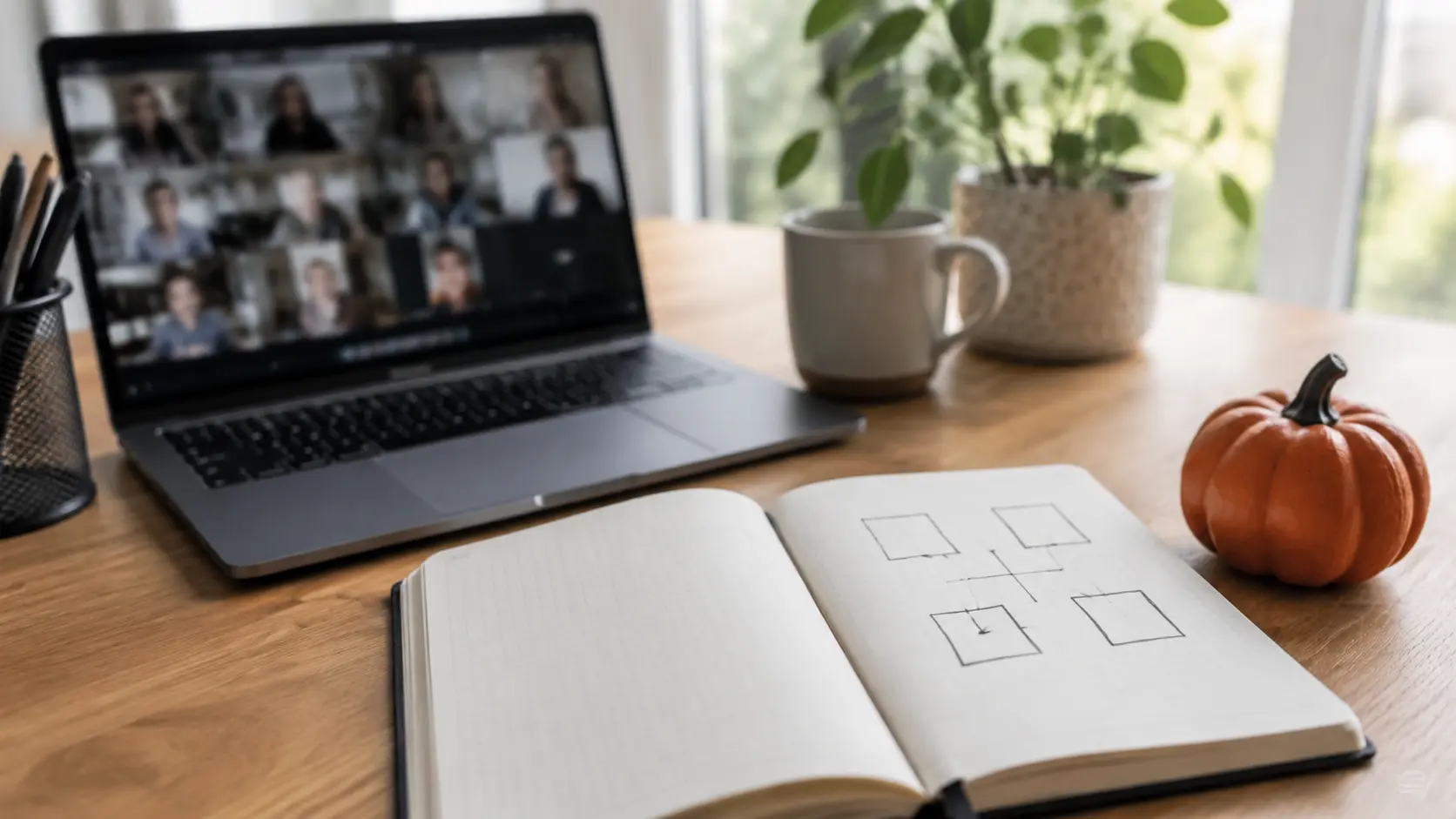
9. Monster Org Chart. The host shares four roles in a column: director, lead, specialist and trainee. The candidates are Witch, Spider, Moon and Cat. Read these clues: Cat reports directly to Spider; Moon sits directly above Spider; Witch sits below Cat; Witch is not the lead. Players work alone for 5 minutes, then submit one ordered chart. The only answer from top to bottom is Moon, Spider, Cat, Witch. One point is awarded for each candidate in the correct position; a completely correct chart earns one bonus point.
Players: three to twenty. Duration: 10 minutes. Materials: shared clue slide and paper. In person: project the same clues and collect folded answers.
Low-Effort Formats That Run All Week
10. Five-Day Codeword. On Monday, the host posts five blank letter boxes. Reveal one clue per workday: first letter of note, last letter of taxi, first letter of ghost, first letter of hallway and last letter of bat. Contributors put one answer in a closed box or private message. On Friday, the host fills the boxes in weekday order to make NIGHT. Everyone who submitted at least one correct daily letter gets one point; anyone who identifies the final word before the reveal gets two more.
Players: any number. Duration: about 2 minutes per day. Materials: five clues, paper and a collection box. Remote: send one clue per day and collect private replies.
11. The Growing Window Scene. Tape a large blank sheet to a shared wall away from individual desks. Each day has one optional prompt: sky, building, creature, office object and final detail. A participant adds one paper shape with removable tape, writes no names, and leaves room for the next person. There is no vote and no best contribution. The format ends Friday when the host photographs the completed scene and removes it. Completion, not comparison, is the score: the group earns one point for each daily prompt represented.
Players: two or more. Duration: 2 minutes per contribution. Materials: scrap paper, pens, removable tape and one backing sheet. Remote: contributors add one simple shape to a shared blank slide; the host exports the final scene.
Costume and Decoration Ideas That Do Not Pressure Anyone
Treat costume participation as a separate opt-in choice, not the admission ticket to a game. A no-cost prompt can be “wear something orange, black or purple that you already own,” with ordinary work clothes equally welcome. Skip rankings, spending-based categories and public explanations. If people want a shared photo, ask who wants to be in it before arranging the group and provide a place off camera.
For decoration, choose one shared surface instead of altering personal desks. Paper pumpkins on a noticeboard, removable window shapes and the Growing Window Scene make the theme visible without creating a contest. Keep games in normal room lighting, and include no active flame in the plan. Follow the workplace's own facilities guidance for everything placed in the office.
How to Run It Without Turning It Into Work
Choose one host, one game and one published stopping time. The host prepares the cards, reads the rule and resolves scoring questions. They should not recruit reluctant players between rounds. For a 30-minute break, allow 3 minutes for the invitation and rules, 20 minutes for play and 7 minutes to check the answer, share the result and clear the table.
Send the invitation with four facts: what the activity is, where it happens, when it ends and that participation is optional. For a hybrid team, run the remote rule for everyone when possible so the people on screen receive the same clues and submission window. End on time even if fewer people joined than expected.
If this small activity is becoming a larger gathering with a budget, venue and formal schedule, plan it as one of your corporate events instead of stretching a break game beyond its job.
FAQ
How Do You Celebrate Halloween in the Office?
Offer one optional, time-boxed activity in a shared space, explain the rules in advance and let normal work continue elsewhere. A desk puzzle, a 30-minute fictional mystery or a paper window scene gives people distinct levels of participation.
What Are Easy Last-Minute Halloween Office Games?
Pumpkin Pattern Recall needs only two grids and pens. Three-Clue Office Map needs a simple six-place sketch. Haunted In-Tray needs nine slips and three folder labels. Each can be prepared shortly before a break.
Which Halloween Games Work for Remote Teams?
Split Clue File, Cropped Object Mystery and Monster Org Chart were designed for a video call. The desk puzzles and Five-Day Codeword also include remote rules.
What Halloween Games Work for Large Groups at Work?
Run The Case of the Missing Nameplate or Blackout Memo in parallel teams of three to five. Give every team the same material, collect one answer per team and end all rooms on the same timer.
Can We Play Without Costumes or Decorations?
Yes. Every game works without either. The theme comes from fictional creature names and paper clues, so regular work clothes and an undecorated room do not change a rule.
How Do We Include People Who Do Not Celebrate Halloween?
Make participation optional, avoid asking why someone declined and keep the activity separate from required meetings. Someone can play, keep score, watch or continue their normal day.
How Many Games Fit a 30-Minute Office Break?
Choose one team game. Reserve time to explain it and clear the space rather than compressing several rounds. The quick desk games are better when the available window is only 5 to 10 minutes.
References
The eleven activities are original rules written to be complete on this page. This article uses no external factual claims, statistics, claims about workplace outcomes or account of Halloween history, so it has no external references. Durations and group sizes are planning parameters of each game rather than measured findings.