

A classroom game has to survive four limits at once: the aisle between desks, the length of a period, a class where everyone plays, and a bell that decides when it stops. Most Halloween game lists ignore all four.
Every game below declares four things before the rules: how long it runs, how much room it needs, how many students it holds, and how to cut it off mid-round. Nothing here needs a purchase, a costume, or candy to work.
The Room Is Part of the Plan
VISU rewards a verified visit at a partner location: you scan a code where you already are, and the reward is tied to being there.
The Four Limits Every Classroom Game Has to Pass
Before any rule, decide the four numbers. They are the reason a game works between desks and fails in a hall, or the reverse.
Time. Not the ideal length, the real one. A game that needs a full period is a game you will run once. Decide the length first and write the rules to fit it.
Space. Classrooms come in three shapes here: seats fixed with no usable aisle, seats fixed with an aisle, and tables you can push aside. Everything below is labelled for one of the three. Do not plan around clearing the room unless you can clear and restore it in four minutes.
Number of students. The failure mode in a full class is not chaos, it is waiting. Any game where students take turns one at a time turns twenty-eight children into twenty-seven spectators.
How it ends early. Every game needs a stopping rule that produces a legitimate result at any moment: highest score when time is called, whichever row got furthest, or a declared draw marked to continue. A game with no early exit ends in an argument.
Borrowing the Vocabulary of the Night
You do not need a theme kit. A Halloween version of a game is usually a normal game with a themed word set, and the word set is free.
Wikipedia's overview of Halloween lists the customary activities: "trick-or-treating (or the related guising and souling), attending Halloween costume parties, carving pumpkins or turnips into jack-o'-lanterns, lighting bonfires, apple bobbing, divination games, playing pranks, visiting haunted attractions, telling frightening stories, and watching horror or Halloween-themed films."
That single sentence is a word bank: pumpkin, turnip, lantern, bonfire, apple, prank, story. Each is a category for a guessing game, a drawing prompt or a spelling round.
Costume figures give you a second list. The same source notes that "Halloween costumes were traditionally modeled after figures such as vampires, ghosts, skeletons, scary looking witches, and scarecrows." Use that group: the traditional figures are generic and free to name, while specific characters from films and books belong to somebody.
The name is a round of its own: "The word Halloween or Hallowe'en comes from the Lowland Scots form of All Hallows' Eve (the evening before All Hallows' Day)." So is the phrase the whole thing runs on. Trick-or-treating is "a traditional Halloween custom for children and adults in some countries," in which "people in costumes travel from house to house, asking for treats with the phrase 'trick or treat'."
Two more facts for a language class. The custom is "prevalent in the Anglospheric countries of the United Kingdom, Ireland, the United States and Canada" and "also has extended into Mexico," where "the practice is called calaverita" and children ask "¿Me da mi calaverita?" instead. Underneath sits an older layer: "In other countries, souling is seen as the origin of the practice of trick-or-treating."
Seated Games That Never Leave the Desk
For the room where seats do not move and the aisle is not usable. Nobody stands up, and everyone plays at once.
1. Silent Sketch Relay. 10 minutes. Desks only. Any number. Ends: call time, count finished sheets. Each student gets scrap paper folded into four. You call a word, they draw it in the first box in forty seconds, fold the drawing under, pass one seat along. Four words, then unfold and read the strips out. Drawing quality is irrelevant.
2. Two Truths and a Turnip. 12 minutes. Desks only. Best at 20 to 30. Ends: stop after any slip. Each student writes three short statements about Halloween customs, two from the vocabulary above and one invented. You draw slips at random and the class votes by raising one, two or three fingers. Voting is silent and simultaneous, so nothing queues.
3. Word Ladder to Halloween. 8 minutes. Desks only. Any number. Ends: any time. A short word on the board, a target word from the bank, one letter changed per step, every step a real word. Pairs read completed ladders out for the class to verify, and one team finishing does not end it.
4. The Etymology Round. 10 minutes. Desks only. Any number. Ends: any question boundary. Read the All Hallows' Eve derivation above, then have pairs work out what other contracted words they use daily. This one works for classes who consider themselves too old for games.
5. One-Minute Story Chain. 10 minutes. Desks only. Any number. Ends: mid-sentence, deliberately. One sheet per row. Write a sentence, fold so only the last few words show, pass it back, sixty seconds each. A story that stops mid-sentence on the bell reads better than one that finishes.
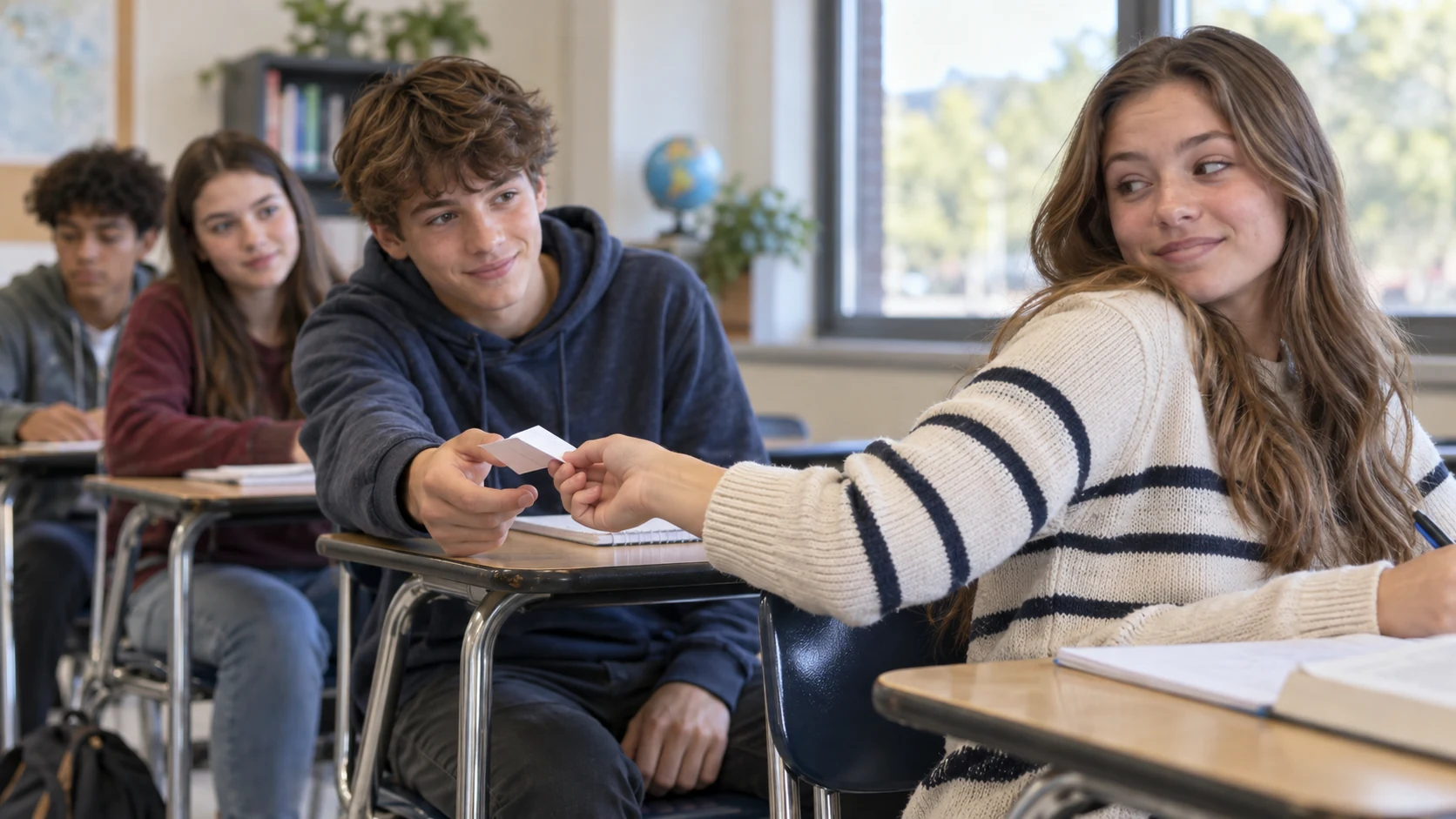
Row Games That Use the Aisle and Nothing Else
These need a usable gap between desks and nothing more. The row is the team, which solves picking sides in four seconds.
6. Pass the Pumpkin. 6 minutes. One aisle. 4 to 8 per row. Ends: the object stops where it is. A small soft object travels down each row while your counting runs. Whoever holds it when you stop answers a question from the bank. Right answer scores, wrong answer carries no penalty. No elimination: a child removed in minute one has thirty-five minutes of nothing to do.
7. Row Spelling Sprint. 8 minutes. Aisle plus board. Any number. Ends: score as it stands. You call a themed word. The first student writes the first letter on a shared strip and passes it back, one letter each. A correct spelling scores the row, and because the strip is visibly moving, no single student takes the blame.
8. The Lantern Handoff. 7 minutes. Aisle. 5 to 10 per row. Ends: any handoff. A paper cup travels down the row balanced on the back of the hand, no gripping. Drop it and it returns to the start of the row. Three round trips or the bell. This is the loudest game here.
9. Category Relay at the Aisle. 10 minutes. Aisle plus a wall. 20 to 32. Ends: count what is on the wall. Tape a sheet per row at the front. One student walks up, writes one word fitting the category, walks back, taps the next. Only one person per row is ever out of their seat. The sheet with the most valid entries wins, checked out loud together.
Whole-Class Games Where Everyone Moves at Once
These need the room cleared or a wide front space. Only plan them if you can restore the furniture inside two minutes.
A Reward Tied to Being There
At a VISU partner location, a code scan connects a verified visit to a reward. No purchase, no profile to complete.
10. Four Corners, Four Figures. 10 minutes. Reachable corners. 15 to 35. Ends: after any round. Label four corners with traditional figures: vampire, ghost, skeleton, scarecrow. You call a clue, everyone walks to the corner they think matches, then you reveal. Students in the wrong corner start the next round from there.
11. Freeze Statue. 6 minutes. Cleared floor. Any number. Ends: instantly, on the freeze. Movement while the sound runs, a held pose when it stops, and you call the shape: a lantern, a scarecrow, a tree in the wind. No elimination, no judging. The stopped state is already the end state.
12. The Silent Line-Up. 8 minutes. Front of room or cleared strip. 12 to 30. Ends: stop the clock, see how far they got. The class arranges itself in one line without speaking: birthday month, alphabetical by first name, or letters in the word they were handed. Gestures allowed, voices not.
13. Mummy Wrap With a Twist. 12 minutes. Groups of four standing. 16 to 32. Ends: unwrap and bin. One strip of scrap paper about a metre long per group, and the most convincing costume detail made by folding and tucking, no tape. Judged by a show of hands.
14. Apple Bobbing Without the Water. 10 minutes. Cleared floor. Any number. Ends: any round. Apple bobbing appears in the customs list, and no classroom wants a tub of water. The dry version: apples on the floor, moved to a marked area by pairs using only forearms.
Games That Live on the Board
Board games need no floor, no aisle, and no preparation you cannot do in ninety seconds.
15. The Growing Lantern. 10 minutes. Board only. Any number. Ends: reveal the word. With each wrong guess you draw a lantern one line at a time, and the class races to finish the word first.
16. Board Race in Pairs. 8 minutes. Board plus a short walk. 20 to 30. Ends: count the columns. Two columns, one per half of the class. Pairs come up, write one themed word each, hand the pen on. Duplicates get crossed off at the end, which teaches everyone to read before writing.
17. Guess the Custom. 12 minutes. Board only. Any number. Ends: any card. Write a short description drawn from the sources, and the class names the custom. The souling line is a good hard one, and the calaverita question lands well in a language classroom.
18. Twenty-Eight Squares. 15 minutes. Board only. One square per student. Ends: score the claimed squares. A grid with one square per student, each hiding a question, claimed by rows that answer. Every student sees a square with their name on it, and it ends when the grid is claimed or the bell rings.
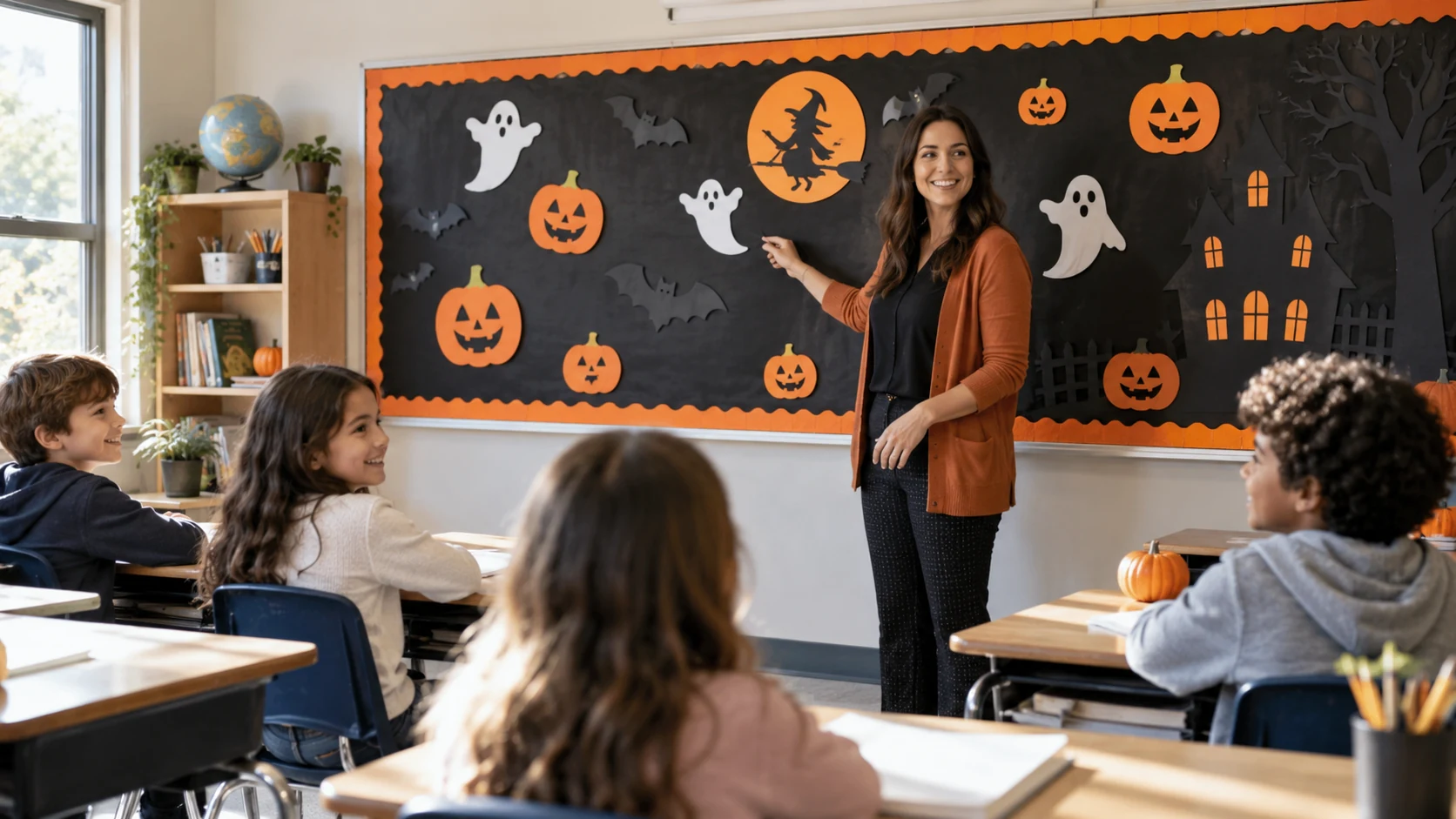
Five-Minute Fillers for the End of a Period
For the gap between finishing early and the bell. All are stoppable in one sentence.
- 19. Last Letter Chain. Each student says a themed word starting with the last letter of the previous one. A pause over three seconds passes the turn on.
- 20. One Word Each. The class tells a story one word per student, two laps maximum. If the bell interrupts, the story ends where it ends.
- 21. The Odd One Out. Name four things from the customs list. Students point at whichever does not belong and justify it. More than one answer is defensible.
- 22. Silent Vote. Two options from the theme, a vote by hand, fifteen seconds a side.
Ending on the Bell Without a Scene
The end is the part that goes wrong, so plan it as carefully as the start.
Say the stopping rule before the first round. "When I call time, the score as it stands is the score" is accepted without complaint at the start of a game and disputed at the end of one.
Warn in turns, not minutes. "Two more rounds" is something students can see coming. "Three more minutes" is not, because nobody is watching the clock except you.
Have a legitimate result for every state. Highest score, furthest row, most squares claimed, or a draw carried over, announced as a real result at the start.
Build the reset into the game. If you moved furniture, the last ninety seconds are for putting it back, announced as the final round.
Keeping the Volume Where You Want It
A game that gets you a visit from the room next door is a game you will not be allowed to run again.
Decide the volume level out loud before the rules. Three levels is enough: silent, table voices, open. Name the level as you introduce each game and students hold it far better than if you correct them later.
Use a visual stop signal rather than your voice. A raised hand, the lights, or a written word on the board. Shouting over an excited class sets the ceiling at your shouting.
Prefer simultaneous quiet games over sequential loud ones. The Silent Line-Up and Silent Sketch Relay involve every student and produce almost no sound, which makes them right for a shared corridor or a testing week.
Do not require costumes and do not make candy the prize. Not every school permits either, and a game that only works with them is one half your colleagues cannot borrow.
FAQ
What Halloween games work in a classroom where the desks cannot move?
The seated set: Silent Sketch Relay, Two Truths and a Turnip, Word Ladder, the Etymology Round and the One-Minute Story Chain. All run entirely from the seat, involve every student at once, and stop cleanly at any point.
How do I run a game if I only have ten minutes?
Choose a format with no setup and a stopping rule that produces a result at any moment. Pass the Pumpkin, Freeze Statue and the board fillers all fit. Announce the length at the start so the ending is expected.
What do I do about students without costumes?
Use the traditional figures as categories rather than as things to wear. Wikipedia notes costumes were traditionally modeled after vampires, ghosts, skeletons, witches and scarecrows, and those work as words on a board.
How do I keep a class of thirty involved instead of watching?
Avoid any format where one student takes a turn while everyone waits. Prefer simultaneous play, or split the class into rows so the unit taking the turn is five students rather than one.
Can I run these without buying anything?
Yes. Everything uses scrap paper, the board, a soft object you already have, and the word list from the sources below. For a prize, points on the board is enough.
How do I explain what Halloween is to a class that does not celebrate it?
Start with the name. Wikipedia describes Halloween as "a celebration observed in many countries on 31 October," and traces the word to the Lowland Scots form of All Hallows' Eve.
References
- Wikipedia: Halloween. The date of the celebration, the customary activities used as the word bank, the derivation of the name, and the traditional costume figures.
- Wikipedia: Trick-or-treating. The definition of the custom, the countries where it is prevalent, the calaverita variant, and souling as an origin.
For indoor activities outside the Halloween season, see indoor activities for kids, and for a question format that fills the same end-of-period gap, see would you rather questions for kids.
Let the Place Count
When you visit a VISU partner location, a scan can connect that verified presence to a reward. The reward is for being there, not for buying.