
The 100th day of school is a classroom milestone many US elementary schools celebrate with counting, writing, movement and a little dressing up. These 100th day of school ideas are sorted by grade and subject, with a way to find your real date, a calm plan for the 100-item collection and a sample schedule you can adapt. No printables, no purchases required.
Put the Class Links in One Place
A VISU Link page can hold the links families already use, such as the class newsletter, a school calendar or an external sign-up form, behind one address and QR code.
When Is the 100th Day of School?
Hendrick Hudson reported its 100th day on February 25, 2025. Newcastle Elementary published a story on March 4, 2025 about celebrations that week; that publication date is not an exact event date. These are U.S. examples, not a universal school calendar.
Count the class’s instructional days using the school’s official calendar, not an individual child’s attendance record. Skip days without scheduled instruction and check how the school handles closures and make-up days. Confirm the milestone with the school before notifying families. There is no single date for all schools.
Use the idea only if it fits your class and curriculum. It does not establish a required celebration, a tradition in every country or a fixed midpoint of the school year.
Match the Idea to the Grade
The best 100th day activity is one that practices something the class is already learning. For schools that use the Common Core State Standards, the number 100 sits right on the math path of the early grades, which is why the day works so well in kindergarten through second grade.
| Grade | Related standard | Good fit for the day |
|---|---|---|
| Kindergarten | Count to 100 by ones and by tens (K.CC.A.1) | Shared count in tens, class counting chant; use smaller collections for individual work |
| Grade 1 | Count to 120 from any number below 120 (1.NBT.A.1) | Counting on past 100, bundling tens, estimating a jar |
| Grade 2 | 100 as a bundle of ten tens; skip-count by 5s, 10s and 100s (2.NBT.A.1, 2.NBT.A.2) | Making 100 several ways, skip-count relays |
| Grades 3 to 5 | Use your current unit | 100-word stories, data from 100 answers, art and arrangement activities |
If your state or school uses a different framework, read the table as a pattern rather than a rule: pick the skill your students are practicing this month and give it a 100 twist.
Math Ideas Built Around 100
Math is where the day earns its place in the calendar. These ideas need only classroom materials such as blocks, cups, counters, crayons and grid paper.
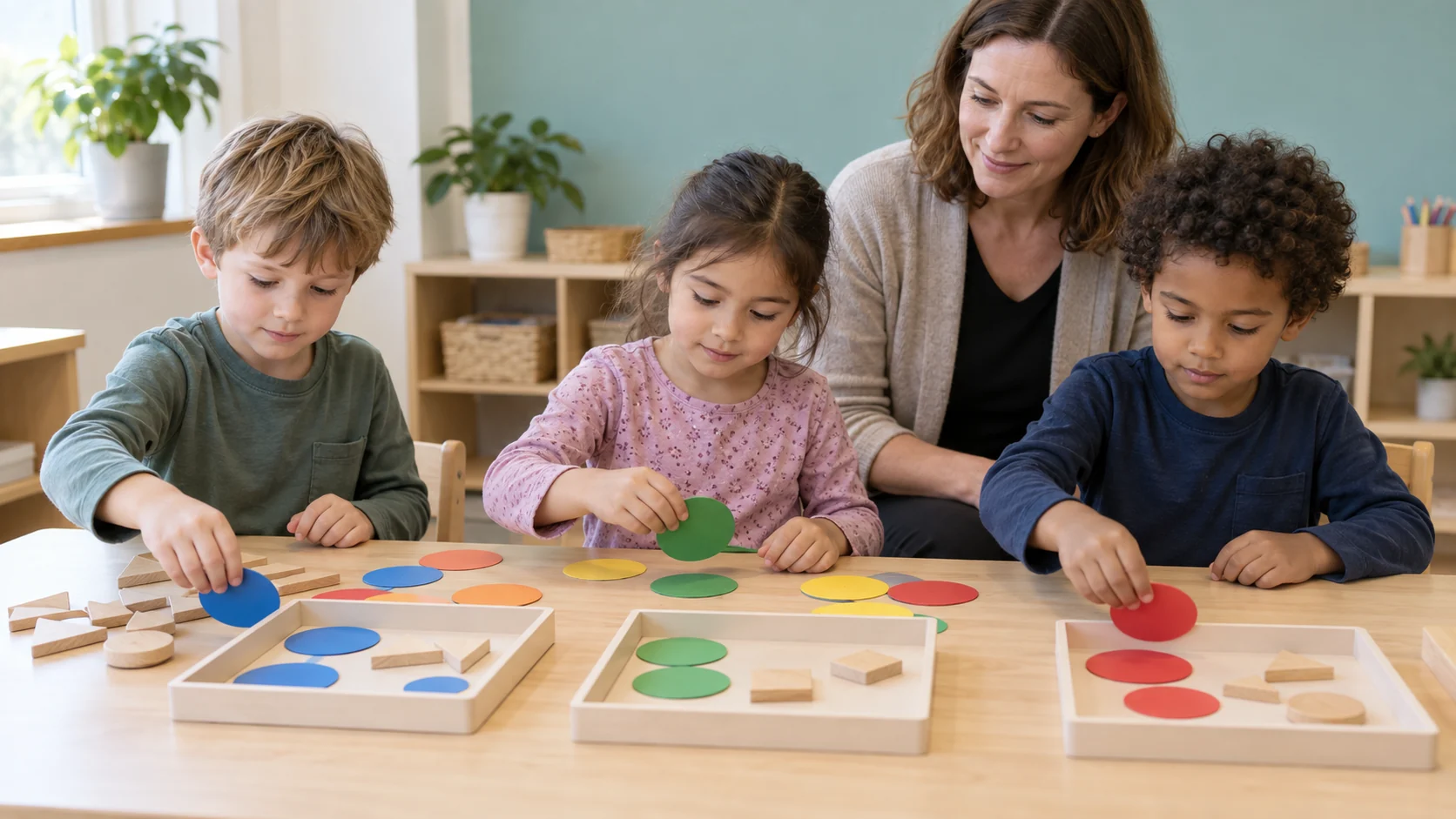
- Ten groups of ten. Use teacher-approved large counters or large paper shapes, with ten work areas. Count ten in each area, then check the total by tens. A class can share the collection; each child does not need to supply 100 items.
- Make 100 two ways. Second graders show 100 with base-ten blocks as ten rods, then as nine rods and ten units, then another combination. Each pair explains its version to the class.
- Skip-count path. Tape a line of 20 squares on the floor. Students point along the squares and count by fives to 100, then use only ten squares and count by tens. Hopping is an optional version when appropriate for the class. Ask what changed and why.
- Estimation jar. Fill a clear container with large teacher-approved non-food pieces, or use a picture of a collection if loose materials do not suit the class. Students write an estimate, then the class counts in tens to check. Compare estimates with the real count without ranking students.
- Hundred grid picture. Draw a 10-by-10 grid and label its cells 1–100 in order. Use a stated colouring rule, such as numbers ending in 5, then compare the selected numbers. The teacher can supply the grid or work with a smaller section.
- 100 cents. With play coins, students find different ways to make 100 cents. It links place value to something children already see at the store.
Keep counting sessions brief and adjust them if children lose interest or need a different way to participate. Pause to check how the group is organising the count before adding more items.
Reading and Writing Ideas
The number 100 gives writing prompts a frame; adapt the amount of writing and the response format to the class.
- 100 words around the room. Hendrick Hudson students wrote down 100 words they identified around their classrooms. Partners hunt for words on labels, charts and book covers and tally them in rows of ten.
- One hundred things to imagine. Build a shared class page of things students would like to learn, places from books or questions about the future. Accept drawings, dictated words or short written contributions. No digital ageing of student photographs is needed.
- If I had 100. A classic sentence starter: "If I had 100 ___, I would ___." Ask students to choose things that are not money, which keeps answers creative.
- 100-word stories. Older students write a complete story in exactly 100 words. Counting forces revision, which is the real lesson.
- 100 questions. Build a class list of 100 questions the students want answered this year, then sort them by subject.
For a fast speaking warm-up, pull a few prompts from our 100 would you rather questions for kids and let each student defend a choice in one sentence.
Share the Plan With Families
Keep the date, the supply note and any external volunteer form behind one VISU Link. Leave student names and photos off the public page.
Movement Ideas That Count to 100
Choose a short optional movement break with the teacher, with seated or non-movement alternatives. The aim is counting together, not completing a physical-performance target. Adjust space, pace and materials for the actual class.
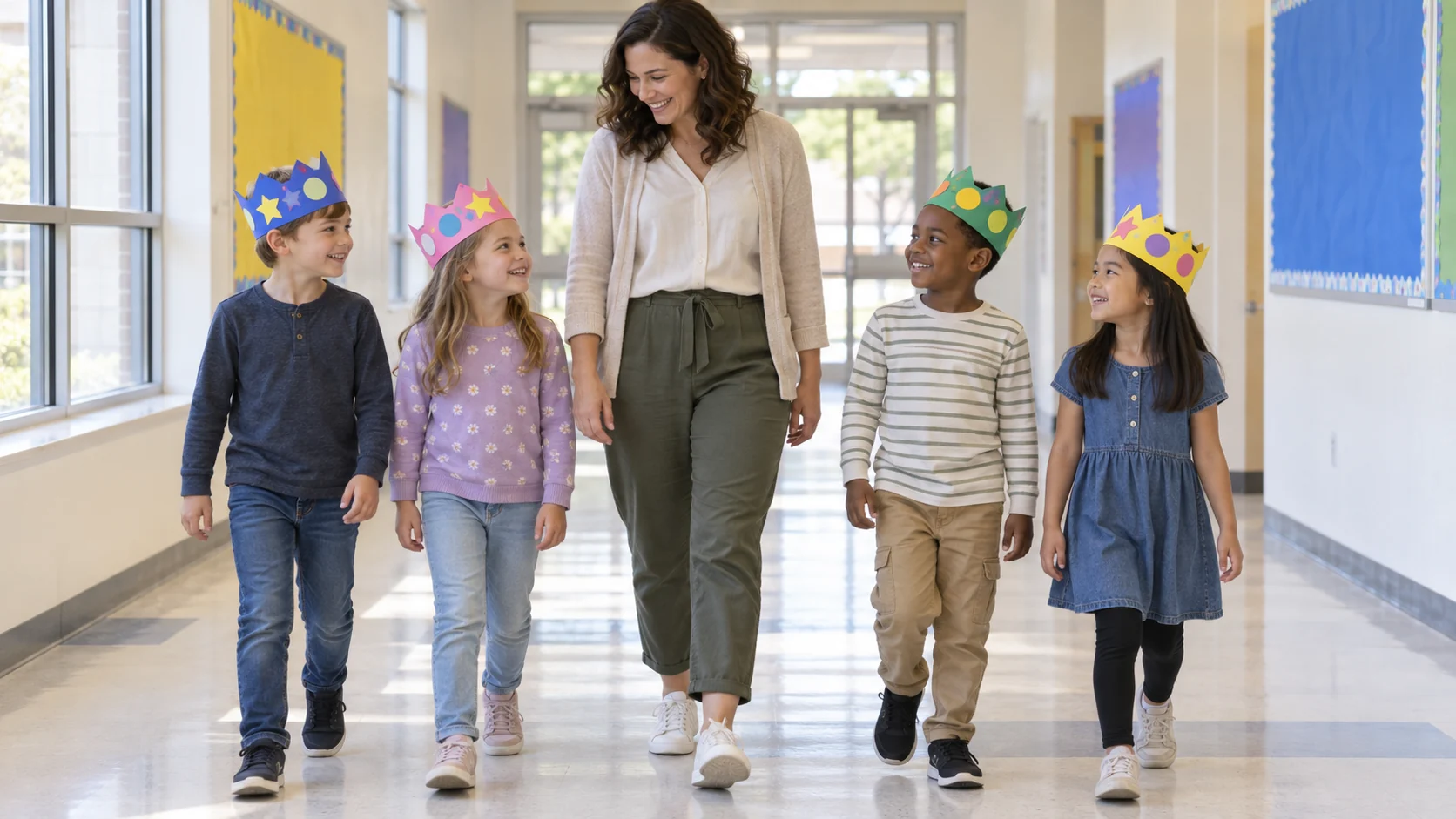
- The 100th minute parade. Hendrick Hudson staged schoolwide parades at 10:40 a.m., which doubled as the 100th minute of the 100th day. Work out your own 100th minute from your bell schedule and walk the halls for two or three minutes.
- Ten stations of ten. Set up ten stations with ten reps each: ten jumping jacks, ten arm circles, ten toe touches and so on. Groups rotate until they reach 100 moves.
- 100 steps. Guess where 100 steps will take you from the classroom door, then walk it and mark the spot. Compare with a teacher's 100 steps to talk about stride length.
- 100-second freeze. Play music for 100 seconds of free dancing, then freeze. Students count seconds aloud on the second round.
Before choosing anything that uses the aisle or the whole room, apply the same time, space and group-size limits described in our classroom games guide. Recheck the activity against this class and lesson rather than assuming the same format will fit.
Art and Counting Arrangements
Choose art and arrangement tasks that use counting. Choose materials and a working scale that fit the actual class.
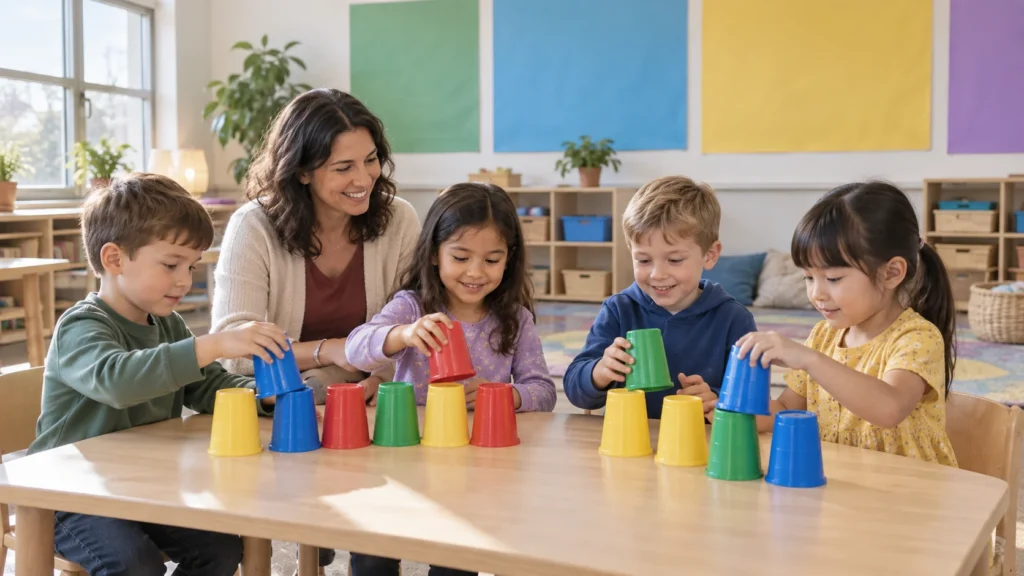
- Arrange and count cups. Use lightweight teacher-approved cups in low rows or groups on a stable work surface. Count the collection and compare grouping methods. Ask students to show how they checked their groups.
- 100-piece collage. Students glue exactly 100 teacher-approved paper shapes, which can be shared across the class into a picture. Counting the pieces in tens before gluing keeps the number honest.
- Class 100 mural. Divide a large sheet into 100 squares. Each student decorates a few squares, and the class fills the rest together so the mural reaches exactly 100.
- 100 years ago. Ask students what they think school looked like 100 years ago, then check the guesses with a school or town librarian's local history material. The goal is curiosity, not a fixed answer.
Paper decorations can be optional. Avoid costumes that caricature older people or require families to buy clothing. Children can also take part without dressing up.
The 100-Item Collection Without the Chaos
Use large teacher-approved non-food materials or paper marks. Avoid small loose pieces, magnets, batteries and sharp objects. The class can share one collection; children do not need to bring materials from home.
- Non-food materials. Keep counting separate from eating. Follow the school’s food and allergy arrangements for snacks; using non-food counters does not by itself meet every access need.
- A suitable container. Use a teacher-approved box or tray sized for the materials instead of requiring tiny items to fit a sandwich bag.
- Count in tens at home. Suggest that families help the child count ten groups of ten. Make home practice optional; the class should still check its groups together.
- A classroom kit for everyone. Provide school materials or drawn marks so participation does not depend on a family purchase or home collection.
- Send the note early. Two weeks is a reasonable lead time. Include the confirmed date, the non-food rule and a reminder that the classroom kit exists.
In class, collections become math: students count them in tens, sort them by color or size and compare two collections that look different but hold the same number.
A Sample Schedule for the Day
This is a hypothetical schedule for a kindergarten or first-grade class, not a plan from any specific school. Change the order to fit your specials and lunch.
| Block | Activity | Time |
|---|---|---|
| Morning meeting | Count to 100 by ones and by tens together | 10 min |
| Math | Collections sorted into ten groups of ten | 30 min |
| Movement | 100th minute parade or ten stations of ten | 10 min |
| Literacy | Shared future-questions page | 30 min |
| Afternoon | Cup grouping or class mural | 30 min |
| Closing | Share one thing each student learned since day one | 10 min |
Close by inviting one observation or question, without comparing children’s progress. The schedule totals 120 minutes of suggested activity blocks; distribute or shorten them to fit the actual timetable, with breaks and ordinary lessons planned separately.
Taking the Idea Outside the US
The examples in this guide come from US classrooms, but the idea travels. A school with a different calendar can count to its own 100th student day and use the same activities. Just avoid presenting it as a local tradition where it is not one.
Make Class Info Easy to Find
Publish the class calendar link, newsletter and external forms on one VISU Link page. It is a link page, not a gradebook or messaging tool.
Frequently Asked Questions
When is the 100th day of school?
Confirm the class’s 100th instructional day with the school’s official calendar, accounting for closures and make-up days. A child’s personal absences do not redefine the class milestone.
Is the 100th day of school the same date everywhere?
No. School calendars and local decisions differ. Use the school’s confirmed date rather than a date copied from another district or country.
Which grades celebrate the 100th day of school?
Choose the task by the class’s current learning and support needs. Early-primary counting and grouping, or older pupils’ writing and data activities, can be adapted; no single task fits every child.
What can kids bring for a 100-item project?
Use large teacher-approved non-food materials or paper marks. Offer classroom supplies and a shared collection so children do not need to bring or buy 100 small objects.
Should we use food for counting on the 100th day?
Keep counting and snack time separate. Follow school food/allergy arrangements and the needs of the actual class; non-food materials are not a universal inclusion guarantee.
Can schools outside the US celebrate the 100th day?
Yes, as an optional classroom idea adapted to the school’s own calendar and curriculum. The U.S. examples do not establish a universal or locally required tradition.
References
- Hendrick Hudson School District: Elementary Students Mark 100th Day of School
- Issaquah School District, Newcastle Elementary: A Century of School Days
- Common Core: Kindergarten Counting and Cardinality
- Common Core: Grade 1 Number and Operations in Base Ten
- Common Core: Grade 2 Number and Operations in Base Ten