

A good debate topic splits a room roughly in half. If everyone already agrees, there is nothing to argue; if the topic touches people's identity or beliefs, the room stops listening. The debate topics below are grouped by level, from middle school to college and the workplace, plus a set of light ones for friends and family. Each comes with the strongest point for each side, so a teacher or club leader can assign sides on the spot. After the lists you will find how to run the debate: formats, speech times, a judging rubric and ground rules that keep it respectful. To assign sides and speaking order in front of everyone, our free random name picker spins a wheel with a seed anyone can check.
Give Your Debate Club One Link
A free VISU Link page keeps the meeting schedule, this week's topic and the sign-up link in one place, so new members always know where to look.
What Makes a Debate Topic Work
In formal debate the topic is called a motion or a resolution, and it is written as one clear statement that one side supports and the other opposes. "Schools should start later in the morning" works. "Is school good?" does not, because nobody knows what winning would look like. Before you use any topic, run it through four quick checks:
- Both sides can win. If you can only think of weak arguments for one side, the debate is over before it starts. Every topic below was chosen because each side has at least one serious point.
- It is about a choice, not a fact. "The Moon landing happened" is not debatable; it is a question with a documented answer. "Space exploration is worth what it costs" is a choice people can weigh differently.
- The group can research it. Younger students need topics they can argue from their own experience. Older students can handle topics that need reading.
- Nobody in the room is the topic. Avoid motions about religion, a group's identity, or anything that would put a classmate's family or background on trial. Those conversations matter, but not in a format where someone is assigned to argue against the classmate next to them.
We also left out topics tied to current elections or political parties. They age quickly, and in a mixed group they tend to turn a skills exercise into a fight about loyalty. If your class studies civics, your teacher's curriculum is a better guide than any list.
Debate Topics for Middle School
At this age, the best topics come from daily life: school rules, food, animals, screens. Students can argue from what they know, and the focus stays on learning to give a reason and answer the other side.
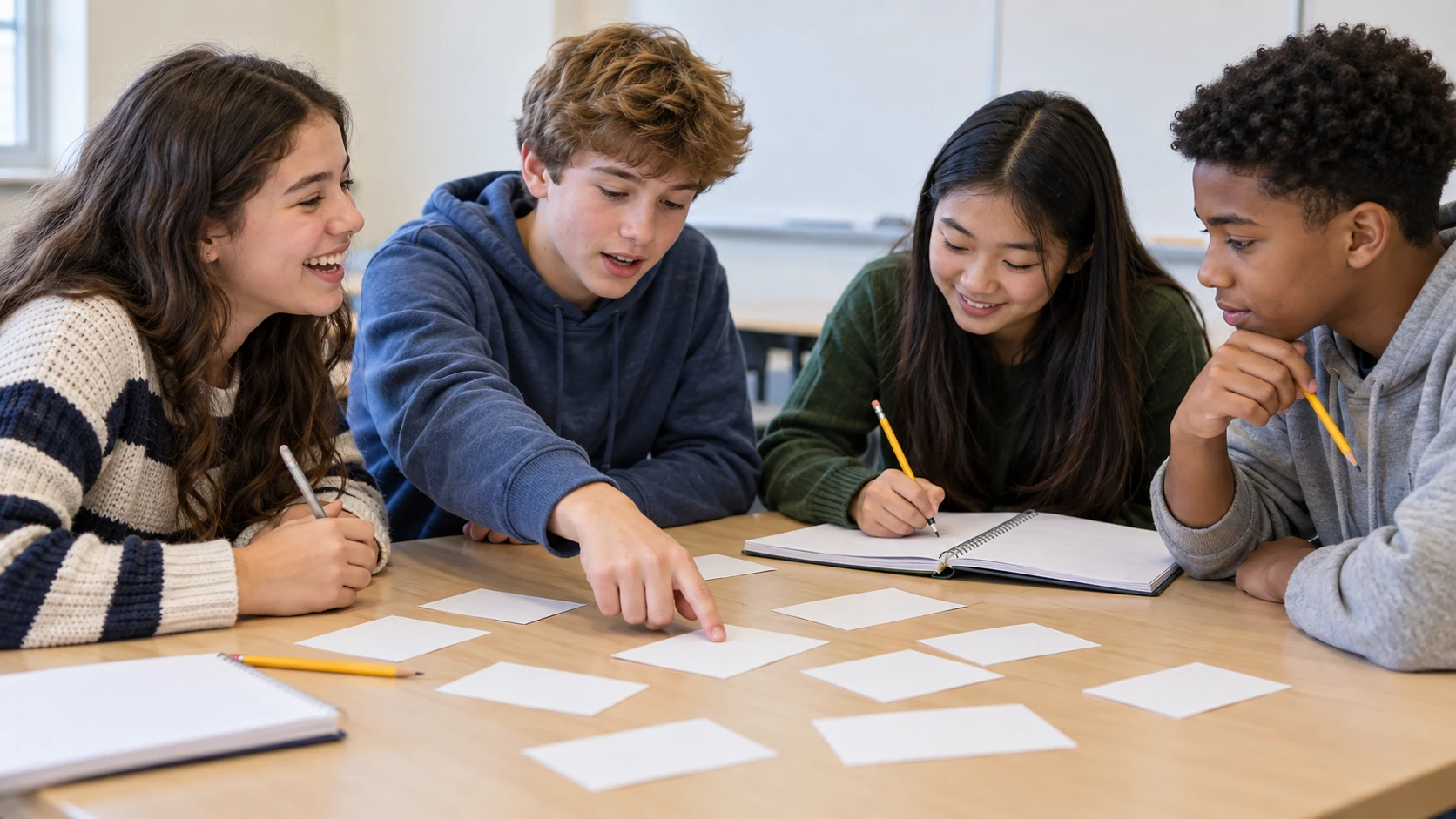
- Homework should be banned on weekends. For: weekends are for rest, family and activities, and students come back more focused. Against: some practice spread over the weekend can stop skills from slipping, and a weekend ban could just pile more work onto weeknights.
- Students should wear school uniforms. For: uniforms reduce pressure over clothes and make mornings simpler. Against: clothes are a way to express who you are, and uniforms cost families money.
- Zoos do more good than harm. For: zoos support breeding programs and let people see animals they would never meet otherwise. Against: even good enclosures limit how animals move and live.
- Every student should learn to cook at school. For: cooking is a life skill that also teaches math and science. Against: school time is limited, and families can teach it at home.
- Video games should count as a sport. For: competitive gaming takes practice, teamwork and strategy. Against: sport should involve physical effort, and that is what makes it different from other hobbies.
- Classrooms should have a class pet. For: caring for an animal teaches responsibility. Against: allergies, weekend care and the animal's own needs make it harder than it looks.
For warm-ups before a first debate, our list of would you rather questions for kids gets students used to picking a side and giving one reason out loud.
Debate Topics for High School
High school students can handle topics where evidence matters and where the answer depends on how you weigh different goals. These work for class debates, speech clubs and practice rounds.
- Phones should be locked away for the whole school day. For: fewer distractions in class and more face-to-face time at lunch. Against: phones help in emergencies and with schoolwork, and students need to learn self-control, not just have it imposed.
- School should start later in the morning. For: supporters argue teenagers need more sleep and learn better later in the day. Against: a later start pushes sports, jobs and family schedules later too.
- Students should be allowed to use AI tools for homework. For: these tools will be part of most jobs, so school should teach students to use them well. Against: if a tool does the thinking, the student does not build the skill the homework was meant to train.
- Every student should take a personal finance class to graduate. For: budgeting, credit and taxes affect everyone. Against: the schedule is already full, and adding a requirement means removing something else.
- Student athletes should need a minimum grade to play. For: school comes first, and the rule keeps students on track. Against: for some students, sport is the reason they stay in school at all.
- Social media apps should require users to be at least 16. For: younger teens would get more time before facing online pressure. Against: age checks are hard to enforce and can push teens toward less safe apps.
Debate Topics for College Students and Adults
At this level, the best topics involve real tradeoffs between costs, freedom and long-term effects. They suit university classes, debate societies and adult discussion groups.
- Space exploration is worth what it costs. For: it drives new technology and long-term knowledge. Against: the same money could solve urgent problems on Earth.
- Students should take a gap year before university. For: a year of work or travel helps people choose a field with more certainty. Against: it can delay a degree, and some students never come back.
- Attendance should not count toward a final grade. For: adults should be judged on what they learn, not where they sit. Against: class discussion is part of learning, and attendance rules protect it.
- Artists should be paid when AI models are trained on their work. For: the work has value and was made by someone. Against: humans also learn by studying others' work, and payment systems would be hard to build.
- Self-driving cars should be allowed on all public roads. For: machines do not get tired or distracted. Against: the technology still faces situations it was not built for, and someone has to be responsible when it fails.
- Cultivated meat should be sold in regular supermarkets. For: it could offer meat with fewer animals raised. Against: long-term effects and costs are still unclear, and farmers' livelihoods are at stake.
Put the Schedule and the Rubric on One Page
Add the club calendar, the motion of the week and a link to your judging rubric to a free VISU Link page, then share it in the group chat.
Fun Debate Topics for Friends and Family
Light topics are the best way to practice the format without stakes. They also work as an icebreaker for a new debate club, a family dinner or a party game. Keep the same rules: one minute per side, then a vote.
- Pineapple belongs on pizza. For: sweet and salty is a classic pairing. Against: pizza has a tradition, and fruit is not part of it.
- A hot dog is a sandwich. For: it is filling inside bread. Against: nobody orders a "sandwich" and expects a hot dog.
- Cats make better pets than dogs. For: cats are independent and need less space. Against: dogs are loyal and get you outside.
- Movies are better than the books they are based on. For: a film can show in two hours what a book needs days for. Against: books leave room for imagination and detail.
- It is better to be a morning person than a night owl. For: the world runs on morning schedules. Against: nights are quieter and better for focus.
- Superheroes should pay for the damage they cause. For: everyone else is responsible for what they break. Against: they are saving the city, and nobody would volunteer.
If the group would rather talk than compete, our list of things to talk about has open questions sorted by situation.
Debate Topics for Work and Team Training
Teams use short debates in training to practice presenting, listening and disagreeing well. Keep the topics about how work is done, not about people in the room.
- Meetings should have a 25-minute limit. For: short meetings force a clear agenda. Against: complex decisions need time, and splitting them across meetings costs more.
- Remote work is better than the office for most desk jobs. For: no commute and fewer interruptions. Against: new staff learn faster around colleagues, and teams lose informal contact.
- Cameras should be optional on video calls. For: less fatigue and more privacy. Against: faces help people read each other and stay engaged.
- Messages sent after hours should wait until the next workday. For: people need real time off. Against: teams in different time zones would slow down.
- Teams should rotate who leads the weekly meeting. For: everyone practices leading and feels heard. Against: consistency helps, and not everyone wants the role.
How to Run a Debate: Formats and Timing
Pick the format by the time you have and the size of the group. The first row is a simple class format we suggest for a single lesson; the others are established competition formats you can borrow from.
| Format | Teams | Speech times | Best for |
|---|---|---|---|
| Quick class debate | Two teams of 3 | 2 minutes per speaker, 1 minute of questions after each side, 2 minutes per closing | One class period, first debates |
| Public Forum | Two teams of 2 | Constructives 4 min, crossfires 3 min, rebuttals 4 min, summaries 3 min, final focus 2 min; 3 min of prep per team | Current topics, practice rounds |
| Lincoln-Douglas | One on one | Constructives 6 and 7 min, cross-examinations 3 min, rebuttals 4, 6 and 3 min; 4 min of prep each | Values and ethics topics |
| British Parliamentary | Four teams of 2 | Usually 5 min in secondary school, 7 min at university | Large clubs, university societies |
| World Schools | Two teams of 3 | Six speeches of 8 min, then two reply speeches of 4 min | Teams with prep time |
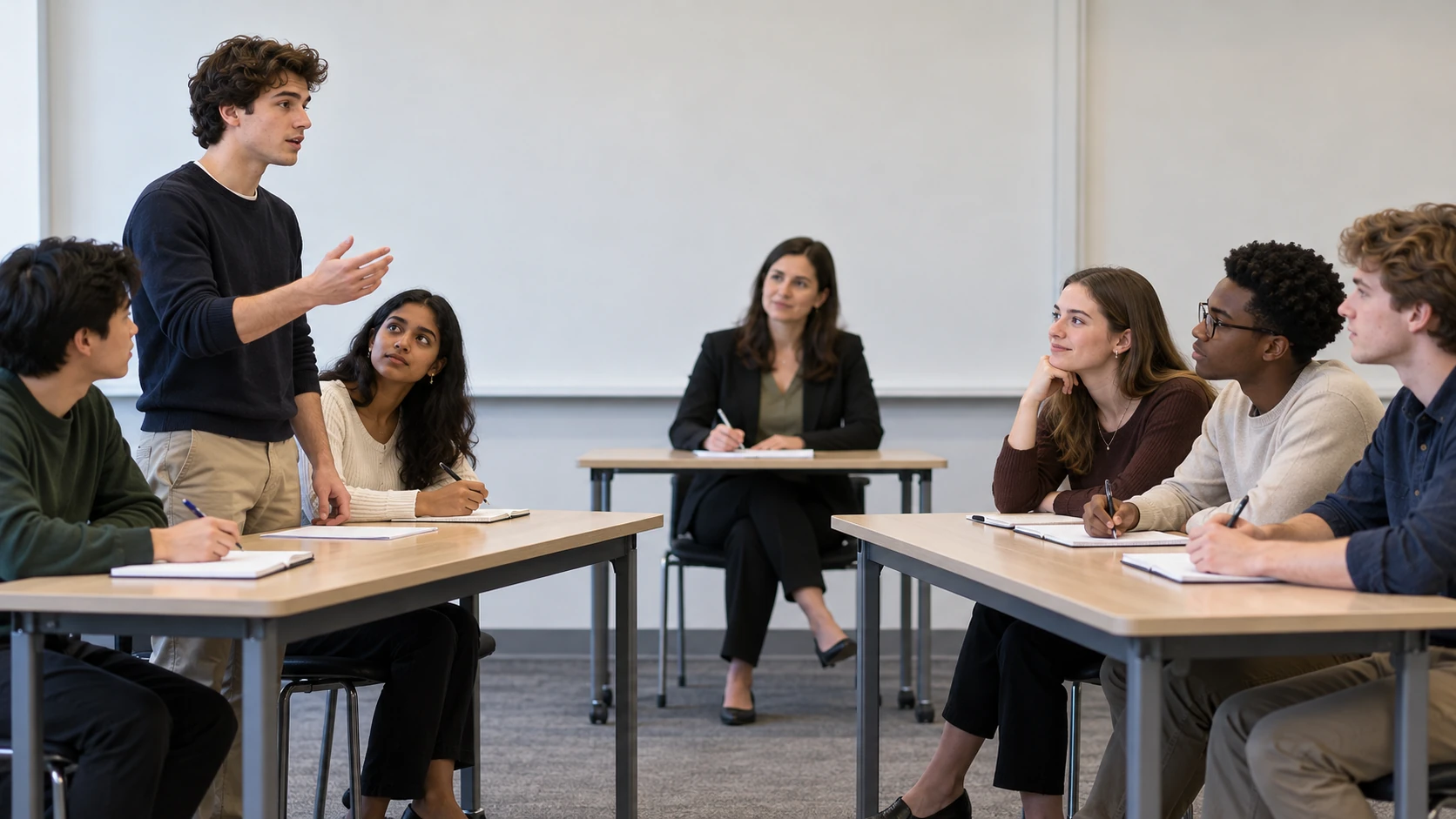
For a first debate in class, the quick format is enough. A run that fits in about 45 minutes:
- Announce the topic and draw sides (2 minutes). Do not let students choose. Arguing a side you disagree with is the best training there is, and a random draw means nobody is labeled by the side they got. Our random name picker has a yes or no mode: ask "Does team A argue for?" and spin. With "remove the winner" on, it sets the speaking order without repeats.
- Form the teams (3 minutes). The random team generator was built for sports, but it splits a class list into teams, balances them by level if you add one, and can keep two people apart. Our guide on how to make fair random teams explains why captains picking in front of everyone is a poor default.
- Prepare (10 minutes). Each team writes its two best arguments and the two it expects from the other side.
- Debate (20 minutes). Speakers alternate between sides. Keep time visible: the futsal preset of our online scoreboard has a countdown clock you can set to any whole number of minutes, and it stops at zero.
- Decide and debrief (10 minutes). Judges give their decision with reasons, then everyone says one argument from the other side that made them think.
How to Judge a Debate Fairly
The first rule of judging is that you score the debate, not the topic. A judge who agrees with one side still has to give the win to the team that argued better. Write that on the board before the first speech.
A simple rubric borrows the weights used in World Schools debating, where content and style each count for 40% of the decision and strategy for 20%:
| Criterion | Weight | What to look for |
|---|---|---|
| Content | 40% | Clear reasons, relevant examples or evidence, and direct answers to the other side's points |
| Style | 40% | Clear speech, eye contact, sensible pace, and staying within time |
| Strategy | 20% | Structure, picking the most important clashes, and teamwork between speakers |
To make scores easier, rate each speaker from 1 to 5 on each criterion, then apply the weights. With several judges, have each one decide alone before any discussion, so the most confident voice does not set the result. If you want the room to see the running total, the simple counter of the online scoreboard adds a point per tap for each side.
A common class variation is the audience vote: the room votes on the motion before the debate and again after, and the side that changed more minds wins. It rewards persuasion over popularity.
Ground Rules for a Respectful Debate
Debate is a contest of ideas, and the rules should make that obvious from the first minute. Share them before the first round:
- Argue against ideas, never against people. "That plan costs too much" is fair. Comments about a person's intelligence, looks or background end the speech.
- Sides are assigned, not chosen. Nobody should assume a speaker believes what they argued. Say this aloud, especially with younger students.
- Let the speaker finish. Questions belong in question time. Interrupting costs points.
- Use evidence you can name. If you cite a number, say where it came from. "Everyone knows" is not a source.
- Anyone can ask to skip a topic. If a motion touches something personal for a student, swap it quietly. There are always more topics.
- Shake hands or say "good debate" at the end. The ritual reminds everyone the contest is over.
The skill that lasts is not winning. It is stating a position, listening to the best version of the other side, and changing your mind when the reasons are good.
One Page for Every Round
Create a free VISU Link page for your debate club or class and share the link anywhere, from the group chat to a QR code on the classroom door.
Frequently Asked Questions
What are good debate topics for students?
Topics where both sides have a serious argument and students can reason from experience or simple research: homework, school start times, phones in class, uniforms, AI tools for schoolwork or zoos. Avoid topics about religion, identity or current elections.
How do you choose a debate topic?
Write it as one clear statement that one side supports and the other opposes, check that each side has at least one strong point, match it to what the group can research, and make sure no one in the room is the subject of the debate.
How long should a class debate take?
About 45 minutes for a first debate: a few minutes to draw sides and teams, 10 minutes to prepare, about 20 minutes of speeches with 2 minutes per speaker, and 10 minutes to decide and discuss.
How is a debate judged?
Judges score the arguments, not their own opinion of the topic. A simple rubric weighs content and style at 40% each and strategy at 20%, the weights used in World Schools debating. With several judges, each decides alone before discussing.
Should students choose which side to argue?
Usually not. Drawing sides at random avoids labeling students by their opinion and trains them to understand the other point of view. Let a student swap the topic, not the side, if it touches something personal.