


Most of the time you are not out of things to do at home, you are out of a decision. The list below removes the deciding part by sorting ideas two ways only: how much time you actually have, and how much energy you actually have.
Every entry says what it needs and why it holds attention when nothing else does. Nothing asks you to buy anything or wait for better weather. Pick a block, pick a line, start.
When Leaving the House Is the Answer
Some afternoons the fix is a short walk with a destination. If it passes a VISU partner location, a verified visit can come with a reward for being there.
Why Bored Usually Means Undecided
Look at what happens in the twenty minutes before you decide you are bored. You are rarely in an empty room with nothing available. You are usually holding a phone, in a home with books, tools, clothes, a kitchen with food in it, and a door that opens. The problem is not supply. Every option costs a small decision, and none announces itself as clearly worth the effort, so you keep sampling instead of choosing.
That is why lists of a hundred ideas rarely help. A longer list is more deciding, not less. What helps is narrowing the field first, which is why everything below is filed under two questions you can answer instantly: how long until something else claims your attention, and are you up for moving. Answer those and you have six or seven options instead of fifty. That is a size you can pick from.
Ten-Minute Fixes
These are for the gap: waiting for something to finish, ten minutes before you leave, the stretch after dinner when anything real feels like too much. Nothing here needs setup you would have to undo.
1. Reset one surface. Needs: one table, desk, or counter. Time: five to ten minutes. Why it holds: the finish line is visible from the start.
2. Learn to fold one thing properly. Needs: a fitted sheet, a shirt, a tote bag. Why it holds: obvious pass or fail, the fastest feedback there is.
3. Write down every idea you have been circling. Needs: paper, no editing. Why it holds: on paper, three unfinished thoughts stop repeating.
4. Pick one object and find out what it is made of. Needs: anything within reach. Why it holds: a narrow question has an end. An open browse does not.
5. Do the small repair you keep walking past. Needs: a loose screw, a hanging thread, a battery. Why it holds: the task was chosen weeks ago, so the deciding is done.
6. Stretch through one full round. Needs: floor space the size of a towel. Why it holds: the shortest route out of a stuck posture.
7. Send one message you have been postponing. Needs: a phone and one sentence. Why it holds: the message is easier than the postponing was.
8. Copy a paragraph by hand. Needs: any book and a pen. Why it holds: it forces a reading speed slow enough to see how the thing is built.
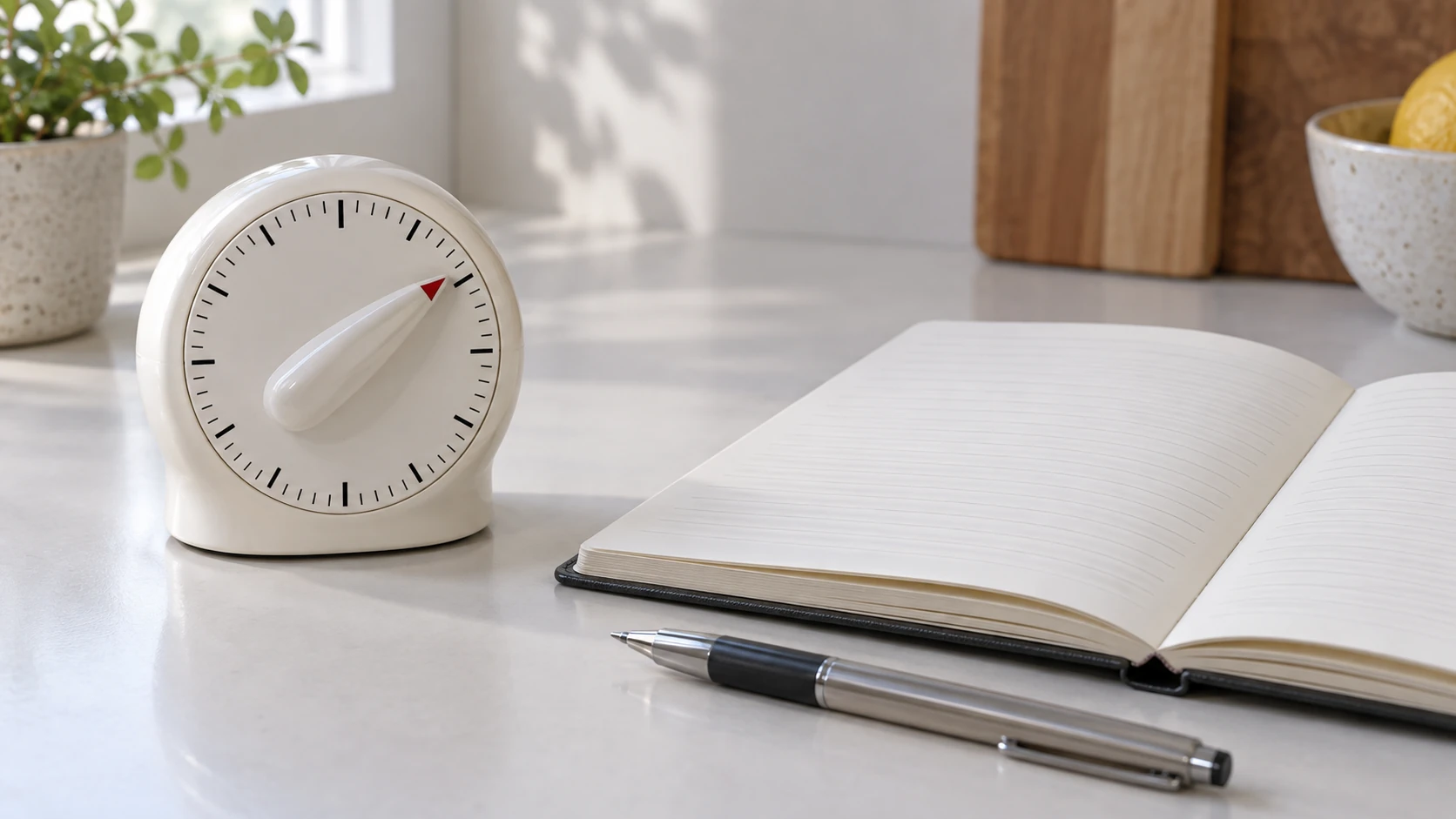
One Hour, Low Energy
An hour is enough for something real, and low energy means the entry cost has to be near zero. Everything here is done sitting down, and none of it punishes you for stopping halfway.
9. Read one long article to the end. Needs: something saved that you never opened. Why it holds: the saved pile is a list you already curated.
10. Sort the camera roll from one trip or one month. Needs: a phone and a single date range. Why it holds: deleting is easier than creating.
11. Draw the same object five times. Needs: paper, a pen, one cup or shoe. Why it holds: repeating one subject removes the question of what to draw.
12. Follow a single topic backward. Needs: one question and patience for footnotes. Why it holds: a chain has direction. Random browsing does not.
13. Reorganise your music or reading list by mood. Needs: the library you already have. Why it holds: constant small decisions at very low effort.
14. Write a letter you will not send. Needs: paper and one recipient in mind. Why it holds: a named audience is easier to write to than an empty page.
15. Plan a trip you have not booked. Needs: a map and one city. Why it holds: all the structure of a project, none of the commitment.
16. Watch one thing on purpose instead of scrolling. Needs: a title chosen before you sit down. Why it holds: the choosing happens once, at full attention.
17. Teach yourself one set of keyboard shortcuts. Needs: the program you already use most. Why it holds: the payoff repeats every day afterward.
If drawing is the one that appeals, our guide to easy doodles is built for exactly this kind of low-effort hour.
One Hour, High Energy
This block is for restlessness rather than dullness: you have energy and no channel for it. These involve moving, making noise, or making a mess you can clean up in ten minutes.
18. Rearrange one room. Needs: furniture you can move alone and a plan you can reverse. Why it holds: the room looks different at the end.
19. Do a fast, loud clean of one room. Needs: music and a bin bag. Why it holds: speed turns a chore into a game with a clock.
20. Invent a circuit with no equipment. Needs: floor space and a timer. Why it holds: designing it is half the activity, so it starts before the effort does.
21. Learn one song end to end. Needs: an instrument or your voice, one song and not five. Why it holds: one song is a target you can hit today.
22. Empty one drawer completely and refill it. Needs: a drawer and a surface to dump it on. Why it holds: emptying it first removes the option of stopping early.
23. Move everything and clean behind it. Needs: a sofa, a bed, or a fridge you can shift. Why it holds: it never happens on a normal cleaning day.
24. Photograph your own home like a stranger would. Needs: a phone and one rule, such as no photo from standing height. Why it holds: the constraint does the creative work for you.
25. Try a physical skill with a clear pass mark. Needs: socks to juggle, a wall for a handstand, a coin to roll across your knuckles. Why it holds: you either did it or you did not.
26. Build something out of packaging. Needs: cardboard, tape, scissors. Why it holds: free materials mean no reason to protect the result.
A Short Walk With a Reason to Arrive
Boredom at home often ends at the front door. VISU connects rewards to verified presence at partner locations, so the trip out can carry something back.
A Whole Afternoon
Three or four uninterrupted hours belong to something that would not survive being split up. The test: would stopping halfway ruin it? If yes, it belongs here.
27. Cook something with a long process. Needs: ingredients already in the house and a method that involves waiting. Why it holds: the waiting is built in, so slowness stops feeling like failure.
28. Take one appliance apart and clean it properly. Needs: a screwdriver and a phone to photograph each step. Why it holds: reassembly is a real puzzle with a real answer.
29. Sort every photo, file, or paper in one category. Needs: the box, folder, or drive, and a bin nearby. Why it holds: the category has edges, so you can genuinely finish.
30. Repair clothes instead of replacing them. Needs: needle, thread, and the pile you keep meaning to deal with. Why it holds: the first repair teaches the second, so the pile speeds up.
31. Write the long thing you keep describing to people. Needs: a keyboard and no plan to publish it. Why it holds: you have already rehearsed it out loud, which is most of the drafting.
32. Redraw the layout of your home to scale. Needs: a tape measure, paper, a ruler. Why it holds: measuring is absorbing, and the drawing stays useful afterward.
33. Do a full inventory of one cupboard or wardrobe. Needs: the space and a list. Why it holds: you find out what you already own.
Things That Make Tomorrow Easier
An empty afternoon is the only time these are cheap. Each costs a few minutes now and saves an argument with yourself later in the week.
34. Prepare tomorrow's clothes and bag. Five minutes now moves a morning decision to a moment when deciding is easy.
35. Write the week's plan on one page. A plan you can see stops you carrying it around in your head.
36. Deal with the errand you have been carrying. The form, the call, or the appointment is usually shorter than the time spent avoiding it.
37. Charge, back up, and update everything at once. Batching removes the interruptions these tasks normally cause one at a time.
38. Set out what you need for a habit you want to restart. Put the shoes, the book, or the notebook where you will trip over them. The barrier to restarting is the setup, not the activity.
39. Clear the pile that greets you at the door. You look at it several times a day, so the payoff repeats.
40. Cook one thing extra and put it away. Slightly more of whatever you were making is marginal effort today and a complete meal tomorrow.
Things You Can Do With What Is in the Kitchen
This is not a recipe section. The kitchen is simply the room with the most raw material in it, and these are about handling it rather than following instructions.
41. Take a real inventory of the cupboards. Most of the boredom about food is not knowing what is there.
42. Cook using only what is open already. No shopping. The constraint replaces the choosing, which is the part that stalls dinner.
43. Sharpen the knives and clean the boards. Maintenance with an immediately noticeable result.
44. Reorganise one shelf by how often you reach for it. The sorting rule is objective, so decisions come quickly.
45. Learn one technique instead of one dish. Use whatever ingredient you have plenty of. A technique transfers to everything afterward.
46. Decant, label, and date what is loose. The result is visible every time you open the cupboard.
47. Freeze the things that are about to turn. Ten minutes converts a small future loss into a future meal.
Screen-Free Options
Sometimes what you want is an hour without a screen in it, and the difficulty is that screens are where the suggestions live. Read this block once, then put the phone down.
48. Play a solo card game. The rules do the structuring, and a deck asks nothing else of you.
49. Reread something you liked years ago. You already know it is worth the hours, so the choice is settled.
50. Walk a route you have never taken in your own neighbourhood. Follow a rule, such as turning left at every second corner. It makes navigating automatic and the surroundings new.
51. Write by hand for twenty minutes without stopping. No editing. The rule removes the judging step that usually ends writing early.
52. Do a jigsaw, crossword, or puzzle book. Difficulty is calibrated in advance, which is exactly what an idle hour needs.
53. Care for the plants properly, not quickly. Water, a cloth for the leaves, better light. Our guide to how to keep plants alive covers what actually matters.
54. Look out the window with nothing else running. The only item on this list with no setup at all.
A Simple Rule for Next Time
This happens again next weekend because the deciding starts from zero every time. So do it once, now. Write four lines on paper and stick it where you sit: one thing for ten minutes, one for a tired hour, one for a restless hour, one for a whole afternoon. Copy them from the sections above. That page is not a schedule, it is a shortcut past the part that stalls you.
The second half of the rule is a limit on browsing. Take two minutes to choose, then stay with it for at least fifteen. Almost everything here becomes interesting somewhere after the ten-minute mark, and almost nothing does inside the first two. People who never seem bored at home are not better at finding ideas. They are faster at closing the question.
And if the answer is that the house itself is the problem, treat that as information. Put on shoes, pick a destination within walking distance, and let the route be the plan. If the weather is against you, our guide to what to do on a rainy day works from the same principle: decide fast, then stay with it.
Let the Trip Out Carry Something Back
VISU ties rewards to verified presence at partner locations. When the answer to a slow afternoon is to go somewhere, being there is what counts.
FAQ
What can I do at home when I am bored and have no money?
Everything here is built from what is already in a normal home: paper, a phone, a kitchen, furniture, a window, your own clothes. Start with the ten-minute block, the one that needs least from you.
What should I do when I am bored but too tired to do anything?
Use the low-energy hour. Sorting, reading something you already saved, drawing the same object several times, or planning a trip you have not booked all work sitting down and can be abandoned without cost.
How do I stop being bored on my phone?
Replace open browsing with one narrow question or one chosen title. Scrolling never ends on its own, so give the session an ending before you start.
What can a teenager do at home when bored?
The same four blocks apply. The high-energy hour is usually the most useful: a room rearranged, a song learned end to end, a physical skill with a clear pass mark, or something built out of cardboard.
How long should I spend deciding what to do?
Two minutes, then stay with it for at least fifteen. The deciding is what costs you the afternoon, not the activity.
What is worth doing when I am bored on a Sunday?
Pick from the afternoon block or the tomorrow block. A long cooking process, a full inventory of one cupboard, or an hour of preparation all pay off past the day itself.
Is it better to go out or stay in when nothing at home appeals?
If two or three ideas here have already failed to appeal, that is a signal. Choose a destination within walking distance and let the route be the activity.