

A baby shower is a small event with a fixed date and a lot of moving parts, and most of the stress comes from doing things in the wrong order. This checklist runs backwards from the party: what to decide eight weeks out, what to lock at six and four, what to confirm at two, and what to hand to other people on the day.
It covers the event only: who organises it, who is invited, where it happens, how the food is handled, what the activities are, and how the gifts and thank-yous get tracked. The weeks are a suggested rhythm, not a rule: adjust them to your own calendar. A guest list that spans several ages is easier to plan once you have seen a hundred would you rather questions sorted by age.
One Link for the Whole Plan
A short address you control, holding the guest list, the task split and the photos from the day, ready to share with the co-hosts.
Who Organises and Who Decides
Before any date goes in a calendar, settle three roles.
- The host. One person owns the plan. Friends, siblings, colleagues or a mix of people can throw a shower; what matters is that one name is the final answer on date, place and money.
- The co-hosts. Everyone who has volunteered to help, with a named slice each: invitations, food, decorations, games, photos, clean-up. A helper without a slice is a guest who feels vaguely responsible.
- The guest of honor. The parents-to-be decide the things only they can decide: which dates work, who is invited, whether they want a surprise, whether there is a theme they would hate, and how they feel about games. Ask early and write the answers down.
Keep the plan in one shared place that every co-host can see: a document, a group chat, a link. If a question comes up and nobody knows whose it is, assign it on the spot.
Eight Weeks Out: Set the Frame
Eight weeks is a comfortable start for a shower with a venue and invitations that need to travel. If you have less time, compress the early steps rather than skipping them.
- Pick the date. Offer the guest of honor two or three options and let them choose. Check the date against anything that would empty the room: holidays, a big local event, another family celebration.
- Pick the time of day. A late morning slot implies brunch, an afternoon slot implies snacks and cake, an evening slot implies a fuller meal. The time decides the food, so decide the time first.
- Decide the size. Small and seated, medium and mingling, or large and open-house. This one choice constrains the venue, the food format and the games.
- Decide the style. Co-ed or not, formal or casual, themed or plain. Ask the guest of honor before committing to any theme.
- Draft the guest list. Collect names from the guest of honor and close family. It does not have to be final yet; it has to be big enough to choose a venue.
- Set the budget categories. Not amounts yet, just the list of things money will go to, and who is contributing. See the budget section below.
Six Weeks Out: Lock the Venue and the Guest List
Venue options, in order of how much work they hand back to you:
- A home. Least cost, most work: cleaning before and after, seating, parking, and the host is also the door person.
- A shared or community space. A room in a building, a club house, a hall. Usually needs a booking and has rules about food and decorations. Ask for them in writing.
- A restaurant or café. Ask about a fixed menu, a minimum spend, how long you keep the room, and whether outside cake or decorations are allowed.
- Outdoors. Park, garden, terrace. Always pair with a rain plan you would actually use.
Finalise the guest list. Get the guest of honor's last additions, then freeze it. Collect for every guest: full name, how to reach them (phone or email, and a postal address only if invitations are mailed), and any note about a plus-one or children.
Also decide now: the invitation format (printed and mailed, digital, or a message with a link) and who photographs: a co-host with a phone, a friend with a camera, or a hired person.
Budget as Categories, Not Amounts
This article gives no amounts: a shower for twelve in a living room and one for sixty in a rented hall share nothing but the name. What transfers is the list of categories. Fill in your own numbers. The same category logic shows up in our guide to planning a wedding for less, where the categories carry the plan.
- Venue: rental, deposit, cleaning fee, or nothing if it is a home.
- Food and drink: the main spread, the cake or dessert, drinks, ice, and serving supplies.
- Invitations: printing and postage, or nothing if digital.
- Decorations: tableware, a backdrop or banner, flowers, balloons, signage.
- Activities: game supplies, prizes, any craft materials.
- Favors: the small thing guests take home, and its packaging.
- The host's gift: separate from the shower budget, and separate from any group gift.
- Buffer: a line for what you forgot, because you will.
If several people are contributing, agree the split by category rather than by total: one person covers food, another covers the venue. The same category logic is the one we use for a much bigger event in our wedding budget breakdown, and it scales down cleanly.
Four Weeks Out: Invitations, Registry and Food Plan
Four weeks is a reasonable lead time for invitations that need a reply. If guests are travelling from far away, send earlier and tell them the date informally before the invitation goes out.
What the invitation needs to say:
- Who the shower is for
- Date, start time and, if you want people to leave, an end time
- Venue name and address, plus parking or transport notes if the place is hard to find
- Who is hosting and how to reply, with a reply-by date
- Whether partners and children are included
- Where the gift registry or wish list can be found, if there is one
- Theme or dress note, only if there is one
Registry as a concept. A registry is simply a list the guest of honor keeps of what they would actually use, so gifts do not duplicate. It can live anywhere: a shared note, a printed list, a wish list on any platform they already use. The host does not build it; the host asks whether one exists and puts the pointer on the invitation. If the parents-to-be would rather not have one, say nothing about gifts at all.
Food plan. Decide the format now, not the menu: brunch buffet, afternoon tea, finger food, a seated meal, or catering. Decide who is making or ordering what, and note every dietary request you have been told about.
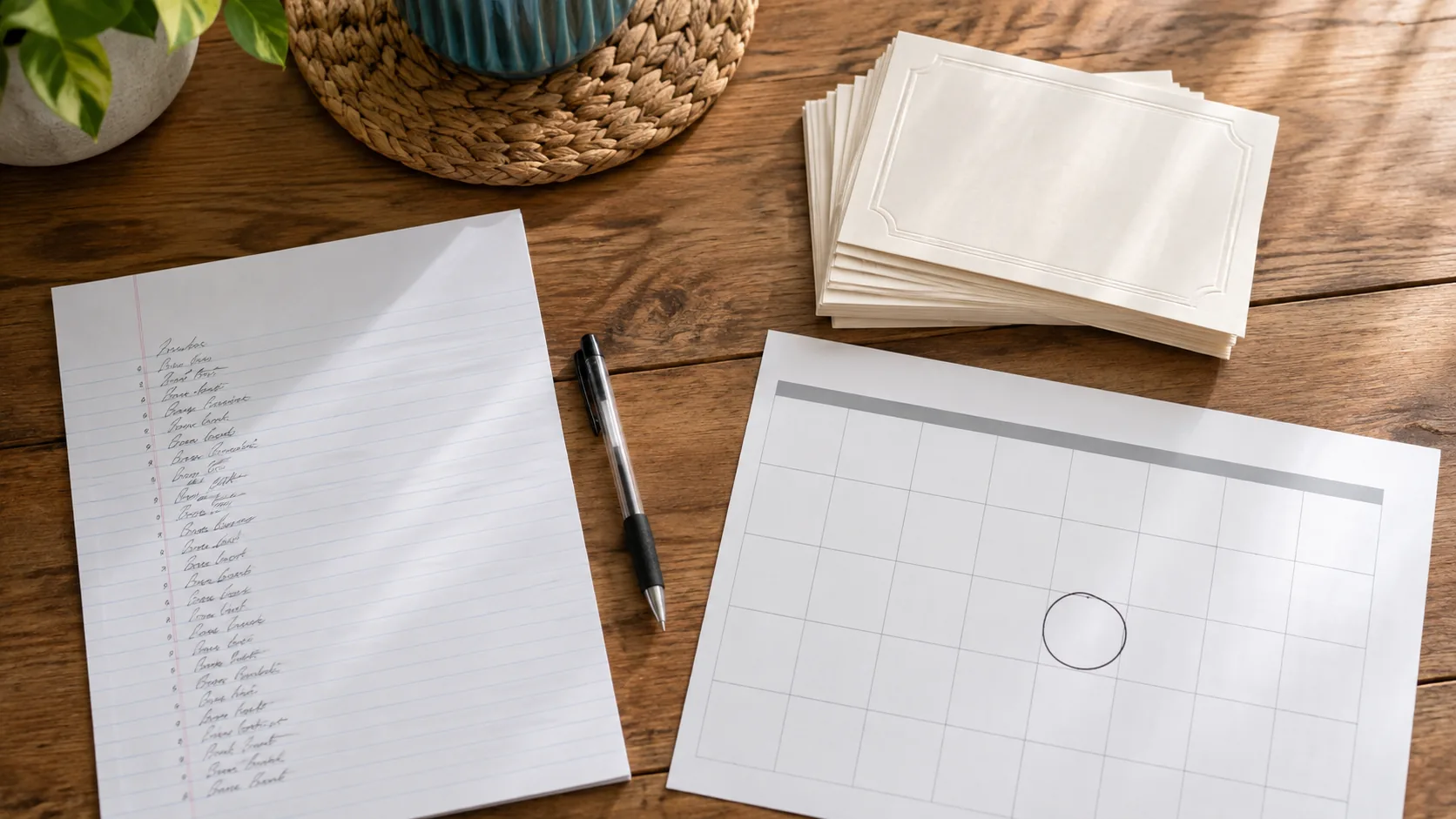
Two Weeks Out: Confirm, Assign and Buy
- Chase replies. Message everyone who has not answered, one by one.
- Confirm the venue. Call or message to reconfirm the date, the arrival time for setup, and any rule you were told.
- Confirm every order. Cake, catering, rentals, flowers. Get the delivery or pickup time in writing.
- Buy the non-perishables. Decorations, tableware, game supplies, favor packaging, candles, anything that keeps.
- Write the day-of schedule. Setup start, guest arrival, food out, games, cake, gifts, wind-down, clean-up. Put a name next to every line.
- Assign the day-of roles. Door and coats, food refills, photos, the gift log, music, clean-up lead.
Keep the Plan Where the Co-Hosts Can See It
Guest list, task split, venue rules and the day-of schedule behind a single address, shared once with everyone helping.
Food as Logistics
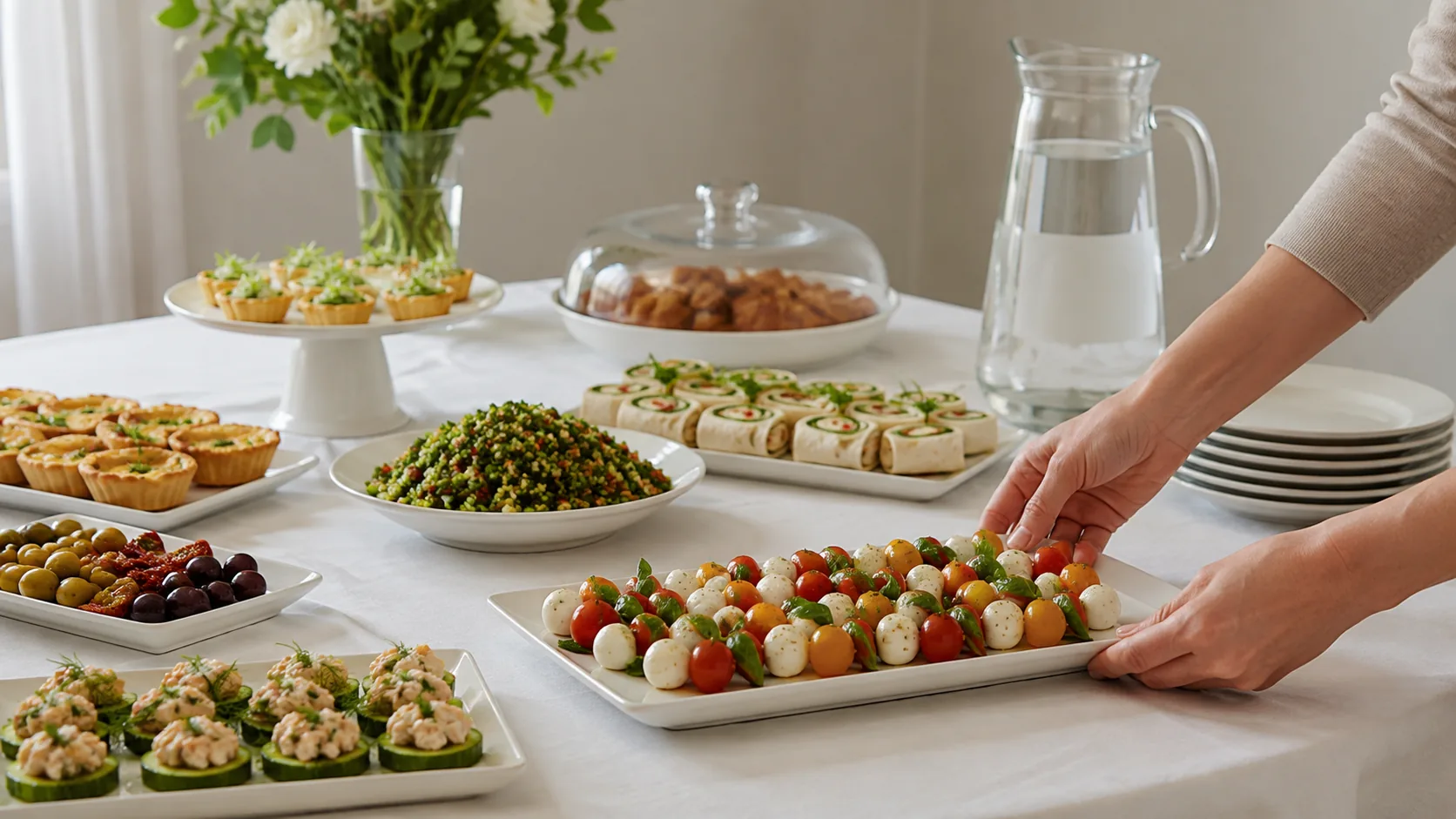
This is not a menu section. It is about how food gets to the table and stays safe there, and it is the only place this checklist leans on an outside source, because serving food to a room of people is not something to improvise.
The US Food and Drug Administration's consumer guidance on buffets gives a few rules that translate directly into shower planning:
- Serve in small platters and replace them. The FDA advises that if you are "not sure how quickly the food will be eaten, keep buffet serving portions small," preparing "a number of small platters and dishes ahead of time" and replacing "the serving dishes with the fresh ones throughout the party."
- Do not top up a dish. The same guidance: "Don't add new food to an already filled serving dish. Instead, replace nearly empty serving dishes with freshly filled ones."
- Watch the clock. The FDA's two-hour rule: "Discard any perishables left out at room temperature for more than 2 hours, unless you're keeping it hot or cold," and if the buffet is held where the temperature "is above 90 °F, the safe holding time is reduced to 1 hour."
- Keep hot things hot and cold things cold. The FDA states hot foods "should be kept at an internal temperature of 140 °F or warmer" and cold foods "should be kept at 40 °F or colder," and suggests placing "plates of cold food on ice" if food will stay out longer than two hours.
Checklist: food logistics
- Each dish assigned to a maker or a vendor, with an arrival time
- Small platters planned in rounds rather than one big spread
- Fridge or cooler space confirmed at the venue for cold backups
- Warming method confirmed for any hot dish
- Serving utensils, plates, cups, napkins counted against the headcount with spares
- Dietary notes matched to at least one dish each
- Containers for leftovers ready, and a plan for who takes what home
The Week of the Shower
- Send a reminder. A short message to every yes with the address, the start time and anything they need to bring.
- Shop the perishables. Two or three days out for most items, the day before for anything that has to be fresh.
- Stage the decorations. Pack them in the order you will put them up, with tape, scissors and string.
- Prepare the gift log. A sheet or note with two columns: gift and giver. Whoever holds this on the day makes the thank-you notes possible.
- Charge everything. Phones, camera, speaker, and any cable you will need at the venue.
- Walk the day-of schedule with the co-hosts. Ten minutes, everyone reads their line, nobody is surprised on the day.
The Day Itself
A simple run of show keeps the afternoon from stalling or ending abruptly. Adjust the blocks to your own start time.
- Setup. Arrive with enough margin to decorate, lay out the first round of food and test the music before the first guest.
- Arrival. The first half hour is drinks, mingling and the door role. Have a place for gifts and a person pointing to it.
- Food. Open the spread once most guests are in. The refill role starts the clock.
- Activities. One or two games at most, after people have eaten and before energy drops. Announce them; do not spring them.
- Cake and a few words. If anyone is going to speak, this is the moment. Keep it short.
- Gifts. If gifts are opened in front of guests, the gift log keeper sits next to the guest of honor and writes as each one is opened. Otherwise the log is filled at the gift table.
- Favors and goodbyes. Favors near the exit, and the host near the favors.
- Clean-up. The clean-up lead runs it; the host has done enough.
Games and Activities: A Short List
Games are optional, and the guest of honor gets a veto. If they are in, pick one or two that match the room. Each of these needs almost no supplies and can be explained in one sentence.
- Guess the number. A jar of small wrapped sweets; closest guess wins the jar.
- Advice cards. Blank cards at each seat; guests write one line of advice or a wish, and the cards go home with the parents-to-be.
- Baby photo match. Guests bring a childhood photo of themselves; everyone guesses who is who.
- The forbidden word. Everyone gets a clothes peg; say the word "baby" and whoever catches you takes your peg. Most pegs at the end wins.
- Name suggestions. A bowl for name ideas, read aloud at cake time, no obligation attached.
Favors, Gift Tracking and Thank-Yous
Favors. One small, identical thing per guest, ready before the day and placed near the exit. Something edible, a small plant, a candle, a packet of seeds. The best favor is the one that is easy to carry home.
Gift tracking. The gift log is the most useful thing the host hands over afterwards. Give it to the parents-to-be within a day or two, along with the reply list so they know who attended.
Thank-yous. Two sets. The guest of honor thanks the guests for the gifts, using the log. The host thanks the co-hosts and anyone who made or brought something, before the week is over.
Keep the Day After It Ends
Photos, the gift log and the thank-you list, behind one address you can share with the parents-to-be and the people who helped.
FAQ
How far in advance should you plan a baby shower?
Eight weeks is a comfortable start if a venue needs booking and invitations need to travel. With less time, keep the same order of steps and compress the early ones.
When should baby shower invitations go out?
Around four weeks before the event, with a reply-by date roughly two weeks before. Guests travelling from far away should hear the date informally even earlier.
Who usually hosts a baby shower?
Anyone close to the parents-to-be can host: friends, siblings, colleagues, or a group. What matters for the checklist is that one person is the named host and the others have a named responsibility.
What should a baby shower invitation include?
Who it is for, date and time, venue and how to get there, host and how to reply with a deadline, whether partners and children are included, and where the registry is, if one exists.
Do you need games at a baby shower?
No. Ask the guest of honor first. If games are in, one or two short ones after food work better than a full programme.
How long should a baby shower last?
Plan for two to three hours. The run of show above fits that window: arrival, food, one or two activities, cake, gifts, favors.