

Useful silent auction basket ideas start with a complete, usable set rather than a large pile of donated things. These 18 original combinations show what could go together and what to confirm before describing each lot. They are planning suggestions, not a record of donated goods, tested bidding results or promised fundraising value.
Make the Public Catalogue Easy to Find
Use VISU Link to gather links to an external catalogue, event information and the organiser contact page.
Choose a Theme From Confirmed Donations
Start with the items you actually have, or a clear written commitment from the donor. Group them by a use: a reading afternoon, a drawing session or a local outing. If an essential piece is missing, simplify the theme instead of implying it will appear later.
A basket is only one possible container. A tote, storage box or reusable tray can hold a coherent lot too. State whether the container belongs to the donation or is borrowed for display. Photograph the actual set after it has been checked, so the catalogue and collection table agree.
If the event format is still undecided, compare the broader fundraising ideas first. Here the task is choosing and describing donated contents; a theme does not establish an item’s value or expected proceeds.
Six Baskets for Time at Home
1. A reading afternoon
Combine one donated paperback, a bookmark, a reading light and a small tote. Keep the selection focused on one reading mood rather than adding unrelated shelf ornaments.
Before listing: List the book title and edition, light power source and whether batteries are included. If the book is used, describe its condition.
2. A puzzle weekend
Pair a boxed jigsaw with a puzzle mat and two sorting trays. The useful extra is a way to store an unfinished puzzle, not a larger decorative container.
Before listing: Record the piece count and finished dimensions. Confirm completeness and describe the box condition; do not call an unchecked used puzzle complete.
3. A tabletop game night
Use one donated board or card game, pencils, a score pad and a reusable snack bowl. Choose accessories that support that game rather than promising an entire party.
Before listing: List the edition, player range and age guidance printed on the box. Say whether the bowl and accessories are included in the lot.
4. A movie-at-home evening
Combine a washable throw, reusable bowls and a set of coasters. A film voucher can be included only if it is an actual confirmed donation; the physical set also works without one.
Before listing: State blanket size and care instructions. If a voucher is included, disclose the service, country, expiry and account requirements without publishing its code.
5. A tea break
Pair unopened tea with an infuser, a mug and a reusable tin. Keep original product labels instead of decanting several varieties into anonymous packets.
Before listing: Record the tea varieties and quantities, the dates shown on the packaging and mug capacity. Do not describe the set as suitable for every dietary restriction.
6. A coffee corner
Combine a sealed coffee bag, a scoop, two cups and a small tray. Match the coffee format to the description so the recipient knows whether a grinder is needed.
Before listing: Specify whole beans or ground coffee, package weight and the cup count. Name any brewing equipment that is not included rather than suggesting a complete coffee station.
Six Baskets for Practical and Creative Activities
7. A drawing desk
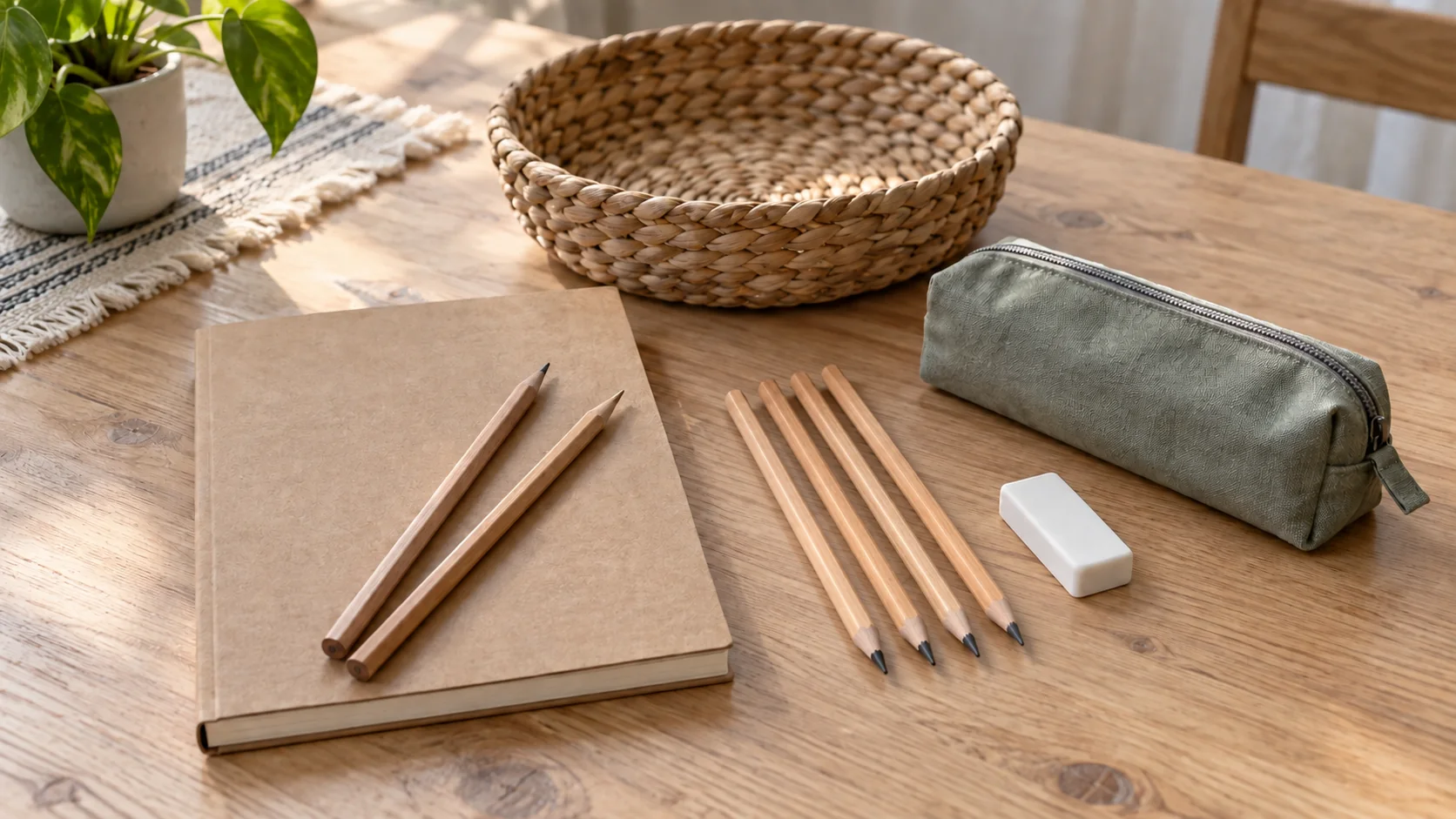
Build around a sketchbook, a set of drawing pencils, an eraser and a sharpener. Put the materials in a reusable pouch so the container has a purpose.
Before listing: List paper size, sheet count and the actual pencil grades supplied. Do not promise that a general sketchbook suits every paint or wet technique.
8. A letter-writing set
Pair blank cards, matching envelopes, a pen and a small address notebook. The recipient can use the set for thanks, invitations or ordinary correspondence.
Before listing: Count cards and envelopes separately and identify the pen refill. Do not imply that postage is included unless actual stamps were donated and their country is stated.
9. A baking-tool bundle
Use a baking tray, spatula, measuring spoons and a tea towel. This keeps the idea useful without adding ingredients that require separate storage arrangements.
Before listing: Record tray dimensions and material, utensil condition and what is supplied. A recipe link is optional; it must not imply that ingredients or a class are included.
10. A picnic-ready set
Combine a picnic blanket, two reusable cups and a lunch bag. Keeping it to reusable equipment makes the contents easier to count and hand over.
Before listing: State blanket size, cup capacity and whether the bag has an insulated lining. Do not claim a cooling duration that has not been established for that product.
11. A plant-care shelf
Group a small watering can, plant labels, a soft cloth and a pair of gardening gloves. A live plant is optional and needs its own care and collection plan.
Before listing: Give glove size, watering-can capacity and whether a plant or pot is included. Keep any care instructions supplied by the donor with the item.
12. A simple sewing kit
Combine thread, fabric clips, measuring tape, a needle case and a sturdy storage pouch. Present it as supplies, not a promise of a finished garment.
Before listing: List quantities and whether scissors are included. Keep sharp pieces secured, retain packaging guidance and state that no sewing machine or lesson comes with the kit.
Share the Confirmed Lot Information
Link to the current external item descriptions and event page. Keep donor details and voucher codes out of the public page.
Six Baskets for Outings, Pets and Local Makers
13. A museum visit
Pair a confirmed donated admission voucher with a tote and a notebook. The small physical items support the visit without claiming that transport or meals are provided.
Before listing: Confirm the number and type of admissions, location, booking method, excluded dates and expiry. Ask whether the voucher can be transferred to the recipient.
14. A creative-class outing
Combine a donated place in a specific class with a pencil case or apron appropriate to the activity. Keep the class description narrow enough that the provider can honour it.
Before listing: State class type, length, location, age or skill requirements, booking deadline and materials included. Separate a booking deadline from the date by which the class must be taken.
15. A local café pause
Pair a confirmed café voucher with two reusable cups or a notebook. Describe the actual voucher rather than calling the package a meal for two without confirmation.
Before listing: Check the named branch, included products or credit, expiry and whether booking is needed. State any additional purchase the offer requires before the lot is listed.
16. An everyday outdoor walk
Use a reusable bottle, small backpack, rain cover and a local map. This is a set of everyday accessories, not specialist safety equipment or a guided trip.
Before listing: List sizes and capacities, and the map area or edition. Explicitly say whether transport, admission and a guide are excluded so the theme does not imply a booked experience.
17. A dog-walking bundle
Combine a lead, waste-bag holder, refill rolls and a washable towel. Avoid adding food or choosing an unspecified harness size just to make the basket fuller.
Before listing: List lead length, item condition and refill quantity. Follow the product's own size or weight guidance; do not claim that one accessory fits every dog.
18. A local-maker collection
Bring together a handmade notebook, a fabric pouch and a coaster set from confirmed donors. Use one colour or material theme while crediting each maker accurately.
Before listing: Record maker names only as authorised, dimensions and care instructions. Include every piece in the inventory; a display sample or borrowed stand is not part of the donation.
Check Restrictions Before Writing the Catalogue
Create one inventory record per lot. Record every item and quantity, condition, dimensions where useful, the donor’s confirmation and where the physical item is stored. Use a separate status for promised, received and ready to collect; a promise is not an item already in your custody.
For a voucher, confirm the issuing business, included service or credit, location, number of people covered, transferability and booking method. Ask about excluded dates, advance notice, age requirements, extra charges and what equipment or materials the recipient must provide. Separate “book by” from “use by”. If no expiry is stated, ask the issuer; do not invent one.
Two real examples explain why these fields matter. Global Minnesota’s public donation form asks for catalogue descriptions, redemption instructions and restrictions or expiry. The Morgan Adams Foundation’s 2026 form also asks about item details and delivery arrangements. These are examples from those organisations, not rules or open donation invitations for your event.
Keep food and product labels with the goods, including the dates and ingredients supplied by the manufacturer. Do not cover them with decorative wrapping. Avoid adding a fresh or fragile item unless someone has confirmed its storage and handover arrangements. An attractive photograph does not prove an item’s condition or suitability.

Write a Description Someone Can Use
Use a specific title and a plain contents list. “Drawing afternoon: one A5 sketchbook, six drawing pencils, one eraser and one fabric pouch” is clearer than “an amazing art experience”. This is a sample description; change every quantity and specification to match the donated set.
A reusable template is: [Lot title]. Includes: [item, quantity, size or edition]. Condition: [confirmed description]. Voucher terms: [issuer, inclusions, booking and use deadlines, exclusions]. Collection: [place, window and organiser contact]. Not included: [display stand, transport or other relevant extras].
Describe restrictions with the same visibility as the attractive parts. A class for one person on weekdays is not a flexible family activity. An admission voucher does not include travel unless that is expressly part of the donation. Keep redeemable codes, private phone numbers and home collection addresses off the public listing; provide the necessary details through the organiser’s agreed route.
Pack for the Handover, Not Only the Display
Give the lot and its inventory sheet the same reference. Check the contents against the sheet before packing, secure small pieces and protect breakable items. Keep any voucher envelope attached to the correct lot, with its redeemable code hidden in public photos.
Agree who brings the item, who stores it and who hands it over. For an experience, confirm which party sends the voucher and handles reservations. Describe pickup or delivery limits before publication, including whether a bulky item requires collection rather than postage. Record substitutions and correct the catalogue before the event rather than quietly changing the contents.
For wider organisation and donor coordination, see fundraising ideas for nonprofits. VISU Link can point to the external catalogue and public contact instructions; it does not create bids, process payments or validate a donor’s promise.
Keep Collection Details Together
Point visitors to the organiser’s collection instructions and contact route. Bidding and payment stay with the separate service chosen for the event.
Frequently Asked Questions
How many things should go in a basket?
There is no required count here. Choose enough confirmed items to make a useful set, then describe each one. Several relevant pieces are clearer than unrelated filler.
Can we include a voucher?
Yes, when the donation is confirmed and the issuer’s conditions are clear. Record inclusions, location, transferability, booking and use deadlines, exclusions and any required extra purchase.
What if a donor has only promised the item?
Mark it as promised in the internal record. Mark a physical item as received only when it reaches the organiser; mark it ready for collection after its contents and handover arrangements have been checked.
Should the basket itself be included?
State that explicitly. A borrowed display basket or stand should not be shown as part of the donated contents without agreement.
Can these ideas guarantee a fundraising amount?
No. These are original combinations and description checks. They do not establish market value, demand or the amount an event will raise.
Does VISU Link run the auction?
No. Use it to organise public links to an external catalogue, event information and contact details. Any bidding or payment takes place in the separate service selected by the organiser.