
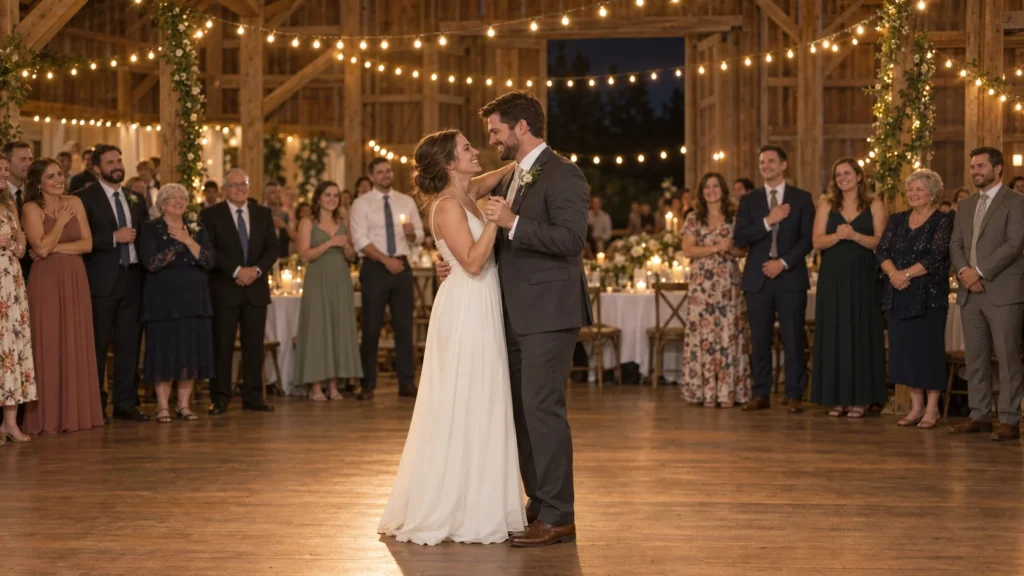
A wedding reception timeline turns a long, happy evening into a sequence that vendors can follow and guests can enjoy without long gaps. This guide gives a sample 5-hour reception schedule and a 4-hour variant, explains where toasts, dances and the cake usually fit, and shows how to adjust the order for your venue, your food service and the people who matter most in the room.
Put the Day's Details on One Page
A VISU Link page can hold the venue address, the guest schedule and links to your external RSVP form or photo album. Share it with one link or its QR code.
What a Reception Timeline Has to Do
The ceremony is usually short and scripted. The reception is the opposite: several hours, many vendors and a room full of people who want to eat, talk, dance and leave at different times. A timeline is the tool that keeps those needs from colliding.
A good reception timeline does three jobs at once:
- It protects the moments you care about, so the first dance, the toasts and the cake happen while the right people are still in the room and the photographer is still working.
- It keeps food moving, because the kitchen needs a firm time to serve, and guests who wait too long for dinner get restless.
- It gives every vendor the same clock, so the DJ or band, the caterer, the photographer and the venue manager can cue each other instead of guessing.
The timeline is not a promise that everything will happen to the minute. Toasts run long, dinner service slows down, a grandparent needs a moment. What matters is the order and the buffer between blocks. If the order is clear, a ten-minute slip is easy to absorb.
Sample 5-Hour Wedding Reception Timeline
The schedule below is an example, not a rule. It counts five hours from the 6:00 PM entrance to the 11:00 PM send-off, plus a separate welcome hour from 5:00 PM. Guests begin taking their seats at 5:50 PM; dinner is served at the tables. Shift every time by the same amount if your ceremony starts earlier or later.
| Time | Block | What happens | Who needs the cue |
|---|---|---|---|
| 5:00 PM | Cocktail hour | Drinks and passed bites while the couple takes family and couple photos | Photographer, bar, catering |
| 5:50 PM | Guests seated | Doors to the reception room open and guests find their tables | Venue manager, DJ or band |
| 6:00 PM | Grand entrance | Wedding party and couple are introduced | DJ or emcee, photographer |
| 6:10 PM | Welcome | Short welcome from a host or parent, and a blessing if you want one | Speaker, DJ for the microphone |
| 6:15 PM | Dinner | First course and main course served | Catering, bar |
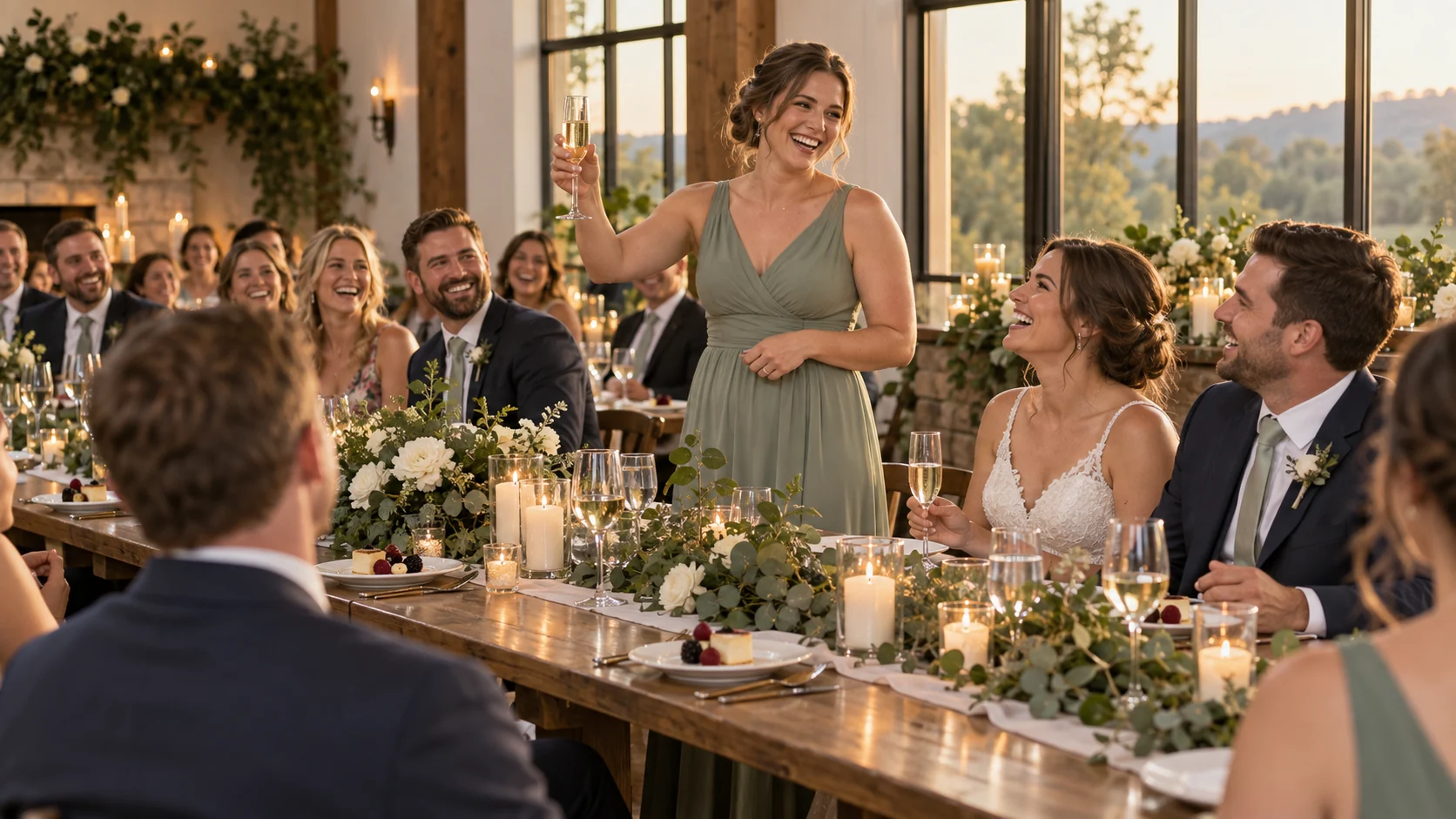
| 7:15 PM | Toasts | Two to four toasts while dessert plates are cleared or coffee is poured | Speakers, DJ, photographer |
| 7:35 PM | First dance | Couple's first dance, then any parent dances | DJ or band, photographer |
| 7:50 PM | Open dancing | Dance floor opens for everyone | DJ or band |
| 8:45 PM | Cake cutting | Couple cuts the cake, then catering plates it for guests | Catering, photographer, DJ |
| 9:00 PM | Dancing | Second dance set; optional bouquet or garter toss | DJ or band |
| 10:00 PM | Late-night snack | Small bites for guests who are staying | Catering |
| 10:45 PM | Last dance | Final song and a call for guests to gather for the exit | DJ or band, photographer |
| 11:00 PM | Send-off | Couple leaves; venue closes out | Venue manager, transport |
Notice the shape more than the clock. Dinner comes early, before energy dips. The toasts sit at the end of dinner, when guests are seated and quiet. The first dance leads straight into open dancing, so the floor fills while the room is already watching. The cake lands in the middle of the dancing, which gives people a natural break without emptying the floor for long.
A 4-Hour Reception Variant
A shorter reception works well for a daytime wedding, a smaller guest list or a venue with a hard closing time. The trick is to merge blocks rather than rush each one. This example runs from 6:00 PM to 10:00 PM, excluding the preceding cocktail hour.
- 6:00 PM, entrance and welcome. Introduce the couple straight into the first dance, so guests are standing and watching at once.
- 6:10 PM, dinner. Ask the caterer whether the proposed meal can be served within this block for your guest count and service layout.
- 7:00 PM, toasts. Keep it to two or three speakers and ask each one to plan for a few minutes.
- 7:20 PM, parent dances and open dancing. Go straight from the parent dances into an upbeat song.
- 8:15 PM, cake cutting. Serve cake from a station so dancing can continue.
- 8:30 PM, dancing and optional traditions. Bouquet toss, anniversary dance or a group song, if you want them.
- 9:45 PM, last dance. Call guests together for the exit.
- 10:00 PM, send-off.
What you give up is slack. With four hours, one late toast can push the cake into the last dance. Put the moments you care about most in the first half and treat anything after the cake as optional.
Share the Schedule Without Reprinting It
Keep the guest version of your timeline on a VISU Link page. If a time moves, update the page and the same link and QR code still work.
Choosing the Order of the Big Moments
Most reception decisions come down to where four moments sit: the entrance, the first dance, the toasts and the cake. There is no single correct order, but each choice has a trade-off.
| Moment | Early option | Later option | What to weigh |
|---|---|---|---|
| First dance | Right after the entrance | After dinner, before open dancing | Early gets it done while you are fresh; later flows straight into the party |
| Toasts | Before dinner is served | End of dinner or between courses | Before dinner delays food; after dinner guests are fed and attentive |
| Cake cutting | Right after dinner | Mid-dancing | Early helps guests who leave soon; later gives the dance floor a break |
| Parent dances | Right after the first dance | Later in the evening | Together keeps the spotlight moments in one block |
Three questions settle most of it. Who must be present for each moment, and when do they plan to leave? Older relatives and families with small children often leave first, so put the moments they care about in the first half. When does your photographer's coverage end? Anything after that time may go undocumented. And how long can your guests sit before they need to move? A long dinner followed by long toasts is the most common source of a flat room.
Optional traditions deserve an honest look. A bouquet or garter toss, a money dance, an anniversary dance or a shoe game each takes time and a few cues. Keep the ones that feel like you and cut the rest without guilt. A shorter program usually feels more generous to guests than a long one.
Food Service Timing and Safety
The meal is the anchor of the whole schedule, because the kitchen works back from the time you give them. Ask your caterer how long each service style takes for your guest count, then build around that number rather than a generic slot.
- Plated dinner. Predictable timing and easy to pair with toasts, but each course needs clearing time.
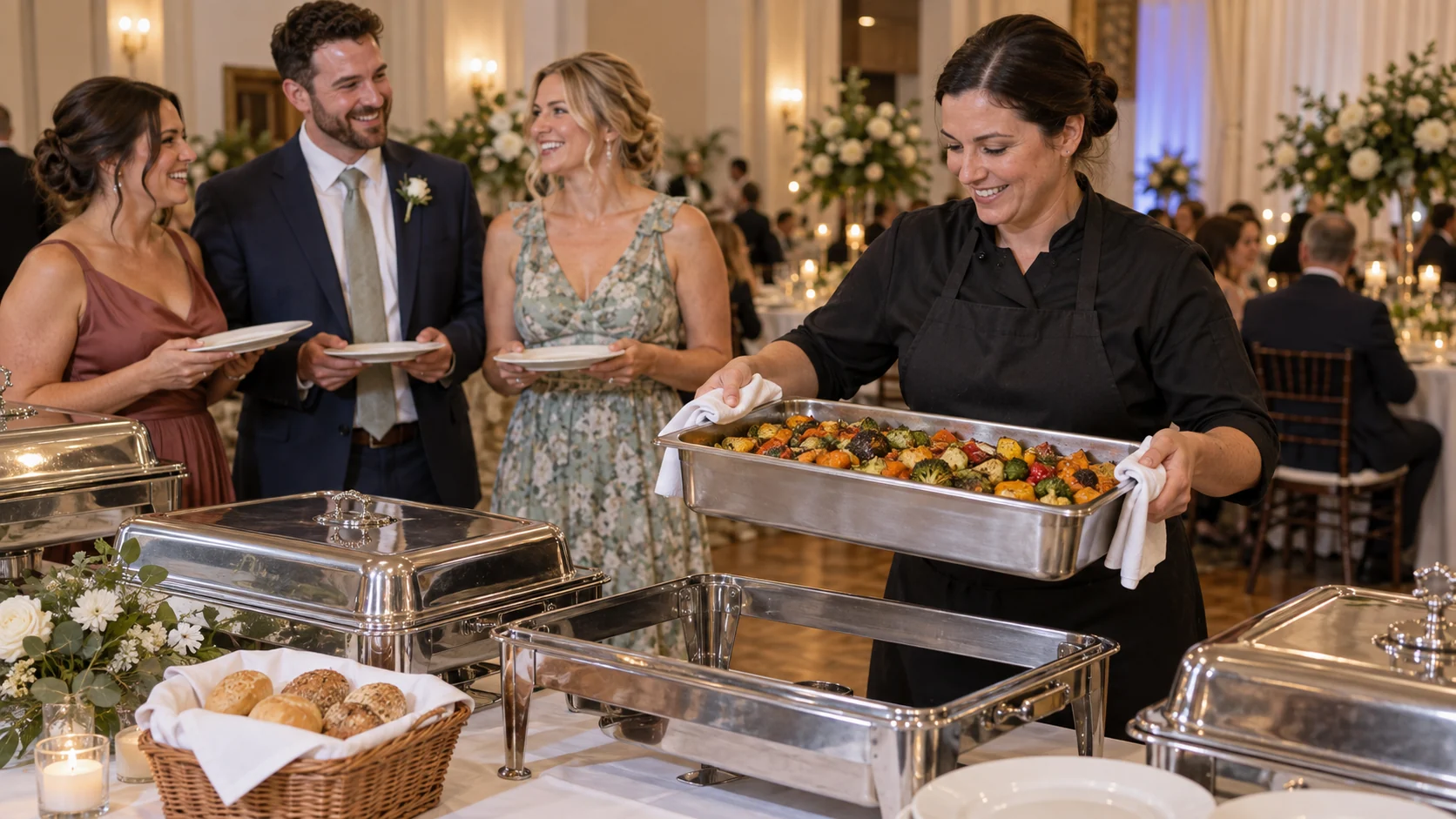
- Buffet. Guests are released table by table, so the last table eats well after the first. Plan the toasts for when most tables have food.
- Family style or stations. Timing depends on the number of stations, staffing and guest flow; assign staff to monitor service throughout.
For food left at room temperature, the CDC and FDA advise a two-hour limit for perishables, reduced to one hour above 90°F. This is not a substitute for controlled hot or cold holding. Agree with the caterer on temperature monitoring, fresh tray replacement and the local rules that apply to the service; do not assume a warming dish alone proves food is safe.
A late-night snack is a good fit for a longer reception, because it arrives fresh for the guests still dancing instead of sitting on a table since dinner. For drinks, keep water and non-alcoholic options easy to find all night, and plan rides or transport for guests before the last call rather than after it.
Build Around Vendors, Venue and Daylight
Your vendors' contracts shape the timeline more than any template does. Before you set times, collect four numbers: when you can access the venue, when the venue must be empty, when your photographer's coverage ends and when the band or DJ contract ends. Then place the reception inside all four.
Photography coverage is where schedules most often fall short. If you are trimming hours to save money, remember what our guide on planning a wedding on a budget points out: the later half of the day is where the toasts and the dancing happen. If coverage ends at 9:00 PM, move the cake and any tradition you want photographed before that time.
For outdoor portraits, ask your photographer to check sunset for the date, location and local time zone. The NOAA Solar Calculator remains online but is no longer actively maintained, so confirm its estimate against a current local source and the conditions at the venue. Plan the portrait break with the photographer rather than treating a calculated sunset as a guaranteed lighting window.
Finally, build in small buffers. Five minutes between blocks feels like nothing on paper and saves the evening in practice. A buffer before the toasts lets the DJ hand over the microphone calmly; a buffer before the send-off lets guests collect their things and gather.
One Link for Every Guest Question
Put the schedule, venue map, shuttle times and your external RSVP or photo album link on one VISU Link page at visu.to/<username>, then print its QR code on a table card.
Frequently Asked Questions
How long is a typical wedding reception?
The examples here allow four or five hours from the entrance to the send-off, plus a separate cocktail hour. They are planning examples, not a standard duration. Check the venue closing time and vendor coverage.
When should toasts happen at a wedding reception?
A common choice is at the end of dinner or between courses, when guests are seated and quiet. Toasts before dinner work too, but they delay food, so keep them short in that slot.
When do you cut the cake at a wedding reception?
Couples often cut the cake after dinner or in the middle of the dancing. Earlier helps guests who plan to leave soon; later gives the dance floor a natural pause.
Should the first dance be at the start of the reception?
It can be. Dancing right after the entrance gets it done while everyone is watching. Doing it after dinner lets it lead straight into open dancing. Both are common.
Does the cocktail hour count as part of the reception?
Count the cocktail hour in the total time guests spend at the event. The sample headings here describe the later entrance-to-send-off block; confirm separately how each venue or vendor contract counts coverage.
Who should get a copy of the reception timeline?
Share the detailed run sheet and supplier contact information with the people coordinating the event. Give the wedding party and speakers the cues relevant to their roles. Guests only need a short schedule with the times that affect them.