


Most fundraising idea lists are a hundred bullet points with no numbers attached, which is how groups end up spending forty volunteer hours to net three hundred dollars. This guide is shorter and more honest: the methods that reliably raise money, what each one really keeps after costs, and how to match them to the size and energy of your group. One deliberate choice up front: nothing here depends on raffles, bingo or any game of chance, every method below works on effort, generosity and community instead of luck. If your fundraiser is built around an event, the engagement side is covered in event activation ideas.
The short version: pick by margin and audience, not by novelty. An a-thon event keeps almost everything it raises; a product sale keeps a third; and the digital rails, matching, recurring, peer-to-peer, multiply whatever you choose.
Give Your Supporters Something to Experience
VISU turns real-world moments into interactive, rewarded experiences, the same mechanics that make modern fundraisers stick.
How to Choose a Method
Three questions decide almost everything: how many people can you actually reach, how much volunteer effort can you spend, and what share of each dollar raised do you get to keep. Fundraising professionals treat that last number seriously, the AFP's guidance puts a well-run special event at around fifty cents of cost per dollar raised, and most advisors want total overhead under 25 to 30 percent of what comes in.
Here is the honest comparison, before the details:
| Method | Upfront cost | Share you keep | Best for |
|---|---|---|---|
| A-thon events (fun run, walkathon) | Low | Highest, near total | Schools, teams, communities |
| Crowdfunding page | Near zero | High, minus platform fees | One clear cause, fast start |
| Peer-to-peer campaign | Low | High | Groups with motivated members |
| Product sales | Medium | Roughly a third to half | Broad casual audiences |
| Silent auction / gala | High | Depends on donated items | Established donor bases |
| Sponsorships | Low | Very high | Anything with visibility to offer |
Notice what is not on the list: raffles and games of chance. Beyond the brand and legal headaches they carry in most places, they compete on luck instead of on your cause, and the methods above outraise them without the fine print.
Events That Actually Raise
A-thons are the margin champions. Fun runs, walkathons and jog-a-thons collect pledges per participant, and because there is nothing to buy and resell, organizers report keeping 95 to 97 percent of what comes in. Platform data puts typical fun-run totals anywhere from around five thousand dollars for a small community event to over twenty thousand for a well-run school campaign, with an average student bringing in roughly 140 dollars in online pledges.
Tournaments monetize what your community already loves. Soccer, golf, pickleball, esports: entry fees plus local sponsorships plus concessions. The competition is the draw; the cause is the reason the entry fee feels good. Keeping players engaged between matches is the same craft covered in event gamification.

Auctions and galas work where a donor base already exists. A silent auction of donated items is not a game of chance, the highest bid wins by choice, which keeps it clean legally and reputationally; check local rules on permits and receipts and you are set. Live auctions typically outraise the silent tables, and a direct paddle-raise, where people simply pledge amounts, often beats both.
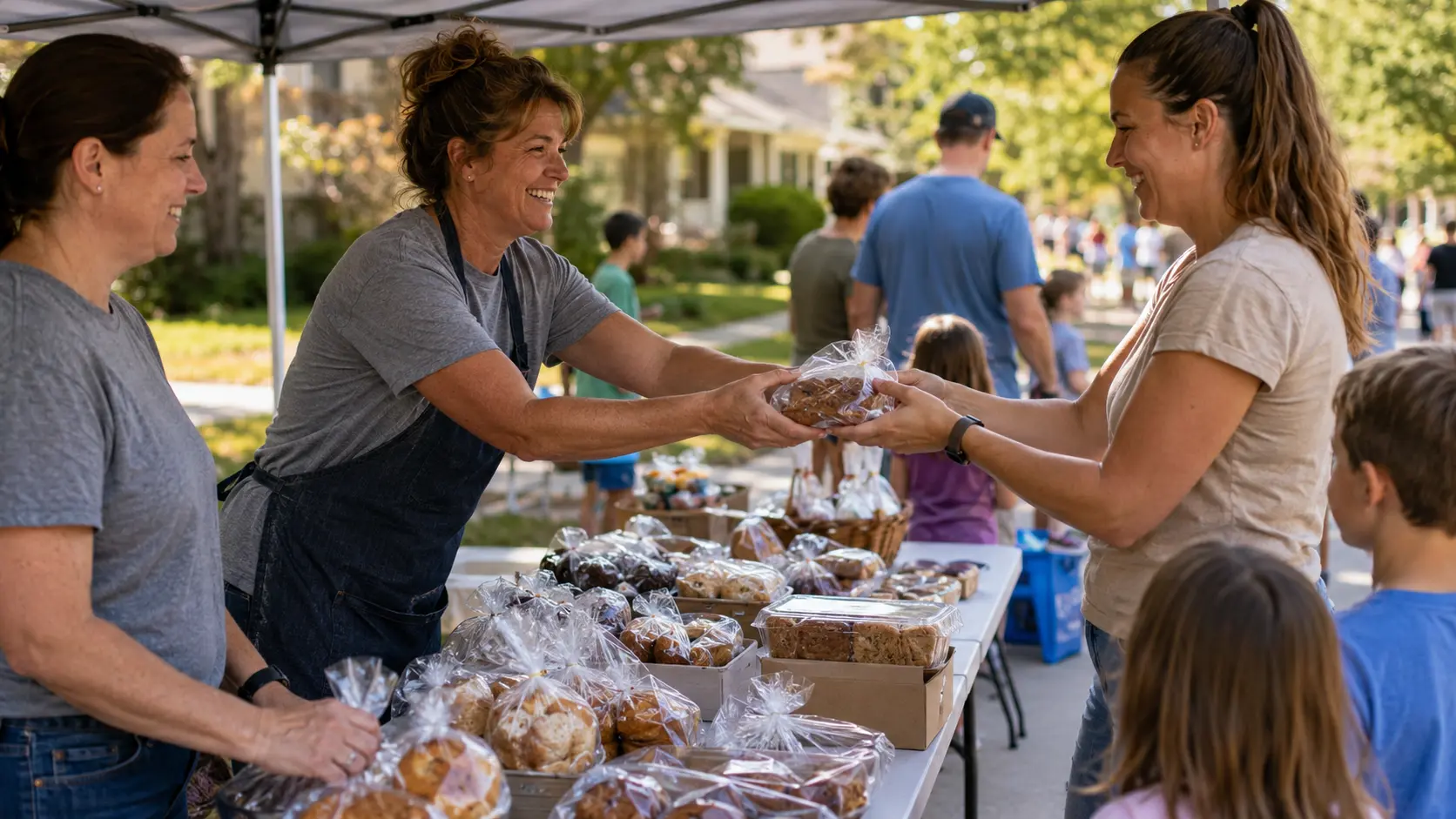
Starter tier still counts. Car washes and bake sales rarely clear more than a few hundred dollars, but they cost almost nothing, teach new volunteers the ropes, and put your cause physically in front of the neighborhood.
The Digital Rails: Matching, Recurring, Peer-to-Peer
Whatever method you pick, the digital layer multiplies it, and the numbers here are the strongest in all of fundraising.
Matching gifts are the closest thing to free money. Research by Double the Donation finds 78 percent of donors do not know whether their employer matches donations, and an estimated 4 to 7 billion dollars in available match funds goes unclaimed every year. One line on your donation page, "check if your employer matches", can double individual gifts you were receiving anyway.
Pro tip: ask for monthly, not just once. Recurring donors renew at around 79 percent, against roughly 32 percent for one-time givers, and monthly giving now accounts for about a quarter of nonprofit online revenue. A ten-dollar monthly supporter is worth more than a fifty-dollar one-time gift by spring.
Peer-to-peer turns members into fundraisers. Each supporter gets a personal page and raises toward the shared goal, the digital backbone behind every modern a-thon. It is a proven machine at every scale: the thirty largest US peer-to-peer programs alone raised 1.17 billion dollars in 2025, and the mechanics work identically for a thirty-kid team.
Timing is a method too. December concentrates about 37 percent of annual online giving, per the M+R Benchmarks study, and overall nonprofit online revenue grew 15 percent in 2025. Plan your big push for when generosity peaks instead of fighting the calendar.
Engagement Is the Other Half of Fundraising
People give more when the experience is memorable. VISU builds the interactive layer that makes events worth showing up for.
Product Sales and Sponsorships
Product sales trade margin for reach. Catalog fundraisers, cookie dough, popcorn and spirit wear typically return 30 to 50 percent of gross to the organization, half or less of what an a-thon keeps. They still earn their place when your audience is broad and casual: buying a product feels lighter than a donation, and some supporters only say yes to that.
Sponsorships are the most underpriced ask. Local businesses fund events for visibility, and in corporate giving surveys sponsorships come out as the highest-ROI channel companies use. Tier the offer, logo on shirts, a named station at the event, a shout-out per lap, and price the top tier higher than feels comfortable. How to make a sponsor's money feel well spent is its own craft, covered in increasing sponsorship value with interactivity.
The two combine naturally: a sponsored a-thon with a modest merch table captures three donor types in one event, the pledger, the buyer and the local business.
What Fits Your Group
Schools and PTAs: a-thons beat product sales on every number that matters, margin kept, volunteer hours, and how the kids experience it. A three-hundred-student school with half the families participating clears five figures. The school-specific playbook is deep enough for its own guide, coming next in this series.
Nonprofits: stack the rails. A recurring-giving program for the base, matching-gift prompts on every donation form, and one flagship event per year timed near December. Each rail reinforces the others, and none requires a bigger team.
Sports teams and clubs: tournament plus sponsorship tiers plus team merch is the natural stack, and platform data shows team campaigns averaging several thousand dollars each season. The team version, with the sponsor pitch written out, is now its own guide: fundraising ideas for sports teams.
Communities and informal groups: a single crowdfunding page with a concrete goal and a personal story is the fastest start, and most campaign platforms report the majority of pages are created on behalf of someone else. Generosity is already there; your job is making it easy. Faith communities are the clearest case, and several denominations rule out games of chance outright, which shapes the whole list of church fundraiser ideas.
Make the Next One Unforgettable
The fundraisers people return to are the ones they enjoyed. VISU adds the interactive, rewarded layer that keeps a community coming back.
FAQ: Fundraising Ideas
What is the most profitable fundraising idea?
By share kept, a-thon events: fun runs and walkathons routinely keep 95 to 97 percent of what they raise because there is no product to buy. Sponsorships are close behind, since a local business covers costs in exchange for visibility. Product sales sit at the bottom of the ladder, returning roughly a third to half of gross.
How do I fundraise without raffles or bingo?
Everything in this guide already does: a-thons, tournaments with entry fees, silent auctions where the highest bid wins by choice, crowdfunding, peer-to-peer, sponsorships and product sales. Skipping games of chance also skips their permit requirements and legal gray zones, and the methods above consistently outraise them anyway.
Are silent auctions legal without a gambling license?
Generally yes, because nothing depends on luck: the highest bidder chooses to win. That places auctions outside games-of-chance regulation in most jurisdictions. You may still need basic sales or event permits and should follow receipt rules for donated items, so a quick check of local requirements is smart, but it is a fundamentally different category from a raffle.
What are matching gifts and why do they matter?
Many employers double or triple their employees' charitable donations on request. Research finds 78 percent of donors do not know whether their employer offers this, and billions in available match funds go unclaimed each year. Adding one employer-match prompt to your donation page captures money that was already approved and budgeted, at zero extra cost to the donor.
How much does a school fun run usually raise?
Platform data ranges from around five thousand dollars for smaller events to over twenty thousand for well-organized school campaigns, with a typical participating student bringing in roughly 140 dollars in online pledges. The spread depends mostly on participation rate and how easy the pledge page is to share, not on the size of the school.
When is the best time of year to fundraise?
Year-end, by a wide margin: December alone concentrates about 37 percent of annual online giving. Schools and teams also do well at season openings, when enthusiasm peaks. Whatever the date, recurring monthly giving softens the calendar problem entirely, which is why converting one-time donors to monthly is the highest-leverage ask in fundraising.