

The first thing to settle, before any activity is planned, is that Day of the Dead is not a Mexican version of Halloween. The two land close together on the calendar and both involve skulls, and that coincidence has produced a lot of confused programming.
Every activity below is anchored to something a source states about the tradition. Where the source is silent, the activity is not here.
When the Gathering Happens Somewhere Else
Some of these plans end up outside the house, at a community center, a library room, a bakery the family walks to. If that place is a VISU partner, scanning the code there turns the visit into a small reward.
Start by Saying What the Holiday Is
Open with the definition, not with decorations. The Day of the Dead, in Spanish Día de (los) Muertos, is a holiday traditionally celebrated on November 1 and 2, though other days, such as October 31 or November 6, may be included depending on the locality. It falls during the Christian period of Allhallowtide, and it is widely observed in Mexico and among people of Mexican heritage elsewhere.
The purpose is stated just as plainly: the holiday involves family and friends gathering to pay respects and remember friends and family members who have died. Everything else serves that gathering, including the tone, the part people get wrong most often. The celebrations can take a humorous tone, as celebrants remember amusing events and anecdotes about the departed. This is not a solemn hush and it is not a fright night.
The activity. Before anything is cut, glued or cooked, have the group write down the two dates and one sentence about what the days are for. Leave it visible: if a proposed decoration cannot be explained by that sentence, it does not go up.
What to leave out. No pumpkins, no sheet ghosts, no jump scares. The skull here is a calavera and it carries a meaning that has nothing to do with terror.
Building an Ofrenda, Element by Element
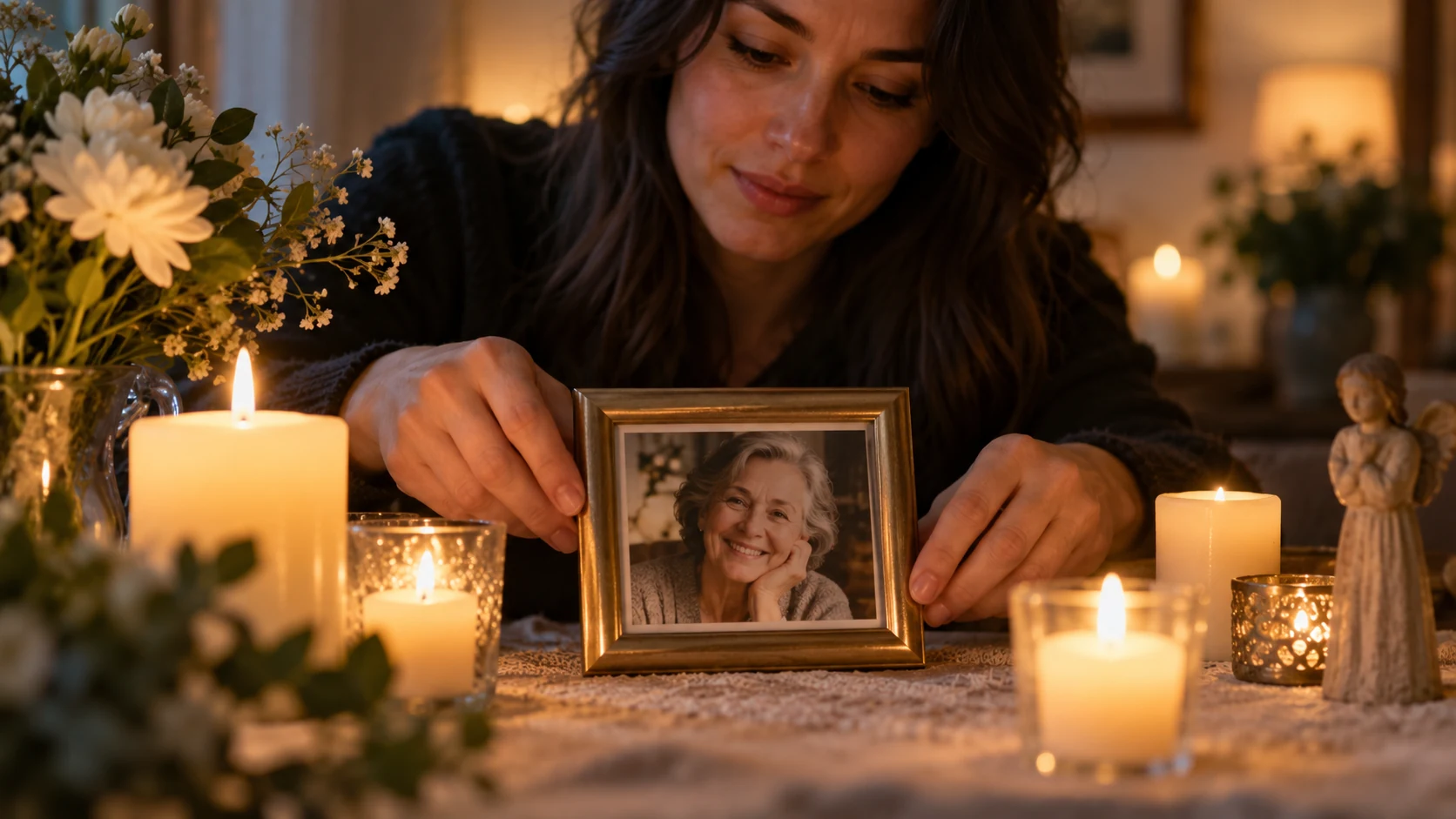
The ofrenda is the central object of the holiday and the most teachable, because each element has a stated reason. During Día de Muertos, the tradition is to build private altars, ofrendas, containing the favorite foods and beverages, as well as photos and memorabilia, of the departed. The intent is to encourage visits by the souls, so they will hear the words of the living directed to them.
These altars are often placed at home or in public spaces such as schools and libraries, and also next to the tombs of the departed. The elements a source names, and only those:
- Photographs and memorabilia of the person being remembered.
- Their favorite foods and beverages. Not generic offerings, theirs.
- Cempasúchil, the orange Mexican marigold, covered below.
- Candles, which appear on home altars in numbers, and on graves.
- Pan de muerto and sugar skulls, plus candied pumpkin and atole.
- Toys, brought for dead children, los angelitos, the little angels.
- Pillows and blankets, so the deceased can rest after their long journey.
Some families build small shrines featuring a Christian cross or pictures of the Blessed Virgin Mary. In a public school setting those elements are a family choice rather than a group assignment, and it is easier to say so plainly than to omit them silently.
Three versions. For younger children, a shared class ofrenda where each child contributes one item and says who it is for. For older students, individual paper ofrendas with each element labelled and its reason beside it. At home, the real thing, with the youngest child in charge of the photographs. The habits that work for preschool art projects carry over, with one change: the child is assembling a meaning, not exploring a material, so leave time for the explaining.
Cempasúchil, the Flower With a Job
The orange flower is the most recognisable element and the one most often used as pure decoration, which loses the point. Graves are decorated with ofrendas which often include orange Mexican marigolds, Tagetes erecta, cempasúchil, originally cempōhualxōchitl, Nāhuatl for twenty flowers, and sometimes called Flor de Muerto, flower of the dead.
The flower has a stated function. These flowers are thought to attract souls of the dead to the offerings, and it is believed the bright petals with a strong scent can guide the souls from cemeteries to their family homes. Scent and colour are doing work, which is why a path of petals is a path and not a border.
- The petal path. Lay a line of orange petals, real or paper, from the door to the ofrenda. Because the belief is that the petals guide the way from the cemetery to the home, the path has a direction and a destination.
- The word itself. A short language exercise: cempōhualxōchitl, twenty flowers in Nāhuatl, and the English marigold, which derives from Mary's gold, a name first applied to a similar plant native to Europe, Calendula officinalis.
- Paper marigolds. Layered orange tissue circles, cut and fluffed, where fresh flowers are not possible.
A Visit That Gives Something Back
If the plan includes going somewhere, a bakery, a market, a hall the group meets in, that trip can be worth something on its own. At a VISU partner location, scan the code and the reward is tied to being there.
Calaveras: Why the Skull Is Not a Scare
This is what keeps the whole topic from collapsing back into Halloween. A common symbol of the holiday is the skull, in Spanish calavera, which celebrants represent in masks, called calacas, and foods such as chocolate or sugar skulls, which are inscribed with the name of the recipient on the forehead.
That last clause is the entire distinction. A named gift is the opposite of an anonymous fright. Calaveras display colorful designs to represent the vitality and individual personality of the departed, and sugar skulls can be given to both the living and the dead, so a living classmate can receive one with their own name on it.
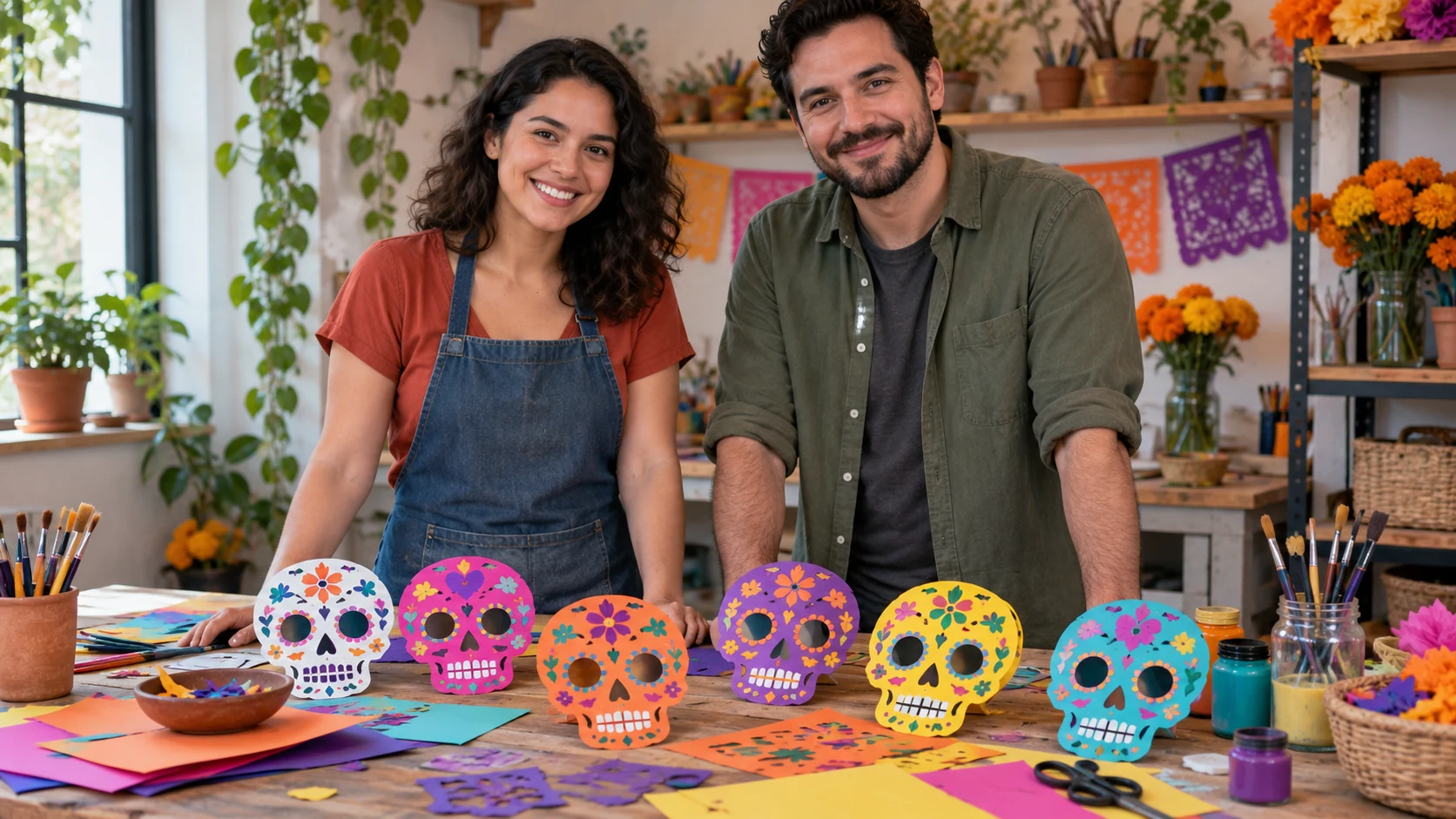
- Named paper calaveras. Cut a skull shape from card, decorate it in bright colour, write a name on the forehead as the tradition does. Each student decides whose name goes on theirs, living or dead.
- Design as portrait. Ask students to choose colours and motifs that stand for one specific person, then say which choice stands for what.
- The Catrina, as art history rather than costume. José Guadalupe Posada's print La Calavera Catrina was likely intended as a criticism of Mexican upper class women who imitated European fashions, and was later elaborated into a full scale figure by Diego Rivera in a fresco painted in 1946 to 1947.
The line not to cross. Painting a skull on a child's face as a costume, with no reference to anyone being remembered, is where the activity turns into aesthetic borrowing. The version that works is on paper, with a name on it.
Calaveras Literarias, the Verse Students Actually Write
A distinctive literary form exists within this holiday: short poems in traditional rhyming verse, called calaveras literarias, literally literary skulls, which are mocking, light hearted epitaphs mostly dedicated to friends, classmates, co-workers or family members, living or dead, but also to public figures, describing habits and attitudes and comedic anecdotes that use death related imagery.
Note who they are usually about: mostly living people. That is what makes the form workable in a classroom. In modern Mexico, in public schools, students are encouraged or required to write them as part of the language class.
How to run it. Each student draws the name of a classmate. The poem is short, rhyming and light hearted, built around one habit that person is known for, with the encounter with death played for comedy rather than menace. Read them aloud: the class sorts out its own tone within about three poems. For adult groups, the public figure version is closer to the newspaper original.
Kitchen Activities Tied to Named Foods
Food here has a double role. During Day of the Dead festivities, food is both eaten by living people and given to the spirits of their departed ancestors as ofrendas, offerings. The same dish goes on the altar and on the table.
- Pan de muerto, bread of the dead: a sweet roll shaped like a bun, topped with sugar, often decorated with bone shaped pieces of the same pastry. The best group activity here, because the shape carries the meaning.
- Tamales, one of the most common dishes prepared for this day.
- Candied pumpkin, named among the foods on home ofrendas. Worth flagging once: squash as a sweet on an altar, not a carved lantern.
- Atole and champurrado, warm, thick, non alcoholic masa drinks. These are the ones to make with a group.
- Agua de Jamaica, water of hibiscus, a herbal tea made from the Jamaican hibiscus plant, served cold and quite sweet.
For adult groups, the drinks are the low effort option. Groups already running regular easy crafts for adults sessions can pair a drink with the paper calavera table and have a full evening.
One Town Is Not Every Town
The most common flaw in Day of the Dead programming is presenting one town's practice as the national one. A source says it directly: the traditions and activities that take place in celebration of the Day of the Dead are not universal, often varying from town to town.
Pátzcuaro and Janitzio, Michoacán. Here the tradition is very different if the deceased is a child. On November 1 of the year after a child's death, the godparents set a table in the parents' home with sweets, fruits, pan de muerto, a cross, a rosary and candles. At midnight on November 2, people light candles and ride winged boats called mariposas to Janitzio, an island in the lake where there is a cemetery.
Ocotepec, Morelos. The town opens its doors to visitors in exchange for veladoras, small wax candles, and in return the visitors receive tamales and atole. This is done only by the owners of a house where someone has died in the previous year.
The pattern holds outside Mexico. Guatemalan celebrations on November 1 are highlighted by the flying of giant kites, customary to help the spirits find their way back to Earth, alongside fiambre, made only for this day. In Belize the celebration is known as Hanal Pixan, food for the souls in the Yucatec Maya language. In Ecuador ceremonial foods include colada morada, with guaguas de pan, bread shaped like people.
The activity. A map with pins and one short card per place, presented as that town's practice rather than a whole country's. One local tradition is frequently misread: in some parts of the country children in costumes knock on doors for a calaverita, a small gift of candies or money. This is similar to Halloween's trick or treating in the United States, but without the component of mischief to homeowners if no treat is given. A resemblance is not evidence that the holidays are the same.
Putting a Session Together
An hour with young children. Ten minutes on the dates and the purpose. Twenty on paper marigolds and the petal path. Twenty on a shared class ofrenda where each child adds one item and says who it is for.
Ninety minutes with older students. Fifteen on the definition and the calendar. Twenty five on calaveras literarias, drawn names, read aloud. Twenty on named paper calaveras. Twenty on the regional map.
An adult gathering. Atole or champurrado, a table of paper calaveras with names on the foreheads, calaveras literarias about public figures. At home the same pieces work as a family evening, with one adult telling one story about each person on the table.
A note for older students. Where the holiday comes from is contested: Mexican academics are divided on whether the festivity has genuine indigenous pre-Hispanic roots or whether it is a 20th century rebranded version of a Spanish tradition. Two things are settled either way. In 2008 the tradition was inscribed in the Representative List of the Intangible Cultural Heritage of Humanity by UNESCO, as practised by the indigenous communities of Mexico, and it has become a national symbol in Mexico, taught in the school system and observed as a school holiday nationwide.
One planning note. If you are preparing early, let the group know the observance sits at the start of November, not wherever the planning falls.
Let the Place You Are In Count for Something
VISU connects rewards to verified presence at partner locations. If the group is already meeting somewhere on the map, the bonus comes from showing up, not from spending more.
FAQ
When is Day of the Dead, and what goes on an ofrenda?
It is traditionally celebrated on November 1 and 2, though other days may be included depending on the locality. An ofrenda holds the favorite foods and beverages of the departed, along with photos and memorabilia, commonly with candied pumpkin, pan de muerto, sugar skulls and atole.
Is Day of the Dead the Mexican Halloween?
No. It is a multi-day holiday in which family and friends gather to pay respects and remember friends and family members who have died. It falls during the Christian period of Allhallowtide, which is why it lands near the same part of the calendar, but the purpose, the symbols and the tone are its own.
Why are marigolds used?
The orange Mexican marigold, cempasúchil, is thought to attract souls of the dead to the offerings, and it is believed the bright petals with a strong scent can guide the souls from cemeteries to their family homes.
What does the sugar skull mean?
Calaveras display colorful designs to represent the vitality and individual personality of the departed. They are inscribed with the name of the recipient on the forehead and can be given as gifts to both the living and the dead.
What is a calavera literaria?
A short poem in traditional rhyming verse, a mocking, light hearted epitaph mostly dedicated to friends, classmates, co-workers or family members, living or dead. In Mexican public schools, students are encouraged or required to write them as part of the language class.
Is Day of the Dead only celebrated in Mexico?
It is widely observed in Mexico and among people of Mexican heritage elsewhere, and separate related observances exist in Guatemala, Ecuador, Belize, Bolivia, Brazil, Honduras, Peru, Costa Rica, the Philippines and Sicily.