


Apex Focus Group does not run the studies it sends you. It is an email service that forwards paid research opportunities operated by other companies. Once that is clear, most of the confusion around it resolves itself.
Search for Apex Focus Group and you get a wall of contradictions: five-figure earning claims on one side, scam warnings on the other. Both can be true at once, because Apex sits between you and whoever actually runs the study. This review separates what Apex publishes about itself from what it never promises.
Know Who Is Paying You
Rewards you can read before you start, from a company that runs its own platform.
What Apex Focus Group Actually Is
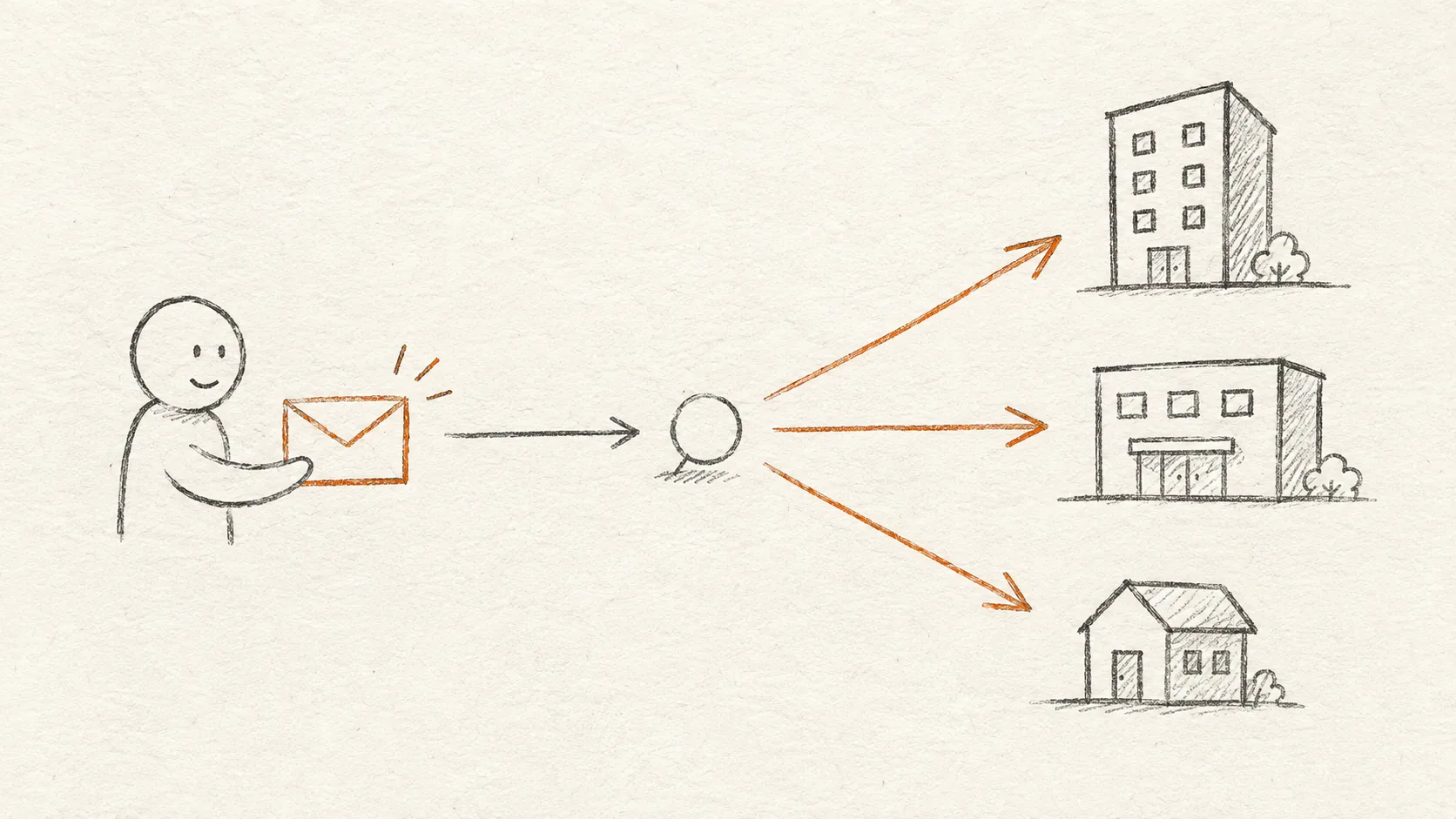
Apex Focus Group is a free email list. You register your interest, and it sends you market research opportunities it has gathered from elsewhere.
The company is upfront about this on its own homepage. Its description says it "connects you with market research opportunities run by independent third-party companies." A disclaimer previously carried in the site footer put it more plainly still: Apex does not own or operate any paid opportunities, it matches subscribers with clinical trials, surveys and focus groups from other providers, and it may receive compensation from those providers.
So the business model is affiliate referral. Apex earns when it sends you somewhere, not when you get paid. That is a legitimate way to run a service, and plenty of useful sites work exactly this way. But it changes what you should expect from it, and it explains nearly every complaint people have.
The homepage also lists three categories, not one: focus groups, clinical trials, and paid survey panels. If you signed up thinking you were joining a focus group company, you were signing up for a broader mailing list than the name suggests.
Is Apex Focus Group Legit?
Apex itself is a real operating business, founded in 2019, and it does send genuine paid research opportunities. It is not a fake company harvesting emails for nothing.
Public reputation is mixed, and the complaints cluster in one place: the third-party offers and partners, rather than Apex failing to deliver its own service. That distinction matters. When something goes wrong in a study, the counterparty is the research firm, not the list that introduced you. Apex has been reported as responsive to complaints raised through the Better Business Bureau, where it is not accredited, including cases where it stepped in over money owed by a partner.
The parts that deserve caution are about transparency rather than payment. Emails go out under a personal name associated with a separate media company. The US addresses given trace back to virtual offices, and the domain registration is private. None of that is illegal, and anonymous ownership is common among affiliate sites, but it means there is no public track record to check the way you can with an established research firm.
One more thing to read carefully: the testimonial on the homepage carries its own disclosure stating that members receive a token of appreciation in exchange for sharing their stories. It is disclosed, which is the right thing to do, but a paid testimonial is not the same as an independent review.
No Middleman Between You and the Reward
Earn from actions you already take, with the terms visible up front.
How It Works, Step by Step
The flow is short, and every step after the first belongs to somebody else.
- You register your interest with Apex. Free, no payment involved.
- Apex emails you opportunities it has collected, matched loosely to interests and location.
- You apply to the study you like, on the third party's own site.
- That company screens you. Apex has no say in whether you qualify.
- That company pays you if you complete the study, on its own terms and schedule.
The word to notice on the Apex site is "qualify." The homepage repeats that you earn when you qualify, which is accurate and easy to skim past. Screening is where most applicants stop, because studies recruit narrow profiles: a specific job title, a health condition, a brand you already buy. Getting the email is not the hard part.
Apex advertises a network of over a thousand research opportunities and a participant base in the millions across all fifty US states, while describing the studies themselves as sourced from research firms around the world. Those are volume figures for the list, not a measure of how often any single subscriber gets selected, and availability comes down to what each individual study will accept.
How Much Do the Studies Pay?
Apex does not set the rates, so there is no Apex pay rate. Whatever you earn comes from the research firm running the study.
Paid research generally pays well per hour compared with survey apps that pay, which is why the category attracts attention. Independent reviewers who have taken part in this kind of study report figures in the range of fifty to a hundred and fifty dollars an hour for qualifying sessions, and established focus group firms publish minimums in that neighbourhood for sessions of one to two hours.
Two things follow from that, and both get lost in the headline numbers:
- The hourly rate is not the yearly rate. A study paying well for ninety minutes is still one ninety-minute study. Income depends on how often you qualify, which nobody can promise you.
- Weekly earning claims are marketing. Figures like a set amount per week describe a best case where you qualify repeatedly, not a baseline.
If you want predictable earnings rather than occasional larger payouts, paid research is the wrong shape of opportunity. It rewards patience and a profile that recruiters happen to want.

Why You Get Emails You Did Not Ask For
This is the most common complaint, and it follows directly from the business model.
Because Apex earns through referral, its emails are not limited to focus groups. Subscribers report receiving unrelated affiliate offers: insurance quote services, class action settlement pitches, debt evaluation services, and car-wrap advertising schemes, a category with a long history of fraud. The research opportunities can be genuine while the surrounding offers are the reason people describe the list as spammy.
If you subscribe, treat every email as a separate decision rather than an endorsement. The fact that Apex forwarded something does not mean Apex vetted it, and the disclaimer never claimed otherwise. Unsubscribing is the normal way out, and you can read our guide on telling legitimate money apps from the rest before handing over personal details to any of them. The same caution applies to the task apps that circulate in the same inboxes.
Earnings You Do Not Have to Qualify For
Scan, share and get rewarded without waiting for a screener to pick you.
Platforms That Run Their Own Studies
If the appeal is paid research, you can go to companies that recruit and pay directly. You lose nothing by skipping the middle layer.
User Interviews recruits participants directly for user and market research, and can handle incentive distribution itself depending on the study. Studies are genuinely well paid when you match, and the honest catch is the same one Apex has, which is that qualifying is rare. The difference is that the platform you apply through is the one running the recruitment.
Prolific takes a different approach, with a published pay floor per hour that researchers must meet. Study availability fluctuates, but the rate rules are written down before you start.
For lower value work that is available more consistently, microtask apps that pay daily are the honest comparison. The pay per hour is far lower than a focus group, and the tradeoff is that you do not sit waiting to be selected.
Verdict
Apex Focus Group is a real service that does what it says: it emails you paid research opportunities. It is not a scam, and it is not a research company either.
Whether it is worth your inbox depends on your tolerance for the rest of the mail. The research opportunities come bundled with unrelated affiliate offers that you have to evaluate yourself, one at a time. If you are comfortable doing that, it is a free source of leads. If you are not, going straight to a platform that runs its own studies gets you the same opportunities with one fewer party involved.
The one thing worth carrying away is the framing, because it answers most of the other questions people ask about it: Apex is the introduction, never the counterparty.
FAQ
Is Apex Focus Group legit?
Yes, in the sense that it is a real company that sends real paid research opportunities. The caution is that it does not operate the studies, so the company you actually transact with is a third party you should check separately.
Does Apex Focus Group pay you directly?
No. Payment comes from the research firm running the study, on that firm's terms and schedule. Apex is compensated by the providers it refers you to, not by paying you.
How much does Apex Focus Group pay?
There is no Apex rate, because Apex does not set it. Paid research sessions are typically well paid per hour, but the amount comes from the individual study and you only earn it if you qualify.
Why am I getting emails from Apex Focus Group?
You most likely registered your interest at some point, or through a related offer. Alongside the research opportunities, the list also sends unrelated affiliate offers, which is the source of most complaints about it.
Is Apex Focus Group available outside the United States?
It depends on the study. Its own participant figures are US-based and most of what it forwards is aimed at that market, but it describes sourcing studies from research firms worldwide and matching by location. Since each opportunity belongs to a different company, eligibility is set study by study rather than by Apex.
What are the better alternatives?
Platforms that recruit and pay participants directly, such as User Interviews or Prolific. You deal with one company throughout instead of applying through an intermediary.