


A money app can be a real business that pays users and still be a poor deal. In this guide, "legit" is only the first gate, not the final verdict. Whether the payout is worth your evening, whether the terms still hold when you try to cash out, and whether a platform is the rare one that takes your money instead of sending it are separate questions. Each one has a test.
This page is the test. Five questions, in the order that saves you the most time: the first two can be answered before you install anything, and the last one is the one most people skip.
Know the Rules Before You Spend the Evening
VISU publishes what it pays for and when it credits, before you start. No deposit is ever required to withdraw what you earned.
What "Legit" Actually Means
Ask whether money apps are legit and you get two answers that both sound confident. One says they are all scams. The other says they all work, usually from someone holding a referral link. Neither is a test you can run.
A more useful definition has three separate layers, and an app can pass one while failing the next:
- Real: an identifiable company operates it, and the money that arrives is actual money.
- Honest: what the app promised on the way in is what it delivers on the way out. The threshold does not move, the terms are not rewritten at cashout, the earnings on screen are the earnings you can withdraw.
- Worth it: the return justifies the hours. This layer has nothing to do with fraud, and it is the one most reviews skip.
The difficult cases sit at the edges. A real company can still run a program with a threshold you rarely reach. And some platforms are not in this business at all, but in the business of taking deposits from people who thought they were earning. Question three separates that group from everyone else, so read it even if you skip the rest.
The shortcut worth avoiding: a Google Play listing is not proof of legitimacy. Google Play prohibits deceptive behavior, but a listing alone does not tell you whether payout rules are reachable or whether support works at cashout. Judge the app by what it discloses and what it does at withdrawal, not by where you downloaded it.
1. Who Operates the App?
A money app that pays users should leave a verifiable trail: an identifiable operator, an official site, terms and a privacy policy, a support channel and clearly described payout methods. Checking takes about two minutes, and what you cannot find is as informative as what you can.
- A named operator, not just a brand. The store listing shows a developer name; the app's own site should show a legal entity, and the two should agree.
- A working website that exists independently of the app store page, with terms of service and a privacy policy you can actually open.
- A support channel you can identify before you need it, ideally one that reaches a human at a company domain.
- Payment methods named explicitly. PayPal, a gift card provider, a bank transfer rail. If the app never states how money leaves the platform, that is worth noticing before you start earning.
Google Play's Deceptive Behavior policy is useful reading here, not because a listing proves anything, but because it is a plain catalogue of the behaviors the platform considers deceptive. It prohibits apps that "misrepresent or do not accurately and clearly describe their functionality" and apps claiming "functionalities that are not possible to implement." When a listing and the actual app disagree, that gap has a name.
2. How Does It Claim to Make Money?
This is the question that separates a business model from a promise, and you can answer it from the store listing before installing anything.
Many reward apps are funded by advertisers, retailers or market-research buyers. Someone pays for your attention, your opinion or your purchase behavior, and the app keeps a cut. When you can name the payer, the model holds up:
- Surveys: a market research firm buys responses from a demographic.
- Offerwalls: an advertiser pays for an install or an in-game milestone.
- Cashback: a retailer pays a commission on a sale it can attribute.
- Referral: the app pays for user acquisition it would otherwise buy as ads.
Each of those has a payer with a reason to spend. If nothing in the app's own description explains where the money originates, that is not a detail the marketing team forgot.
The line worth watching inside this question
Three situations look similar in a screenshot and are not the same thing:
- Explainable: surveys, offerwalls, cashback and referral. There is a buyer, and the app is the middleman.
- Check the conditions: being paid for an honest opinion, or for promotional activity that is clearly disclosed as promotional. This is ordinary work, and the terms decide whether it is a good deal.
- Red flag: the app says you are being paid specifically to post positive ratings, reviews, or likes. The FTC warns consumers not to trust offers like that and says honest companies do not operate that way.
The distinction is not the payment. It is whether you are paid for a genuine reaction or paid to manufacture one that looks spontaneous.
3. Do You Ever Have to Pay to Unlock Your Earnings?
Every other question on this page is about quality. This one is about a specific fraud, and it has a single rule you can apply without judgment.
The FTC documents the pattern under the name task scams, or gamified job scams. It runs in a fixed order:
- An unexpected message arrives, usually by text, WhatsApp or Telegram, offering online work. The tasks are described in vague terms like "optimization" or "product boosting."
- You complete tasks in an app and watch a growing balance of supposed earnings. The FTC is direct about this number: it is fake.
- You are paid a small real amount, typically $5 to $20, which is what buys your trust.
- To unlock the next set of tasks or withdraw the balance, the app asks you to deposit your own money, usually in crypto. The deposit is the product. The earnings were never there.
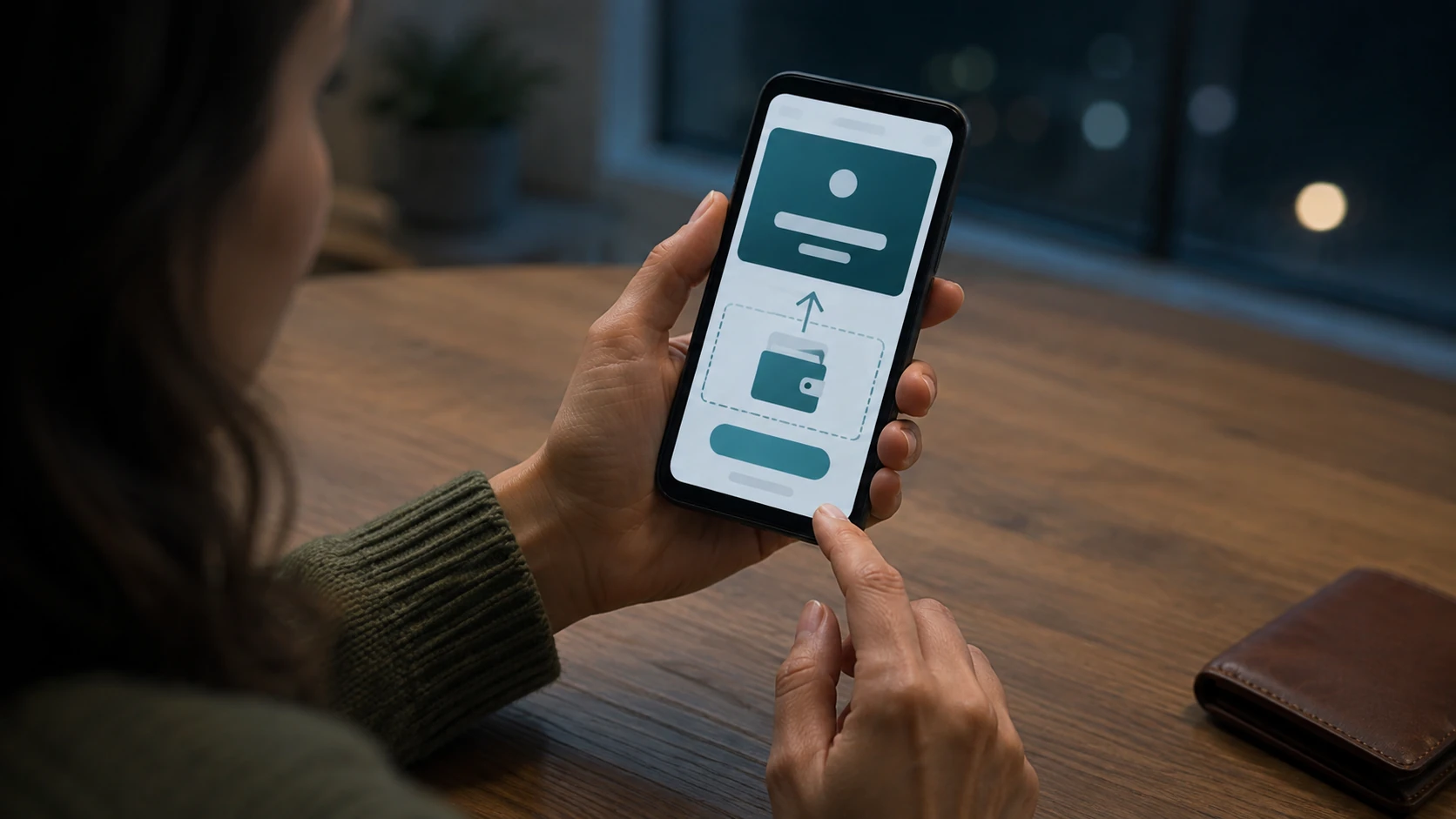
The FTC's rule fits in one line: "Never pay anyone to get paid, or to get a job. That's a sure sign of a scam." The agency's Data Spotlight on gamified job scams tracks the losses, which is the reason this question outranks every other consideration here.
Worth being precise about scope: this describes task scams, not money apps generally. But the operative test is narrow and easy to apply. If a platform asks you to deposit your own money to unlock earnings you supposedly already earned, that matches the FTC task-scam pattern. Stop there.
Earning Should Never Require a Deposit
VISU never asks you to put money in to take money out. Attention you were already giving is the whole input.
4. Are the Payout Rules Disclosed Before You Invest Time?
An app clears questions one through three and can still take your evenings. This is where that happens, and the tell is disclosure timing: the rules that decide whether you get paid should be readable before you earn, not after.
Find these five before your first session, not after:
- Minimum threshold. The number you must reach to withdraw anything. Compare it against what a normal week of use actually produces, because that ratio decides whether the balance is reachable at all.
- Payout methods. PayPal, gift cards, bank transfer. Gift-card-only is not fraud, but it is not cash either.
- Pending periods. Some offers hold credit pending advertiser confirmation; if they do, that period should be disclosed before you start.
- Eligibility. Country, age, device, and one account per person. These are worth reading early, because they are easiest to discover at the moment you try to withdraw.
- Forfeiture conditions. What voids a balance: inactivity, a VPN, a second account, a disputed offer.
If you cannot find these in the app's own materials, you have learned something. Google Play's transparency principle is the useful framing again: functionality should be "what you see is what you get," with no hidden or undocumented behavior. Payout rules that only surface at withdrawal are inconsistent with the transparency principle we are using here, whatever else the app does correctly.
5. Legit Versus Worth It
An app can pass all four previous questions and still be a bad use of your time. Keeping these separate is the most useful habit on this page, because "is it a scam" and "is it worth it" get argued as if they were one question, and they almost never are.
Once an app is real and honest, only one number decides: earnings divided by the time it actually took. Count the whole cost, not the visible part.
- Disqualified surveys. Screening out after several minutes is unpaid time and belongs in the denominator.
- Time to threshold. A rate is meaningless if reaching the minimum takes four months.
- Attention cost. Sessions that need real focus compete with things you would rather do; passive earning does not.
- What the reward buys. Points denominated in a private currency are worth the goods you can actually get, not the number on screen.

Calculate earnings divided by total time. A legitimate app can still be a bad deal if the effective rate is too low for your time. Running that arithmetic reframes the decision: not "will I get scammed" but "is this the best available use of the hour." On that measure, the apps worth keeping tend to be the ones that fit into time you were already spending rather than asking for time you have to find.
Time You Were Already Spending
VISU credits what you do as you do it, so it fits into the scrolling you already do rather than asking for a new habit.
Examples of How We Apply This Test
The same five questions produce different verdicts depending on the app. These are the reviews where we run them in full:
- KashKick is the clearest case of an app that passes question three and struggles with question four: real payments, and a pending window that generates most of the complaints.
- Testerup is question one done properly: a named German operator with a legal imprint, which settles who is responsible and nothing else.
- Mistplay shows how question five behaves when rewards are denominated in a private points currency rather than in cash.
- VISU Network gets the same treatment as everything else here, including the parts that are still limited.
- Apps that suddenly stop paying is usually question four arriving late: a rule that existed all along and was only enforced at cashout.
- Thirty days across ten apps is question five with the arithmetic done rather than estimated.
If you want the comparison rather than the method, the side-by-side table covers thresholds and payout methods across fifty apps.
FAQ: Are Money Apps Legit?
Are money apps legit?
A money app can be a real business that pays users and still be a poor deal, so "legit" is only the first gate. Many reward apps are funded by advertisers, retailers or market-research buyers, which is a model that can hold up. Use the five questions above: the third one identifies the task-scam pattern the FTC documents, and the fifth one decides whether a legitimate app deserves your evenings.
How can you tell if a money app is a scam?
The strongest single signal is being asked to pay in order to get paid. The FTC's guidance on task scams is explicit: never pay anyone to get paid, or to get a job. If a platform asks you to deposit your own money to unlock earnings you supposedly already earned, that matches the FTC task-scam pattern.
Does a Google Play listing mean an app is legitimate?
No. A Google Play listing is not proof of legitimacy. Google Play prohibits deceptive behavior, including apps that misrepresent their functionality, but a listing alone does not tell you whether a payout threshold is reachable or whether support works at cashout. Disclosed payout rules and consistent behavior at withdrawal are the stronger signals.
Why did my money app stop paying me?
Possible causes include pending confirmation from an advertiser, eligibility rules, duplicate-account flags or VPN restrictions. Check the published terms and the support response before assuming fraud. Reading the forfeiture conditions before you start is what makes this diagnosable later.
How much can you realistically earn from money apps?
Calculate earnings divided by total time, including disqualified surveys and the time spent reaching the minimum threshold. A legitimate app can still be a bad deal if the effective rate is too low for your time. That calculation matters more than the headline rate, and it is also why apps that fit into time you were already spending tend to compare better.
Is it a red flag if an app pays you to leave a review?
Being paid specifically to post positive ratings, reviews or likes is a red flag. The FTC warns consumers not to trust offers like that and says honest companies do not operate that way. Being paid for an honest opinion, or for promotional activity that is clearly disclosed as promotional, is a different arrangement, and there the terms decide whether it is worth doing.