

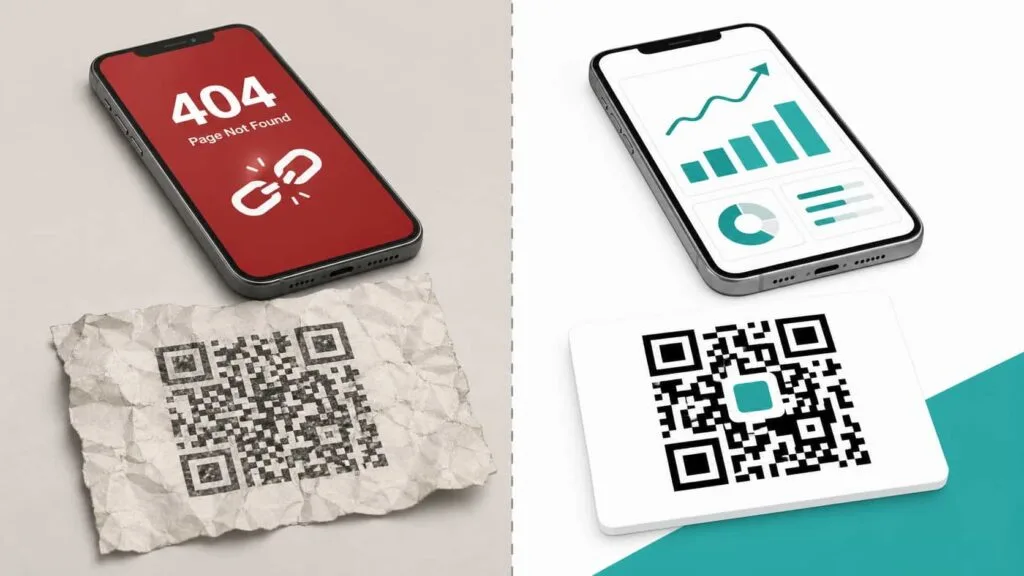
You printed 500 table tents with a QR code that links to your Google review page. Six weeks later, Google changed its review URL format. Every single code now resolves to a 404 error. You have no idea because static codes do not tell you when they break. Your customers scan, see an error page, and walk away. You think the codes are not working because people do not want to leave reviews. The codes are not working because the link is dead and no one told you.
This is not a hypothetical scenario. Google Business Profile review URLs have changed multiple times, most recently in 2024 when the share URL format was updated. Reddit threads, Google support forums, and local SEO communities are full of business owners discovering weeks or months later that their review QR codes stopped working. The problem is not the QR code itself. The problem is that a static code bakes the destination URL directly into the pattern and offers zero visibility into what happens after the scan.
The Uniqode State of QR Codes 2026 report surveyed 1,000 consumers and found that 29% have encountered expired or dead QR code links, 36% have experienced codes that did not scan properly, and 27% have hit slow-loading or broken experiences. On the marketer side, a Bitly survey found that 87% cannot trace what happens after someone scans their code. That is not a minor analytics gap. That is flying an entire review collection campaign with no instruments. A Google review QR code built on a static foundation has no way to alert you when the destination changes, no way to measure performance, and no way to recover without reprinting everything.
Stop Flying Blind
VISU QR Ads gives you dynamic review QR codes with real-time scan tracking, destination updates without reprinting, and alerts when something breaks. Know what happens after the scan.
What "Static" Actually Means and Why It Matters
A static QR code encodes the entire destination URL directly into the black-and-white pattern. When someone scans it, the phone reads the URL from the pattern and opens it. There is no intermediary server, no redirect layer, and no platform involved after the code is created. The URL is the code and the code is the URL. If the URL works, the code works. If the URL breaks, the code is a printed piece of waste.
A dynamic QR code works differently. It encodes a short redirect URL that points to a server controlled by the generating platform. When someone scans it, the phone hits the redirect server, which forwards the scan to whatever destination you have configured. You can change that destination at any time without touching the printed code. The redirect layer also captures scan data: how many people scanned, when, from what device, and from what location.
The distinction matters enormously for review collection. Google review URLs are not permanent. They have changed format multiple times. A Google support thread from 2024 documented the review share URL changing unexpectedly, breaking QR codes that business owners had printed and distributed. One Reddit user reported their QR code for Google reviews simply stopped working after a Google Business Profile update, with no warning or notification. For the complete breakdown of the technical differences, see our guide on dynamic vs static QR codes.
Five Ways Static Review QR Codes Fail
The first and most damaging failure mode is a broken destination. When Google changes the review URL format, or when a business verifies its profile and receives a new Place ID, the old URL stops resolving. With a dynamic code, you update the destination in 10 seconds. With a static code, every printed instance is dead. A Google support thread documented a business losing access to 369 reviews after a re-verification changed their CID and Place ID. Every QR code pointing to the old review link stopped working instantly.
The second failure is invisible performance. You cannot improve what you cannot measure. A static code gives you exactly zero data points. You do not know if anyone scanned it. You do not know if the link loaded. You do not know which of your five locations gets the most scans. You do not know whether the table tent or the receipt placement performs better. The 87% of marketers who cannot trace post-scan journeys are overwhelmingly using static codes with no analytics layer. Proper QR code tracking requires a dynamic infrastructure.
The third failure is density and scanability. Static codes that encode long URLs produce dense, complex patterns. A Google review URL can be 80 to 120 characters long. When all of that is encoded directly into the QR pattern, the resulting code has more modules, smaller squares, and less error tolerance. Bitly's research confirmed that dynamic codes produce sparser patterns that scan faster and more reliably, especially on small printed surfaces or from a distance. A static code on a receipt or business card may need multiple scan attempts, and each failed attempt reduces the chance the customer tries again.
The fourth failure is the inability to A/B test. With dynamic codes, you can create two codes pointing to different review page configurations and measure which one converts better. You can test whether a direct Google review link outperforms a landing page with instructions. You can test different call-to-action text on the printed material. Static codes lock you into one destination with no way to compare alternatives.
The fifth failure is platform dependency inversion. Ironically, a static code has zero platform dependency because the URL is baked in. But this apparent advantage becomes a trap: when the destination itself depends on an external platform (Google), the lack of a redirect layer means you have no buffer between your printed material and Google's URL structure. A dynamic code adds a controlled intermediary that insulates you from upstream changes.
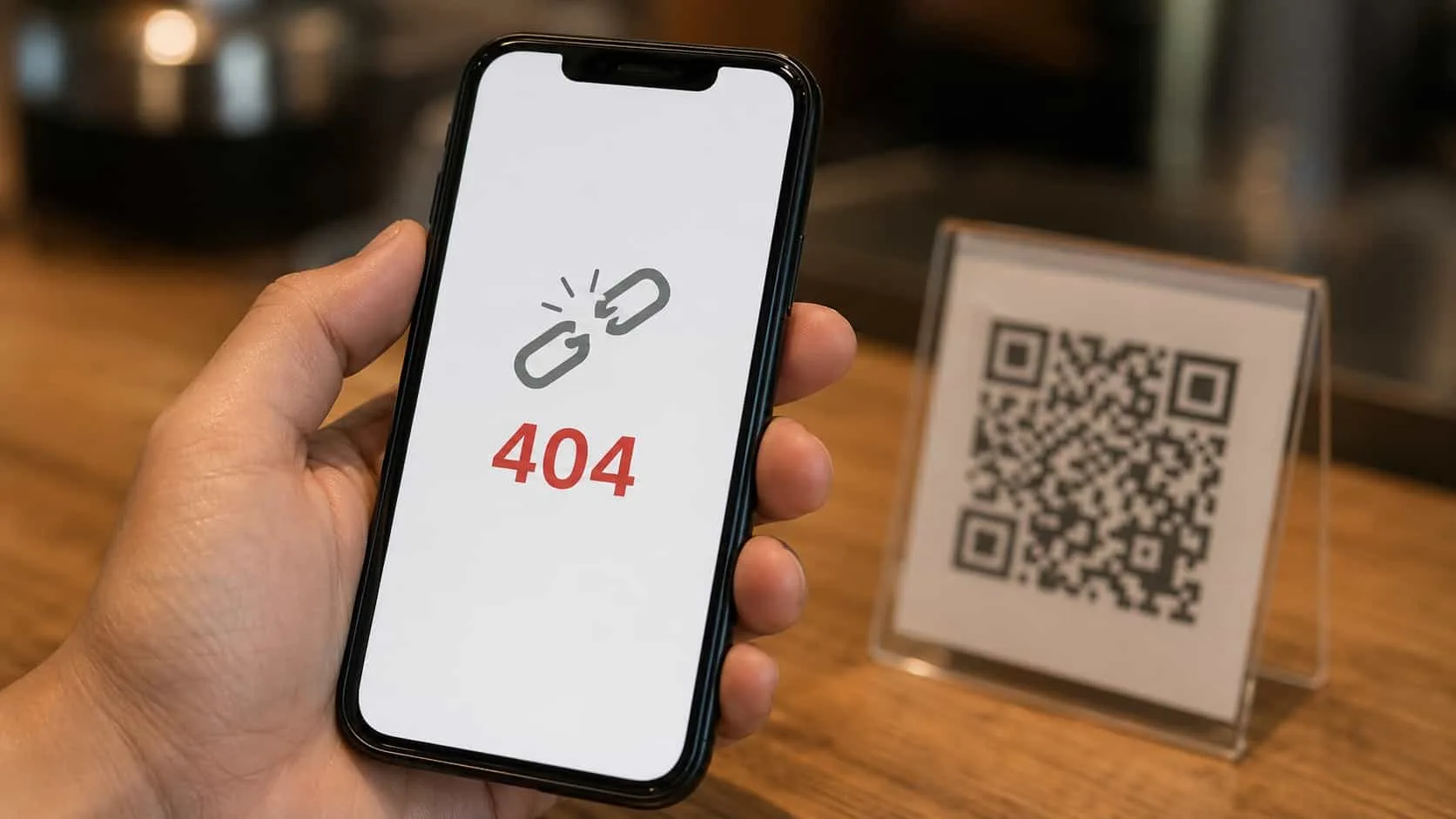
Know Before It Breaks
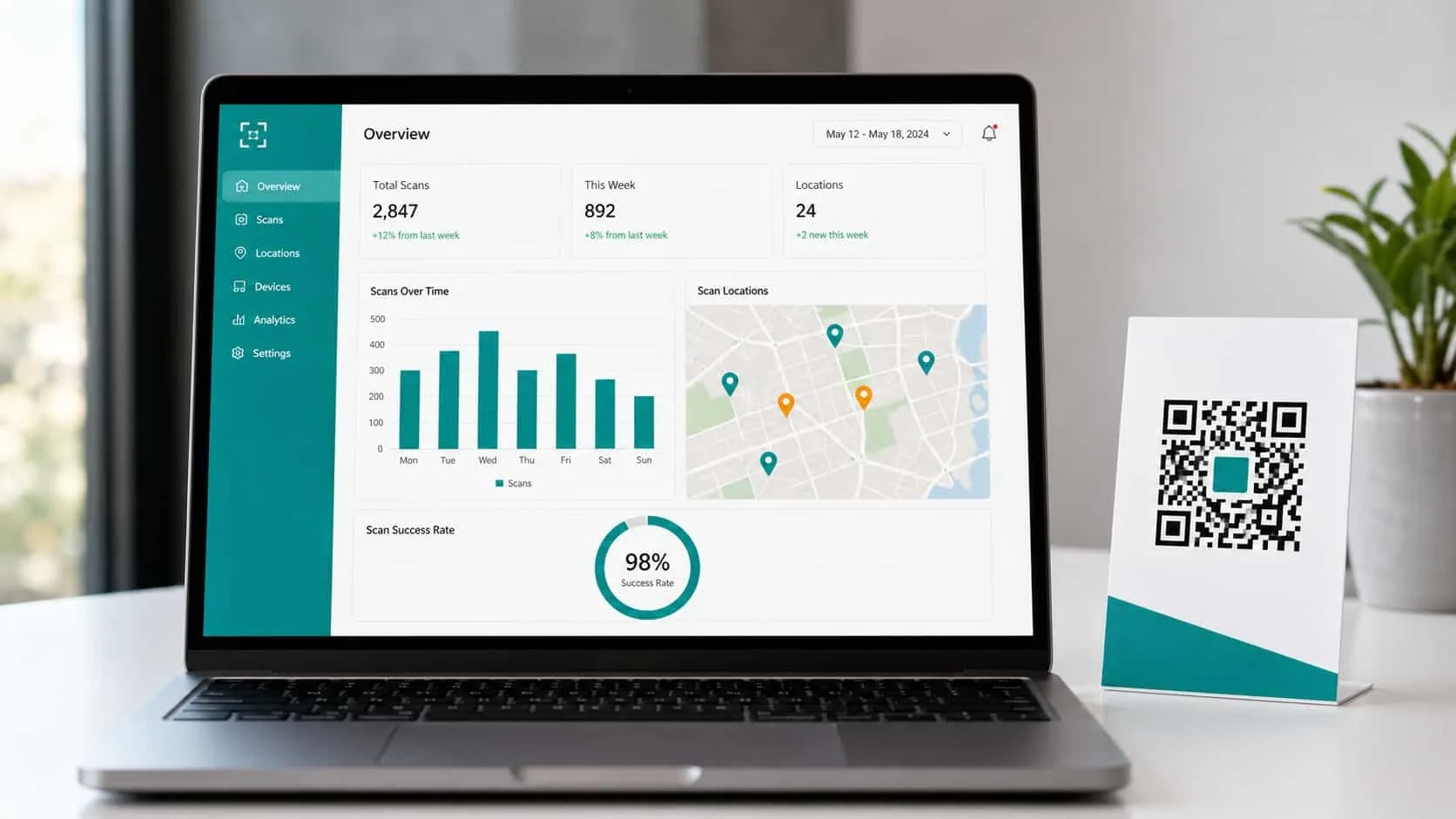
VISU QR Ads monitors your review QR codes in real time. If scan volume drops or a destination goes down, you know immediately. No more silent failures.
What Dynamic Codes Do Differently
A dynamic QR code solves every failure mode listed above. The destination is editable: when Google changes the review URL, you update it once in the dashboard and every printed code in every location resolves to the new URL instantly. No reprinting. No downtime. No lost reviews.
The analytics layer provides visibility that static codes cannot match. You see total scans, unique scans, device types, geographic locations, and time patterns. You know that your table tent in the front window gets 12 scans per week but your receipt code gets 3. You know that Friday evenings produce 40% of your weekly scans. You know that your downtown location outperforms your suburban one by 3:1. This data lets you optimize placement, timing, and staff prompts based on evidence rather than guessing.
The sparser pattern of a dynamic code is easier and faster to scan. Because it encodes only a short redirect URL (typically 15 to 25 characters) rather than a full Google review URL (80 to 120 characters), the QR pattern has fewer modules, larger squares, and higher error tolerance. This means reliable scans from greater distances, at sharper angles, and on smaller printed surfaces. A dynamic code on a business card scans on the first try where a static code might need two or three attempts.
The ability to update destinations enables strategies that static codes make impossible. You can rotate the review prompt seasonally: "How was your summer patio experience?" in June, "How was your holiday dinner?" in December, pointing to the same Google review page but through different landing pages that set context. You can run A/B tests between a direct Google review link and a guided review page. You can add retargeting pixels to the redirect to build audiences of people who scanned but did not complete a review. For businesses ready to move away from static entirely, see why experts recommend you stop using static QR codes for any campaign that matters.
Static vs Dynamic: Side-by-Side Comparison
| Factor | Static QR Code | Dynamic QR Code |
|---|---|---|
| Destination editable | No — baked into pattern | Yes — update anytime |
| Scan tracking | None | Total scans, unique scans, device, location, time |
| Survives URL change | No — code becomes dead | Yes — update redirect in seconds |
| Pattern density | High — full URL encoded (80-120 chars) | Low — short URL encoded (15-25 chars) |
| Scan reliability | May need multiple attempts on small surfaces | Reliable first-scan on most surfaces |
| A/B testing | Impossible | Rotate destinations, compare conversions |
| Reprint cost on failure | $500+ per 10,000 flyers | $0 — update destination digitally |
| Error detection | None — fails silently | Scan drop alerts, link monitoring |
| Platform dependency | None (but no protection from URL changes) | Requires active platform (adds protection layer) |
| Cost | Free to generate | Platform subscription (typically $5-50/mo) |
When a Static Code Is Actually Fine
Static codes are not always the wrong choice. They are the right choice when the destination URL will genuinely never change, when you do not need any analytics, and when the content is permanent. A static code encoding your Wi-Fi network credentials is perfect because the data is self-contained and does not depend on any external URL. A static code on a museum plaque pointing to a permanent informational page is fine if you are certain that URL will not change.
For Google review collection, none of these conditions apply. The destination URL is controlled by Google and has changed before. You need analytics to know whether the code is working. The content (a review prompt) benefits from testing and seasonal updates. Using a static code for review collection is choosing the wrong tool for the job. It is free to generate but expensive to maintain when it inevitably breaks. To see how the tools compare in practice, read our analysis of VISU vs static QR generators.
How to Migrate from Static to Dynamic Without Reprinting Everything
If you already have static codes printed and distributed, you do not necessarily need to replace them all at once. Start by creating a dynamic code for your highest-traffic placement (usually the table tent, checkout counter, or mirror station) and replace that single code first. This gives you a baseline of scan data to compare against the static placements that have no data.
For the remaining static codes, prioritize replacement by risk. Any code printed on material that cannot be easily swapped (packaging, permanent signage, engraved surfaces) should be replaced with dynamic codes at the next reprint cycle. Codes on easily replaceable materials (table tents, receipt inserts, business cards) can be swapped immediately at minimal cost.
The migration also reveals how many scans you were actually getting. Many businesses assume their static codes are performing well because they see occasional new reviews. When they switch to dynamic and see actual scan data, they often discover that dozens of people are scanning but not completing the review. That conversion gap is invisible with static codes and immediately actionable with dynamic ones. The scan-to-review conversion rate for well-placed dynamic codes is typically 15 to 20%, meaning 80 to 85% of scanners are dropping off somewhere in the process. Without analytics, you cannot identify where or why.
Every Scan Should Count. Make Sure It Does.
VISU QR Ads delivers dynamic, trackable review QR codes that survive URL changes, measure performance, and never fail silently. Replace your static codes today.
Frequently Asked Questions
How do I know if my current QR code is static or dynamic?
Look at the URL encoded in the code. If it is a long Google review URL (containing "search?q=" or a Place ID), it is almost certainly static. If it is a short URL from a QR platform (like a bit.ly link or a platform-specific domain), it is dynamic. You can check by scanning the code and looking at the URL that loads in your browser bar before any redirect occurs. If you created the code using a free generator without creating an account, it is static.
Can Google really change the review URL without warning?
Yes. Google has changed the Business Profile review share URL format multiple times. In 2024, the review share URL structure was updated, and business owners reported their existing QR codes breaking. Google does not notify individual businesses when URL formats change. If you are using a static code with a hardcoded Google URL, you are exposed to this risk with no buffer and no warning.
Is a dynamic QR code worth the subscription cost?
The subscription typically costs $5 to $50 per month depending on the platform and plan. A single reprint of 10,000 flyers costs approximately $500. If a dynamic code prevents even one reprint cycle, it has paid for itself for years. Add the value of analytics, A/B testing, and uninterrupted review collection, and the ROI is not close. The question is not whether you can afford a dynamic code. It is whether you can afford the silent failure of a static one.
What happens if the dynamic QR code platform goes down?
This is a legitimate concern. A dynamic code depends on the redirect server being online. If the platform experiences downtime, scans fail temporarily. The mitigation is choosing a reputable platform with strong uptime guarantees and, critically, one that does not deactivate codes when trials expire or plans are downgraded. Some platforms deactivate all dynamic codes when a free trial ends, holding your printed materials hostage. Verify the platform's deactivation policy before printing anything.
How many reviews am I losing with a broken static code?
It depends on your business volume and placement effectiveness. A restaurant with a table tent QR code typically collects 3 to 5 reviews per week. If the code breaks undetected for 8 weeks, that is 24 to 40 lost reviews. A barbershop with mirror codes can lose 10 to 25 reviews per week. Because static codes provide no scan data, you often do not realize the code is broken until you notice your review velocity has dropped, which can take weeks.
References
- Uniqode: State of QR Codes 2026 — Consumer Behavior and Scan Trends
- Bitly: Static vs Dynamic QR Codes — Key Differences and When to Use Each
- BreakingAC: How to Choose a QR Code Generator That Won't Break Your Campaign (2026)
- Wave Connect: QR Code Statistics 2026 — 60+ Facts and Data
- BrightLocal: Local Consumer Review Survey (2026)