

Most small business owners who tried QR code marketing once and gave up did not actually try QR code marketing. They tried a static QR generator, which is a different thing in the same way that a photocopier is a different thing from a print shop. The free generator produces a picture. The picture, once printed, points to one URL forever and produces zero data about who scanned, when, or what they did next. When the campaign behind that URL ended, the printed code became digital litter. Nobody scanned it again, the owner had no way to repurpose it, and the conclusion that "QR codes do not work for our business" got filed away alongside other things tried once and abandoned.
The conclusion is wrong, but it is wrong for a specific reason. The owner did not get bad results from QR marketing. The owner got the only results a static generator can produce, which is the marketing equivalent of taping a sign to a wall and hoping for the best. There is no version of that approach that produces a channel, because the underlying tool has no concept of channel. A static QR is a one-way address sticker. A platform like VISU is something structurally different: a destination layer, an analytics layer, and a campaign rotation layer sitting behind a code that itself never changes physically.
This guide walks through the real differences between using a static QR generator and using VISU as a marketing platform. Not the feature checklist version, but the operational version, the one that matters when you are running a small business and trying to figure out whether a QR code is going to produce returning customers or just become another printed page on the wall. The differences are not about the QR image itself. They are about everything that happens on the other side of the scan.
Stop Printing Dead Ends. Build a Channel That Can Be Updated Anytime.
VISU QR Ads gives small businesses dynamic destinations, real per-scan analytics, and campaign rotation so the codes already printed in your space keep producing results long after the first campaign ends.
What a Static QR Generator Actually Gives You
A static QR generator takes a URL and turns it into a black-and-white image. That is the entire product. The URL gets encoded directly into the visual pattern of the code, which means the code itself contains the destination. Once printed, that mapping is permanent. There is no server in the middle, no redirect, no way to change where the code points after the print run is done. The pattern on the paper and the destination are the same object expressed in two formats.
That permanence is the source of every limitation that follows. Because the URL is baked into the image, you cannot change it. Because there is no server in the middle, you cannot count scans, you cannot see when they happened, you cannot see what device or location they came from. The scan goes directly from the customer's phone to the destination website, and the QR generator is no longer part of the loop. It did its job at print time and exited the system. Whatever happens after is invisible to you.
There is nothing wrong with this for some use cases. A static QR code that points to a Wi-Fi password, a vCard, a permanent business URL, or a plain-text message works perfectly forever, because the destination never needs to change and the data never needs to be collected. Free static generators are exactly the right tool for those jobs. The problem is that most small business owners reach for the same free tool when they are actually trying to run a marketing campaign, which is a fundamentally different job that the static tool cannot do. For a deeper view of where the line falls, see our guide on dynamic vs static QR codes.
What VISU Actually Is, and Why It Is Different
VISU is not a fancier QR generator. The QR image VISU produces is technically the same kind of pattern as the image any free generator produces. The difference is what is encoded inside it. A VISU code encodes a short URL that points to a redirect on the VISU server. The customer scans, their phone goes to that short URL, the VISU server logs the scan with timestamp, device, and location data, and then redirects the phone to whatever destination is currently configured for that code. The redirect happens in milliseconds, so the customer feels nothing different. The owner gets a complete record of what happened.
That single architectural change (the redirect through a server) unlocks everything else. Because there is a server in the middle, the destination can be changed at any time without changing the printed code. Because every scan passes through the server, the owner gets per-scan data. Because the destination is dynamic, the same printed code can run different campaigns in different weeks. Because the analytics is centralized, the owner can compare which placement (counter, table, receipt, window) generates the most engaged customers and adjust accordingly.
This is the structural reason a "free QR generator vs VISU" comparison is not really a comparison of two similar tools. It is a comparison of a one-time print artifact against an ongoing marketing channel that happens to use a QR code as its entry point. The QR is the door. VISU is the building behind it. Static generators give you the door without the building. For a broader view on what VISU does and why it exists, our overview on what is VISU Network covers the wider scope.
The Scan Data You Get (and Do Not Get) With Each
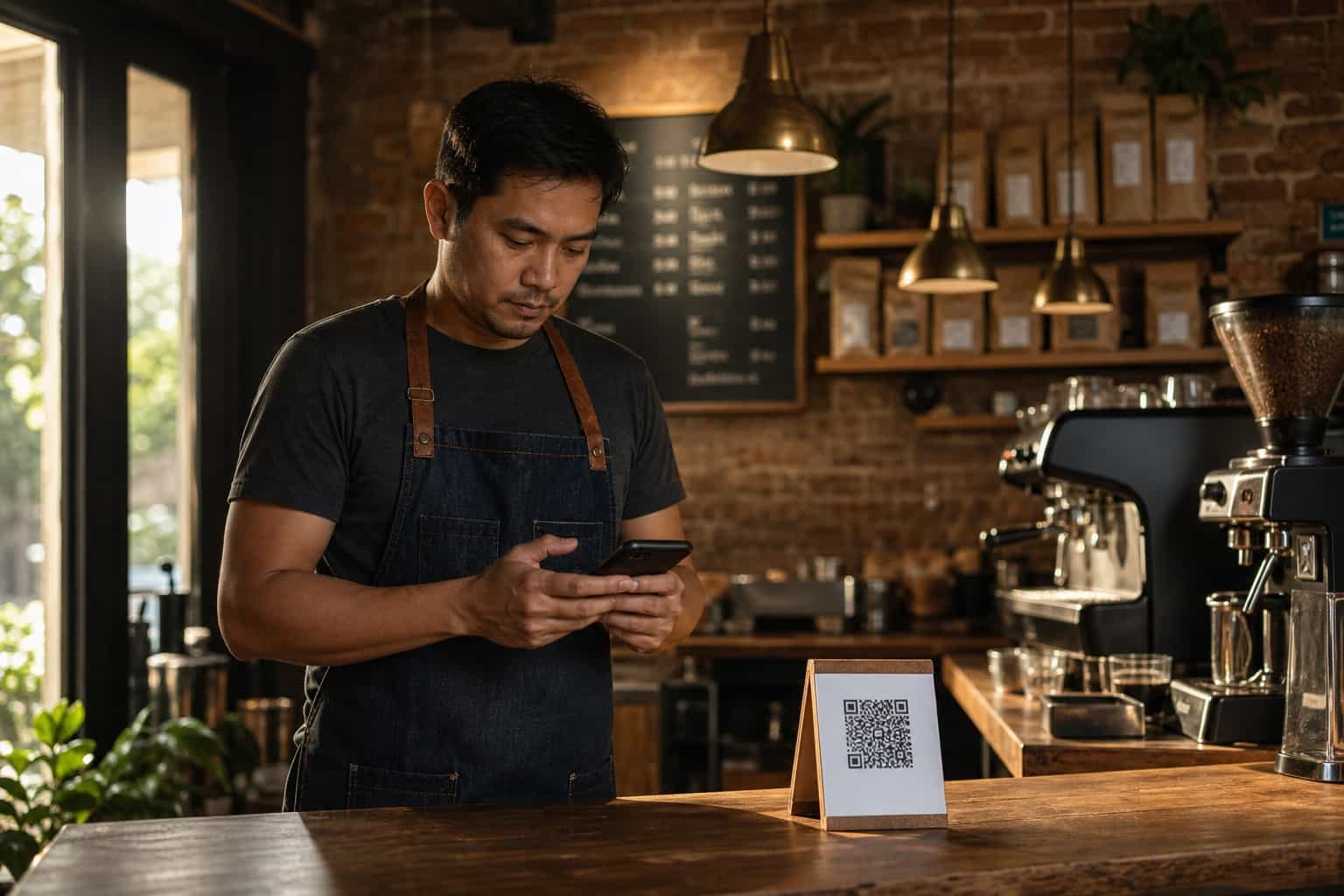
With a static QR, the scan data you get is exactly nothing. The customer scans, the customer goes to the destination URL, and that traffic might show up in whatever analytics the destination itself has (Google Analytics on a website, for example). But the code itself produces no data, and there is no way to know which of your printed codes (the one on the table, the one on the counter, the one in the window) produced which visits. Every scan looks the same from the destination's perspective. The placement intelligence, which is the entire point of running multiple codes in the first place, is invisible.
With VISU, the scan data is per-code, per-scan, with timestamp, device type, approximate location, and the path the customer took after the scan. If you have four codes in your shop (table, counter, window, receipt) you can see at the end of every week which one generated the most scans, which one generated the highest conversion rate, and which one is essentially dead weight. You can rotate the codes physically, change the offers, or kill the ones that do not work, all based on actual data rather than guessing. The placement decisions that owners with static codes make blindly become observable.
The per-scan timestamp data is particularly useful for service businesses and restaurants because it shows when customers actually engage with a code. A salon owner might learn that mirror scans peak in the final fifteen minutes of an appointment, which confirms the rebooking flow should land there. A restaurant might learn that table tent scans peak during the post-meal lull, which informs when waitstaff should walk by and ask if everyone is good. Static codes produce none of this, because the architecture cannot. For a tactical guide on what to actually do with the data once you have it, see our piece on stop using static QR codes.
Updating Destinations Without Reprinting
The most underrated VISU feature is the simplest one. The destination behind a printed code can be changed in twenty seconds from a phone. The owner opens the dashboard, picks the code, types or pastes the new destination, saves. The next person who scans that code goes to the new place. The printed material does not change. The QR pattern on the table tent or the window decal stays identical. Only what happens after the scan is different.
That capability matters because retail and restaurant campaigns naturally have a short life. A summer cocktail menu replaces the spring one. The lunch promotion runs for three weeks and then a new one starts. The collection drop in the boutique window changes monthly. With static codes, each campaign change either requires reprinting every code in the space (expensive, slow, environmentally wasteful) or leaves dead links scattered around the shop that customers scan and reach an outdated page or a broken URL. Either outcome is bad. The dynamic update path eliminates both.
The same capability also makes seasonal recovery possible. A code printed for a Valentine's Day campaign can be repurposed in March for a spring lookbook, in April for an Easter promotion, and so on through the year. The physical artifact is one-time, the destination is infinite. A small business that prints a single set of well-placed codes can run a year of campaigns through them without ever touching the physical paper again. For a parallel view on the platform-level differences between QR systems, see our guide on QR code platform comparison.
One Print Run. A Year of Campaigns.
VISU QR Ads turns every code you print into a reusable channel that can be updated from your phone whenever you want to run something new.
Campaign Rotation: One Code, Many Lives
Campaign rotation is what separates a QR code as a one-time marketing artifact from a QR code as an ongoing channel. With static, rotation is impossible. With VISU, rotation is the entire point. The same code on the same table can run a different offer every week. Week one, the loyalty signup. Week two, the limited cocktail. Week three, the Google review ask. Week four, the new menu preview. Then back to week one. The customer who comes in monthly experiences a fresh reason to scan each time. The owner gets four campaigns of data through one physical surface.
The operational pattern that works best for small businesses is a four-week rotation tied to a single weekly habit. Fifteen minutes on the slowest day of the week, the owner opens the dashboard, sees which campaign just ran and how it performed, and queues up the next one. The customer-facing surface (the table tent, the mirror, the window decal) stays untouched and untouched and untouched. Only the destination behind it cycles. Over a year this produces 52 campaign weeks through what would have been a single static campaign.
The rotation also creates a built-in A/B test environment. The owner can run two different offers in two weeks back-to-back and see directly which one produced more scans and conversions. Static codes cannot do this even theoretically, because each campaign requires a new printout and the variables are confounded by the print timing, the placement freshness, and the customer mood. With VISU, the only variable is the offer, which makes the comparison clean and the lesson durable. For owners specifically focused on QR as a growth channel rather than a single tactic, our piece on how VISU turns QR codes into growth channels covers the broader strategic frame.
Cost Comparison: Free vs Paid Honestly
The static QR generator is free. The dynamic platform costs money. That comparison is technically true and operationally misleading, because it compares the cost of producing an image (free) against the cost of running a marketing channel (paid). The honest comparison is between what each tool actually does for the business over a year.
A static code produces one campaign with no data. If the campaign converts at the baseline rate, fine. If it does not, the owner cannot tell why, cannot adjust, and cannot recover the printing cost. The "free" tool actually costs whatever the printing cost was plus the opportunity cost of the customers who scanned and converted at low rates because the offer was wrong and nobody had data to find out. For a small business running four placements with quarterly reprints, the printing alone over a year easily exceeds what a dynamic platform subscription costs.
A dynamic platform produces 50+ campaigns over a year (one rotation per week) with full data on every one. The owner sees which offers work, which placements convert, which days and times produce engagement, and which segments respond to which messages. The subscription cost gets amortized across all of that, and the marginal cost of each additional campaign is essentially zero because the print is the same. For most small businesses, the dynamic platform pays for itself within the first two or three campaign rotations through the combination of avoided reprinting costs, captured data, and offers that actually work. For an even more granular view on the cost trade-offs, our piece on free QR code generators walks through where free is enough and where it is not.
When a Static QR Is Actually Fine
Not every QR code use case needs a dynamic platform behind it. There is a specific set of jobs where a static code is genuinely the right tool, and pretending otherwise would be dishonest. The pattern across all of them is that the destination is permanent, the data is not needed, and the code will not be part of an ongoing campaign rotation. If those three things are true, free static is the correct choice.
The clear cases are Wi-Fi passwords printed on a table tent for guests, vCards on business cards so people can save contact info with one scan, payment QRs for direct transfers where the wallet address never changes, and informational signs that point to a stable URL like a menu PDF or a directions page. None of those benefit from a dynamic platform, because none of them are marketing campaigns. They are utility services that happen to use a QR code as the input method.
The line gets crossed the moment the QR is supposed to do anything more than route a single scan to a fixed destination. Promotions, loyalty signups, reviews, capture flows, anything that is part of a campaign that will end or rotate, anything where knowing who scanned would be useful, anything that is meant to come back next month with a different offer. Every one of those is a dynamic job. Treating it as a static one is the most common reason small business QR marketing fails before it even starts.
When Static QR Quietly Fails Small Businesses
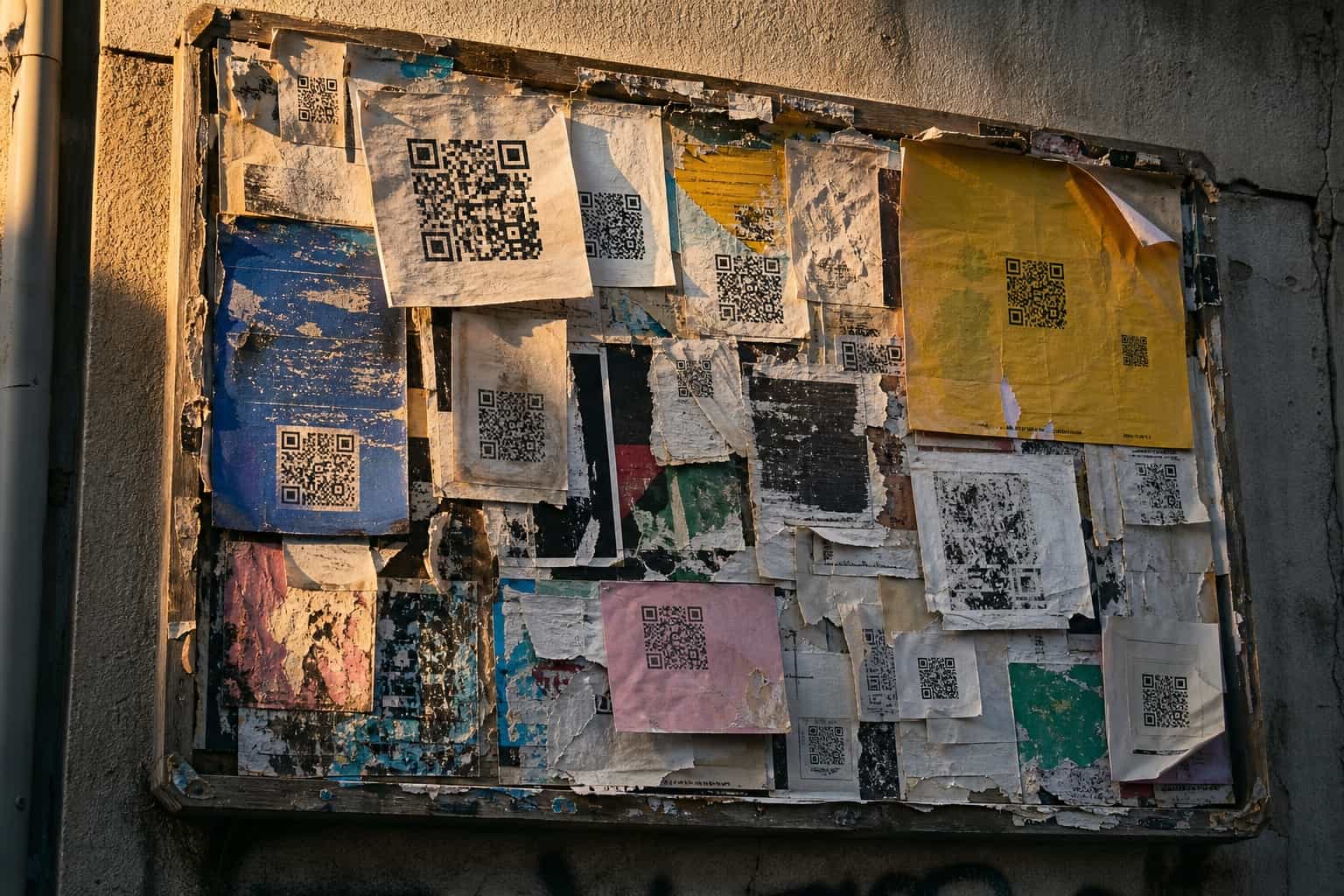
The most common failure mode is the abandoned campaign. A small business prints a static code for a promotion that ends, and the code stays on the table or window for months afterward, pointing to a URL that now redirects to a "campaign ended" message or, worse, a broken page. Customers scan, get nothing, and silently decide that QR codes from this business are not worth scanning. The next legitimate campaign suffers because trust in the surface eroded during the dead period.
The second failure mode is invisible underperformance. A static campaign runs, some people scan, but the owner has no way to know whether the scan rate is good, bad, or normal. There is no benchmark, no comparison across placements, no way to tell whether the offer is the problem or the placement is the problem or the timing is the problem. The campaign either works enough to feel okay or does not work and gets blamed on QR codes generally, when the real issue might have been a poorly worded headline that fifteen minutes of data would have surfaced.
The third failure mode is the dependency on reprinting. Each new campaign requires a new code, which requires new prints, which requires owner time to design and order and replace the physical materials. For most small business owners that operational burden is high enough that campaigns slow to once or twice a year, which means the QR is functionally not a channel. It is an occasional event. The marketing rhythm small businesses actually need (weekly cycling, seasonal updates, fast experiments) becomes practically impossible to sustain.
The fourth failure mode is the missing capture. Most static codes point to a website or social profile that has no capture flow on the landing surface. The customer scans, lands on a page, looks around, and leaves without giving any contact information. The scan happened, the moment passed, and the relationship between business and customer did not advance. With a dynamic platform, the landing surface is purpose-built for capture, so the scan converts into a contact at a meaningfully higher rate.
How to Migrate From Static to Dynamic Without Reprinting Everything
The good news is that migrating from a static QR setup to a dynamic one does not have to mean throwing away everything already printed. The standard migration path uses URL redirection at the destination level. If your old static codes pointed to a specific URL on your website (yourbusiness.com/promo, for example), that URL itself can be redirected on your website to the new dynamic platform. The static codes keep working, the scans now route through the dynamic system, and you get the analytics and update capability retroactively without reprinting.
The longer-term path is to gradually replace static codes with dynamic ones during the natural lifecycle of physical materials. When the table tents need replacing anyway, the new ones get dynamic codes. When the window decal gets refreshed for a new season, the new one uses the dynamic platform. Within twelve months most small businesses fully migrate just by riding the normal replacement cycle, with no extra cost beyond the subscription.
The fastest tactical migration is to print one new dynamic code, place it at the highest-traffic surface (usually the counter or the table tent), and use it for the next four-week campaign rotation. After one month the owner has real data showing the difference between dynamic and static performance, and the case for migrating the rest of the surfaces makes itself. The transition does not need to happen all at once, and most owners find that doing it in phases is both cheaper and easier to manage than a full rip-and-replace.
The QR Is the Door. VISU Is the Building Behind It.
Static generators give you a door that opens once. VISU QR Ads gives you a marketing channel that runs for years through the same printed code, with data, rotation, and the ability to update from your phone.
Frequently Asked Questions
Can a free QR generator really not be updated after printing?
Correct. A static QR code encodes the destination URL directly into the visual pattern of the code, so the code and the destination are essentially the same object. Once printed, there is no way to change where it points without printing a new code. The only workaround is to redirect the destination URL itself at the website level, which only works if the original URL is on a website you control.
Do customers know the difference between static and dynamic QR codes when they scan?
No. The scanning experience is identical from the customer's perspective. The phone camera sees the QR pattern, the phone opens the URL, and the customer arrives at the destination. The redirect through a dynamic platform happens in milliseconds and is invisible. The customer cannot tell which kind of code they scanned, and there is no security or privacy difference from their side.
Is a dynamic QR code platform worth it for a very small business?
It depends on whether the business is running ongoing marketing campaigns or just informational QR codes. If the QR codes are pointing to permanent things (Wi-Fi password, menu PDF, contact card), static is fine and free. If the QR codes are part of any kind of changing campaign (promotions, loyalty, reviews, capture flows), the cost of a dynamic platform pays for itself quickly through avoided reprinting and the value of the data, even for very small businesses.
What happens to my existing printed static QR codes if I switch to VISU?
If your static codes point to a URL on a website you control, you can redirect that URL to your new VISU destinations and the static codes will start working through the dynamic system. If your static codes point to a third-party URL you do not control, those codes cannot be migrated and will need to be replaced when the physical materials are due for refresh anyway.
Are dynamic QR codes safe and reliable?
Yes, when run on a reputable platform. The redirect adds essentially no latency from the customer's perspective and the underlying QR standard is identical. Reputable platforms keep their redirect servers highly available and the codes work as long as the platform is operating. For the specifics on the operational and trust side, our piece on is VISU legit covers that question directly.