


CashWalk exists because of a specific complaint: people were tired of watching a step-app balance grow into rewards they could never actually claim. It pays for the same walking you already do, but converts to gift cards rather than a wall of partner offers. That one difference is the whole reason it keeps showing up as the Sweatcoin alternative. This review explains how the conversion really works, what you can redeem, the honest catches, and whether it is worth installing. Reviewed based on how the app operates and what users publicly report. For the full category, see apps that pay you to walk.
Honest summary first: CashWalk is legit, genuinely passive, and redeems more cleanly than points-and-offers apps. It is also slow, gift-card only, and pays the same modest amount every step app pays. Nobody is getting rich walking.
Steps Are Free. The Rate Still Is Not.
Walking rewards cost you nothing, which is their appeal, but the rate stays tiny. VISU pays for short verified actions tied to real campaigns, at a far better value per minute. Stack it with your step app rather than choosing between them.
What CashWalk is and how it works
CashWalk is a step-tracking rewards app. It counts your steps in the background, converts them into in-app coins, and lets you redeem those coins for gift cards. There is no deposit, no subscription, and nothing to buy.
The money behind it is advertising. CashWalk earns from ads shown in the app and from partner offers, then passes a slice to you as coins. That is the same funding model as every legitimate walking app, and it is why the payout is real but small. When you know who funds a reward, you know what to expect from it.
The appeal is that it costs you nothing extra. You were going to walk. The app just watches and pays a little for it, which is a fundamentally different proposition from an app that demands your attention. That distinction is the core of our walking versus gaming comparison.
Steps to coins: the conversion that matters
Here is where expectations go wrong. The step count is the fun number, but the conversion is the real one, and it happens in two stages.
Stage one: steps to coins. Every step earns a fraction of a coin, and there is usually a daily cap. Walking more does not scale linearly forever, so a marathon day does not pay like a marathon.
Stage two: coins to gift cards. This is the stage that decides whether the app is worth keeping. Coins accumulate slowly toward redemption thresholds, and a realistic walker is looking at weeks of steps for a modest gift card, not days.
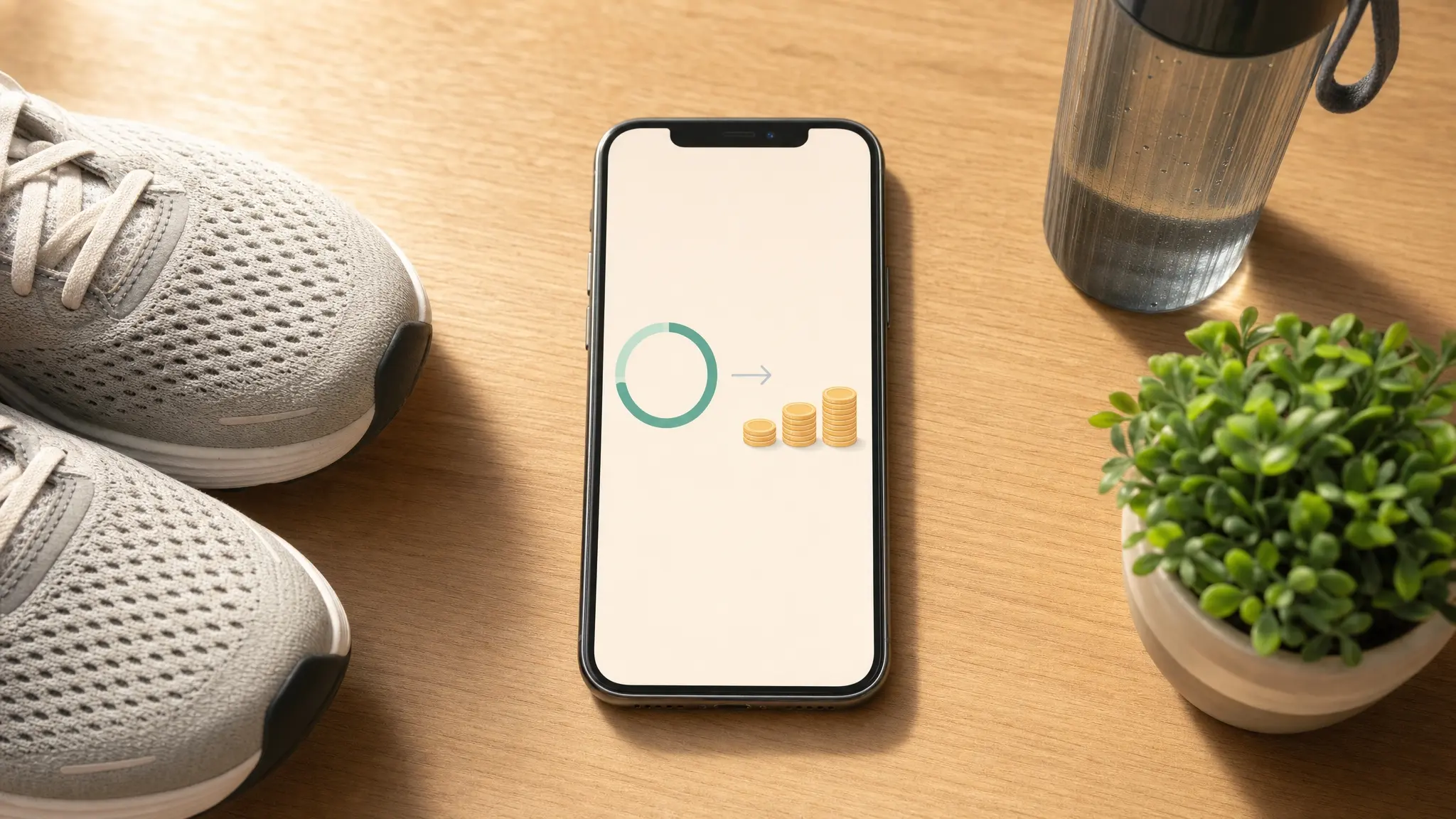
We are not going to invent a precise figure here, because rates change and vary by region. What is consistent across user reports is the shape of it: genuinely passive, genuinely slow, genuinely real. Anyone quoting you a big monthly number from step-walking alone is guessing.
Why the Rate Is What It Is
Your steps are not worth much to an advertiser, so a reward split from ad revenue stays small no matter how far you walk. A verified action tied to a real campaign is worth more to the business paying for it, which is why the value per minute is higher. That gap is the whole model behind VISU.
CashWalk vs Sweatcoin
This is the comparison that actually brought you here, so let's be direct about it.
| Criterion | CashWalk | Sweatcoin |
|---|---|---|
| What you do | Walk, passively tracked | Walk, passively tracked |
| Funded by | Ads and partner offers | Ads and partner offers |
| Pays in | Coins to gift cards | Points to offers and deals |
| Redemption clarity | Clearer, you know what you get | The main complaint |
| Speed | Slow | Slow |
| Availability | Varies by region | Wider |
Our Sweatcoin review and is Sweatcoin worth it go deep on the redemption gap. If you want cash rather than gift cards, neither of these is your answer, and walking apps that pay to PayPal or Evidation are better fits.
Pros and cons
Pros
- Genuinely passive, it costs you no extra time at all
- Gift-card redemption is clearer than points-and-offers rewards
- No deposit, no subscription, nothing to buy
- Rewards walking you were already doing anyway
Cons
- Slow, expect weeks of walking for a modest gift card
- Gift cards only, not cash, which disappoints some users
- Daily caps mean extra walking does not scale your earnings
- Availability and rates vary by region
- Battery drain from constant step tracking
None of these make CashWalk a scam. They make it a walking app, with the ceiling every walking app has. The apps to actually avoid are the ones with no funding source and a withdrawal threshold that rises as you approach it, which is a completely different pattern.
Verdict: is CashWalk worth it?
CashWalk is for you if you already walk a lot, you want zero-effort rewards, and a gift card every few weeks feels like a fair bonus for doing nothing differently.
Skip it if you specifically want cash, you were hoping to earn meaningfully from walking, or you would find daily caps and slow accumulation frustrating.
Stack it with walking apps, and with something faster. The smart setup is not one app, it is a few that never conflict. Run CashWalk passively for steps, add a broader activity app like the ones in get paid to exercise, and add a direct earner for the minutes when you are not walking. VISU pays for short verified actions funded by real campaigns, so those idle minutes are worth more than your steps are. See what VISU Network is, and check whether VISU is legit first.
Your Steps Are Covered. Your Idle Minutes Are Not.
CashWalk handles the walking part for free, and that is genuinely worth having. VISU covers the rest: real value for short verified actions tied to real campaigns, with no daily cap and no coins to convert. They stack, they do not compete.
FAQ: CashWalk Review
Is CashWalk legit?
Yes. CashWalk is a legitimate step-rewards app funded by advertising and partner offers, with no deposit required and a real gift-card redemption. The honest caveat is the amount: it is small and slow, like every walking app.
Is CashWalk worth it?
Worth installing if you already walk, since it costs you no extra effort and a gift card every few weeks is free money for doing nothing differently. Not worth it if you expected meaningful earnings or specifically wanted cash rather than gift cards.
How much does CashWalk pay?
Rates vary by region and change over time, so no single figure applies. What is consistent in user reports is the shape: steps convert to coins slowly, with daily caps, and coins convert to modest gift cards over weeks rather than days.
Is CashWalk better than Sweatcoin?
It does not pay more, it pays more clearly. Both are funded the same way and pay a similar modest amount. CashWalk's advantage is gift-card redemption instead of a wall of partner offers, which is exactly the Sweatcoin complaint it addresses.
Does CashWalk pay real cash?
No, it pays gift cards. If cash is what you want, walking apps that pay directly to PayPal or health-data apps that convert points to cash are better fits. The gift-card limitation is CashWalk's main drawback.
Does CashWalk drain your battery?
Constant step tracking uses some battery, as it does in any step app. It is usually manageable, but it is a real cost of the passive model. If battery is tight, that is a fair reason to limit how many tracking apps you run at once.