


Every small business owner has a drawer somewhere full of half-stamped paper loyalty cards that the customer never came back for. They sit there as physical proof of a real problem: the loyalty program worked enough to get printed, handed out, and partially used, then quietly broke down because the card got lost, the stamp pad dried up, or the customer changed wallets. The intention was right. The mechanic was wrong. Paper does not survive the modern customer's life, which means most small business loyalty programs leak more value than they retain.
QR code loyalty fixes the leak without complicating the program. The customer scans a code, the system tracks the visit, the reward unlocks at the right number, and the entire history lives on the customer's phone where it cannot be left in a coat pocket or run through the laundry. There is no app to download, no card to carry, no stamp pad behind the counter. The owner gets a list of returning customers with visit dates and frequency. The customer gets a reward they actually remember earning. Both sides win because the friction that killed the paper version is gone.
This guide walks through how to set up a QR code loyalty program for a small business that actually keeps customers coming back. The mechanic, the math, the staff side, the rewards that work versus the ones that look generous but fail, and the weekly habit that makes the program compound. Nothing here requires a developer or an enterprise plan. The whole thing fits on the budget of the punch cards you were going to print anyway.
Replace the Punch Card With Something That Actually Tracks
VISU QR Ads gives small businesses a no-app loyalty mechanic with dynamic codes, scan tracking, and customer-level data so every returning visit is captured and credited automatically.
Why Paper Punch Cards Quietly Fail
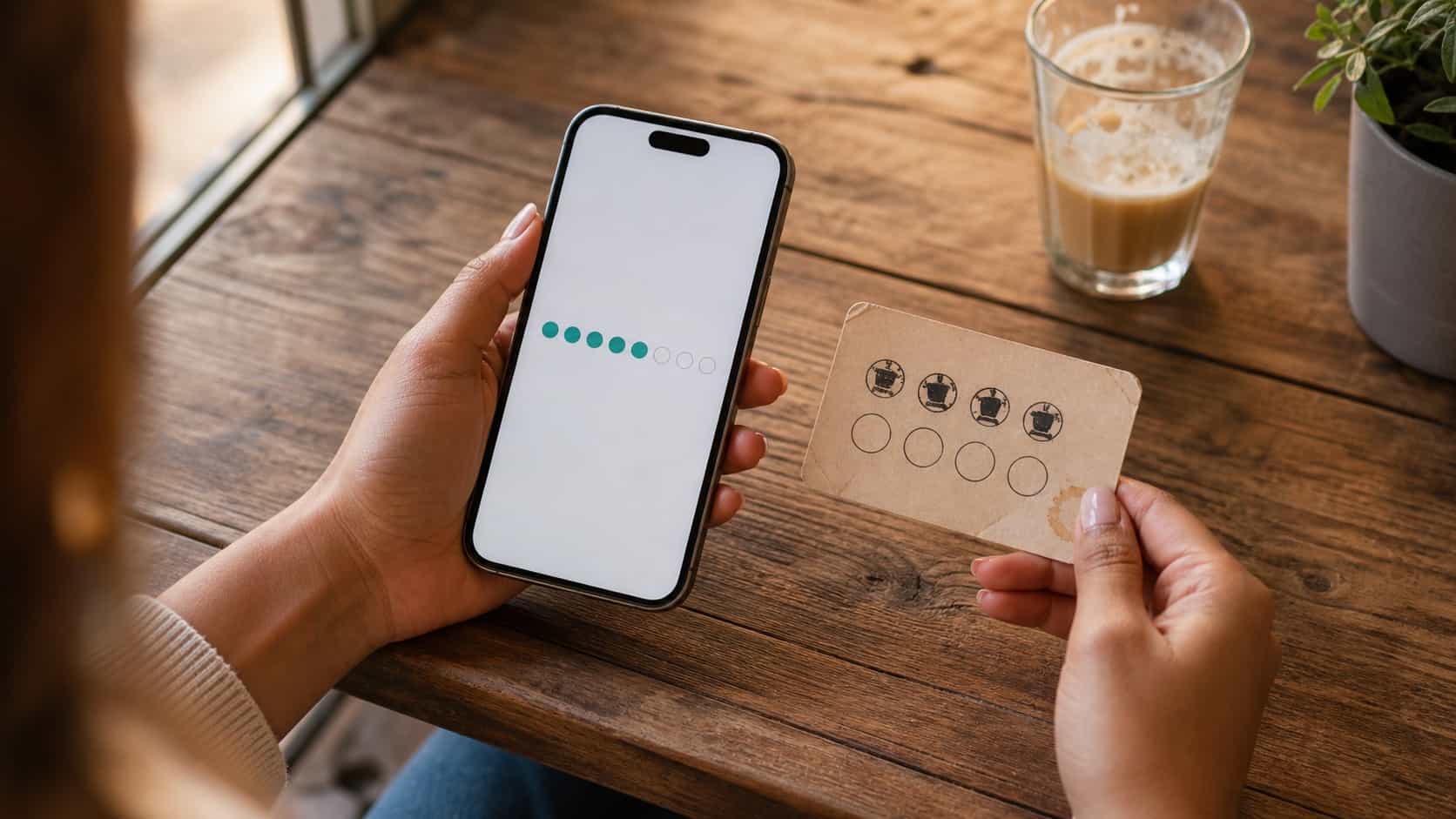
Paper punch cards have a deceptive failure mode. They look like they are working, because customers do come back, do present the card, and do collect stamps. The numbers feel encouraging at first. What gets hidden is the much larger group of customers who got a card on visit one, lost it before visit two, and silently walked away from the program. Those customers do not show up in any complaint, any statistic, any owner conversation. They just stop coming, and the owner never connects the silence to the loyalty mechanic.
The math of paper loyalty is rough. A typical paper program loses roughly half its participants between the first and second visit purely to card loss, and another large chunk drops off when the card is more than 60 percent complete because the customer cannot remember which pocket or wallet has it. By the time anyone redeems the reward, the program has filtered out the casual customers and only retained the regulars who would have come back anyway. The program is rewarding loyalty that already existed instead of building new loyalty.
The other quiet failure is data. A paper program produces zero usable information. The owner cannot see which customers are close to redeeming, which ones stalled at three stamps and need a nudge, which days drive the most loyalty visits, or what the average time between visits is. Without that data, the owner cannot improve the program. They can only print more cards and hope. For a fuller comparison of how different program structures perform, see our guide on loyalty program types.
How a QR Code Loyalty Program Actually Works
The mechanic is simpler than most owners assume. There is one printed QR code, usually placed at the counter where payment happens. After each transaction, the customer scans the code with the phone they already have in their hand from paying. The scan opens a mobile page that recognizes the customer (by phone number, email, or a saved profile from the first scan), records the visit, and shows the updated loyalty progress visually. No app download, no account creation, no paperwork.
On the first scan ever, the customer enters a phone number or email and confirms a quick opt-in. That single signup creates the loyalty account, and from then on every scan from the same phone is automatically credited to the same account. The customer sees their progress (three of seven stamps, two more visits to a free coffee, eighty percent of the way to the next reward) on the same page they land on every time. The page is bookmarkable, returnable, and lives on the phone forever.
On the owner side, the dashboard shows every loyalty member, every visit, the date and time of each scan, and the redemption status. When a customer hits the reward threshold, the system flags the next visit so staff knows to redeem. When a customer has not visited in 30 days, the system can send a reminder. None of this requires the owner to do anything during the day. The program runs in the background while the staff focuses on serving customers.
The reason this mechanic works where paper fails is that the customer does not have to carry anything. The phone is already in their pocket. The QR code at the counter is the same code every visit. The progress is automatically updated. The reward is automatically unlocked. Every friction that killed paper loyalty has been removed, which is why digital programs typically retain three to five times more participants past the first redemption threshold. For a side-by-side breakdown of expected returns, see our piece on loyalty program ROI benchmarks.
The Reward Math That Decides Everything
Most loyalty programs fail not because the technology was wrong but because the reward math was wrong. The reward has to be valuable enough that the customer feels it is worth chasing, cheap enough that the business profits when redeemed, and reachable in a number of visits that matches how often the customer realistically buys from you. Get any of those three wrong and the program either does not motivate or does not pay back.
A reasonable starting frame is to look at three numbers. Average ticket size, typical visit frequency, and gross margin per ticket. If a customer spends 12 dollars per visit at 60 percent margin, each visit produces 7.20 dollars of contribution. A reward that costs the business 4 to 6 dollars (a free coffee, a small free side, a percentage discount on a single item) sits comfortably under one full ticket of contribution, which means the program is profitable as soon as the customer earns the reward by completing the required visits.
The visit count to reward matters more than the reward size. A "buy ten, get one free" program asks for ten visits before the customer feels the payoff. For a daily-coffee customer, ten visits is two weeks. For a weekly-haircut customer, ten visits is over two months. Same mechanic, completely different psychology. The right visit count is one that lets the customer see themselves reaching the reward in a horizon that feels short. For most cafes and quick-serve, that is five to seven visits. For service businesses with weekly or monthly cadence, three to five visits often works better than the conventional ten.
The other rule is to make progress visible early. A customer who scans for the first time and sees one of seven stamps filled is more motivated than a customer who sees zero of seven. Some programs even credit the first visit as a bonus stamp at signup ("welcome, here is your first stamp free") because the early progress dramatically lifts the second-visit return rate. Small psychological gift, large behavioral effect. For more on how small incentives shift behavior, see our piece on micro rewards that change behavior.
Set the Reward Math With Real Numbers, Not Guesses
VISU QR Ads tracks visit frequency, redemption rates, and customer cohorts so you can tune the reward threshold based on how your customers actually behave.
The Staff Side: Making the Mechanic Survive a Real Day
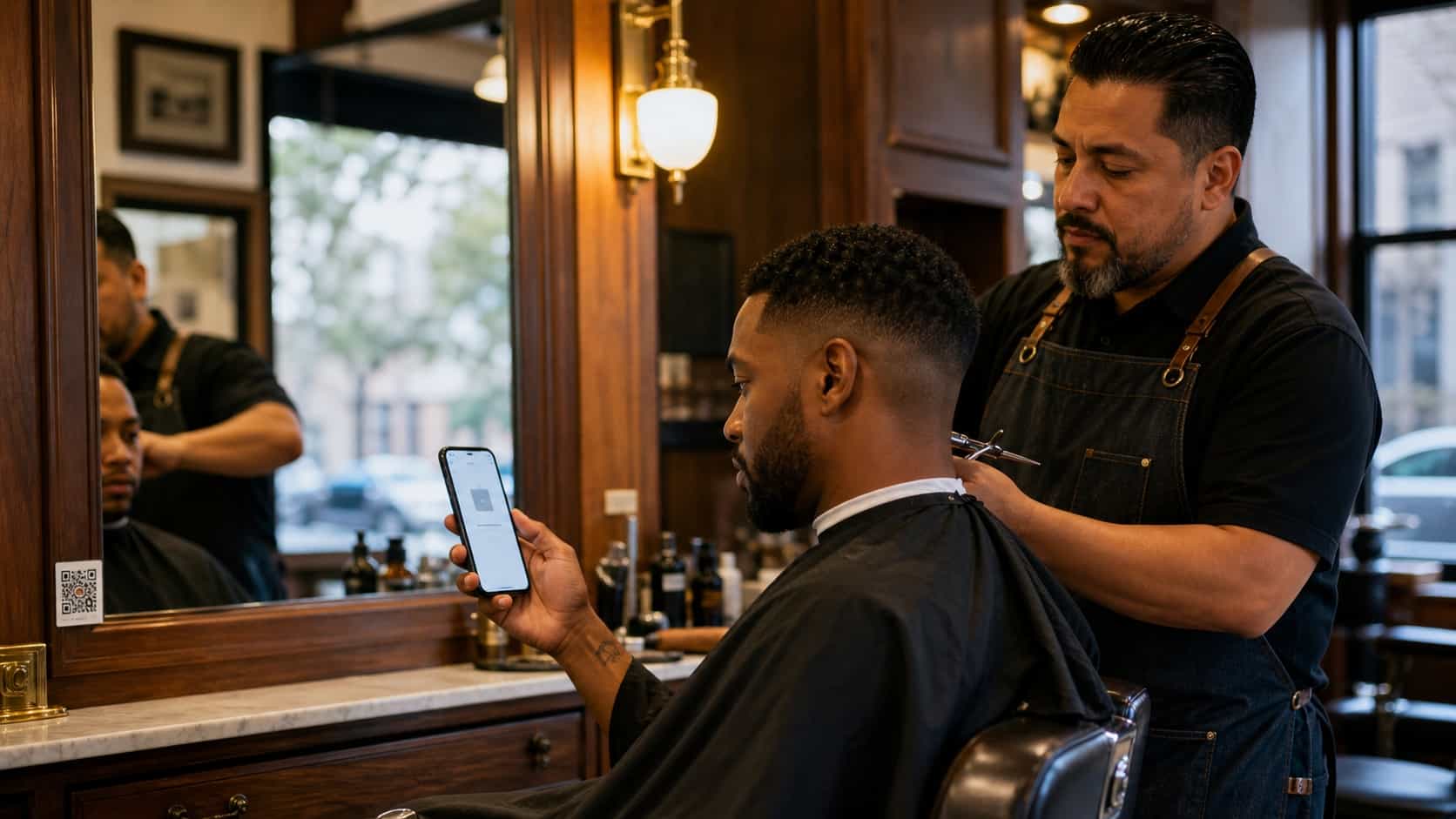
The biggest factor in a small business loyalty program is the staff member at the counter, not the technology. A code that nobody is told about gets scanned by maybe two percent of customers. The same code, with a one-line verbal prompt at every transaction, gets scanned by 25 to 40 percent. The difference between a failing program and a strong one is almost always staff consistency, not platform features.
The script has to be short, natural, and the same every time. Something like "want to scan our loyalty code? Free coffee on your sixth visit." Eight to twelve words, casual, no upsell pressure. The customer either scans or does not, but they always heard the offer. Owners who train staff to say the line on every transaction see scan rates climb in the first week and stabilize at a high baseline within a month. Owners who hope customers notice the code on their own see flat numbers indefinitely.
The training is also about confidence with the mechanic. Staff need to be able to handle the three or four common questions ("how does this work?", "do I need an app?", "what do I get?", "what if I lose my phone?") without slowing the line. A one-page laminated cheat sheet near the register, plus a five-minute walkthrough at hire, is enough. The staff member does not need to be a technology expert. They need to be able to point to the code, say the line, and answer the basic questions clearly.
One staff-side detail that owners often miss is the moment of redemption. When a customer arrives with a completed loyalty card on their phone, the staff member has to acknowledge the reward warmly and quickly, not treat it like a transaction problem. The redemption moment is the emotional payoff of the entire program, and a flat or fumbled redemption breaks the customer's enthusiasm for the program even when they technically got what was promised. Train staff to celebrate redemptions, not just process them.
Rewards That Work and Rewards That Look Generous
The rewards that drive the most repeat behavior are not always the most expensive. The pattern from observed programs is that rewards tied directly to the core product perform much better than rewards that feel like generic discounts. A coffee shop offering "buy six coffees, get one free" outperforms the same shop offering "buy six coffees, get fifteen percent off your next visit," even though the percentage discount might cost the business more on average. The free product feels like a gift. The discount feels like a transaction.
The other pattern is that rewards customers can predict and visualize work better than rewards that are surprises. "Free haircut on your sixth visit" is concrete and the customer can picture themselves redeeming it. "Mystery reward at six visits" introduces uncertainty, and uncertainty reduces motivation in loyalty contexts where customers are doing repeated low-stakes effort. Save mystery for short-term campaigns. Use predictable rewards for the loyalty backbone.
Tiered rewards work for businesses where customers visit often enough to climb tiers within a meaningful time window. A coffee shop can run "first reward at 5, second at 10, bigger at 20" and customers will pursue the bigger reward over months. A service business with monthly cadence cannot run the same structure because the timeline to the bigger reward is too long to motivate. Match the tier structure to the visit frequency or skip tiers entirely and run a single clean reward.
The rewards that fail in practice include category-restricted discounts ("ten percent off any pastry"), time-restricted rewards ("free coffee on Tuesdays only"), and rewards that require additional purchase to redeem ("free coffee with any breakfast order"). Each restriction reduces perceived value and adds friction at redemption. The cleanest rewards are unconditional. One trigger, one reward, no fine print. For more low-cost reward structures that work for small businesses, our guide on low-cost loyalty ideas walks through specific examples.
The Data You Actually Get (and How to Use It)
Beyond the loyalty mechanic itself, the QR code program produces a steady stream of customer-level data that paper programs simply cannot generate. The data is not dramatic on any single day, but it accumulates into a usable picture of the business within a month or two, and an extremely useful picture by month six.
The first data layer is visit frequency by customer. The dashboard shows which customers come twice a week, which ones come once a month, which ones came three times in February and never returned. That distribution is invisible in any other system the small business has access to. Knowing which customers are weekly regulars versus monthly drifters changes how the owner thinks about marketing, staffing, and even product mix.
The second data layer is redemption behavior. Some customers earn the reward and immediately come back to use it within a week. Others earn the reward and never return to redeem. Both behaviors carry information. Fast redeemers are your high-engagement segment. Earned-but-not-redeemed customers are a recovery opportunity, and a single reminder message ("you have a free coffee waiting") often brings them back when nothing else would.
The third data layer is dormancy. Customers who used to scan weekly and then stopped scanning are at risk of churn before they show any other sign. The dashboard surfaces these dormant accounts, and a simple win-back message ("we miss you, here is a small reward to come back") timed at the right moment recovers a meaningful percentage of customers who were quietly drifting away. None of that recovery is possible with paper.
For a deeper view on what to do with these visit patterns once you have them, our guide on QR code rewards program walks through specific tactics for each segment.
The Weekly Rhythm That Makes Loyalty Compound
A loyalty program does not improve by itself. It improves through a small weekly habit that takes 10 to 15 minutes and turns the data into one or two actions per week. Owners who build this habit see their program compound. Owners who set it up and walk away see it plateau within months and slowly decay.
The weekly review has three checks. First, new signups in the past seven days. If signups dropped, the issue is usually placement or staff prompting, not the program itself, and the fix is to walk through the customer journey and find where the prompt is missing. Second, redemptions in the past seven days. Redemptions are the heartbeat of the program because they confirm the mechanic is actually motivating return visits. Third, dormant accounts older than 30 days. This is the recovery list, and a single batch message to that group every week or two recovers a meaningful chunk.
The actions that come out of the review are usually small. Move a code from one surface to another. Tweak the staff script. Send a recovery message to ten dormant accounts. Add a one-time bonus stamp event for a slow weekday. None of these are huge changes. They are micro-adjustments that, compounded over six months, produce a program that looks completely different from where it started, in a good way.
The quiet truth of small business loyalty is that the program is never finished. It is a living system with seasonal patterns, customer cohorts that arrive and age, and a constant low-level need for tuning. The owners who treat it that way build assets that competitors cannot easily copy, because the value is not in the technology, it is in the months of accumulated learning about your specific customers. For tactical campaign ideas that layer on top of the loyalty backbone, see our piece on QR campaigns for repeat visits.
Mistakes That Kill QR Loyalty Programs
Setting the visit count too high. "Buy ten, get one free" is the legacy default, but for many small businesses that horizon is too long to motivate. Five to seven visits often produces stronger second-visit return rates and more total redemptions, even though each individual reward is reached faster. Volume of redemption beats rarity of redemption almost every time.
Hiding the QR code. A loyalty code on the back wall, behind the register, or on a shelf customers cannot see produces almost no scans. The code has to be at the counter where payment happens, at customer eye level, with a small visible headline. If the code requires effort to find, the program fails before the mechanic ever has a chance.
Not training the staff. The single biggest performance variable in a small business loyalty program is whether the cashier actually says the line on every transaction. Owners who skip the training step see scan rates around two to five percent. Owners who train the line see 25 to 40 percent. Same code, same offer, vastly different results.
Making the reward conditional. Restrictions, time windows, additional-purchase requirements, and category limits all reduce perceived value. If you have to add a condition, do it sparingly and make it visible from the start. Surprise restrictions at redemption time damage trust permanently.
Forgetting the redemption moment. The reward is the emotional core of the program. A flat or rushed redemption (a quick "okay, here you go" with no warmth) breaks the loop even though the customer technically got what was promised. Train staff to acknowledge the redemption warmly. It costs nothing and it is the moment that decides whether the customer signs up for the next loop.
Treating it as set-and-forget. The program needs 10 to 15 minutes a week of attention. Owners who skip the weekly review get one cohort of customers and watch the program decay as those customers age out. The compound benefit only happens for owners who tune the program weekly.
Stop Stamping. Start Tracking.
VISU QR Ads turns your counter into a working loyalty channel with no app, no card, and a real list of returning customers you can message, reward, and recover.
Frequently Asked Questions
Do customers really sign up for a QR code loyalty program if there is no app?
Yes, and the no-app aspect is actually one of the main reasons signup rates are higher than app-based loyalty. Customers resist downloading another app for a single small business but readily scan a code and enter a phone number that takes ten seconds. Programs that avoid app downloads consistently see signup rates two to four times higher than programs that require app installation.
How many visits should the loyalty reward require?
Five to seven visits works for most cafes, quick-serve restaurants, and frequent retail. Three to five visits often works better for service businesses with weekly or monthly cadence (salons, barbershops, clinics). The general rule is to set the visit count so the customer can see themselves reaching the reward in a horizon that feels short relative to their visit pattern.
What does a QR loyalty program cost a small business?
The platform cost is typically a small monthly fee, similar to or less than what businesses spend on printed punch cards over a year. The bigger cost is the reward itself, which is variable and only paid when a customer redeems. Most small businesses find the program produces positive contribution starting in month two or three once redemptions begin and recovered customers offset the reward cost.
Can the same QR code work for multiple locations?
Yes, with a dynamic code platform. The same code can recognize which location it was scanned at (by linking each printed code to a specific store) and credit visits accordingly while keeping a unified loyalty account across locations. Customers can earn at one location and redeem at another, which is often a competitive advantage for businesses with multiple stores.
What about customers who do not have a smartphone?
For the small percentage of customers without smartphones, owners typically keep a paper backup option for those specific cases without making it the default. The QR code program runs as the main mechanic, and the paper card serves a niche segment without diluting the digital program's data.