

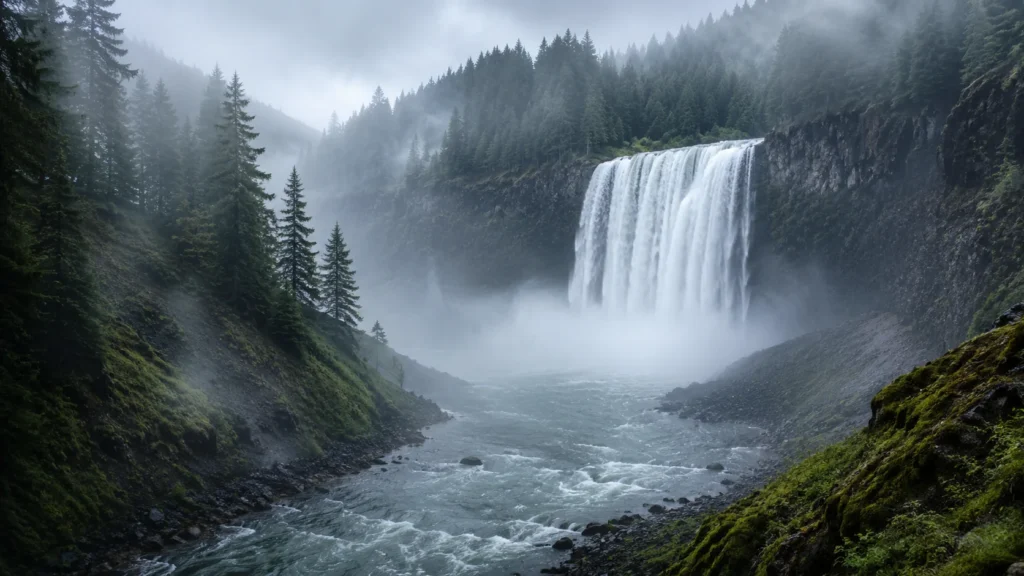
Seattle may be the best waterfall city in America. Within an hour of downtown, the Cascade foothills stack up falls you can walk to before lunch: a 268 foot giant with an observation deck, mossy canyon cascades on old railroad grades, and a forest amphitheater at the end of a two mile stroll.
This guide covers five waterfall hikes near Seattle that earn their spot for different reasons: the shortest walk, the biggest drop, the best hike-to-payoff ratio, the closest to the city, and the classic day out. Every distance and elevation figure below comes from the Washington Trails Association's hike pages, linked in the references, so you can check current conditions before you drive.
One Link for All Your Adventures
A short address you control, pointing to your trail photos, lists and plans wherever they live.
Snoqualmie Falls: The Icon
Start with the one everybody knows. Snoqualmie Falls drops 268 feet in a single plunge, roughly 100 feet wide in ordinary flow, and after storms it thunders hard enough to soak the upper viewpoint in spray. It sits just outside the town of Snoqualmie, east of Seattle off Interstate 90.
This is the least demanding entry on the list: the upper observation decks are steps from the parking area, and the optional trail to the lower viewpoint runs about 1.4 miles round trip with 250 feet of elevation gain. It is the waterfall for visiting relatives, small kids, and days when you want the spectacle without the workout. Go after a run of rain for maximum thunder, or in the morning to beat the crowds that fill the decks by mid afternoon on sunny weekends.
Twin Falls: The Canyon Walk
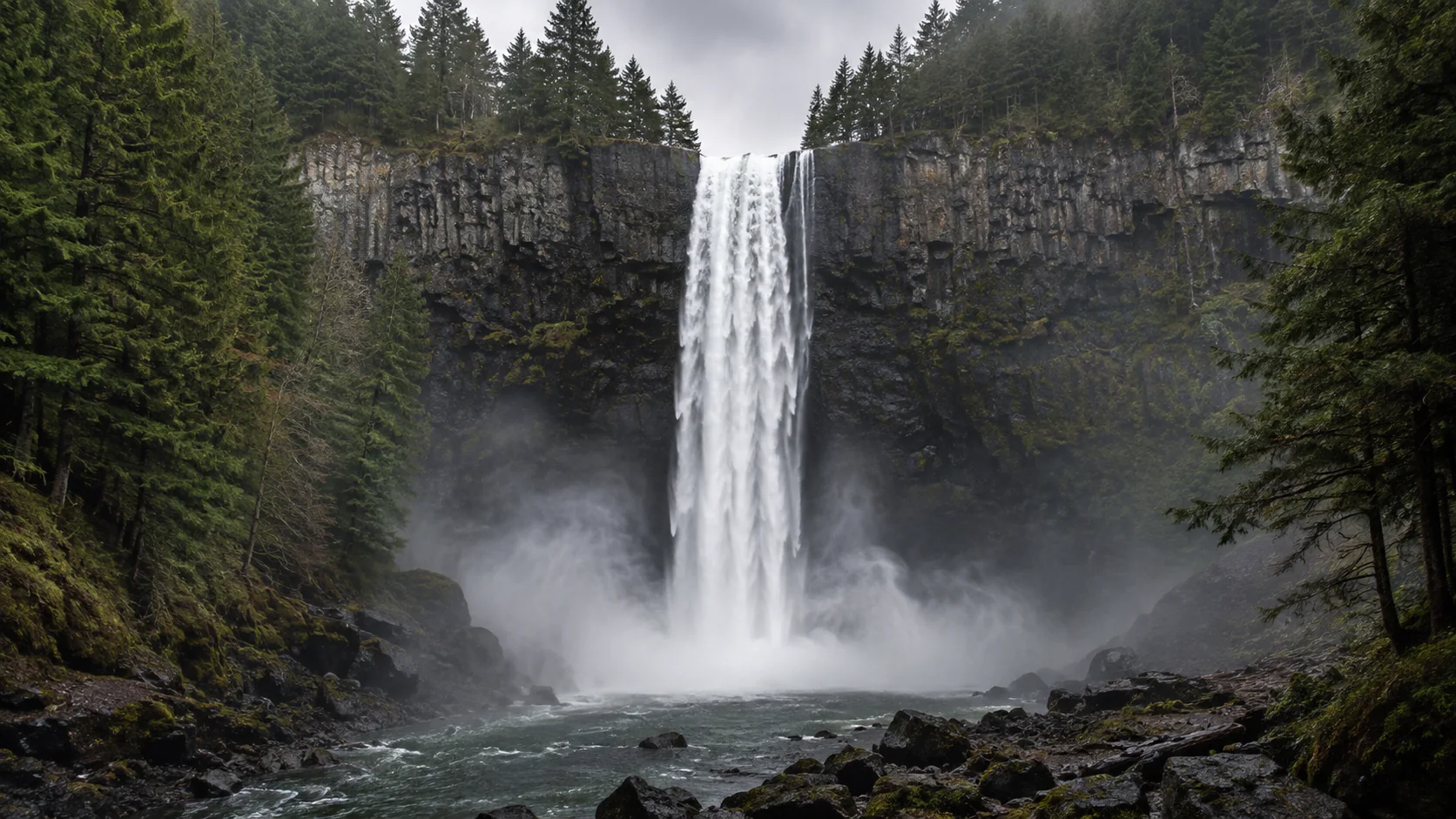
In Olallie State Park near North Bend, the Twin Falls trail follows the South Fork Snoqualmie River through mossy old forest to a series of viewpoints on a 135 foot waterfall squeezed into a rock canyon. The walk runs about 2.4 miles round trip with 500 feet of gain, with a wooden bridge between the drops that puts you almost on top of the water.
The forest is the co-star here: big mossy trunks, river the whole way, and enough shade that the trail works even on hot days. Because it is a state park trailhead, your car needs a Discover Pass, Washington's state lands parking pass, covered in the planning section below.
Franklin Falls: The Family Favorite
Further up the Interstate 90 corridor near Snoqualmie Pass, Franklin Falls is the classic beginner and family hike: about 2.0 miles round trip with 400 feet of gain along the South Fork Snoqualmie, ending at a 135 foot falls that descends in three tiers, with the final drop landing in a rocky bowl where hikers gather on the gravel bank.
On summer weekends this is one of the most popular short hikes in the region, and the small lot fills early; a weekday or an early start changes the whole experience. In high summer you can cool off in the spray at the base. Winter transforms the falls into an ice amphitheater, but the road access changes seasonally, so check the trail page before a cold-season visit.
Keep Your Trail List in One Place
Link your hike photos, maps and plans from one short address you can share with anyone.
Coal Creek Falls: The Closest In
You do not even have to leave the Seattle metro area. Coal Creek Falls hides in Cougar Mountain Regional Wildland Park in Bellevue, a 2.5 mile round trip with 416 feet of gain through second-growth forest that has swallowed the area's coal mining past. The falls itself is a modest mossy cascade rather than a giant, at its best in the wet months and sometimes a trickle by late summer.
The point of this one is the ratio of effort to escape: minutes from Interstate 405, no mountain pass driving, and a genuine forest waterfall on a quiet loop. It is the after-work option and the drizzly-Sunday option, and in the shoulder seasons, when the big falls trails are snowed in or packed, it quietly becomes the best waterfall walk in the area.
Wallace Falls: The Full Day Out
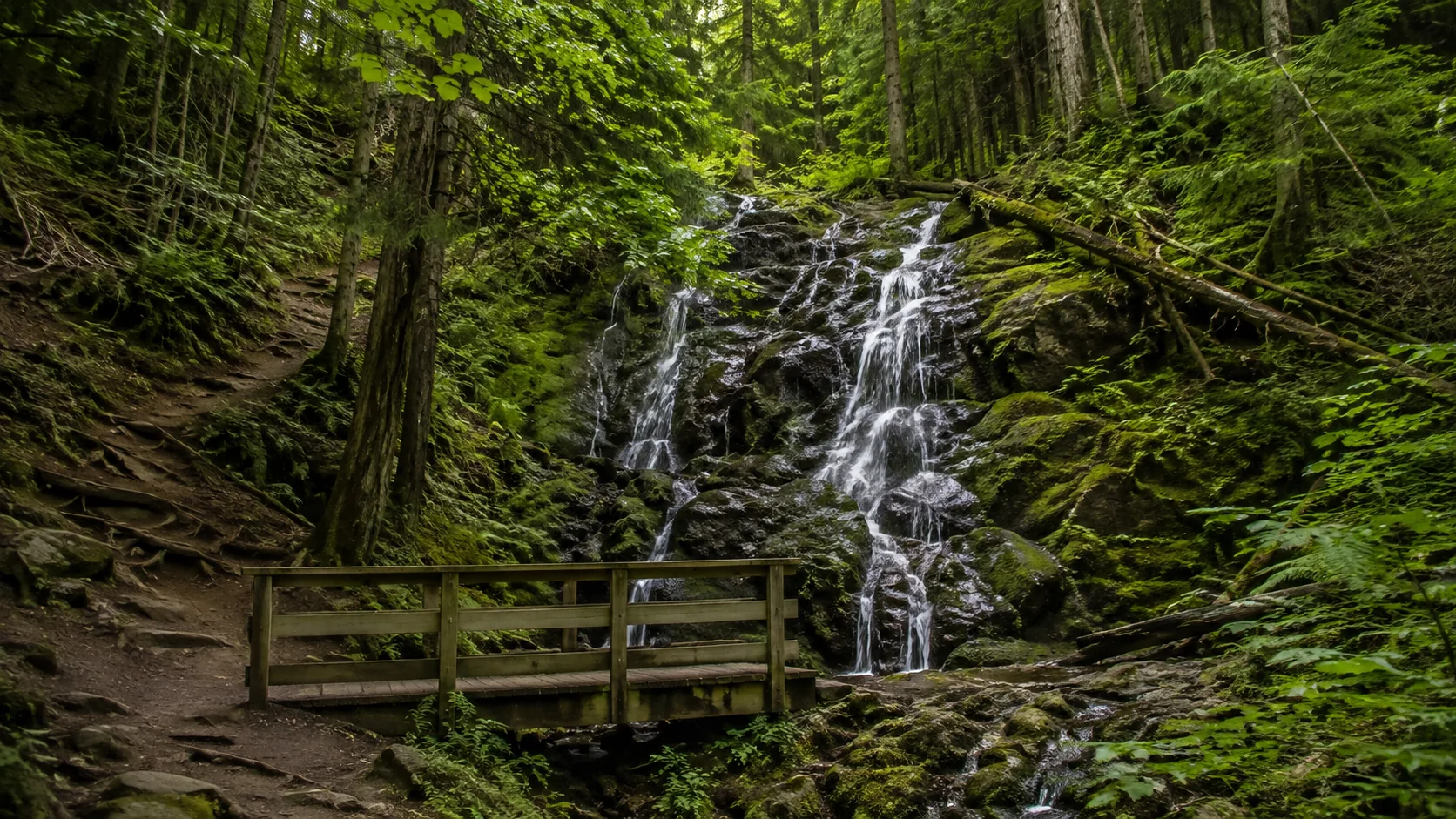
North of the others on the US 2 corridor near Gold Bar, Wallace Falls State Park serves the biggest hiking day on this list: the Woody Trail runs about 5.6 miles round trip with 1,300 feet of elevation gain past a series of viewpoints. The centerpiece is the 265 foot Middle Falls, a drop so tall it can be spotted from the Skykomish Valley below.
The trail gives you the river almost the whole way, with lower, middle and upper viewpoints spaced like acts of a play; many hikers turn around at the middle viewpoint and still get the headline view. This is another state park, so the Discover Pass applies, and the lot fills on fair-weather weekends. Bring real shoes and treat it as the day's main event rather than a stop.
Before You Go: Passes and Timing
Passes: trailhead parking around Seattle is a patchwork. State parks such as Olallie (Twin Falls) and Wallace Falls require the Discover Pass for parking; other trailheads fall under different agencies with their own requirements, and Coal Creek sits in a county park with no parking fee. The Washington Trails Association page for each hike lists exactly which pass applies, which is the single best reason to check it before driving.
Timing: waterfall season here is upside down from beach season. Late fall through spring, fed by rain and snowmelt, is when the falls run biggest; late summer shrinks the smaller cascades like Coal Creek. Weekday mornings beat weekend afternoons everywhere on this list, most dramatically at Franklin and Snoqualmie.
Safety: stay on the trail and behind barriers at viewpoints, keep children and dogs close near canyon edges, and remember that rocks in the spray zone are slick year round. Mountain weather changes fast; a dry trailhead does not promise a dry summit viewpoint.
Share the Whole Trip, Not Ten Links
One VisuLink holds your photo gallery, your favorite trail pages and everything else worth sharing.
FAQ
What is the easiest waterfall to see near Seattle?
Snoqualmie Falls. The upper observation decks are steps from parking, and the full trail to the river is only about 1.4 miles round trip. The falls drops 268 feet, so the easiest option is also the most dramatic.
Which waterfall hike is best for kids?
Franklin Falls: about 2 miles round trip with gentle grades, a river alongside for most of the walk and a big three-tier payoff at the end. Snoqualmie Falls works for even smaller kids since the main viewpoint needs almost no walking.
Do I need a pass to park at these trailheads?
For the state park trailheads at Twin Falls and Wallace Falls, yes: a Discover Pass. Other trailheads vary by agency. Check the Washington Trails Association page for each hike, which lists the exact pass required.
When do the waterfalls near Seattle run biggest?
Late fall through spring, when rain and snowmelt feed the rivers. Late summer is the smallest flow, and modest cascades like Coal Creek Falls can shrink to a trickle by then.
Can I swim at these waterfalls?
These are cold, fast mountain rivers with slick rock, and pools below falls have strong currents. People do wade near some bases in summer, but treat the water with respect, keep children close and stay behind barriers where they exist.