

Most small businesses use QR codes the same way: print one, link it to the menu or the Instagram, and forget it exists. That is fine if you only want a digital menu. It is a tragedy if you want to grow. Because somewhere in your space, every single day, dozens of customers walk in, get served, pay, and leave without you ever knowing who they were, what they liked, or how to bring them back. The QR code on your counter could be capturing all of that. Most owners just never set it up to do the job.
The reason QR codes get treated like decorations instead of an acquisition channel is that the default templates pointed at menus and social pages do not produce any visible business outcome. There is no list of customers at the end of the month, no number of leads, no growth chart. So owners conclude QR codes are a gimmick. The real conclusion is that they were pointing at the wrong destination. A QR code aimed at a menu is a convenience. A QR code aimed at a capture flow is a customer acquisition channel.
This piece walks through the framework that turns a printed code into a real growth channel. The three things any acquisition QR code must do, the placements that produce volume, the destinations that convert, and the simple data loop that makes the channel compound month after month. None of this needs new tech. It needs a different intent behind the code that is already on your counter.
Turn Every Scan Into a Customer You Can Reach Again
VISU QR Ads gives you dynamic codes, capture flows, and real-time scan data so each printed surface becomes a measurable acquisition channel.
Why Most QR Codes Are Not an Acquisition Channel
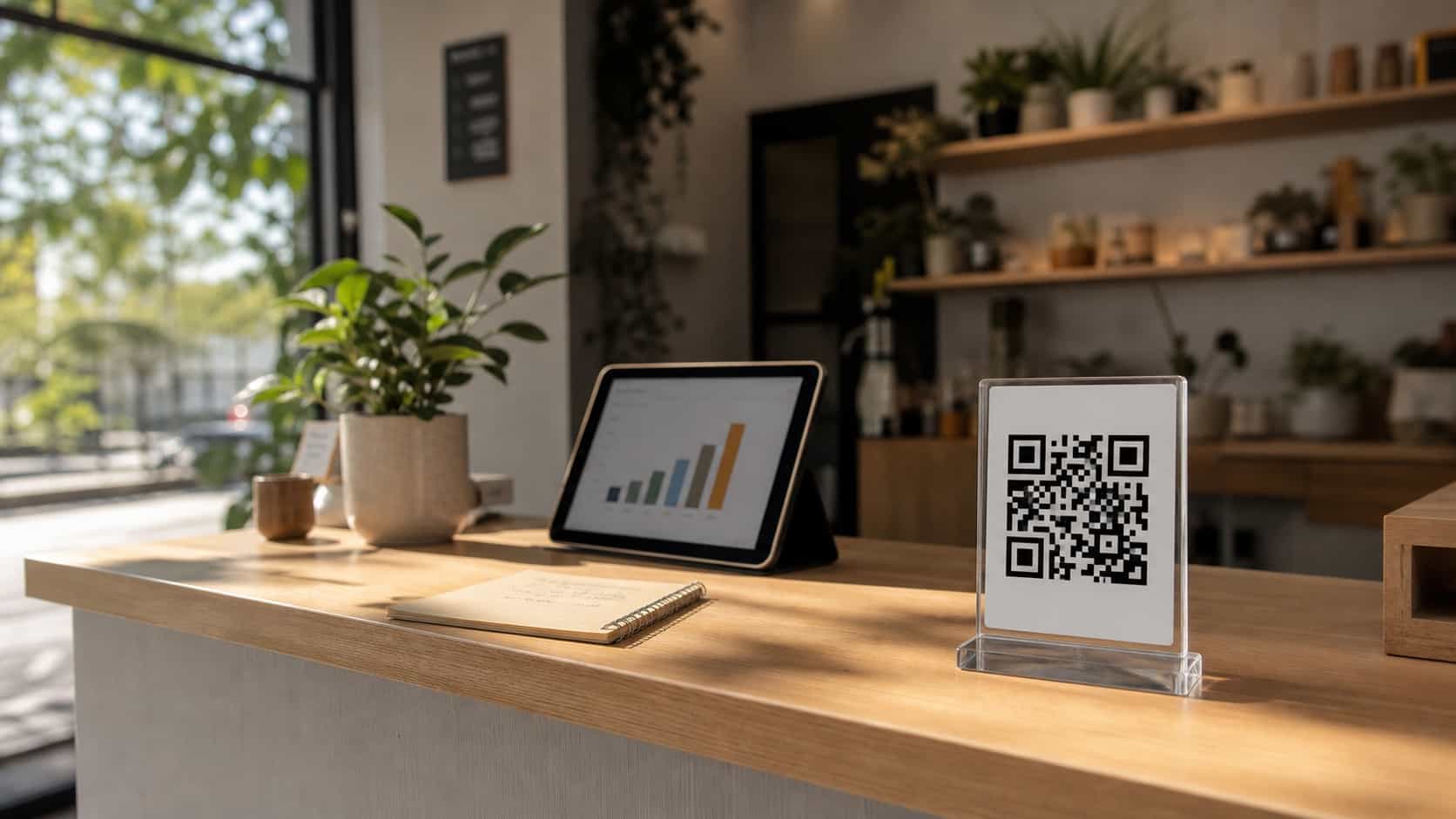
An acquisition channel is anything that produces a steady, measurable flow of new customers you can reach again. Search ads are an acquisition channel. Word of mouth is an acquisition channel when you can track referrals. A printed QR code can absolutely be one too, but only if it produces the same output every channel must produce: a contact, a permission, or a relationship that did not exist before the scan.
Most QR codes produce zero of those things. A scan happens, the customer reads a menu or follows an Instagram, and walks away. You did not learn who they were. You cannot reach them next week. You cannot count them in any meaningful way. From a growth perspective, that scan was a polite conversation that ended without exchanging numbers. The destination did all the work of being interesting and none of the work of capturing the relationship.
The fix is not technical. It is intent. You decide that this code, on this surface, exists to acquire customers, and then every choice flows from that decision. The destination changes. The offer changes. The placement decision changes. What you measure changes. The same printed sticker that was a menu link last month becomes a real acquisition channel this month, with no new equipment, just a different job description for the code. For a deeper look at the lead capture mechanics specifically, see our piece on QR code lead generation.
The Three Jobs of an Acquisition QR Code
If a QR code is going to function as an acquisition channel, it has to do three jobs in sequence. Skip any one of them and the code degrades back into a gimmick. Do all three and the code starts producing customers you can count, contact, and re-engage.
Job one: trigger a scan. This is the placement and offer problem, and it is the one most owners actually focus on. The code has to be visible at the right moment, in the right surface, with enough context that the customer wants to scan. Free wifi, a discount, a loyalty signup, a chance to win something. The exact offer depends on the business, but without a reason to scan, no other job matters because the funnel never starts.
Job two: capture a piece of identity. The scan lands on a destination, and that destination has to ask for something. A name, a phone, an email, a WhatsApp opt-in, a social follow with a tagged account. Anything that turns the anonymous scan into a known person you can reach again. Most QR codes skip this entire step, which is exactly why they fail as an acquisition channel. A scan with no capture is a footprint with no name attached.
Job three: deliver the promised value immediately. The customer just gave you something (their attention, their data, sometimes both). You have to give back instantly. The wifi password, the discount code, the menu, the loyalty card, the entry confirmation. If the value lands in the same flow, the customer associates your business with a fast, fair exchange. If they have to wait for an email or get redirected three times, you have trained them to ignore future asks. The first scan is also the first impression, and impressions compound.
That is the entire framework. Trigger, capture, deliver. Every acquisition QR code that actually grows a business does these three things in the same flow, on the same scan, without breaking the customer's attention. Anything that takes a second tap, a second app, or a second visit is leakage. For a complementary view on what data to actually collect and how to use it, see our guide on collect customer data.
Destinations That Convert (and Ones That Do Not)
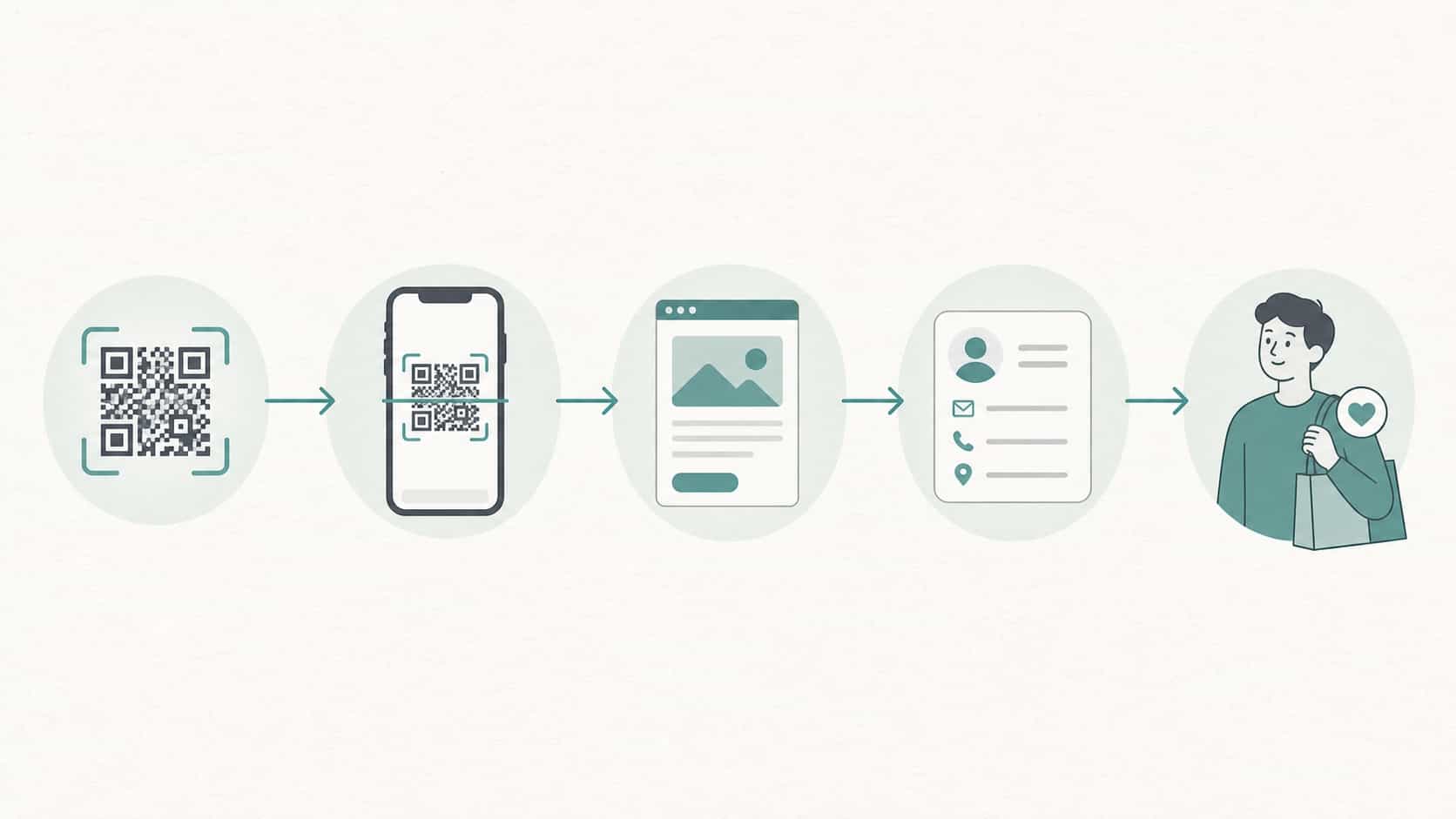
The destination is where almost every acquisition QR code lives or dies. Pointing the code at a homepage, a generic Linktree, or a social profile produces curiosity and nothing else. The customer scrolls, gets distracted, and the moment is gone. A destination built for acquisition is narrow, fast, and asks for one specific thing in exchange for one specific value.
The destinations that consistently convert share four traits. They load in under two seconds on a mid-range phone over cellular. They show the value upfront, before any form, so the customer understands the trade. They ask for the minimum data possible, ideally one field and a confirmation. And they deliver the value on the same screen, without an email round-trip. Wifi password landing pages, instant discount codes, single-tap loyalty signups, and contest entry forms all hit these traits when built well.
The destinations that fail share a different pattern. Long forms with five fields. Required account creation before the value is shown. Auto-redirects to social apps that lose the customer in the feed. Generic "thank you" screens with no reason to come back. PDFs of menus that take ten seconds to load. Any of these alone will cut conversion in half. Two of them stacked will cut it to zero. The customer is on a sidewalk, in a queue, or at a table for two minutes. They will not fight your form to give you their email.
One destination type is worth special mention. A short, clear capture flow that ends with a WhatsApp opt-in or an SMS list is the highest-value acquisition outcome for most physical businesses, because those channels reach the customer with near-perfect open rates compared to email. If you can architect the destination to produce a phone number with permission to message, you have built an asset that compounds for years from a single scan.
Build the Destination, Not Just the Code
VISU QR Ads connects each printed surface to a fast, mobile-first capture flow with built-in tracking, so every scan turns into a measurable contact.
First-Party Data: The Real Asset You Are Building
The reason an acquisition QR code is more valuable than it looks is that the output is first-party data. A name, a phone, an email, a preference, a visit timestamp. Data the customer gave you directly, in your own space, with your own permission. That data has properties that paid ad audiences and rented social followers do not have. It does not disappear when an algorithm changes. It does not require a monthly platform fee to access. It belongs to you, and it gets more valuable every time the customer comes back, because each visit adds context to the same record.
Over six to twelve months, a small business running an acquisition QR code program builds something that competitors with bigger ad budgets cannot easily replicate: a list of named customers, with permission to contact, segmented by what they bought and when. That list is the foundation of every reactivation campaign, every birthday promo, every "we miss you" message that brings customers back without paying for them again. Acquired once through the QR code, retained for years through the data.
The compounding part is the key. Year one, the QR code might capture a few hundred names. Year two, those names plus the new captures, plus the visit data, plus the segments you can now build from behavior. Year three, you have a database that costs nothing to maintain and gives you sending lists for any campaign you want to run. Compare that to running paid ads year after year for the same audience and the math is uncomfortable for any ad-only acquisition strategy. For a deeper view on how to handle that data responsibly and build it as an asset, our guide on first-party data collection walks through the full picture.
Placements That Drive Acquisition Volume
An acquisition QR code only works at scale if enough people scan it. Volume comes from placement, and the placements that produce acquisition-grade volume are not always the same as the ones that produce engagement. An engagement code can sit on a wall and slowly accumulate scans. An acquisition code needs to be where attention, idle time, and the right emotional moment line up.
The highest-volume acquisition placements in physical businesses tend to be the same five surfaces. The counter at the moment of payment, when the customer has phone and wallet both in hand. The table in restaurants and cafes during the post-meal pause. The mirror or chair-side surface in salons and barbershops where customers spend twenty minutes idle. The exit area, capturing the post-experience emotional charge. The receipt itself, reaching customers after they have left and want to act later. Each of these has a different conversion profile, and a business running an acquisition channel typically uses two or three of them at the same time.
The placement strategy for acquisition is different from placement for engagement in one specific way: you optimize for the moment when the customer can act, not just notice. Noticing produces impressions. Acting produces captures. The mirror placement during a haircut converts because the customer is sitting still with the phone already out, not because the mirror is dramatic. The post-meal table tent converts because there is nothing else to do for ninety seconds, not because the table is special. For a full breakdown of which surfaces work for which moments, see our guide on dynamic QR code placement ideas.
Volume also benefits from the same code being deployed in multiple physical contexts of the business. Counter, table, exit, and bag insert all running the same destination, all tracked separately so you know which surface drives most of the channel. Placement diversity is risk diversity. If one surface gets covered, ignored, or moved, the others keep producing.
How to Measure QR Code CAC and Channel ROI
If you want QR codes to compete in your head against paid ads, you have to measure them the same way. Cost to acquire a customer, conversion rate at each stage, lifetime value of the customer once acquired. The math is simpler than it sounds because the cost side of a QR code program is mostly fixed.
Start with the cost. A small dynamic QR code platform, the printing of stands and tents, the time to set up the destination, plus whatever offer you give the customer (a discount, a free item). Add it up monthly. That is your channel cost. Then count the captures. A capture is a confirmed contact you can message again, not just a raw scan. Divide channel cost by captures and you have a per-capture cost, which is your effective CAC for new contacts.
The interesting comparison happens when you put that number next to the CAC of every other channel you run. Local Facebook ads, Google ads, flyers, paid promotions. Most small businesses discover that the QR code channel comes in cheaper per capture by a wide margin once it is running, because the cost is mostly fixed and the captures grow with traffic. The first month is expensive per capture because traffic is low. By month three or four, the channel is producing captures at a fraction of the cost of paid ads and the gap widens from there.
Lifetime value is where the channel really separates itself. A captured customer with phone permission is reachable for free from then on. Every subsequent visit, every reactivation message, every promo announcement reaches them at zero acquisition cost. That changes the LTV-to-CAC ratio in ways paid channels cannot match, because paid channels keep paying every time. For more granular visibility into the scan-to-customer journey itself, see our piece on how VISU turns QR codes into growth channels.
The Weekly Data Loop That Compounds the Channel
The difference between a QR code program that produces a list and one that compounds into a real channel is the weekly review loop. Fifteen minutes, once a week, looking at three numbers and making one or two small adjustments. That cadence is what turns the channel from a passive list builder into something that improves itself month over month.
The three numbers to review are total scans, capture rate (captures divided by scans), and time to first action (how quickly captured customers do something measurable, like a return visit or a redemption). Total scans tells you whether placements and offers are pulling attention. Capture rate tells you whether the destination is converting that attention. Time to first action tells you whether the value you delivered actually mattered enough to bring them back.
Each week, one of those three numbers will be the weakest. That is your action item for the next seven days. Low scans means the placement or the offer needs attention, maybe a different surface or a clearer headline. Low capture rate means the destination is leaking, maybe a form too long or a value prop unclear. Long time to first action means the welcome flow is not connecting, maybe the first message arrives too slow or with the wrong tone. One adjustment, one week, one number watched. That is the entire loop.
Over six months, that fifteen-minutes-a-week habit compounds into a channel that knows itself. You learn which placements produce the best customers, which offers convert, which messaging brings people back. None of that knowledge exists at the start. All of it builds, week by week, in the same dashboard, on the same business. For a parallel approach focused on increasing physical store traffic with the same loop, our piece on increase foot traffic covers complementary tactics.
Mistakes That Keep QR Codes Stuck as a Gimmick
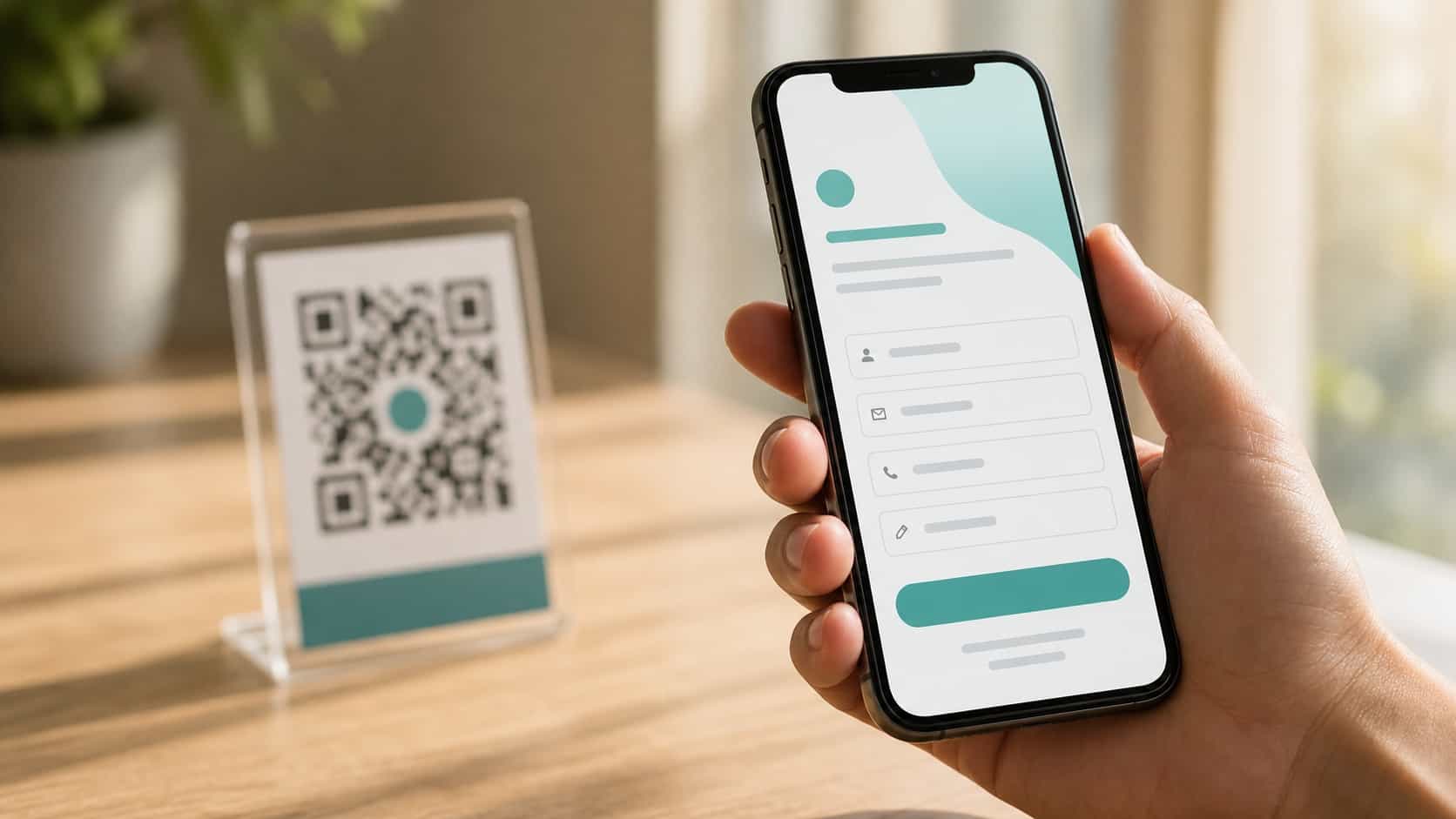
Pointing the code at a menu or a homepage. Both are dead ends for acquisition. Menus do not capture anyone, and homepages spread attention across ten possible actions, none of which happen. The code has to point to a single, narrow capture flow built specifically for the moment of the scan.
Asking for too much data on the first scan. Any form longer than two fields will lose the majority of customers. Name and phone, or name and email, is the maximum. Anything else can be collected later, after the relationship has produced a second visit and the customer trusts the exchange.
Giving the value behind a delay. Discounts that arrive by email an hour later, wifi passwords that require a confirmation tap, loyalty cards that need account verification. Each delay drops the perceived fairness of the exchange. The customer paid attention now. They want the value now.
Treating the channel as set-and-forget. The acquisition QR code is not a static install. It is a small system that gets better with weekly attention. Owners who set it up and never look again get one cohort of captures and then watch the channel decay. Owners who tune it weekly get a compounding asset.
Not measuring CAC or LTV. If the channel is not measured the same way as ads, it stays in the "decoration" mental category and never gets the resources it deserves. The owners who scale QR acquisition are the ones who put the numbers next to their ad CAC and let the comparison drive the decision.
Using a static code for an acquisition channel. Static codes cannot be updated, cannot be tracked, and cannot be redirected when the offer changes. An acquisition channel needs flexibility, which means dynamic codes from day one. The cost difference is small. The strategic difference is enormous.
Stop Linking. Start Acquiring.
VISU QR Ads turns every counter, table, and signage into a tracked acquisition channel with capture flows, real-time scan data, and the dashboard to compound it month after month.
Frequently Asked Questions
Can a QR code really be a customer acquisition channel for a small business?
Yes, when it is built to capture identity, not just deliver content. A code pointed at a menu is a convenience. A code pointed at a single-step capture flow that gives the customer something instantly in exchange for a phone or email is a real acquisition channel. The difference is the destination, not the code itself.
What kind of offer works best to trigger an acquisition scan?
Offers that produce immediate, tangible value. Free wifi, an instant discount on the current visit, entry to a small giveaway, or a loyalty signup with a first reward right away. Vague offers like "join our community" or "follow us on Instagram" produce almost no captures because the value is unclear and delayed.
How many captures should I expect per hundred scans?
A well-built acquisition flow with a clear offer typically converts 25 to 50 percent of scans into captures. A poorly built flow with a long form or a vague value prop converts under 10 percent. The destination quality is the biggest single factor. A bad destination wastes good placements.
Should I ask for phone or email?
Phone, when possible. Phone numbers reach customers through SMS or WhatsApp with much higher open rates than email, and they tend to be more accurate because customers use one phone number for years. Email is fine as a backup or for businesses where customers expect email-only contact.
How long until the QR code channel produces meaningful CAC?
Most small businesses see a stable per-capture cost by month three or four, after the placements have been adjusted once or twice and the destination has been refined. The channel keeps improving from there because the cost stays mostly fixed while captures accumulate.